As an Amazon Associate, I earn from qualifying purchases. Some links in this article are affiliate links, if you buy through them I may earn a small commission at no extra cost to you.
Quick Summary
- It’s usually a delivery problem: The reservoir almost always has enough calcium, the issue is that inconsistent water uptake stops it reaching the fruit.
- Calcium moves with water: It travels through the transpiration stream, so fruit (which barely transpires) is last in line whenever water flow is disrupted.
- Stabilise the reservoir first: Consistent top-offs, steady EC and avoiding let-it-run-low cycles fix more blossom-end rot than any supplement.
- True deficiency looks different: Real calcium shortage hits new leaf growth first (tip burn, curling, distortion), not just the fruit.
- Cal-Mag helps only as a baseline: Worth adding if you run RO or soft water, but won’t rescue fruit that’s already affected.
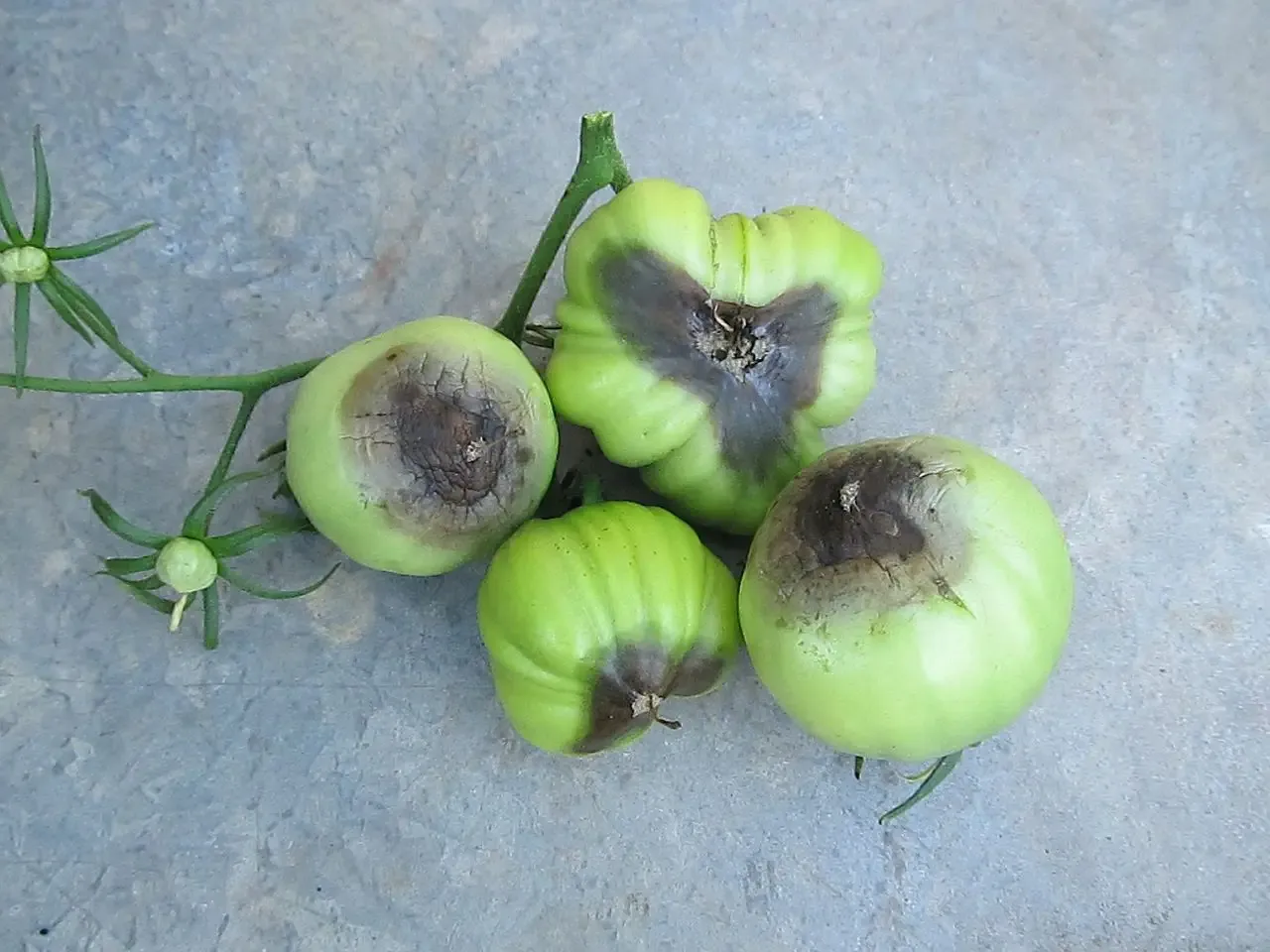
Blossom-end rot is a physiological disorder in tomatoes and peppers causing a flat, dark, leathery patch on the bottom of the fruit due to localized calcium deficiency. The foliage often appears healthy: leaves stay dark green, vegetative growth remains robust, and no deficiency charts match the symptoms. Then you inspect the fruit and discover dark, sunken tissue across the blossom end.
Growers frequently assume the solution is short on calcium and pour in supplements. More often, the reservoir holds adequate calcium, but the plant cannot transport it to expanding fruit cells. Resolving blossom-end rot requires stabilizing water uptake rather than overfeeding minerals.
The Calcium Delivery Mechanism
Calcium does not move through plant tissue like nitrogen or potassium. It travels passively through the transpiration stream, pulled upward by water evaporating from leaf stomata. Large leaves transpire heavily and pull the majority of dissolved calcium. Expanding fruit has few stomata and transpires minimally, placing developing fruit at the end of the line.
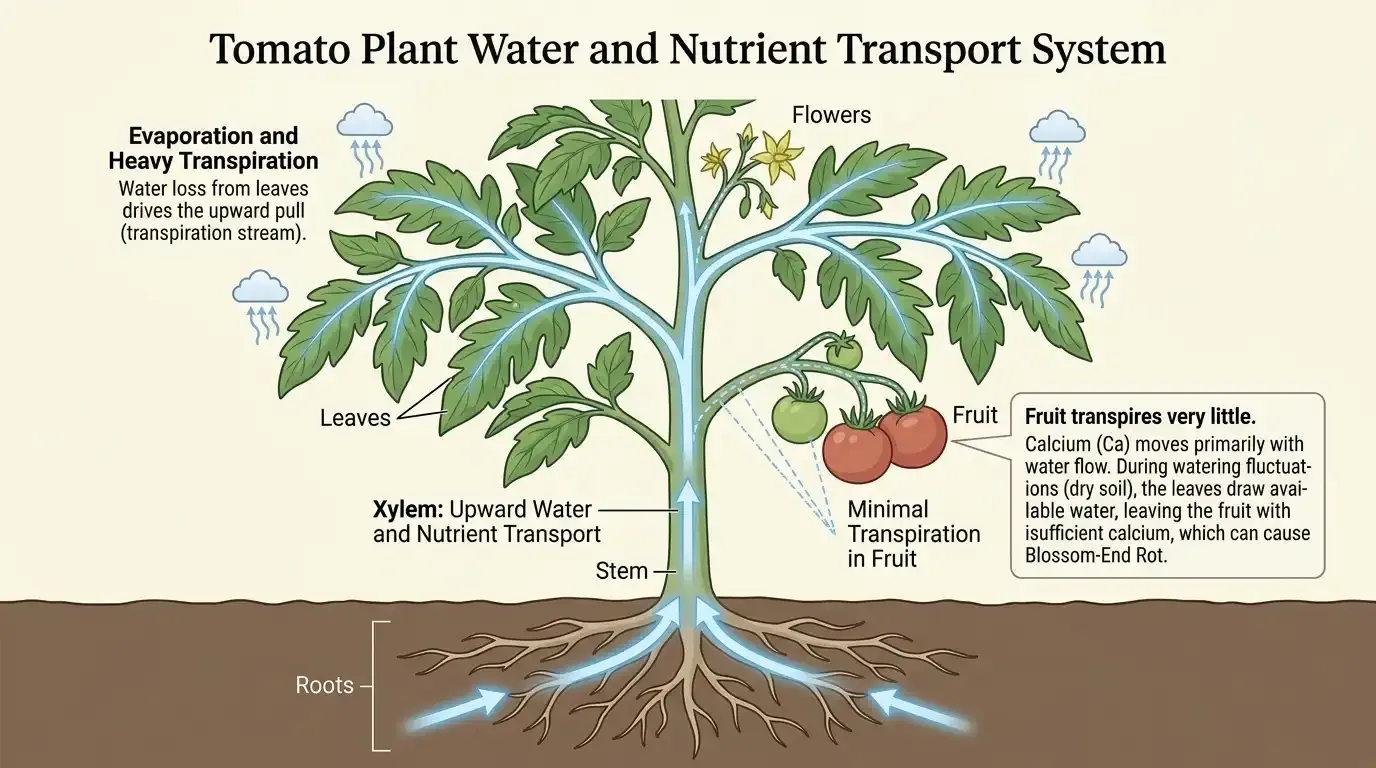
When water uptake remains steady, sufficient calcium reaches the fruit. When transpiration or water uptake fluctuates, calcium delivery to fruit tissue stalls first, even while foliage stays dark green. This explains why blossom-end rot strikes vigorously growing plants.
Environmental Triggers in Hydroponics
Reservoir Volume Swings: Allowing water levels to drop significantly between refills stresses root water uptake. Refilling with solution at a substantially different EC or temperature shocks root hairs and breaks transpiration continuity.
Rapid Fruit Expansion: During early fruit swell, cell division proceeds faster than passive calcium transport can support if transpiration is constrained.
Excessive Electrical Conductivity (EC): Overly concentrated nutrient solutions increase osmotic pressure in the root zone, making it harder for roots to pull in water and slowing the entire transpiration stream.
Vapor Pressure Deficit (VPD) Extremes: Low relative humidity or excessive canopy heat forces leaves to transpire at maximum rates, diverting calcium away from low-transpiring fruit clusters.
Root Stress and Hypoxia: Oxygen-depleted or diseased roots cannot pump water efficiently regardless of reservoir calcium concentration. Maintain water temperatures below 21°C (70°F) and run adequate air stone aeration.
Identifying True Calcium Deficiency vs. Delivery Problems
True calcium deficiency appears differently than localized blossom-end rot. Because calcium is an immobile nutrient, a genuine elemental deficit hits new vegetative tissue first: look for hooked or curled leaf tips, distorted young foliage, and necrosis along growing shoots long before fruit develops.
If new leaves and shoot tips look crisp and healthy while only fruit bottoms rot, the reservoir has sufficient calcium; delivery is the issue.
| Symptom | Blossom-End Rot | True Calcium Deficiency |
|---|---|---|
| Affected Area | Fruit tissue only | New shoot tips and young leaves |
| Visual Sign | Dark, leathery patch on blossom base | Distorted, hooked, or scorched young leaves |
| Root Cause | Inconsistent water delivery / transpiration | Insufficient dissolved calcium in solution |
| Primary Fix | Stabilize reservoir volume, humidity, and EC | Add Cal-Mag or raise calcium nitrate levels |
Note
Nutrient Mobility in Plant Tissue:
- Mobile nutrients (Nitrogen, Phosphorus, Potassium, Magnesium) can be scavenged from older foliage to support new shoots. Deficiencies appear on lower, mature leaves first.
- Immobile nutrients (Calcium, Iron, Sulfur, Boron, Copper) become fixed within cell walls. Deficiencies manifest exclusively on new leaves, growing tips, and developing fruit.
For a diagnostic breakdown by leaf pattern and position, see our hydroponic nutrient deficiency chart.
Corrective Actions for Blossom-End Rot
Stabilize Reservoir Levels: Avoid letting reservoirs run low before topping off. Maintain steady fluid levels and consistent EC to prevent osmotic shocks.
Moderate EC During Fruit Set: Resist running high fertilizer concentrations during early fruit development. Lowering EC slightly helps roots absorb water freely.
Manage Relative Humidity: Maintain 50–70% relative humidity in the grow room. Excessively dry air increases leaf transpiration and robs fruit of calcium; excessively humid air stops transpiration entirely.
Add Baseline Calcium When Using Pure Water: If your source water is reverse osmosis (RO) or very soft (under 50 ppm TDS), supplement with a Cal-Mag additive like CaliMagic by General HydroponicsView on Amazon. This ensures baseline availability without overfeeding nitrogen.
Maintain Solution pH: Keep reservoir pH between 5.5 and 6.5. Outside this window, calcium ions precipitate and become unavailable to roots. Verify daily using a pH and EC combo meterView on Amazon.
Managing Affected Fruit
- Remove Damaged Tomatoes: Rotting fruit will not heal. Pruning affected fruit redirects photosynthetic sugars and calcium toward healthy new sets.
- Edibility: Fruit with minor blossom-end rot is safe to eat; simply slice away the sunken, leathery base.
- Non-Transmissible: Blossom-end rot is a physiological condition, not a viral or fungal infection. It does not spread between fruits or neighboring plants.
Once transpiration and reservoir consistency are stabilized, newly developing fruit will mature without necrotic patches within 5–10 days.
Related Diagnostic Guides
For yellowing foliage symptoms elsewhere on the plant, our hydroponic nutrient deficiency chart covers mobile and immobile mineral lockouts. For leaf symptoms showing purple, bronze, or brittle tips, see our guide to non-yellow hydroponic deficiencies. If pH swings drive mineral lockouts, our pH management guide details stabilization techniques.
Editor’s Note: Parts of this guide were structured and optimized with the assistance of AI, then thoroughly reviewed, edited and expanded with first-hand growing experience by our author Raymond to ensure practical, real-world accuracy.
Frequently Asked Questions
What is blossom-end rot in hydroponic tomatoes?
Blossom-end rot is a physiological disorder where the bottom of the fruit develops a flat, dark, leathery patch. It's caused by insufficient calcium reaching the developing fruit tissue, but in most hydroponic cases the reservoir has plenty of calcium. The real problem is inconsistent water uptake, which disrupts the transpiration stream that carries calcium to the fruit.
Does adding more calcium fix blossom-end rot?
Sometimes, but rarely. If your base nutrient line is low on calcium or you're using reverse osmosis water, a Cal-Mag supplement helps as a baseline correction. But if the reservoir already has adequate calcium, adding more won't fix the fruit, the issue is inconsistent water movement, not a shortage. Stabilise the reservoir first.
Can blossom-end rot spread to other fruits or plants?
No. Blossom-end rot is a physiological disorder, not a disease. Fruits that were already past the critical early-development stage when the calcium shortage occurred are unaffected. New fruits that set after you correct the underlying cause will grow normally. Remove affected fruits to redirect the plant's energy.
Can you eat tomatoes with blossom-end rot?
Yes. Cut away the dark, affected tissue and the rest of the fruit is perfectly safe to eat. Blossom-end rot doesn't spread to healthy tissue or contaminate the fruit.
How do I tell blossom-end rot apart from true calcium deficiency?
True calcium deficiency hits new growth first because calcium is immobile: look for distorted or withered young leaves, tip burn and curled margins, usually before any fruit shows symptoms. If your new growth looks healthy and only the fruit is affected, the problem is calcium delivery, not a shortage in the reservoir.
Our Amazon Storefront
Browse all our recommended tools & supplies
Everything we personally use and trust, hand-picked for gardeners like you.

I've been running DWC and Kratky systems for several years and write about what actually works, not textbook theory. Follow along for honest product reviews, practical guides and real grow results.