As an Amazon Associate, I earn from qualifying purchases. Some links in this article are affiliate links, if you buy through them I may earn a small commission at no extra cost to you.
Quick Summary
- Germination Fundamentals: Seeds need consistent moisture, 70–80°F (21–27°C), darkness until emergence and pH-adjusted water (5.8–6.2). Get these right regardless of which medium you use.
- Rockwool vs. Alternatives: Rockwool is reliable but non-biodegradable and mildly irritating to handle. Rapid Rooters, peat pellets, coco coir and perlite/vermiculite match its germination rates without the drawbacks.
- Closest 1:1 Replacement: Rapid Rooters and organic starter plugs offer the same structural shape and handling convenience as rockwool cubes without synthetic fibers.
- Moisture & Handling Tradeoffs: Coco coir requires careful moisture monitoring because the surface dries faster than the core; paper towel germination is fast but has a fragile 12–24 hour transplant window.
- Root Damage Risk: Handle seedlings by the stem base, not the root tip. Most transplant failures come from handling rather than the medium itself.
Looking for the general germination process from seed selection to system transfer? See our step-by-step guide to germinating seeds for hydroponics.
Hydroponic seed germination without rockwool involves using sustainable starter media (such as peat pellets, coco coir, or organic plugs) to provide moisture, oxygen, and root support without mineral wool fibers.
Germinating seeds for hydroponics follows fundamental plant biology: seeds require consistent moisture, warmth, and oxygen. In a soilless system, the medium you choose to hold moisture around the seed determines how easily you can manage watering and avoid seedling rot.
This guide covers core environmental requirements first, then evaluates how each rockwool alternative performs in everyday practice.
What Seeds Need to Germinate in Hydroponics
A seed contains internal starch reserves and an embryo. To trigger germination, you must provide four environmental factors:
1. Consistent moisture, not saturation
The seed coat must absorb water to soften and split. Insufficient moisture stalls germination, while waterlogged media create anaerobic conditions that invite damping-off pathogens. The ideal moisture level resembles a wrung-out sponge: uniformly damp throughout, with no free water pooling when gently squeezed.
2. Temperature in the right range
Most hydroponic crops germinate best between 70°F and 80°F (21°C–27°C). Temperature directly dictates sprouting speed:
| Crop | Optimal germination temp | Days at optimal |
|---|---|---|
| Lettuce, spinach | 65–70°F | 2–5 days |
| Basil, herbs | 70–75°F | 3–7 days |
| Tomatoes, peppers | 75–80°F | 5–10 days |
| Cucumbers, squash | 75–80°F | 3–5 days |
Every 5°F drop below optimal roughly doubles germination time. At 60°F, tomato seeds that normally emerge in 7 days can stall for three weeks. Using a seedling heat mat removes temperature swings.
3. Darkness (for most seeds)
Most vegetable and herb seeds germinate best in darkness, requiring light only once shoots emerge. A few varieties, such as the chamomile seeds covered in our chamomile growing guide, need light exposure to break dormancy. Unless seed packets specifically state otherwise, keep trays covered until sprouts appear.
4. pH-adjusted water
Municipal tap water often measures between 7.0 and 7.5, which is too alkaline for emerging root hairs. Target 5.8–6.2 when soaking starter plugs and misting seed trays. Outside this range, sensitive taproots struggle to absorb trace minerals once they emerge.
Choosing a Germination Medium: Rockwool and the Alternatives
Once environmental parameters are set, medium selection comes down to workflow, sustainability, and budget. Here is how the options compare:
Rockwool remains common in commercial greenhouses because it holds moisture evenly, maintains structural rigidity, and drops cleanly into standard net cups. The drawbacks include mineral fiber irritation during handling (requiring gloves and a dust mask) and zero biodegradability in landfills.
Organic alternatives (Rapid Rooters, coco coir, peat pellets, and perlite/vermiculite blends) deliver equivalent germination rates. The practical differences lie in handling, root protection during transplant, and recurring cost.
Why Look Beyond Rockwool?
Non-Biodegradable Waste
Used rockwoolView on Amazon does not decompose. For growers prioritizing sustainable practices or running regular crop cycles, discarded rockwool cubes accumulate quickly.
Handling Irritation
Dry rockwool sheds fine mineral fibers that irritate skin and mucous membranes. Wetting cubes before handling helps, but organic alternatives eliminate the issue entirely.
Recurring Costs
Rockwool sheets are single-use consumables. Bulk coco coir bricks or compressed peat pellets provide significantly more germination sites per dollar.
Method Comparison: Which Medium Is Right for You?
Seed Germination Method Comparison
Compare key metrics, difficulty levels, transplant risk factors, and recommended use cases for the top rockwool alternatives.
| Method | Relative Cost | Biodegradable | Difficulty | Transplant Risk | Best Suited For |
|---|---|---|---|---|---|
Rapid Rooters / Starter Plugs | Medium | Yes | Easy | Low | Closest 1:1 handling drop-in for rockwool users |
Coco Coir | Low (bulk) | Yes | Moderate | Low–Medium | High-volume grows, cost-conscious growers |
Peat Pellets | Low–Medium | Yes | Easy | Low | Beginners, small batches |
Perlite/Vermiculite Mix | Low | No | Moderate | Medium | Growers who already have materials on hand |
Paper Towel | Minimal | Yes | Easy | High | Quick viability tests, not regular production |
Selection Tip: For most beginner systems (like DWC and NFT), Peat Pellets and Rapid Rooters strike the perfect balance between low difficulty and lowest transplant shock risk.
The Five Methods: Evaluating Each as a Rockwool Substitute
Rapid Rooters and Organic Starter Plugs: The Closest 1:1 Rockwool Replacement
For growers wanting the structural convenience of rockwool cubes without mineral wool fibers, organic plugs like Rapid Rooting PlugsView on Amazon provide an exact 1:1 replacement. Made from composted bark and organic polymer binders, they form spongy, pre-drilled plugs that hold their shape when wet.
Advantages: They retain a firm structure, fit standard net cups without collapsing, and provide high aeration around emerging taproots even when resting in shallow nutrient film.
Tradeoffs:
- Surface drying: The upper rim of organic plugs dries faster than rockwool if left uncovered; use a humidity dome during the first few days.
- Unit cost: Pre-molded organic plugs carry a modest price premium over bulk peat pellets or loose coco coir.
How to use them:
- Check plug moisture directly from the bag. If dry, soak in pH-adjusted water (5.8–6.2) for 15 minutes, then shake gently so they remain moist rather than saturated.
- Drop 1–2 seeds into the pre-drilled center hole roughly ¼ inch deep.
- Place trays on a heat mat at 70–80°F under a vented humidity dome.
- Move the plug into your net cup once bright root tips emerge from the bottom or sides.
Coco Coir: Eco-Friendly and Cost-Effective at Scale
Coco coir holds moisture while maintaining loose pore space, making it an economical option for high-volume growers starting large batches of seeds.
Advantages: Coco coir is renewable, fully biodegradable, and affordable in compressed brick format.
Tradeoffs:
- Uneven surface drying: The top layer of coir dries out noticeably faster than the interior. Touching the top surface can mislead you into overwatering a root zone that is already wet. Gauge moisture by lifting the cell to check weight.
- Loose texture: Loose coir requires net cups with fine mesh or a clay pebble base to keep fine coir dust from drifting into the reservoir.
How to use it:
- Rinse coir thoroughly with clean water to flush out residual sodium and salts.
- Expand in water adjusted to pH 5.8–6.2.
- Fill seedling cells loosely without compressing the fibers tightly.
- Sow seeds ¼ inch deep, one per cell.
- Mist the surface daily rather than bottom-watering to prevent soaking the root zone.
- Once seedlings form true leaves and roots hold the coir together, transfer into net cups.
Peat Pellets: Simple and Accessible for Beginners
Compressed peat pellets expand into self-contained, mesh-wrapped cylinders when soaked in warm water, combining seedbed, medium, and root wrap in a single unit.
Advantages: The biodegradable mesh keeps the root core intact during transplant, allowing you to move seedlings directly into net cups without tearing delicate root hairs.
Tradeoffs:
- Expansion time: Peat pellets require 3–5 minutes of warm-water soaking to fully expand before sowing.
- Natural acidity: Peat tends toward mild acidity, making pH-balanced soak water (5.8–6.2) important to prevent root-zone drops below 5.5.
How to use them:
- Place pellets in a nursery tray and pour warm water over them until fully expanded.
- Drain standing water so pellets remain moist, not submerged.
- Gently widen the pre-formed hole with a toothpick if necessary.
- Sow one to two seeds per pellet, ¼ inch deep, and pinch the top fibers closed.
- Cover with a humidity dome and monitor daily.
- Transfer the entire mesh cylinder into a net cup once roots emerge through the fabric.
Sizing Tip: 36mm peat pellets fit standard 2-inch net cups used in DWC and NFT setups. For 3-inch net cups, use 50mm pellets or backfill around 36mm pellets with clay pebbles.
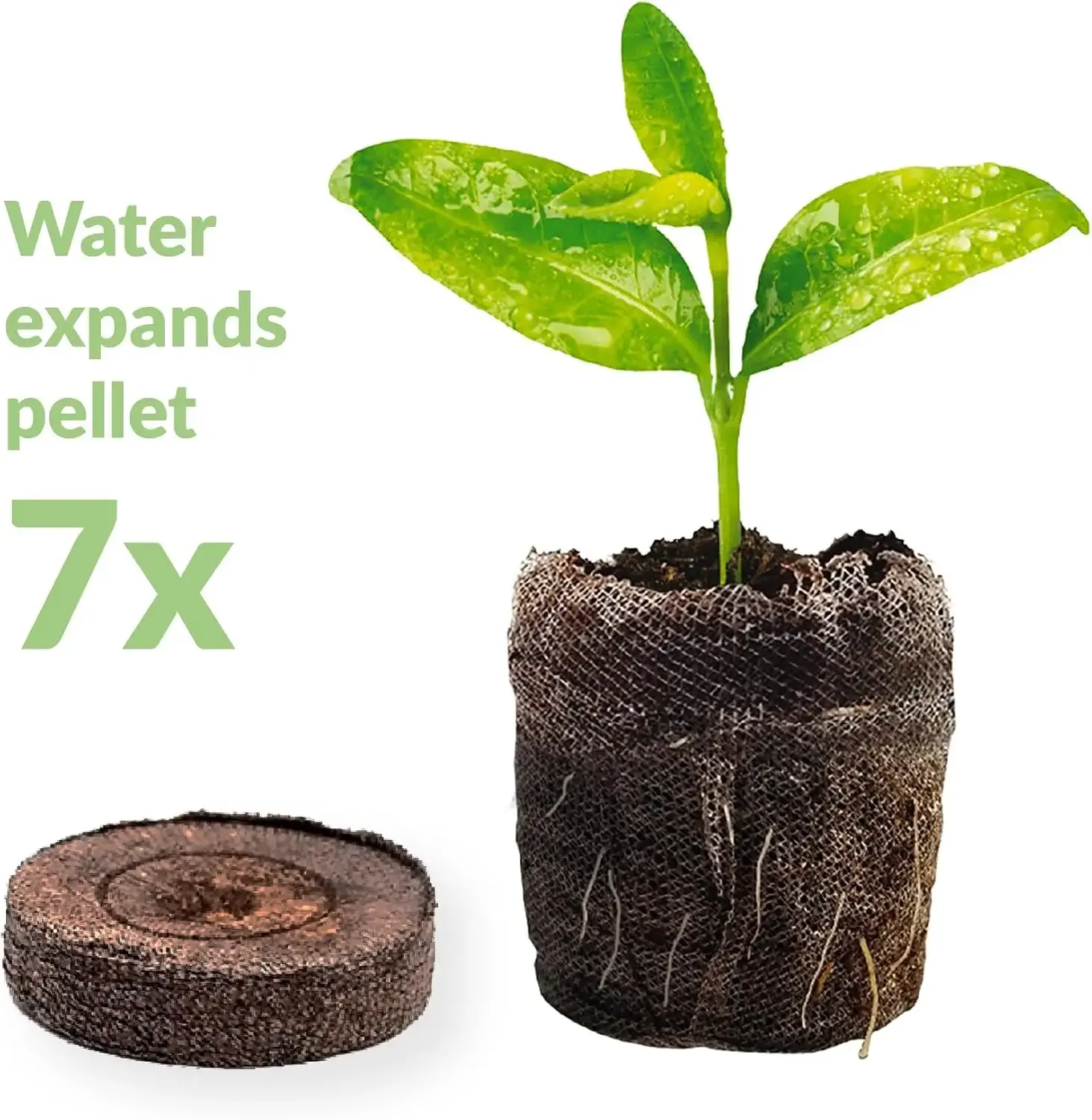
Jiffy 36mm Peat Pellets – 100 Count
Pre-formed pellets that expand in warm water and fit directly into standard 2-inch net cups. Biodegradable mesh holds the plug together at transplant, so you don't disturb the root zone. 36mm is the right size for most beginner DWC and NFT setups.
Perlite and Vermiculite Mix: Practical for Existing Inventories
A 50/50 blend of perliteView on Amazon and vermiculiteView on Amazon combines rapid drainage with reliable water retention, making it convenient for growers who already stock both media for Dutch bucket or potting mixes.
Advantages: Inert, sterile, and highly aerated, this mix prevents seedling suffocation and carries no initial salts or pH skew.
Tradeoffs:
- Transplant disturbance: Because the mix remains loose, removing seedlings requires scooping them out, which exposes and disrupts fine root hairs.
How to use it:
- Combine equal parts perlite and vermiculite in seedling flats.
- Moisten thoroughly with pH-adjusted water (5.5–6.5).
- Sow seeds ¼ inch deep.
- Maintain 70–80°F bottom warmth. Add water to the tray base so the mix wicks moisture upward.
- Once seedlings form true leaves, gently scoop root balls out and rinse loosely before placing in net cups.
Paper Towel Method: High Germination Visibility, Delicate Handling
The paper towel method requires minimal materials and works well for verifying seed viability before planting out larger trays.
Advantages: Requires no specialized plugs and lets you observe seed cracking within 24 to 48 hours.
Tradeoffs:
- Narrow transplant window: Seedlings must be moved within 12 to 24 hours of taproot emergence. Waiting longer allows root hairs to knit into the paper fibers, tearing off during removal. It is poorly suited for commercial or bulk propagation.
How to use it:
- Dampen an unbleached paper towel until moist throughout without dripping.
- Space seeds across one half, folding the other half over them.
- Seal inside a zip-top bag to retain humidity and place in a warm, dark area at 70–80°F.
- Check every 12 hours once 48 hours have passed.
- As soon as the radical extends 3–5mm, gently transfer the sprout using blunt tweezers, gripping only the seed coat rather than the root tip.
- Insert into a pre-moistened organic plug or expanded peat pellet.
Microgreens germinate rapidly and bypass the transplant step altogether. See 25 Microgreens with Incredible Health Benefits for beginner-friendly microgreen varieties.
Step-by-Step: Germinating Seeds in Peat Pellets
For most home setups, peat pellets offer the easiest balance of affordability and root protection:
Materials Needed:
- 36mm peat pellets
- Propagation tray with clear dome
- Seedling heat mat
- pH-adjusted water (pH 5.8–6.2)
- Seeds
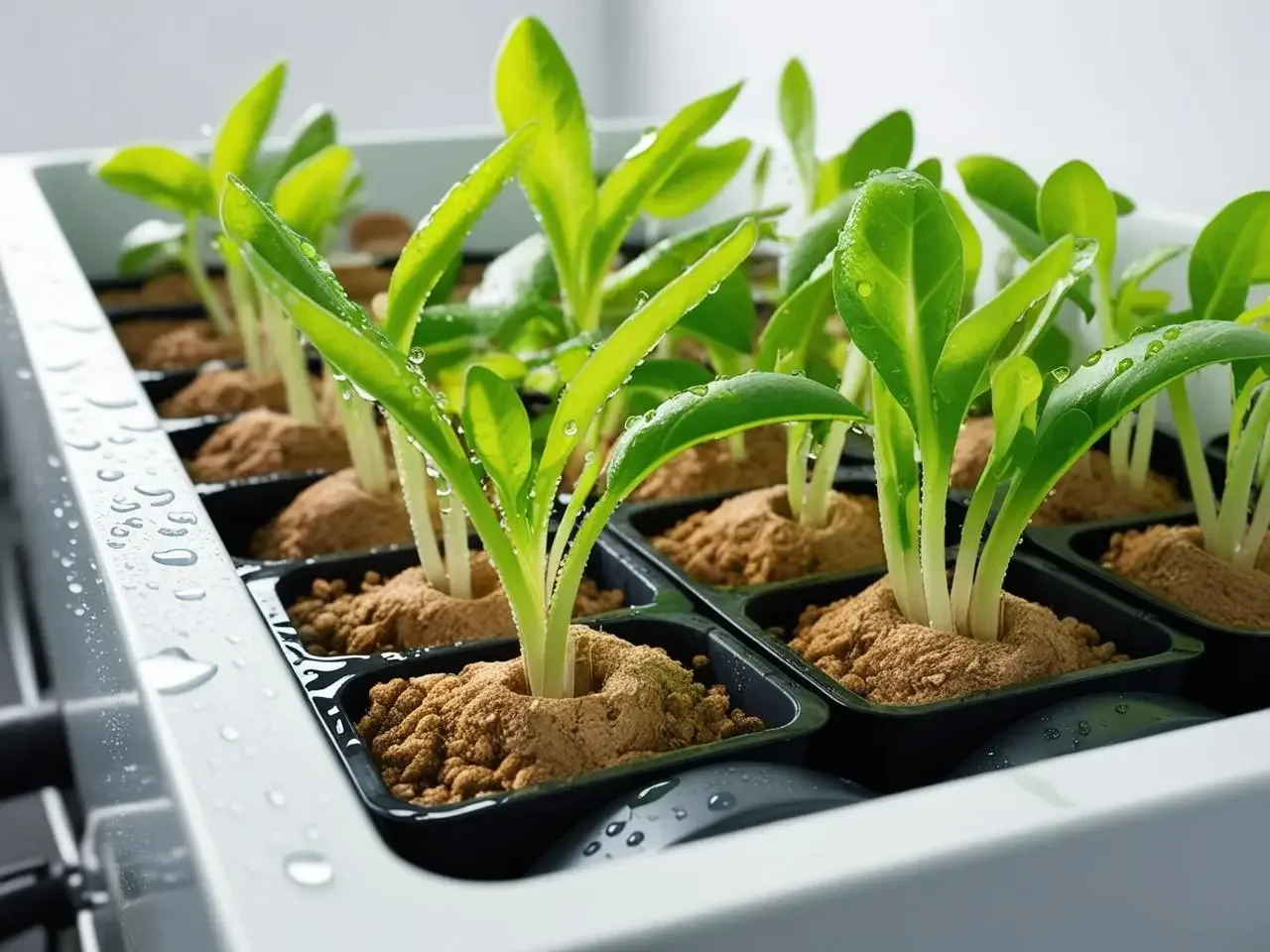
Step 1: Soak the pellets. Arrange pellets in the tray and add warm water (75–80°F). Wait 4–5 minutes until pellets expand into 1.5-inch cylinders. Pour off excess water.
Step 2: Check pH. Verify that your soak water sits between 5.8 and 6.2 to ensure the slightly acidic peat remains in the ideal root-uptake range.
Step 3: Sow the seed. Press seeds ¼ inch deep into the top depression, pinching loose peat fibers over the opening.
Step 4: Regulate the environment. Place the tray on a heat mat set to 75°F and cover with the humidity dome.
Step 5: Inspect daily. Vent the dome daily for brief fresh air exchange and mist lightly if top surfaces lighten in color.
Step 6: Remove dome upon emergence. When sprouts show green cotyledons, remove the dome and position full-spectrum grow lights 12–18 inches overhead.
Step 7: Transplant. Once the first true leaves unfold and root tips penetrate the outer mesh, set the entire pellet into a net cup. Backfill with expanded clay pebblesView on Amazon to stabilize the plant.
For system selection advice, see our complete guide to hydroponics for beginners.
Environmental Targets
Temperature
Maintain root-zone temperatures between 70°F and 80°F (21°C–27°C). Fruiting crops like tomatoes and peppers thrive toward the upper end (78°F), while greens prefer 68–72°F. Heat mats prevent overnight temperature drops from stalling sprouts.
Humidity
Target 70–80% relative humidity until seeds crack. Once green shoots emerge, remove the dome to avoid fungal damping-off.
pH Balance
Keep water between 5.8 and 6.2. Test input water before soaking media, as municipal tap water often runs alkaline. See our guide to managing hydroponic pH for correction techniques.
Light Requirements
Seeds do not require light until shoots appear. Once emerged, provide 14–16 hours of daily light using balanced full-spectrum LEDs. For fixture options, consult our breakdown of the best LED grow lights for beginners.
Transplanting Seedlings Safely
Avoid these common transplant errors:
- Transplanting too early: Moving sprouts before true leaves unfold risks fatal shock.
- Transplanting too late: Allowing roots to circle or mat makes them harder to establish in active water streams.
- Rough handling: Always lift seedlings by the plug or stem base, never by the delicate root tip.
- Excessive nutrient strength: Start newly moved seedlings on quarter-to-half-strength nutrient solution (around 0.4–0.6 EC) for the first week to prevent salt burn.
For system comparisons, see our guide explaining hydroponics systems.
Troubleshooting Common Issues
Seeds Rotting Before Germinating
Caused by waterlogged media or poor air circulation. Media should be damp, not dripping wet. Vent humidity domes daily.
Slow or Failed Sprouting
Test seed viability by soaking seeds in water for 15 minutes; sinkers are generally viable, while floaters often lack healthy embryos. Verify root-zone temperatures with a thermometer.
Surface Mold Growth
White surface fuzz signals excessive humidity and low airflow. Remove the dome, improve room air movement, and mist lightly with a dilute 3% hydrogen peroxide solution (1 teaspoon per cup of water) if mold persists.
Stretched, Spindly Stems
Seedlings stretch when light intensity is too low or fixtures are placed too far away. Lower your LED lights to 12–18 inches above the canopy.
Selecting the Right Method
For a seamless drop-in alternative to rockwool cubes, use Rapid RootersView on Amazon. For straightforward, low-cost home growing, peat pelletsView on Amazon provide excellent root protection at transplant. When starting large batches on a budget, bulk coco coirView on Amazon provides a renewable, cost-effective solution.
Reserve the paper towel method for quick viability checks, and prioritize consistent moisture and warmth across whatever medium you choose. For the complete nursery-to-reservoir workflow, consult our step-by-step guide to hydroponic seed germination.
Companion Planting in Hydroponics:
Certain crops benefit from growing side by side in shared reservoirs. Discover productive pairings in our guide: The Best Companion Plants for Hydroponic Gardens
Editor’s Note: Parts of this guide were structured and optimized with the assistance of AI, then thoroughly reviewed, edited and expanded with first-hand growing experience by our author Raymond to ensure practical, real-world accuracy.
Frequently Asked Questions
Can you germinate seeds directly in a hydroponic system without any medium?
Yes, this is called bare-root or water germination. Place seeds in a net cup with the bottom just touching the nutrient solution. It works for fast-germinating crops like lettuce and basil but has lower success rates for slower seeds. A starter medium is more reliable for beginners.
How long does hydroponic seed germination take without rockwool?
Most leafy greens and herbs germinate in 3–7 days at 70–75°F. Tomatoes and peppers take 5–10 days. Cucumbers and squash take 3–5 days. Temperature is the biggest variable: every 5°F below optimal roughly doubles germination time.
What pH should water be for germinating hydroponic seeds?
5.5–6.5, with 5.8–6.2 as the ideal range for most crops. Above 6.5 and micronutrient availability starts to drop; below 5.5 the medium can become too acidic for the seedling's first roots.
Which rockwool alternative has the highest germination success rate?
Peat pellets and Rapid Rooters consistently outperform other methods for beginners because they maintain even moisture distribution and handle transplanting with minimal root disturbance. The paper towel method has a similar germination rate but higher transplant failure due to root damage.
Do I need a humidity dome to germinate seeds hydroponically?
Not strictly, but it makes germination significantly more consistent by maintaining the 70–80% humidity seeds prefer. A sheet of cling film over your tray is a free alternative. Remove it or ventilate once seedlings emerge.
Should I use rockwool or one of the alternatives?
Rockwool works well and is the most widely used starter medium for a reason: it holds moisture evenly, drains well and is available in consistent quality. The main reasons to avoid it are cost at scale, the handling hazards (fibres irritate skin and lungs) and the fact that it's non-biodegradable. If none of those matter to your setup, rockwool is a fine choice. If they do, peat pellets or coco coir replace it without any loss in germination rate.
Our Amazon Storefront
Browse all our recommended tools & supplies
Everything we personally use and trust, hand-picked for gardeners like you.

I've been running DWC and Kratky systems for several years and write about what actually works, not textbook theory. Follow along for honest product reviews, practical guides and real grow results.