As an Amazon Associate, I earn from qualifying purchases. Some links in this article are affiliate links, if you buy through them I may earn a small commission at no extra cost to you.
Quick Summary
- Fast Turnaround: Sprout to harvest in 35–45 days; loose-leaf greens are harvestable in under 3 weeks.
- Light Feeders: Requires low EC (1.0–1.4 mS/cm) and stable pH (5.5–6.5) to thrive and prevent tip burn.
- System Agnostic: Performs beautifully in simple Kratky buckets, active DWC or sloped NFT setups.
- Airflow is Key: Maintain active ventilation near the canopy to aid transpiration and avoid nutrient lockout.
- Bolting Prevention: Keep water temperatures under 75°F to prevent bitterness and premature seeding.
Hydroponic lettuce is one of the most reliable starter crops for indoor growers. It germinates quickly, tolerates minor nutrient fluctuations, and transitions from seed to harvest in under six weeks. Lettuce adapts across nearly every hydroponic design, performing equally well in passive Kratky containers, active DWC buckets, and sloped NFT channels.
This guide covers variety selection, target pH and EC ranges, system comparisons, and a week-by-week timeline from seed to harvest.
Hydroponic Lettuce Varieties
Different lettuce cultivars exhibit distinct growth habits in soilless culture. Loose-leaf varieties represent the easiest starting point because they do not require head formation to be harvestable; you can begin harvesting outer leaves within three weeks.
Black Seeded Simpson and Two Star are proven beginner varieties: rapid, heat-tolerant, and slow to bolt under mild temperature swings. For compact heads with tender texture, Buttercrunch forms tight rosettes well-suited to dense indoor arrangements.
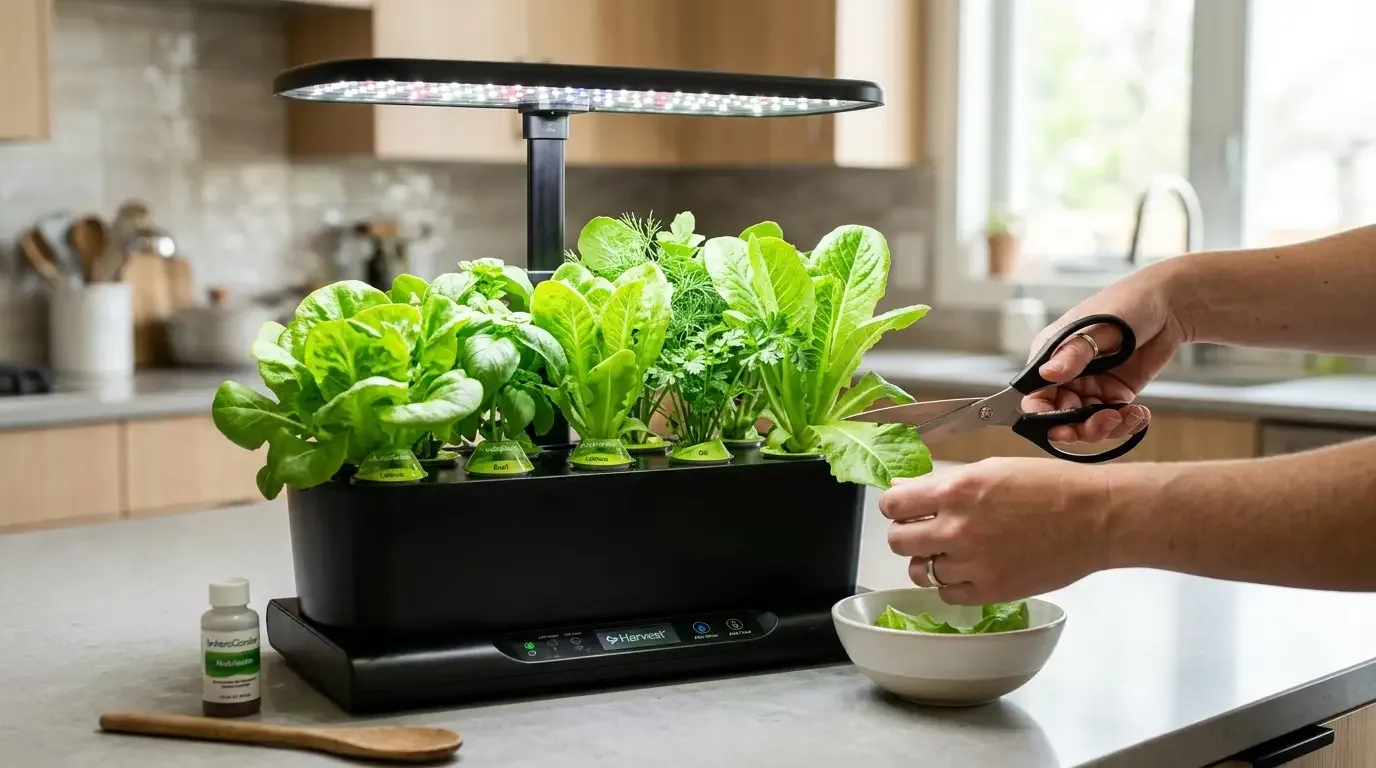
For high-density growing, including countertop units like the AHOPEGARDEN 12-PodsView on Amazon, SalanovaJohnny's Seeds provides uniform leaf structure and exceptional cut-and-come-again yields.
Romaine varieties (Parris Island Cos, Rouxai) require 55–65 days to reach full maturity and demand greater vertical clearance. They perform best once system water chemistry is stable and lighting height can be adjusted upward.
Avoid crisphead (iceberg) varieties indoors; they demand cool root-zone conditions and heavy air circulation to form dense heads.
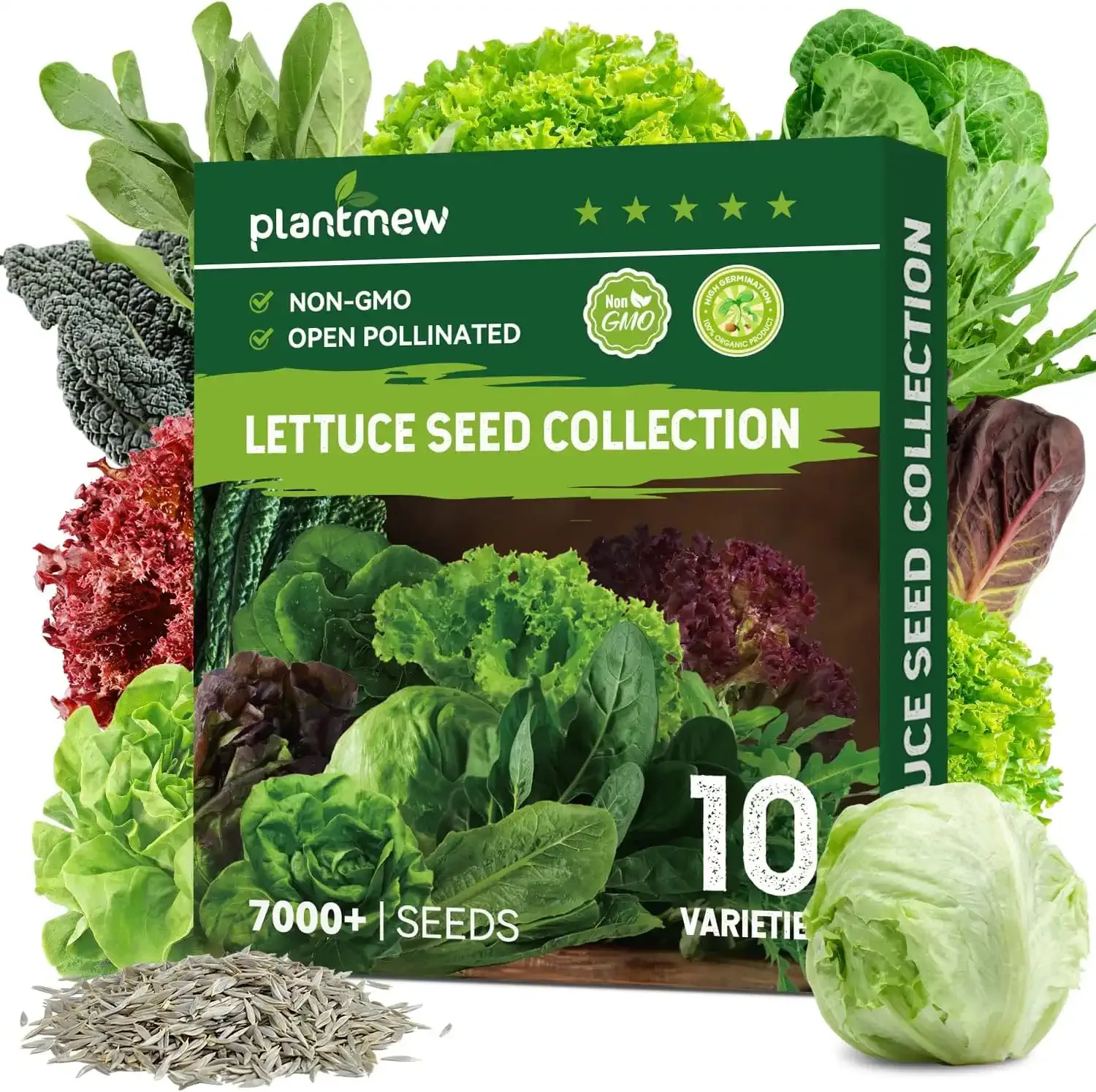
10-Variety Lettuce Seed Collection
Features non-GMO seeds for 7 lettuce varieties (Buttercrunch, Black Seeded Simpson, Red Romaine, Iceberg, Grand Rapids TBR, Parris Island Cos, and Lolla Rossa). Be adventurous and try the included Bloomsdale Spinach, Lacinato Kale, and Arugula as well!
Optimal pH and EC Targets
Lettuce has a broad tolerance band, making water chemistry management straightforward:
Target Acidity
Maintain reservoir pH between 5.5 and 6.5, with 5.8 as the target baseline. This keeps iron, phosphorus, and manganese fully soluble while buffering against rapid acid crashes.
Check pH daily during the first week of any new reservoir fill; lettuce roots actively exchange ions that shift water chemistry, especially in reservoirs under 5 gallons.
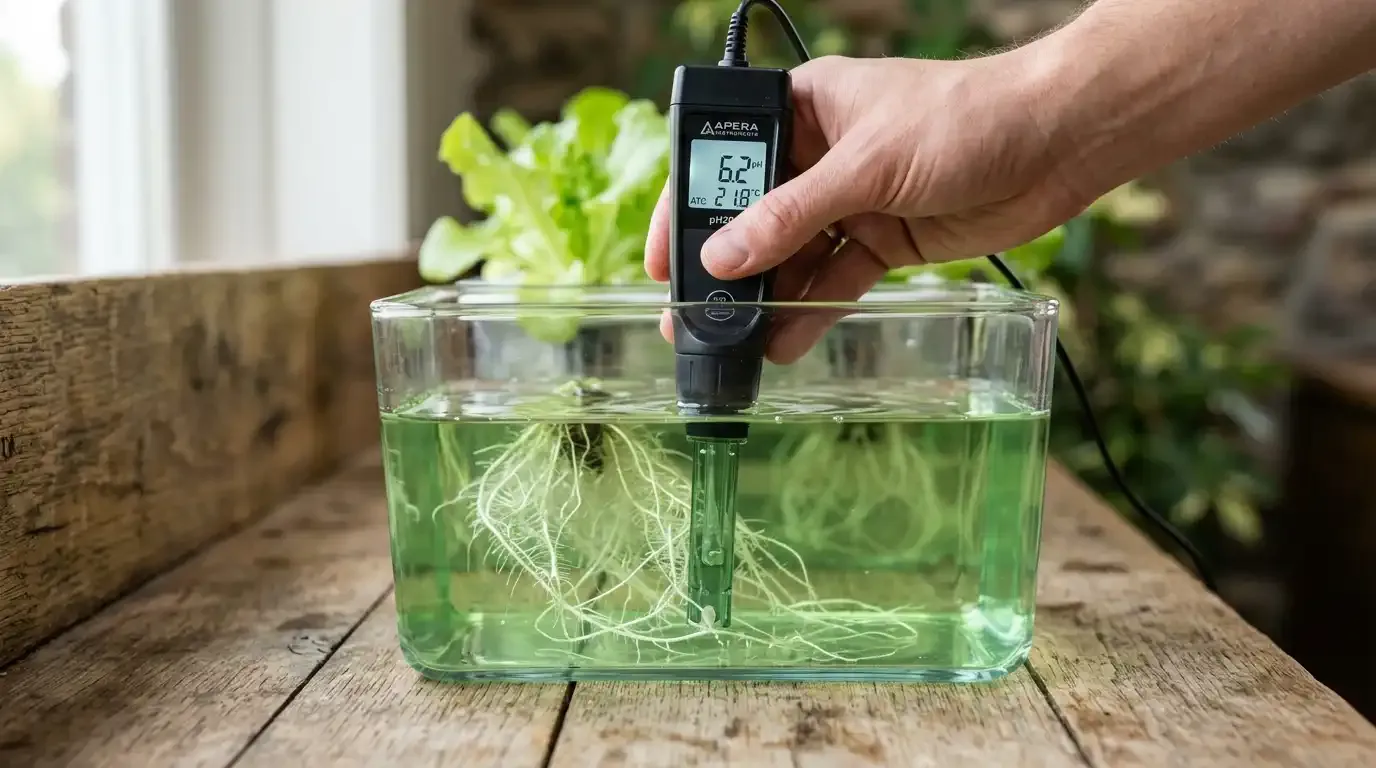
Electrical Conductivity (EC) Targets
Lettuce is a light feeder compared to fruiting nightshades:
- Seedlings and early growth: 0.6–0.8 mS/cm (300–400 ppm, 500 scale).
- Established vegetative canopy: 1.0–1.4 mS/cm (500–700 ppm).
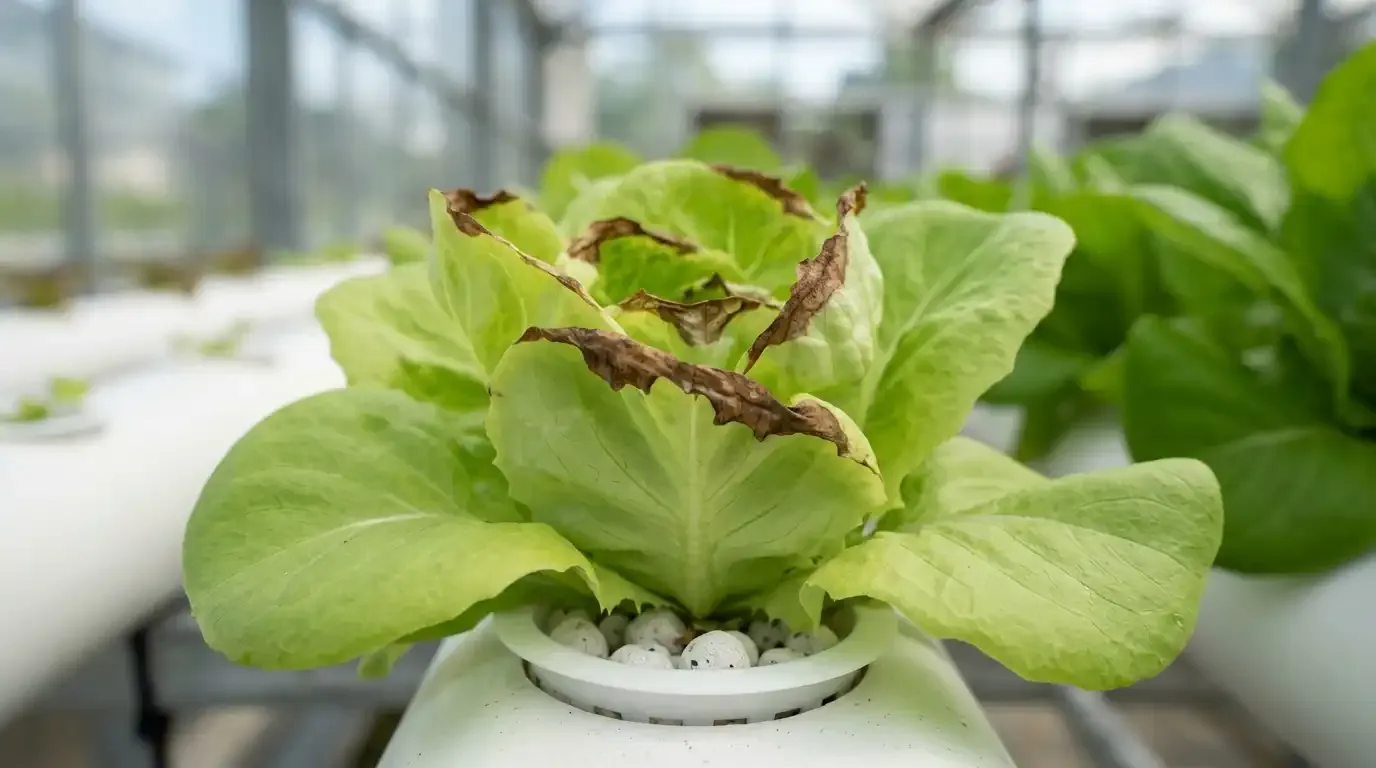
Exceeding 1.6 mS/cm increases the risk of tip burn, a marginal necrosis caused when high salt concentrations hinder water movement to fast-expanding leaf tips. Monitor both metrics with a digital combo meter.
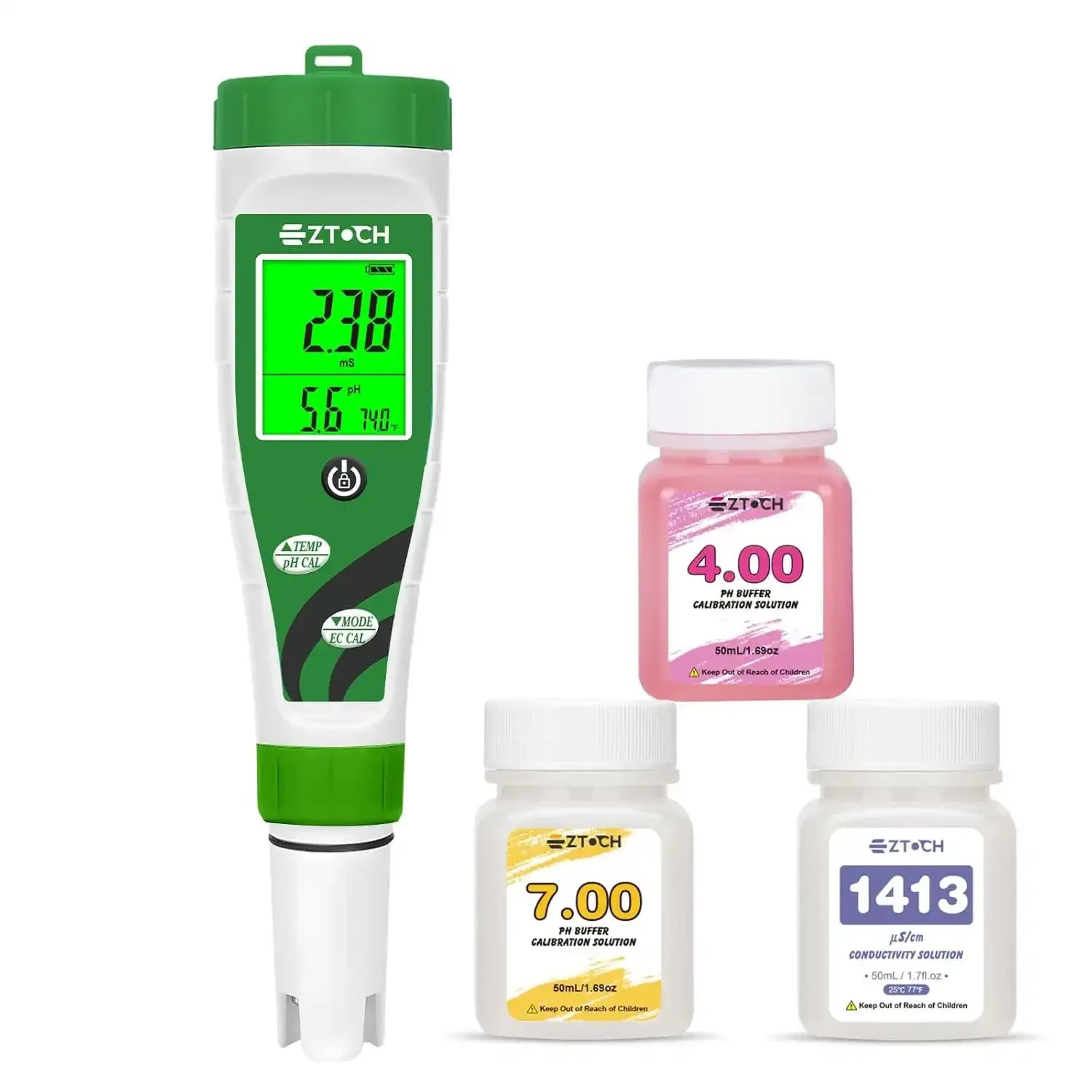
pH and EC Combo Meter Pen
Affordable and convenient 3-in-1 digital meter that measures pH, EC (conductivity), and temperature. Features automatic temperature compensation and backlit LCD display for quick, accurate daily reservoir checks.
Hydroponic System Options: Kratky, DWC, and NFT
Lettuce adapts readily to various hydroponic designs:
Kratky Method
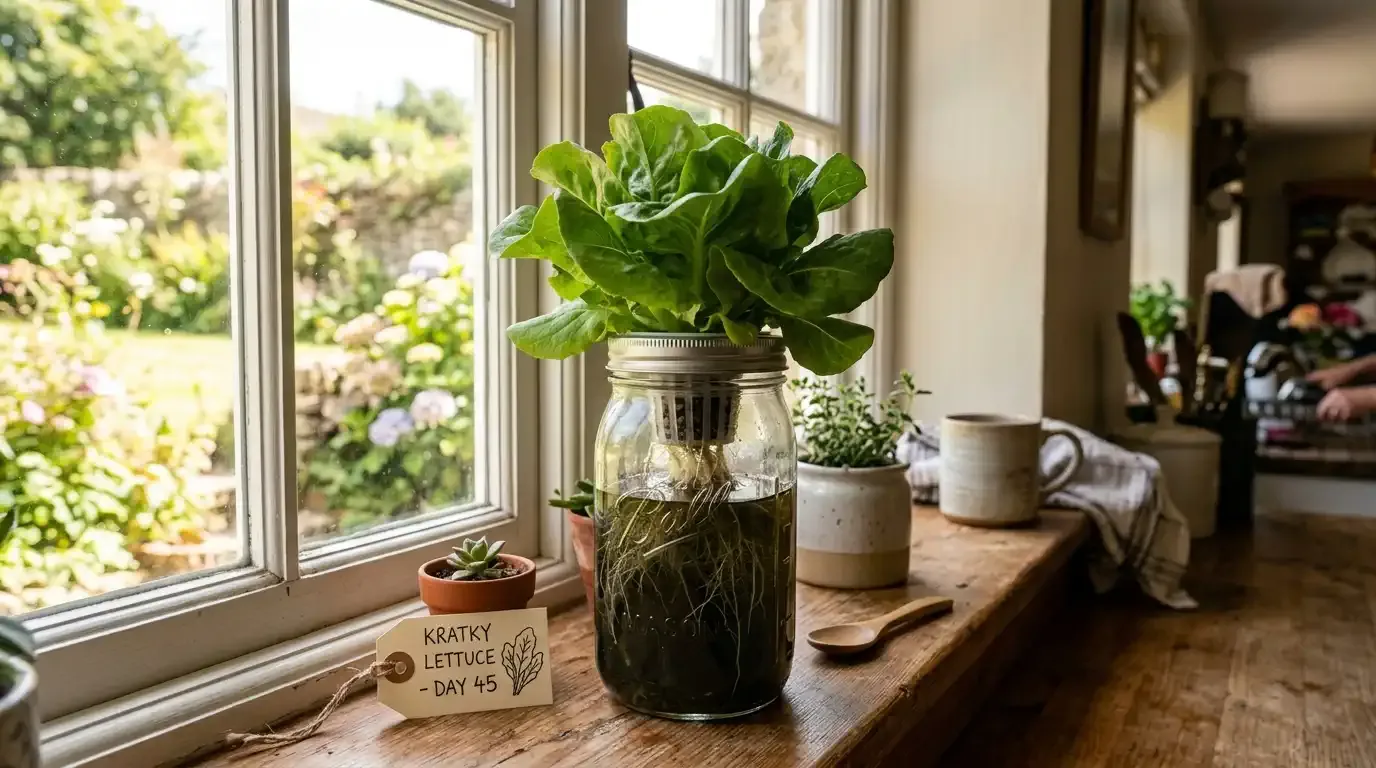
The Kratky method requires zero electricity: a net cup suspends seedlings over a static nutrient reservoir that gradually recedes as roots expand. It is cost-effective and well-suited for loose-leaf harvesting. Review setup details in our Kratky system guide.
Deep Water Culture (DWC)
Deep Water Culture accelerates growth rates by aerating the reservoir with an air pump and air stone. Continuous oxygenation prevents root rot and supports rapid foliage production.
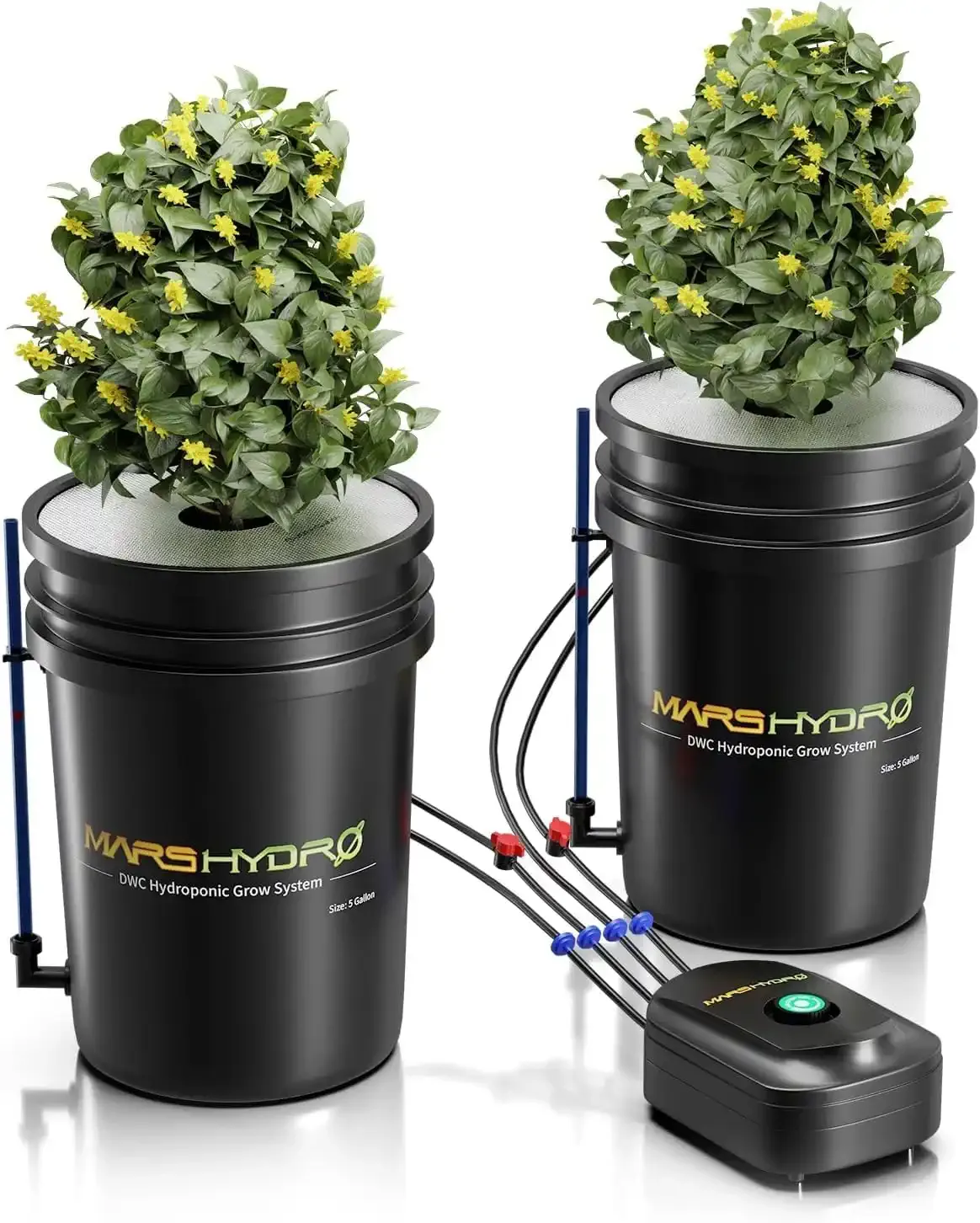
Mars Hydro DWC Bucket System
Complete 5-gallon Deep Water Culture setup with air pump, air stone and net pot lid. Perfect for accelerating vegetative lettuce growth through constant root oxygenation.
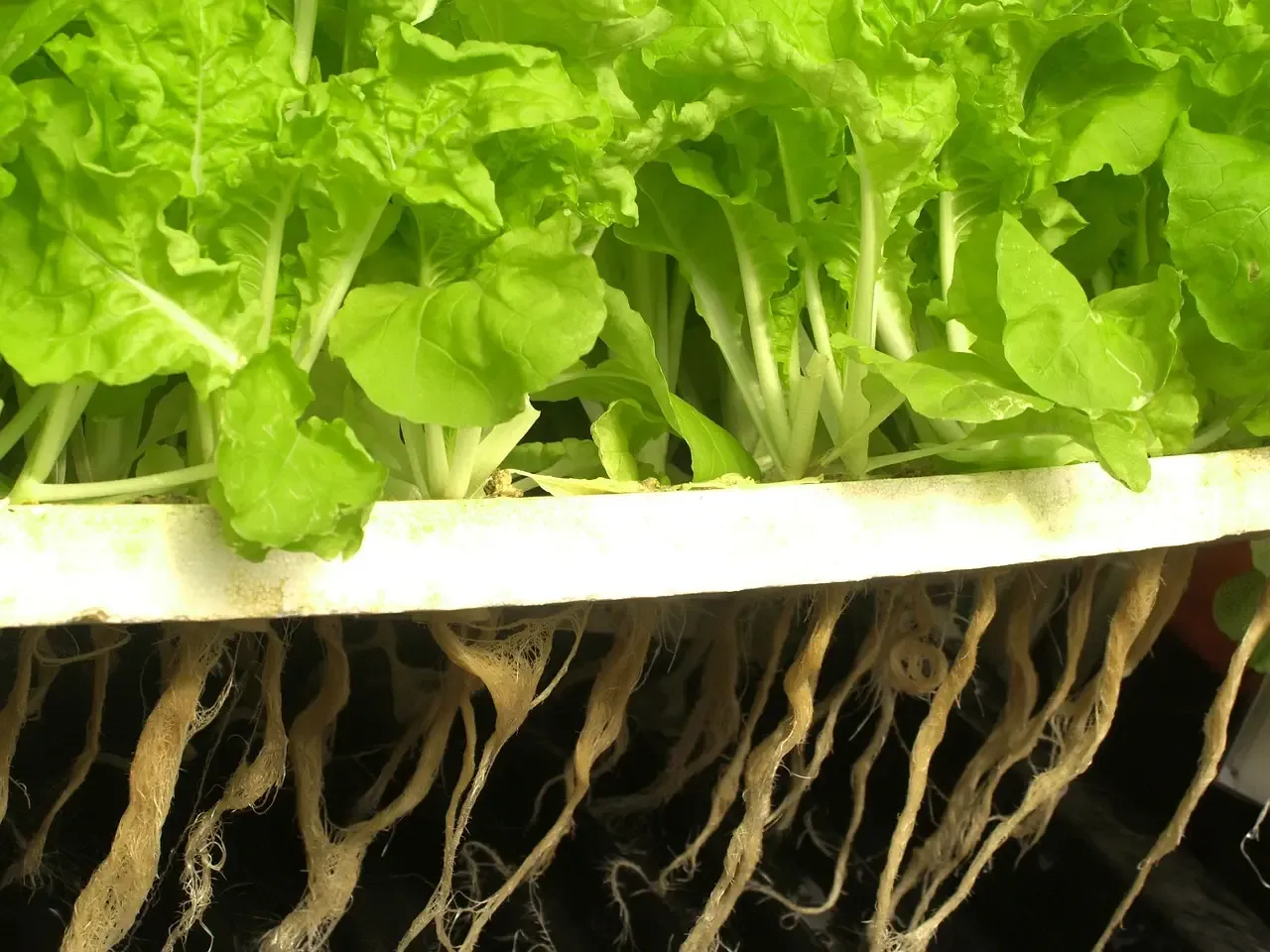
Nutrient Film Technique (NFT)
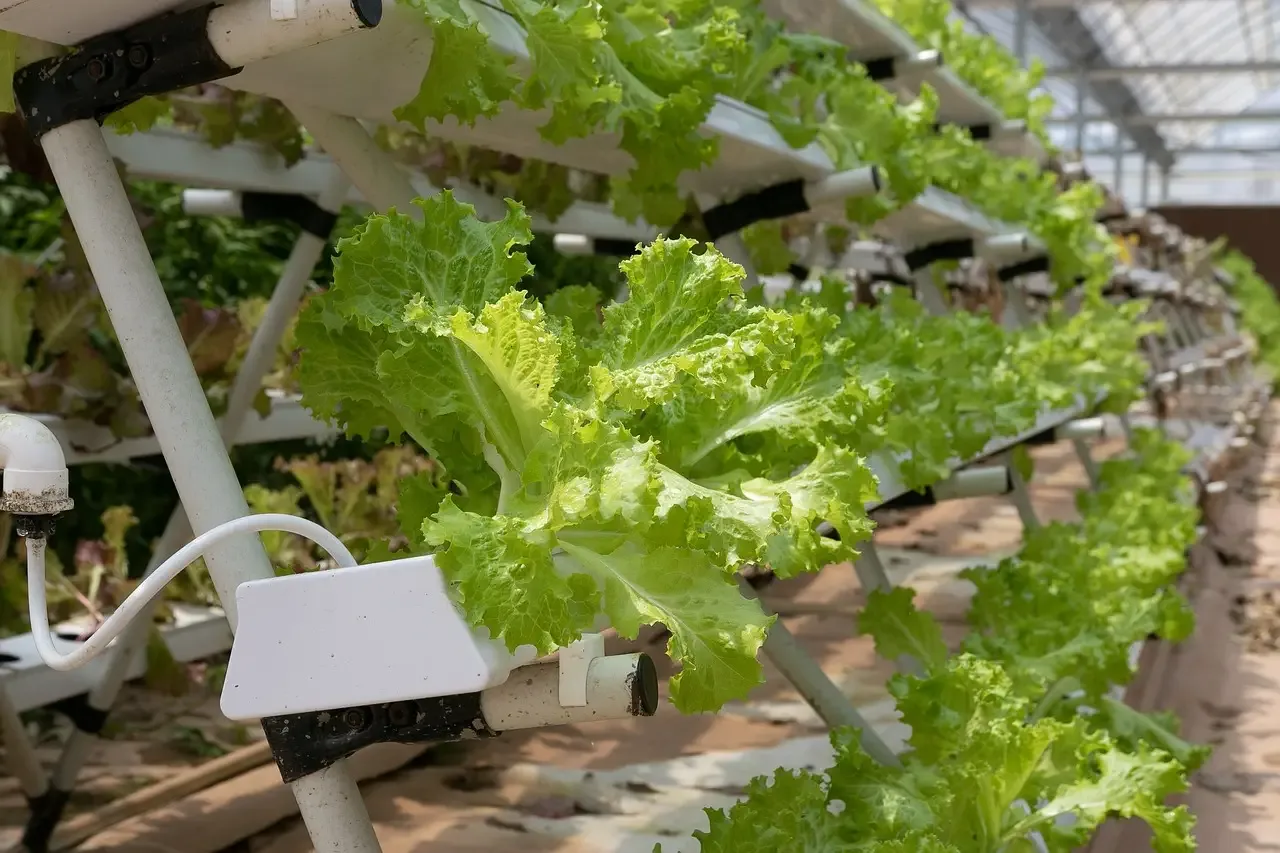
NFT channels represent the commercial benchmark for leafy greens. A shallow stream of nutrient solution flows over root mats in sloped gullies, maximizing root aeration while conserving water. Compare channel dynamics with aeroponic systems in our NFT vs. Aeroponics guide.
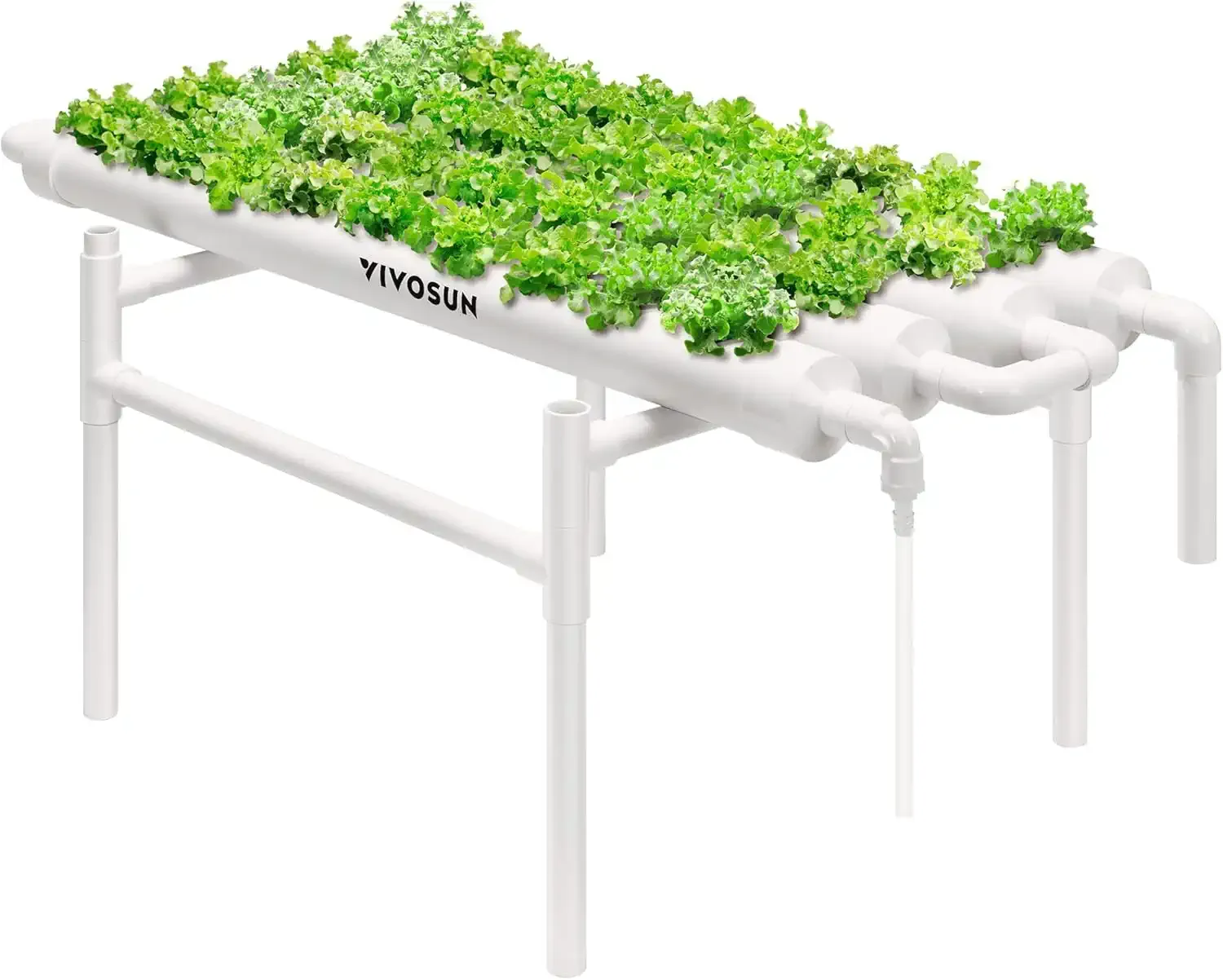
Vivosun NFT Hydroponic Grow System
Multi-tier sloped channel system designed for growing up to 36 leafy greens. Perfect for maximizing lettuce harvests in compact indoor footprints.
Ebb and Flow
Flood-and-drain tables support lettuce effectively, though the plumbing complexity is generally better suited to larger, deep-rooting vegetables. Learn more in our ebb and flow beginner’s guide.
Timeline: From Seed to Harvest
- Days 1–7 (Germination): Sow seeds in pre-soaked starter plugs kept damp at 18°C–24°C (65°F–75°F). Sprouts emerge in 2–4 days. Move under grow lights upon emergence at 0.6 mS/cm.
- Days 8–21 (Vegetative Growth): Roots extend into the active solution. Gradually raise EC to 1.0–1.2 mS/cm. Run oscillating canopy fans to aid transpiration and prevent tip burn.
- Days 22–35 (Bulking Phase): Heads begin forming on Buttercrunch and Salanova varieties. Loose-leaf greens can be harvested via cut-and-come-again. Maintain EC at 1.2–1.4 mS/cm.
- Days 35–45 (Maturity): Full head harvest for romaine and heading butterheads. Harvest before flowering stems elongate; bolting introduces bitter sesquiterpene lactones into leaf tissue.
Harvesting outer leaves continuously extends plant productivity over 6 to 8 weeks before plants require replacement.
Troubleshooting Common Issues
Tip Burn
Crispy, necrotic leaf margins signal tip burn. Rather than a calcium shortage in solution, tip burn is almost always a transpiration restriction caused by stagnant air or high humidity. Position an oscillating fan directly over the canopy to improve air circulation before adding mineral supplements.
Bolting and Bitterness
Premature flowering produces elongated central stems and milky, bitter sap. Keep water temperatures below 24°C (75°F) and restrict photoperiods to 14–16 hours daily to keep greens sweet.
Root Rot
Brown, discolored roots and foul odors indicate anaerobic pythium development. Increase air pump output, lower water temperature, and clean reservoir basins thoroughly.
Harvesting Best Practices
While whole-head harvests create clean presentation, taking mature outer leaves while leaving central growing crowns intact maximizes total food output per square foot. Stagger plantings by two weeks to ensure a continuous, uninterrupted salad harvest throughout the year.
For a fast start, pick up quality lettuce seedsView on Amazon and set up a compact passive container using our beginner Kratky guide.
Editor’s Note: Parts of this guide were structured and optimized with the assistance of AI, then thoroughly reviewed, edited and expanded with first-hand growing experience by our author Raymond to ensure practical, real-world accuracy.
Frequently Asked Questions
What is the best pH and EC for hydroponic lettuce?
Keep the reservoir pH between 5.5 and 6.5 (5.8 is the sweet spot). Maintain an EC level of 0.6–0.8 mS/cm for seedlings and 1.0–1.4 mS/cm once established to avoid tip burn.
Which hydroponic system is best for growing lettuce?
Deep Water Culture (DWC) and Kratky are excellent for home setups, while a Nutrient Film Technique (NFT) system is the commercial standard for scaling up production.
How long does lettuce take to grow in hydroponics?
Lettuce typically goes from seed to harvest in 35 to 45 days. Loose-leaf varieties can be harvested as early as 21–25 days using the cut-and-come-again method.
Why is my hydroponic lettuce bitter?
Bitterness is almost always caused by bolting (flowering), which is triggered by reservoir temperatures above 75°F or excessive light exposure times.
How do I prevent tip burn on hydroponic lettuce?
Tip burn is usually a transpiration problem caused by high humidity or poor airflow rather than a lack of calcium. Point a small fan at the plant canopy to improve airflow.
Our Amazon Storefront
Browse all our recommended tools & supplies
Everything we personally use and trust, hand-picked for gardeners like you.

I've been running DWC and Kratky systems for several years and write about what actually works, not textbook theory. Follow along for honest product reviews, practical guides and real grow results.