As an Amazon Associate, I earn from qualifying purchases. Some links in this article are affiliate links, if you buy through them I may earn a small commission at no extra cost to you.
Quick Summary
- Flood and Drain: Automatically flood the plant root zone with nutrients and drain it back to the reservoir.
- Root Oxygenation: The draining cycle pulls fresh oxygen deep into the growing medium to prevent rot.
- Versatility: Grow a wide variety of plants, from leafy greens to root vegetables, in a single tray.
- Timer Cycles: Set the submersible pump to flood the tray for 15 minutes, 3 to 6 times per day.
- Equipment Needs: Require a tray, a reservoir, a submersible pump, a timer and overflow fittings.
What is an Ebb and Flow Hydroponic System
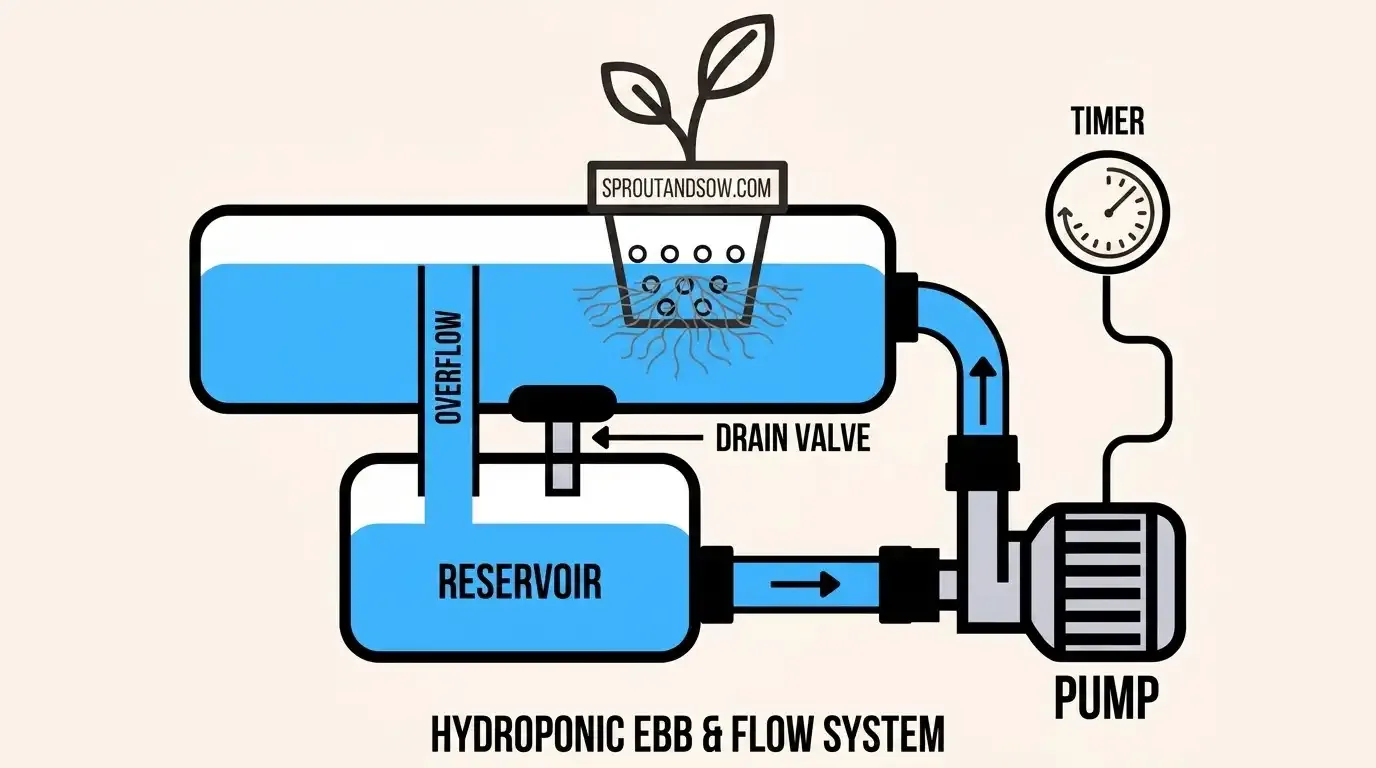
An ebb and flow system (also known as flood and drain) periodically pumps nutrient solution into a shallow plant tray, lets the roots feed, and drains the liquid back into a reservoir below. Alternating wet and dry periods ensures roots receive moisture, mineral salts, and oxygen without drowning.
How the Ebb and Flow System Works
- Flooding Stage: A submersible pump moves nutrient solution from the lower reservoir into the upper plant bed. The water rises until it reaches the height of an overflow drain tube, immersing root tips for 10 to 15 minutes.
- Draining Stage: Once the timer cuts power to the pump, gravity pulls the nutrient solution through the pump intake back into the reservoir. This retreating water pulls fresh air down through the root zone.
- Rest Period: Between pump cycles, roots stay suspended in damp growing medium exposed to humid air. This dry period prevents the anaerobic conditions that trigger Pythium root rot.
Benefits of the Ebb and Flow System
Ebb and flow systems separate watering from oxygenation. Because roots never sit permanently submerged, root zones absorb atmospheric oxygen between each flood cycle.
Recirculating the solution keeps water consumption low. The reservoir recaptures runoff, saving fertilizer and municipal tap water compared to drain-to-waste setups.
Flexibility is another practical advantage. Adjusting digital timer runtimes lets you customize watering frequency for different plants without swapping plumbing, trays, or pumps.
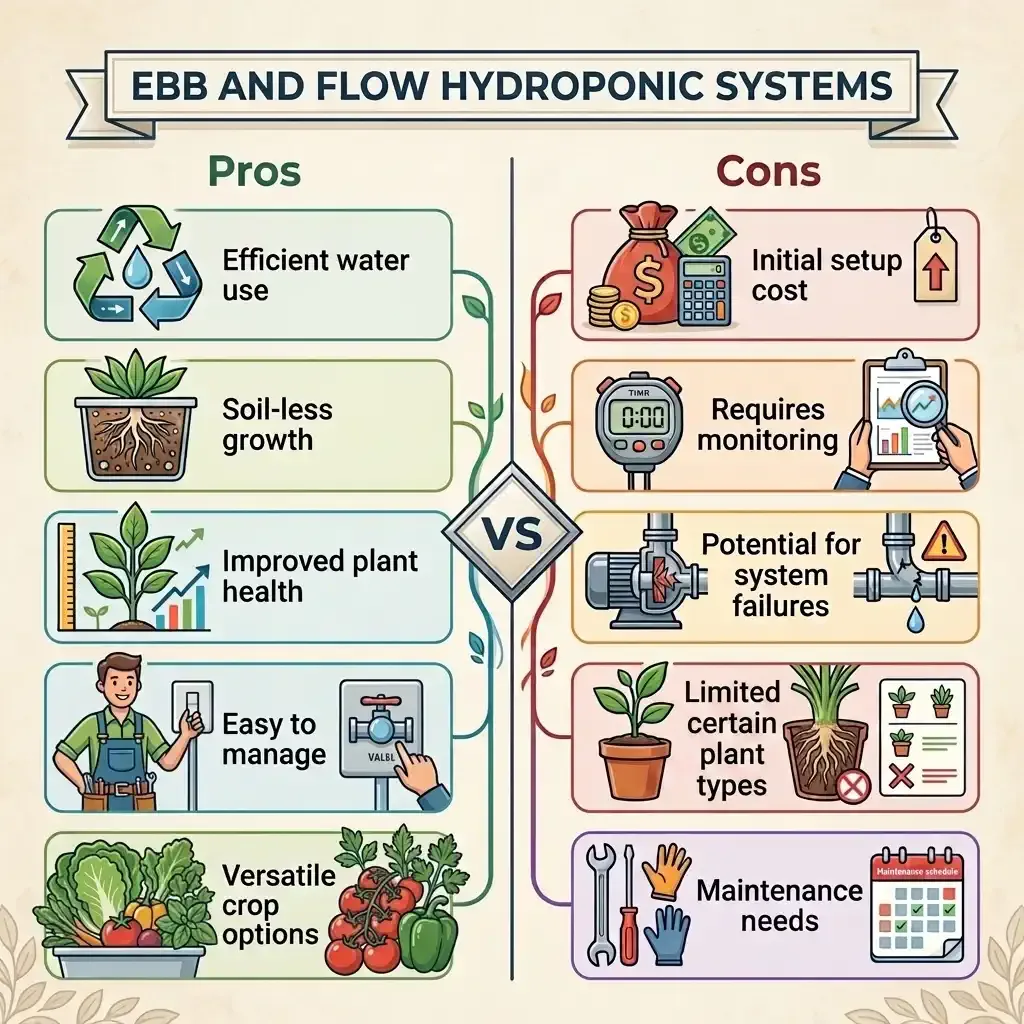
Drawbacks to Consider
- Pump Dependence: The system depends on a functioning pump and timer. A blown fuse or jammed impeller can desiccate bare roots within a single afternoon. If you encounter equipment issues, our guide to troubleshooting common hydroponic problems outlines emergency recovery steps.
- Overwatering Risks: Flooding too frequently suffocates roots, especially in water-retentive media. Clay pebbles handle multiple floods daily, while dense media require extended dry periods.
Equipment You Need to Get Started
A complete ebb and flow build requires five primary components:
- Flood tray: A 2×4 foot plastic tray provides ample space for a dozen small plants while keeping reservoir volume manageable.
- Reservoir: Choose a tank sized at roughly 50% to 75% of total flood tray capacity. A 2×4 foot tray requires a 15-to-20-gallon reservoir to maintain stable water levels.
- Submersible pump: A pump rated at 160–250 GPH provides sufficient head height to flood a standard bench within five minutes. Our guide to choosing the right submersible pump details flow calculations and plumbing diameters.
- Digital timer: Digital outlet timers with multiple programmable daily run intervals allow fine-tuning down to the minute.
- Bulkhead fittings and overflow tube: Two thru-hull fittings plumb the tray: one connects to the pump feed, and a taller standpipe sets the maximum flood depth before draining excess solution.
Choosing a Growing Medium
The medium supports the root structure and dictates required flood frequency:
| Feature | LECA (Clay Pebbles) | Rockwool |
|---|---|---|
| Water Retention | Low (Drains quickly) | High (Retains moisture) |
| Flood Frequency | High (4–6 times/day) | Medium (3–4 times/day) |
| Durability | Reusable indefinitely | Single crop cycle |
| Prep Required | Rinse clay dust | Soak at pH 5.5 |
LECA Clay Pebbles
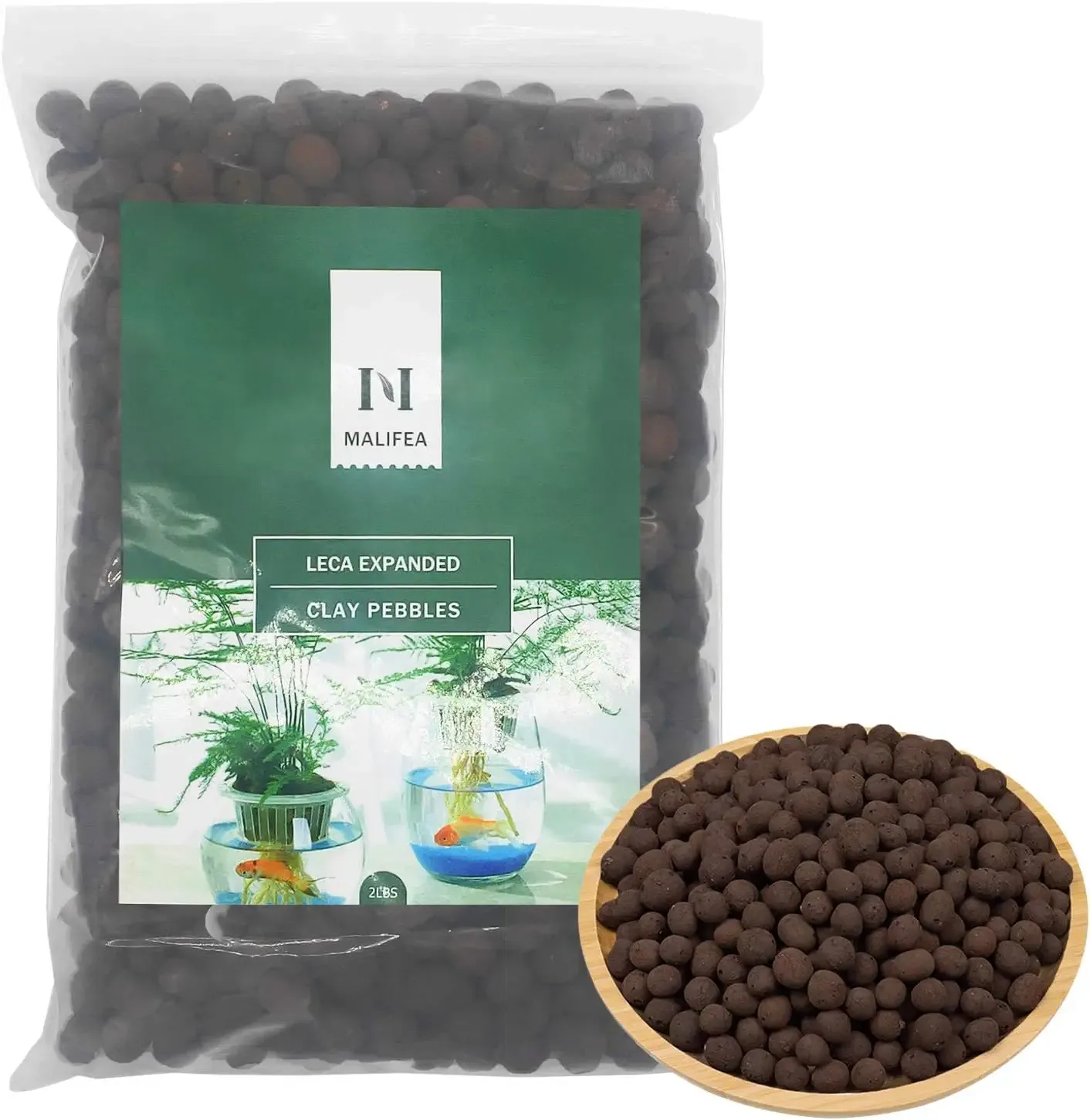
Expanded clay pebbles drain freely and never compact or decompose. Air pockets between pebbles supply roots with oxygen during dry cycles. Set timers for four to six flood cycles daily.
Leca Clay Pellets
Perfect for flood and drain setups, these expanded clay pebbles are porous, lightweight, and hold their shape indefinitely. They provide excellent aeration and drainage for roots between watering cycles.
Rockwool
Rockwool holds significant water, making it suited for warm grow rooms where clay pebbles dry out rapidly. Because rockwool remains moist longer, reduce flood intervals to two or three times daily. Soak rockwool in a pH 5.5 water bath before planting to neutralize manufacturing alkalinity.
Avoid standard potting soil or loose fine coco in a flood tray, as loose particulates wash into the reservoir and clog pump impellers.
Starting pH and EC
Maintaining stable nutrient chemistry prevents leaf burn and nutrient lockout:
- pH: Keep reservoir water between 5.8 and 6.2 for leafy greens and herbs. Fruiting crops can tolerate up to 6.5.
- EC (electrical conductivity): Run seedlings at 1.2–1.6 mS/cm, increasing to 1.8–2.2 mS/cm during vegetative growth. Heavy fruiting crops tolerate up to 2.5 mS/cm.

Bluelab pH Pen
A highly accurate, laboratory-grade digital pH tester designed specifically for hydroponic reservoirs. Waterproof, auto-calibrating, and featuring automatic temperature compensation to ensure precise readings every time.
Log measurements every two to three days. If EC climbs while water levels drop, plants are consuming water faster than salts; top off the tank with fresh dechlorinated water. If EC drops sharply, replenish concentrated nutrients. For comprehensive crop targets, consult our guide to optimal pH and EC values for hydroponic herbs and plants.
Common Plants for Ebb and Flow Systems
Leafy greens, culinary herbs, dwarf bush beans, and peppers grow well in flood trays. If you want to compare flood trays with continuous-flow methods, read our Nutrient Film Technique vs. Deep Water Culture breakdown. For a broader plant selection, refer to the best hydroponic plants for beginners.
Next Steps
Before assembling trays and stands, test your pump, timer, and bulkhead fittings with plain tap water to confirm drain speeds and verify leak-free seals. Once plumbing tests pass, choose your growing medium and dial in timer intervals.
If you are comparing flood-and-drain mechanics against static systems, our complete beginner’s guide to hydroponics reviews each layout side by side.
Editor’s Note: Parts of this guide were structured and optimized with the assistance of AI, then thoroughly reviewed, edited and expanded with first-hand growing experience by our author Raymond to ensure practical, real-world accuracy.
Frequently Asked Questions
How often should an ebb and flow system flood?
Most ebb and flow systems flood three to six times daily for roughly 15 minutes, depending on the growing medium and ambient temperature. Fast-draining media like expanded clay pebbles (LECA) require four to six cycles, while moisture-retentive rockwool often needs only three.
What is the biggest risk of an ebb and flow system?
Pump failures and power outages pose the highest risk. Because roots hang above the reservoir between cycles, they dry out quickly if a flood cycle fails. A battery backup or high overflow setting helps protect roots during electrical cuts.
What growing medium works best in an ebb and flow system?
Expanded clay pebbles (LECA) drain freely, maintain structure, and never decompose. Rockwool cubes also work well, especially for young seedlings, but retain extra moisture and require fewer flood cycles.
What pH and EC should I target in an ebb and flow system?
For leafy greens and culinary herbs, keep pH between 5.8 and 6.2 and EC between 1.2 and 2.0 mS/cm. Fruiting crops like peppers can handle up to 2.5 mS/cm. Test readings every two to three days and top off with plain water between full reservoir changes.
Our Amazon Storefront
Browse all our recommended tools & supplies
Everything we personally use and trust, hand-picked for gardeners like you.

I've been running DWC and Kratky systems for several years and write about what actually works, not textbook theory. Follow along for honest product reviews, practical guides and real grow results.