As an Amazon Associate, I earn from qualifying purchases. Some links in this article are affiliate links, if you buy through them I may earn a small commission at no extra cost to you.
Quick Summary
- The True Source of Noise: The loud “hum” is usually not the pump’s motor, but the hard plastic casing vibrating against the floor or table.
- Vibration Mats: Placing your pump on a thick silicone mat or mousepad is the cheapest, fastest way to silence an active Deep Water Culture (DWC) setup.
- Suspend the Pump: If a mat doesn’t work, suspend the air pump in mid-air using bungee cords inside your grow tent to completely eliminate surface vibration.
- Mute Trickling Water: Extend your water return lines so they discharge below the reservoir’s water line to stop the sound of splashing.
- Upgrade the Hardware: If you sleep in the same room as your garden, ditch electromagnetic pumps and upgrade to an ultra-quiet piezoelectric air pump.
Silencing an indoor hydroponic setup requires addressing two mechanical issues: chassis vibration from air pumps and splashing water from return drains.
If you are planning an indoor grow space, read our guide to apartment hydroponics for layout advice, or explore our review of aesthetic hydroponic systems for modern kitchens for whisper-quiet all-in-one units.
Here are practical mechanical steps to isolate noise without sacrificing plant oxygenation.
1. Silencing the Air Pump Hum
In Deep Water Culture (DWC) systems, an external air pump runs continuously to deliver dissolved oxygen through submerged air stones. The motor uses an electromagnetic coil that oscillates a rubber diaphragm 60 times per second.
When a hard plastic pump sits on a wooden floor or hollow metal shelving, the surface functions as a sounding board. Isolating the pump from rigid surfaces stops this acoustic transfer.
For air requirements and sizing principles, review our guide on the importance of air pumping in hydroponics.
| Technology | Electromagnetic Diaphragm | Piezoelectric Solid-State |
|---|---|---|
| Drive Mechanism | Magnetic armature vibrating rubber | Piezoelectric ceramic disk flexing under charge |
| Acoustic Profile | Low-frequency hum (transferred to floors) | Silent operation (no rotating or striking parts) |
| Output Volume | High airflow (powers multi-tank arrays) | Low airflow (sized for single 5-gallon buckets) |
| Best Application | Grow tents, closets, and utility rooms | Studio apartments and bedside setups |
Method A: Acoustic Decoupling with Silicone Pads
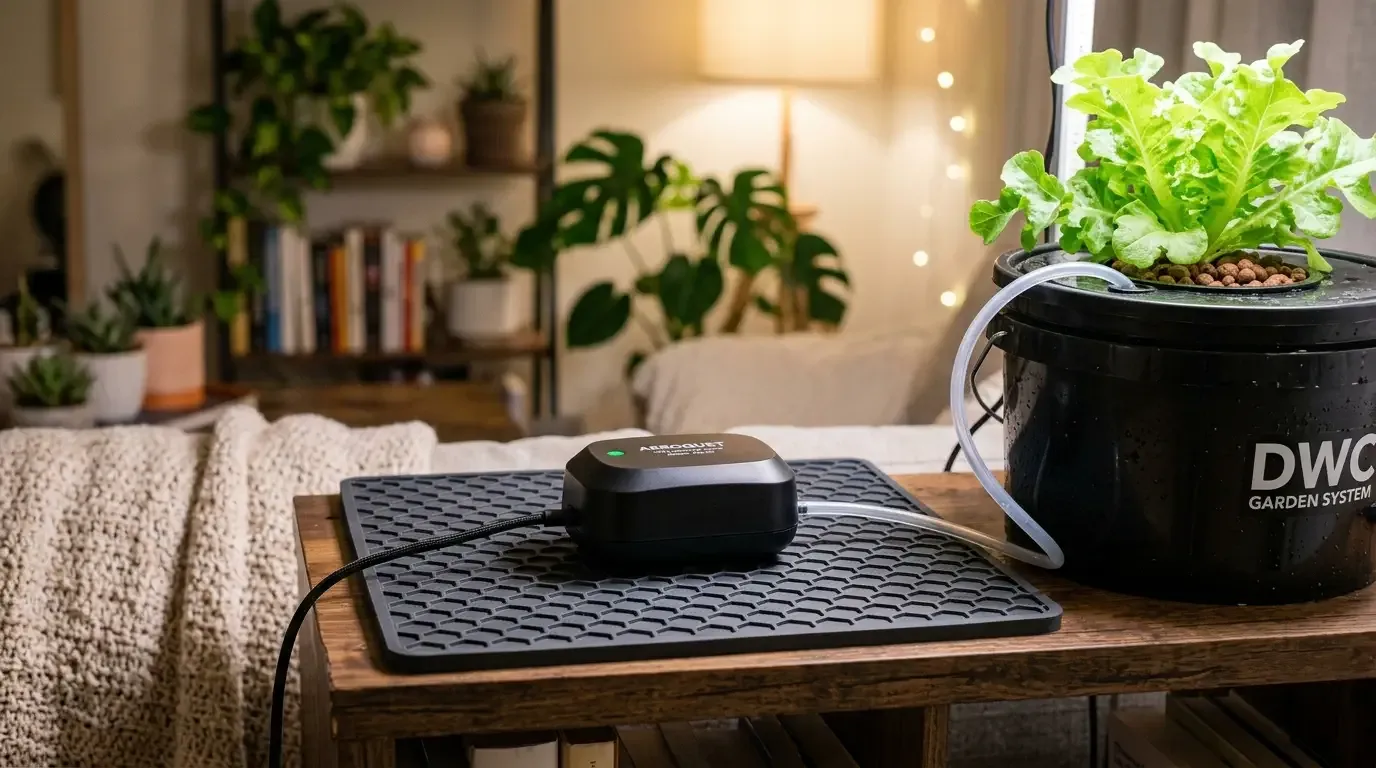
Never place an air pump directly on bare wood, laminate, or metal shelves. Place a high-density silicone mat or thick neoprene pad underneath the housing feet.

Anti Vibration Dampening Mat
Slide this under your air pump. The thick silicone absorbs the mechanical vibration before it can reach your floor or shelf, instantly cutting the hum by 80%.
(Avoid folded cotton towels, as compressed fabric blocks the bottom air intake screen and causes internal overheating).
Method B: Bungee Suspension
Inside a grow tent or wire shelving rack, suspend the air pump using an elastic bungee cord attached to overhead framing. Because the pump hangs freely in air, mechanical vibration has no solid surface to resonate through.
Method C: Piezoelectric Pumps
For studio apartments where the garden sits in your living or sleeping quarters, standard diaphragm pumps can remain audible even with dampening pads. Solid-state piezoelectric air pumps replace vibrating magnets with an electrical ceramic diaphragm. While they produce lower air volume, they operate without mechanical hum on single-reservoir systems.
2. Eliminating Water Trickle and Splashing
In recirculating NFT, drip, and vertical tower systems, a submersible water pump lifts liquid to the root zone. While the submerged motor remains quiet, drain water crashing back into the reservoir creates continuous splashing noise.
Submerge Return Lines Below the Waterline
Splashing occurs when falling drainage impacts standing liquid through open air. Slip a segment of vinyl drain hose over the return bulkhead so the discharge port sits two inches below the normal reservoir water line. Water rejoins the tank through laminar flow without breaking surface tension.
Angle Drainage Along Tank Walls
If return fittings cannot extend below the waterline due to drainage backpressure, angle the discharge tube so exiting solution glides down the interior wall of the reservoir rather than dropping into the center.
3. Silencing Countertop Smart Gardens
Desktop systems like AeroGarden and LetPot use compact internal circulating pumps that cycle on periodic timers.
- Maintain Water Levels: Countertop reservoirs grow noisy when water levels drop below 50%. The pump pulls vortex air and returning streams fall farther, creating trickling sounds. Keep water at the fill line.
- Inspect Impellers for Roots: If a pump emits a rattling or grinding noise, stray roots have likely bypassed the filter screen and wrapped around the magnetic impeller. Unplug the unit, remove the pump faceplate, and clear root strands with tweezers.
- Add a Neoprene Base: Countertop stone and wood surfaces amplify small pump motors. Placing an unobtrusive neoprene mousepad beneath the unit dampens vibration transfers.
A dense vibration mat and submerged return piping eliminate excess noise while keeping your crops well oxygenated.
Editor’s Note: Parts of this guide were structured and optimized with the assistance of AI, then thoroughly reviewed, edited and expanded with first-hand growing experience by our author Raymond to ensure practical, real-world accuracy.
Frequently Asked Questions
Why is my hydroponic air pump so loud?
Most consumer air pumps use an electromagnetic armature vibrating against a rubber diaphragm. The resulting hum is transferred directly into hard floors, tables, or shelving through mechanical resonance. Decoupling the pump housing from hard surfaces cuts most audible noise.
Is it safe to put my air pump on a towel to silence it?
No. Towels block intake vents on the base of the pump casing, reducing airflow, causing motors to overheat, and creating an electrical fire hazard. Use a dedicated high-density silicone vibration mat or hang the pump with bungee cords instead.
How do I stop the sound of trickling water in my system?
Water sounds occur when return drains splash from a height into standing reservoirs. Extend return pipes so that the discharge outlet sits below the reservoir waterline, or angle return lines so water rolls down the inner sidewall rather than plunging into the center.
Will a larger air pump be louder than a small one?
Yes. Higher-output pumps use larger electromagnetic coils and heavier diaphragms that produce more mechanical vibration. For single-bucket setups, choose a pump sized specifically for your tank volume rather than an oversized commercial unit.
Our Amazon Storefront
Browse all our recommended tools & supplies
Everything we personally use and trust, hand-picked for gardeners like you.

I've been running DWC and Kratky systems for several years and write about what actually works, not textbook theory. Follow along for honest product reviews, practical guides and real grow results.