As an Amazon Associate, I earn from qualifying purchases. Some links in this article are affiliate links, if you buy through them I may earn a small commission at no extra cost to you.
Quick Summary
- Flow Rate: Select a pump that can turn over your reservoir volume at least two times per hour.
- Head Height: Calculate ‘max head’ (how high the pump must push water) to choose correct pump power.
- Pump Types: Match inline or submersible pumps to your specific system design.
- Energy Efficiency: Choose magnetic-drive pumps to reduce electricity usage and heat transfer.
- Maintenance Tips: Clean your pump filter every 2-4 weeks to prevent clogging and motor burnout.
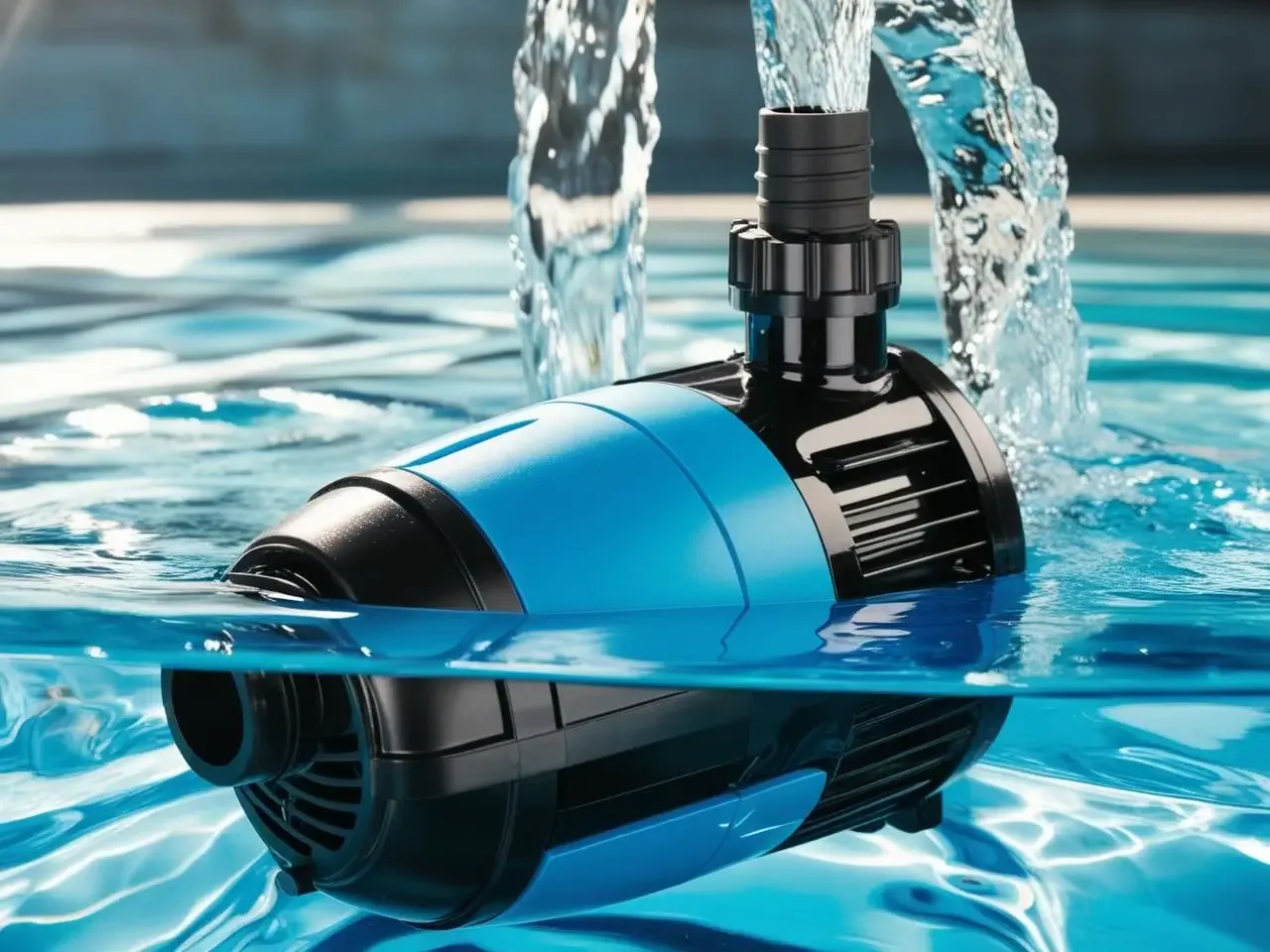
A submersible pump is an epoxy-sealed motor placed directly on the floor of a hydroponic reservoir. It pushes water and dissolved mineral ions through delivery manifolds to plant roots.
Selecting the correct pump requires matching flow volume and vertical head height to your reservoir size and crop architecture.
1. Submersible Pump Fundamentals
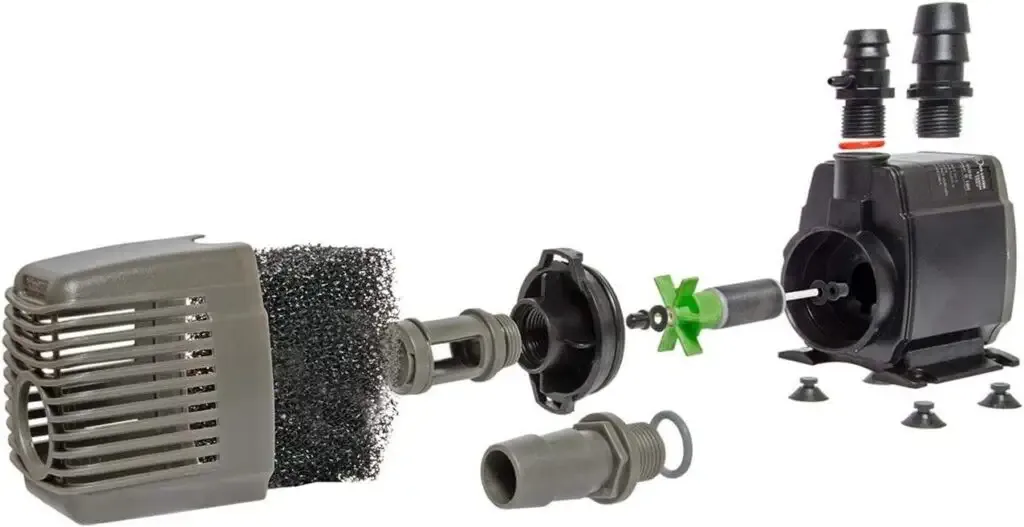
Submersible pumps operate submerged in liquid. They use an electromagnet to spin an internal ceramic or plastic impeller, drawing solution through a screened intake and pushing it out a threaded discharge barb:
- Internal Cooling: Surrounding reservoir liquid cools the motor casing.
- Low Noise Footprint: Operating underwater dampens motor hum, making them practical for apartment grow spaces.
- Compact Footprint: Because they sit inside the tank, they require no external plumbing holes through reservoir sidewalls.
2. Technical Sizing Specifications
Flow Rate (Gallons Per Hour - GPH)
The baseline sizing rule for active recirculating systems is turning over total reservoir volume two to three times per hour.
- Small Desktop Systems (5–10 Gallons): 50–150 GPH
- Medium Multi-Site Systems (15–30 Gallons): 200–400 GPH
- Large Vertical Racks and Towers (40+ Gallons): 500–1,000+ GPH
Head Height (Lift Height)
A pump’s advertised GPH rating indicates flow at zero vertical elevation (ground level). As tubing ascends, gravity and pipe wall friction restrict flow. Maximum head height designates the vertical point where water flow stops completely.
Always measure the vertical rise from the reservoir floor to the highest emitter or top channel port. Choose a pump whose rated maximum head height is at least 1.5 times higher than your actual system height. If your vertical column stands five feet tall, choose a pump with a head height rating of at least eight feet.
Power Draw and Thermal Transfer
Submersible pump motors transfer heat directly into reservoir water. Running high-wattage pumps continuously in small volumes can raise water temperatures above 70°F (21°C), reducing dissolved oxygen and inviting root rot. Select magnetic-drive pumps that draw low wattage relative to their flow rating.
Flow Control Valves
Pumps with mechanical flow adjustment collars or variable dials allow you to throttle output when switching between seedlings and heavy fruiting crops. For an overview of how delivery methods differ, our hydroponics systems explained guide details pump requirements across DWC, NFT, and drip configurations.
3. Recommended Hardware Configurations
Match pump specifications to system volume rather than buying oversized hardware:
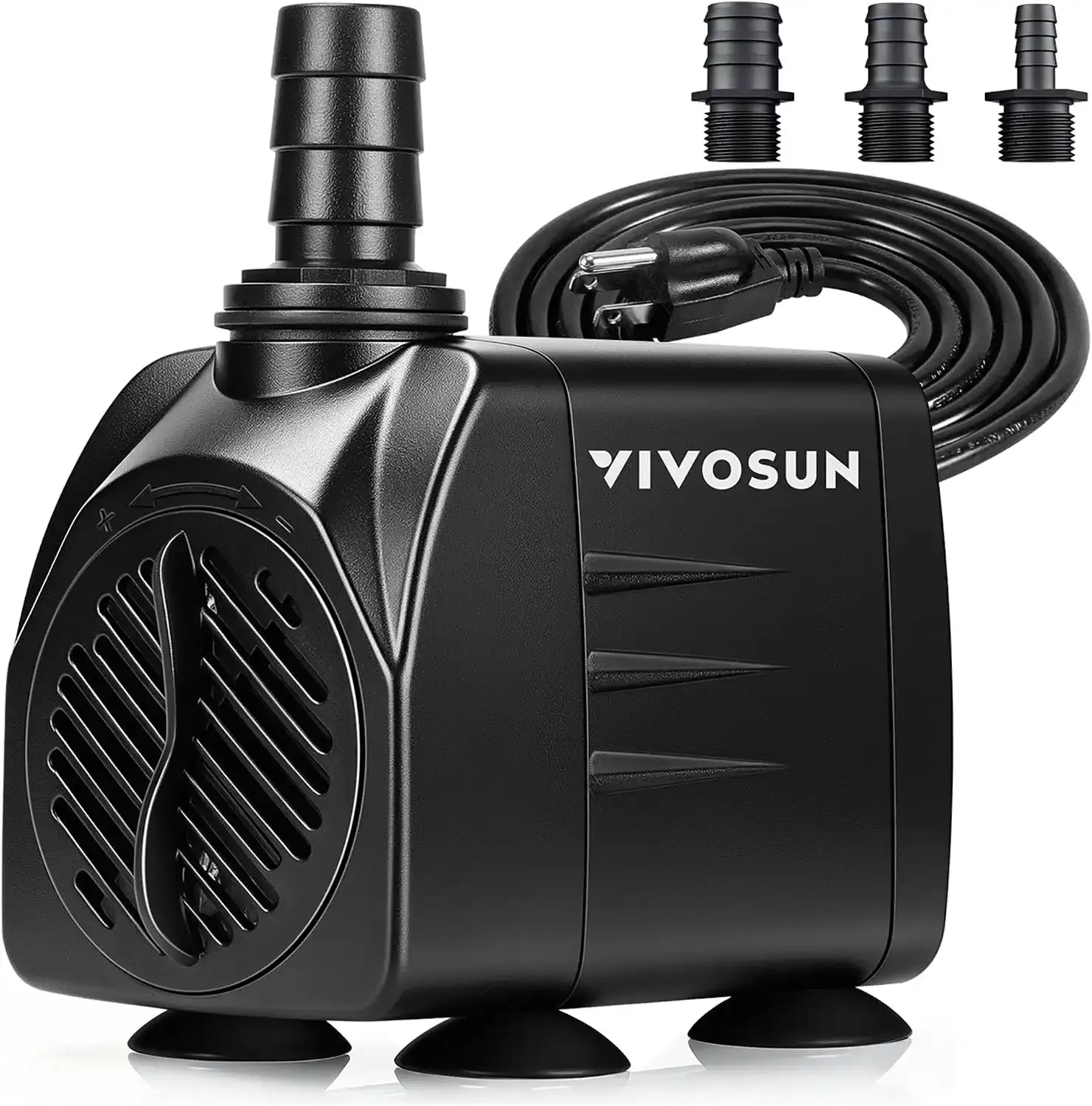
VIVOSUN 480 GPH Submersible Pump
- Our recommended option for small to medium setups. Extremely versatile, featuring a rotating water outlet and an adjustable flow regulating valve.
- Specs: 480 GPH (1800 L/H) flow, 25W power, 7.2 ft. max lift, 3.5” x 2.7” x 2.3” size with 5-ft. three-core power cord
- Detachable & Cleanable: Compact size makes it easy to hide, and disassembles without specialized tools for simple cleaning
- Flexible Mounting: Strong 4x suction cups allow you to secure the pump flat, vertically, or horizontally
Note
Operational Considerations: The 480 GPH unit uses standard mechanical components. Pair it with an external digital outlet timer to schedule intermittent run cycles for drip lines or ebb-and-flow flood trays.
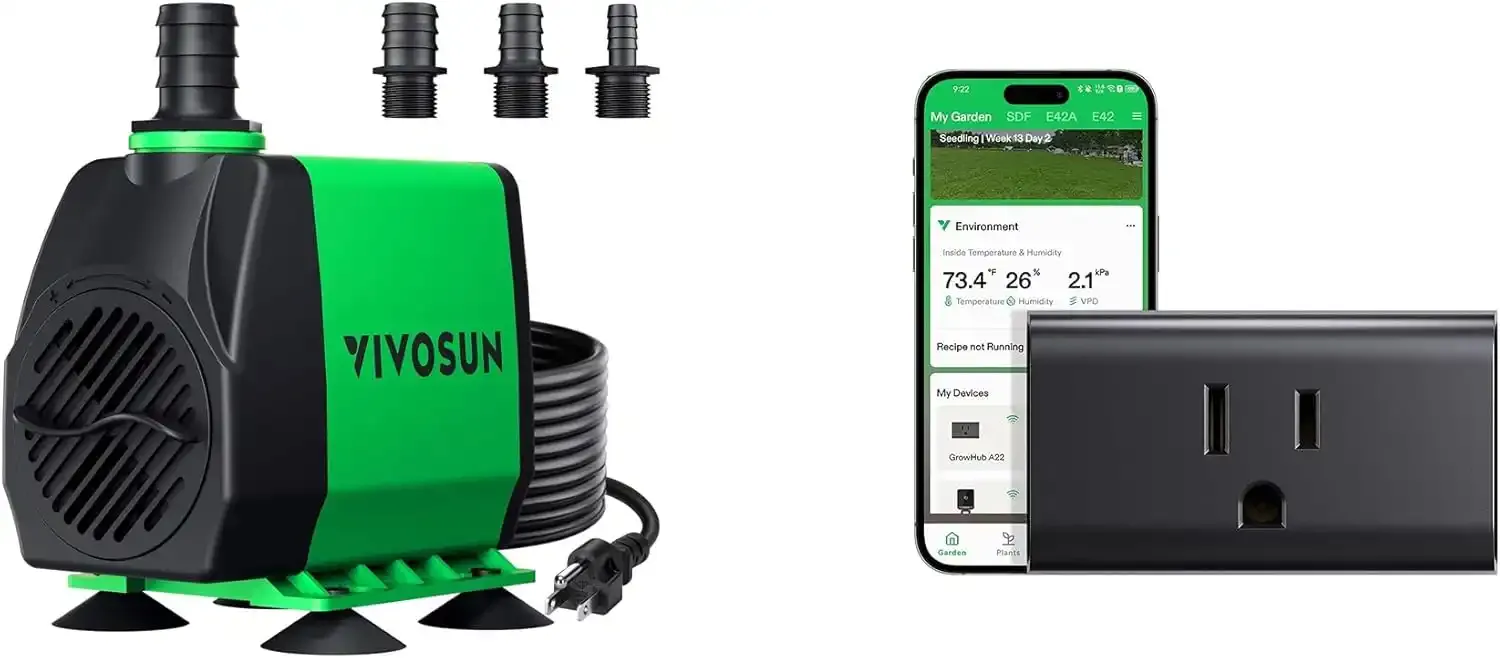
VIVOSUN 800 GPH Pump & GrowHub Controller A10
- A high-flow pump bundled with VIVOSUN's GrowHub A10 Smart WiFi Outlet. Offers seamless app-based automation that operates locally even when offline, keeping your growing process uninterrupted.
- Specs: 800 GPH (3000L/H) flow, 50W power, 10 ft. max lift, 4.33*3.5*4.1 inches size
- Detachable & Cleanable: Small-sized pump is easy to hide and disassemble without tools for easy cleaning
- WiFi Automation: 15A 1800W smart plug outlet compatible with the Vivosun App for remote scheduling and precise device management
Note
Network Requirements: The GrowHub controller requires a standard 2.4GHz Wi-Fi band for smartphone pairing.
4. Maintenance and Longevity
Because hydroponic solutions carry concentrated fertilizer salts and organic root fragments, pump impellers require routine servicing to prevent motor burnout:
- Bi-Weekly Cleaning: Unplug the unit, twist off the impeller cover, and remove the magnetic rotor. Soak plastic and ceramic parts in warm vinegar to dissolve calcium and phosphate scale.
- Monitor Vibration: A humming or vibrating pump indicates air trapped in the impeller chamber or debris caught in the intake screen.
- Prevent Dry Operation: Never allow a submersible pump to run out of water. Operating in air overheats internal bearings and melts the water-tight seal within minutes. For additional safeguards, read our guide on common hydroponic mistakes beginners make.
Summary
Select a submersible pump that turns over your reservoir volume two to three times per hour at your required vertical head height. Clean the intake screen every two to four weeks to ensure consistent nutrient flow.
To browse specific hardware bundles and accessories, visit the official VIVOSUN Amazon StorefrontView on Amazon for compatible fittings, timers, and manifold components.
Editor’s Note: Parts of this guide were structured and optimized with the assistance of AI, then thoroughly reviewed, edited and expanded with first-hand growing experience by our author Raymond to ensure practical, real-world accuracy.
Frequently Asked Questions
How do I calculate the pump size needed for my system?
Choose a pump rated for at least two to three times your reservoir volume in gallons per hour (GPH), factoring in head height loss from vertical lift and plumbing friction.
How often should I clean my hydroponic water pump?
Clean the intake screen and impeller assembly every two to four weeks to clear salt buildup, root fragments, and organic biofilms before they restrict motor rotation.
What type of pump is best for hydroponics?
Submersible magnetic-drive pumps work best for home and hobby installations up to 50 gallons. External centrifugal inline pumps are suited for commercial operations exceeding 100 gallons to prevent heat transfer into the reservoir.
What are the disadvantages of a submersible water pump?
Submersible pumps transfer motor heat directly into the nutrient solution and can elevate water temperatures above 70°F (21°C) if undersized or run continuously in small reservoirs.
How much water flow do you need for hydroponics?
Flow requirements vary by architecture: small drip setups require 50 to 150 GPH, whereas large vertical towers and commercial NFT manifolds require 400 to 1,000+ GPH.
Do I need a water pump for hydroponics?
Active systems like NFT, aeroponics, and drip setups require water pumps for circulation. Passive methods like the Kratky method require no mechanical pumps.
Can you do hydroponics without a pump?
Yes. Passive techniques such as the Kratky method grow crops in standing nutrient solution without electrical pumps or timers.
How long does the pump need to run for hydroponics?
Run times depend on configuration: Nutrient Film Technique (NFT) requires continuous 24/7 circulation, whereas ebb-and-flow and drip systems run on timed cycles of 5 to 15 minutes several times per day.
What are the different types of submersible pumps available?
Most hobby hydroponic pumps use magnetic-drive impellers. Variable-frequency pumps offer digital flow adjustments, and specialized high-pressure diaphragm pumps power aeroponic atomizers.
How do I install a submersible pump in my hydroponic system?
Place the pump flat against the reservoir floor using rubber suction feet. Connect the discharge barb to delivery tubing, route the cord through the lid grommet, and verify the pump is submerged before powering on.
What are some common problems with submersible pumps?
Common issues include salt scale seizing the impeller, low water levels causing dry-run overheating, and pinched tubing creating backpressure that reduces flow.
Our Amazon Storefront
Browse all our recommended tools & supplies
Everything we personally use and trust, hand-picked for gardeners like you.

I've been running DWC and Kratky systems for several years and write about what actually works, not textbook theory. Follow along for honest product reviews, practical guides and real grow results.