As an Amazon Associate, I earn from qualifying purchases. Some links in this article are affiliate links, if you buy through them I may earn a small commission at no extra cost to you.
Quick Summary
- Start Simple: Avoid complex plumbing early; begin with a passive Kratky or single DWC reservoir.
- Monitor pH: Test reservoir pH every 48 hours to maintain nutrient bioavailability between 5.5 and 6.5.
- Avoid Overfeeding: Keep mineral concentrations moderate; excess electrical conductivity causes salt burn on foliage.
- Maintain Roots: Aerate the reservoir and keep water temperatures below 72°F (22°C) to prevent Pythium root rot.
- Block Light: Use opaque containers to deny light to algae blooms in the reservoir and plumbing lines.
Hydroponics gives growers direct control over root oxygenation, mineral nutrition, and photoperiod. However, closed-loop water systems leave little buffer for error compared to ground soil. Small miscalculations in nutrient concentration or water temperature produce rapid symptoms in foliage and root tissue.
This guide outlines seven frequent operational mistakes, their diagnostic symptoms, and direct corrective actions.
Hydroponic Mistakes at a Glance
| The Mistake | What You See (Symptoms) | Corrective Action |
|---|---|---|
| pH Imbalance | Yellowing leaves, stunted growth (nutrient lockout) | Test water; use pH Up or pH Down to stabilize at 5.5–6.5. |
| Nutrient Burn | Crispy, brown, or curled leaf margins | Flush system with plain water; dilute nutrient strength by half. |
| Poor Lighting | Spindly, stretched “leggy” stems | Lower LED fixtures to 12–18 inches (30–45 cm) above canopy. |
| Root Suffocation | Brown, slimy, foul-smelling root mass | Increase air pump output and install fresh air stones. |
| Light Leaks | Green film or slime in reservoir | Use opaque containers; seal net cup gaps with clay pebbles. |
1. Choosing an Overly Complex System
Complex plumbing, multiple timers, and high-pressure pumps introduce numerous mechanical failure points. New growers should start with passive Kratky containers or single-bucket Deep Water Culture (DWC). Kratky requires zero electrical connections or moving parts. To assemble a system under twenty dollars, review our guide on the easiest and cheapest hydroponic system you can start today.
2. Neglecting pH Monitoring
Pouring balanced nutrients has no effect if reservoir pH drifts out of spec. Root membranes absorb mineral ions through chemical transport channels that depend on hydrogen ion concentration. Above pH 6.5, iron, phosphorus, and zinc precipitate into insoluble salts. Below 5.5, plants fail to absorb calcium and magnesium, leading to cell wall collapse and leaf chlorosis.
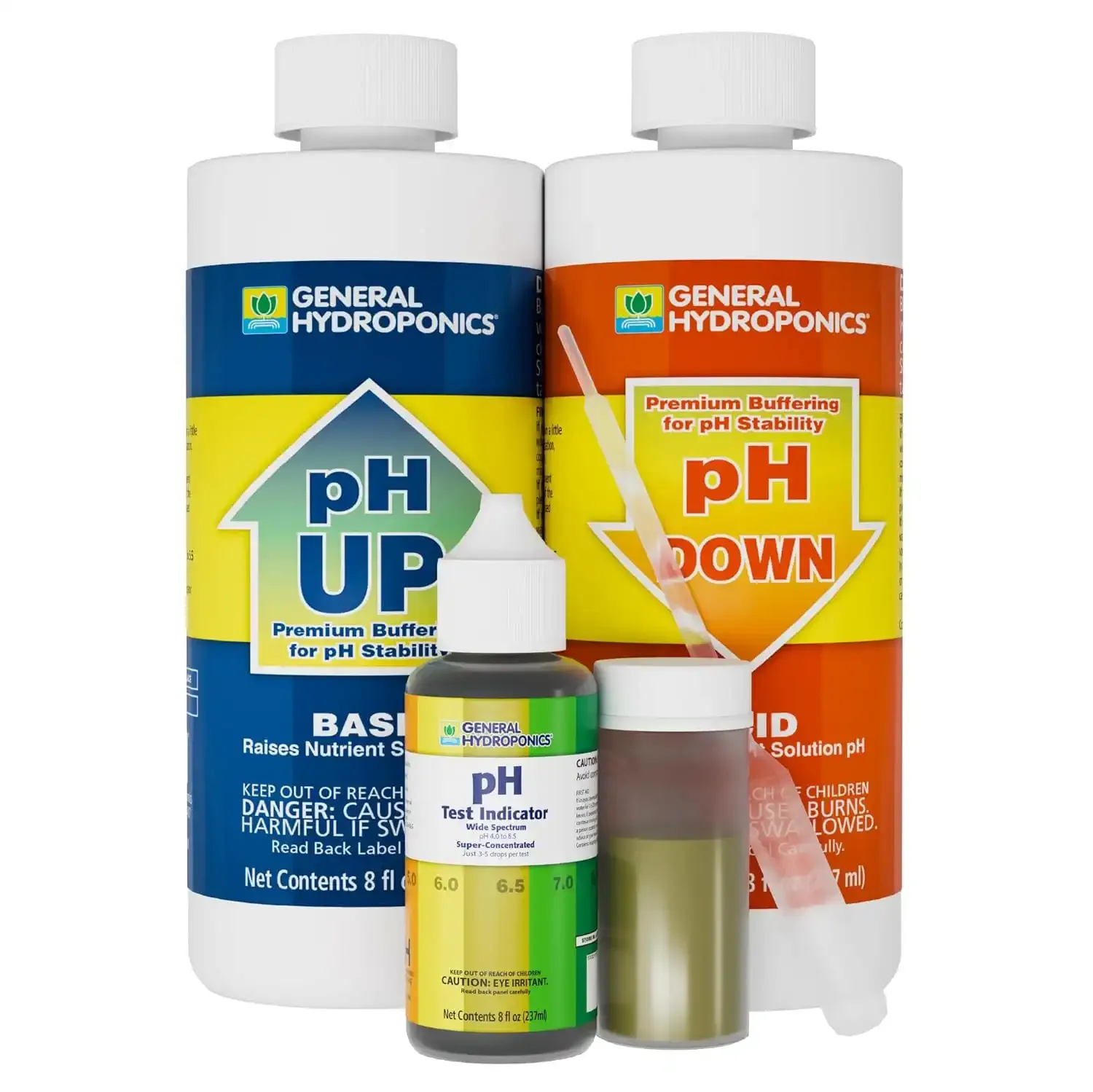
General Hydroponics pH Control Kit
Includes liquid pH test indicator solution for visual confirmation, alongside concentrated pH Up and pH Down adjusters for reservoir stabilization.
Managing Reservoir pH
- Test Regularly: Test pH every 48 hours using a calibrated digital glass-electrode pen or liquid indicator dye.
- Maintain Target Range: Keep the solution between 5.5 and 6.5 for general hydroponic vegetables.
- Dose Gradually: Add dilute acid (phosphoric acid) or base (potassium hydroxide) in small milliliter increments; overshooting causes drastic pH swings that shock root hairs.
- Log Values: Record daily pH readings to identify rapid acid-base shifts caused by root respiration.
Review our detailed guide on understanding hydroponic pH levels and how to manage them to diagnose nutrient lockout curves.
3. Overfeeding and Salt Accumulation
Excessive fertilizer concentrations elevate electrical conductivity (EC), creating osmotic pressure that draws water out of plant roots. This manifests as necrotic, brown leaf margins (tip burn). Conversely, underfeeding starves vegetative growth, turning foliage pale.
Balancing Nutrient Delivery
- Start Conservative: Mix nutrients at 50% of the manufacturer’s recommended dosage for young vegetative seedlings.
- Monitor Leaf Tissue: Dark green, clawing leaves indicate nitrogen excess; brown edges indicate salt burn; pale leaves signal general mineral deficiency.
- Measure Conductivity: Use an EC or TDS meter to track ionic salt concentration rather than relying on volume estimates.
- Select Balanced Formulations: If choosing between formulas, read our guide on how to choose the best hydroponic nutrients for your garden.
4. Inadequate Lighting Configuration
Insufficient photosynthetically active radiation (PAR) forces seedlings to stretch their hypocotyls, creating weak, spindly stems prone to lodging. Excessive light intensity or high radiant heat from fixtures positioned too close causes photobleaching and upward leaf curling.
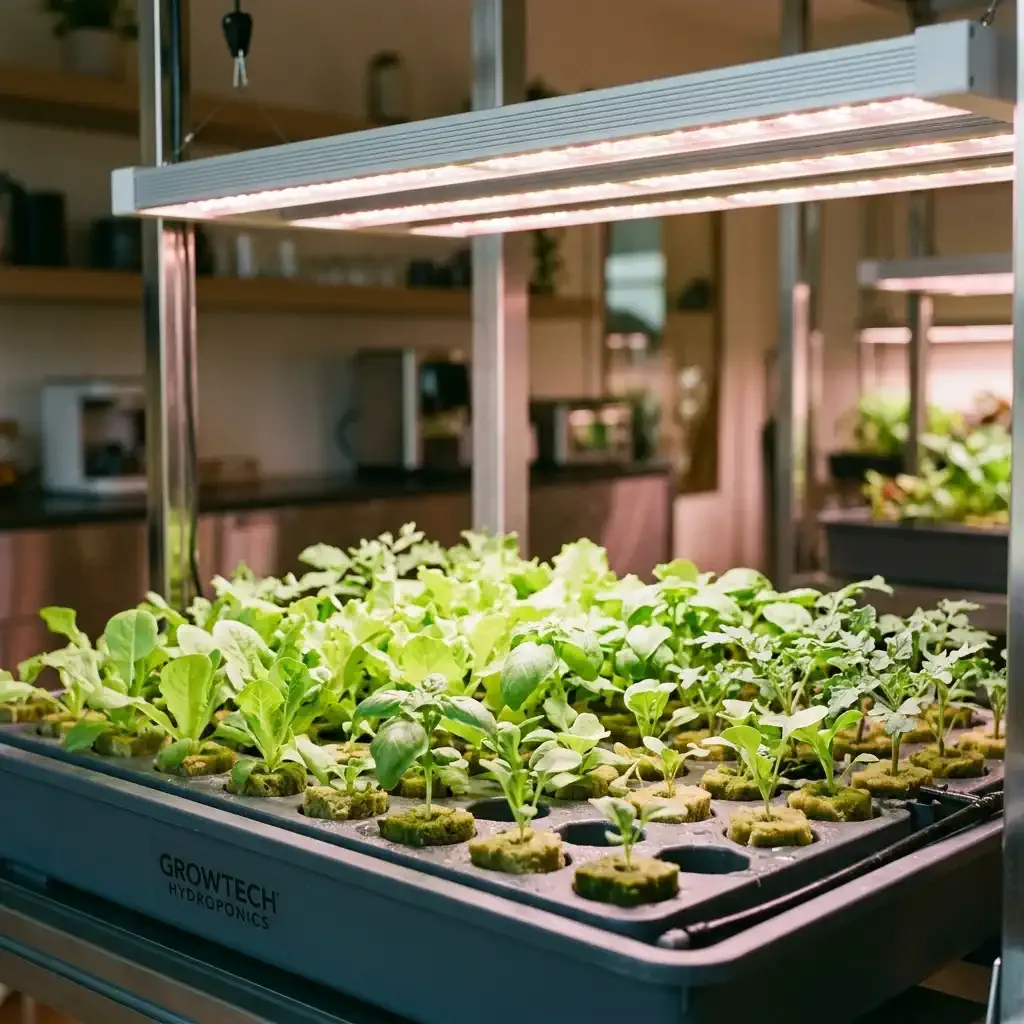
Optimizing Grow Lights
- Select Full-Spectrum Fixtures: Use 4000K–6500K full-spectrum LED fixtures delivering balanced blue and red wavebands.
- Adjust Hanging Heights: Maintain fixtures 12 to 18 inches (30–45 cm) above foliage for young greens, moving fixtures up as the canopy expands.
- Automate Photoperiods: Connect lighting to a digital timer, supplying 14 to 16 hours of light and 8 to 10 hours of darkness daily.
5. Overlooking Root Oxygenation
Plant roots require dissolved oxygen for cellular respiration. In stagnant water, anaerobic conditions allow opportunistic water molds (Pythium and Phytophthora) to colonize root surfaces. The root cortex turns brown, detaches from the vascular core, and produces foul sulfur odors.
Defending Against Root Rot
- Inject Dissolved Oxygen: Run an air pump connected to micro-pore air stones 24 hours a day in active systems. Read our guide on the importance of air pumping in hydroponics for flow sizing.
- Maintain Thermal Limits: Keep water temperatures below 72°F (22°C). Warm water holds substantially less dissolved oxygen and accelerates bacterial division.
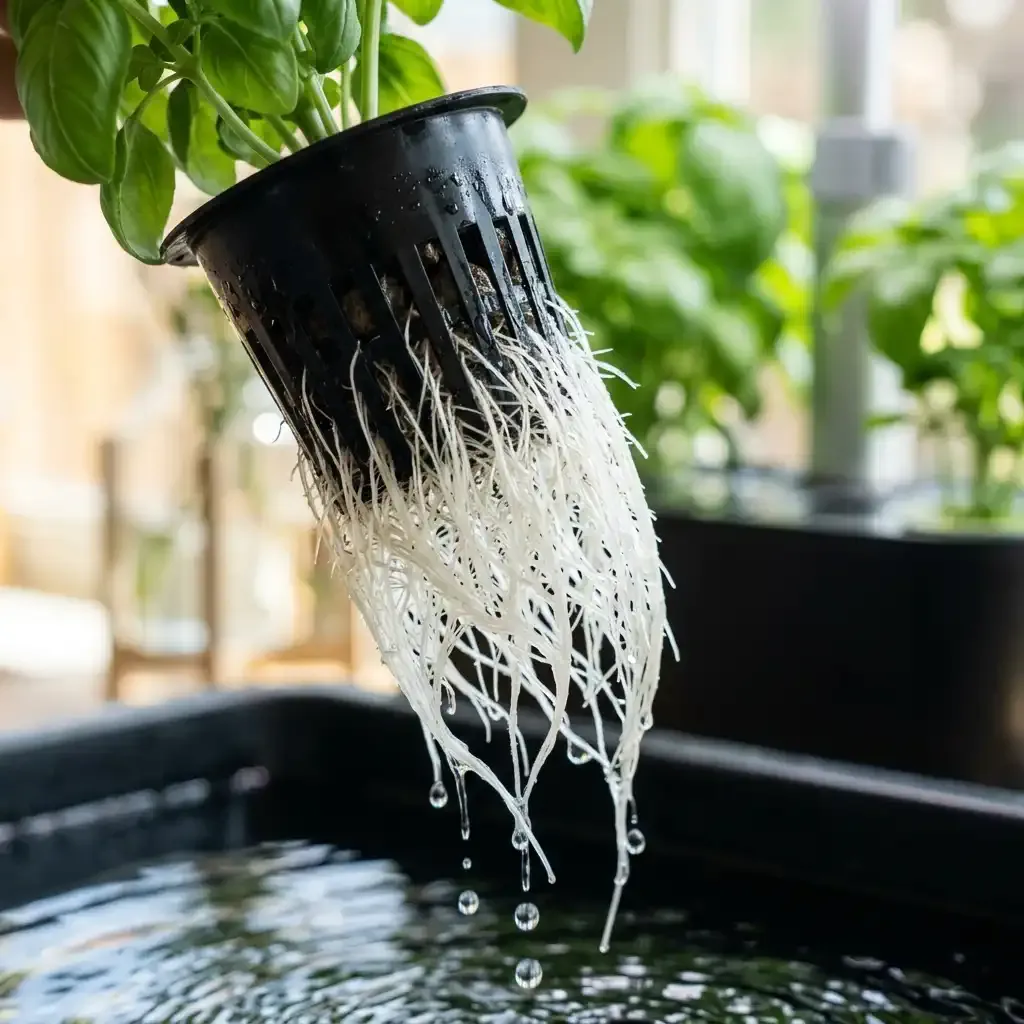
- Inspect Submerged Roots: Healthy roots remain firm, fibrous, and white. Trim degraded tissue and sanitize reservoirs with dilute 3% hydrogen peroxide if pathogens appear.
6. Permitting Light Leaks and Algae Growth
Algae requires light, moisture, and minerals. If light penetrates the reservoir or root channels, algae colonies expand along plumbing surfaces. Algae consumes dissolved oxygen during nighttime respiration, competes for nitrogen and phosphorus, and fouls pump impellers.
Preventing Algae Colonization
- Use Opaque Containers: Build reservoirs exclusively from high-density, light-blocking dark plastics.
- Cover Unused Sites: Place opaque lids or caps over open net cup holes.
- Seal Enclosure Seams: Check system lids and plumbing grommets for illumination gaps. Review how hydroponic systems are explained to evaluate light-tight system designs.
7. Neglecting Routine System Maintenance
Hydroponic systems require scheduled maintenance to remain chemically stable. Neglecting flushes leads to salt incrustation, clogged drippers, and nutrient lockout. If your system encounters operating issues, consult our guide on how to troubleshoot common hydroponic problems.
Establishing a Maintenance Schedule
- Flush Reservoirs: Drain and replace the reservoir solution every 14 to 21 days to reset mineral ratios.
- Rinse Media: Periodically top-pour plain pH-adjusted water through clay pellets to flush accumulated mineral salts.
- Clean Mechanical Hardware: Disassemble water pump impellers and soak air stones in white vinegar to clear mineral deposits.
Conclusion
Closed-loop hydroponics depends on four core environmental controls: calibrated pH (5.5–6.5), conservative nutrient concentration, continuous root oxygenation, and total light exclusion from reservoirs. Managing these four variables prevents the vast majority of crop losses.
Editor’s Note: Parts of this guide were structured and optimized with the assistance of AI, then thoroughly reviewed, edited and expanded with first-hand growing experience by our author Raymond to ensure practical, real-world accuracy.
Frequently Asked Questions
What is the most common mistake beginners make in hydroponics?
Neglecting pH levels is the most common error. If reservoir pH drifts outside the 5.5 to 6.5 range, it triggers nutrient lockout, a state where plants are chemically unable to absorb minerals even if they are abundant in the water.
Why are my hydroponic plant leaves turning yellow?
Yellowing leaves indicate nutrient deficiency, salt burn, or pH lockout. Test reservoir pH first; if the reading is within 5.5 to 6.5, verify electrical conductivity. Starting at half the manufacturer's recommended nutrient dosage protects young root tissue.
How often should I change the water in my hydroponic reservoir?
Perform a complete reservoir flush and water change every 2 to 3 weeks. Plants selectively absorb water and individual ions at different rates, causing the remaining solution to lose balance and drift in pH.
What does root rot look like and how do I prevent it?
Root rot appears as brown, mushy, or slimy roots accompanied by a foul sulfur odor. Prevent outbreaks by keeping water temperatures below 72°F (22°C) and maintaining continuous aeration with air stones.
Why are my hydroponic seedlings growing tall and skinny?
Spindly, leggy seedlings stretch when photon intensity is insufficient. Lower LED fixtures to 12 to 18 inches (30–45 cm) above the canopy to restore compact node spacing.
How do I stop algae from growing in my hydroponic reservoir?
Algae requires light to photosynthesize. Exclude light by using opaque plastic containers, covering empty net pot openings, and taping plumbing seams.
Our Amazon Storefront
Browse all our recommended tools & supplies
Everything we personally use and trust, hand-picked for gardeners like you.

I've been running DWC and Kratky systems for several years and write about what actually works, not textbook theory. Follow along for honest product reviews, practical guides and real grow results.