As an Amazon Associate, I earn from qualifying purchases. Some links in this article are affiliate links, if you buy through them I may earn a small commission at no extra cost to you.
Quick Summary
- pH absorption: Maintain water pH between 5.5 and 6.5 to guarantee plants can chemically absorb minerals.
- Testing Tools: Use digital pH pens, liquid test kits or paper test strips to monitor acidity daily.
- pH Adjustment: Use pH Up (potassium hydroxide) or pH Down (phosphoric acid) to correct water balance.
- Acidity Drift: Expect pH to fluctuate naturally as plants absorb nutrients and water level drops.
- Buffered Nutrients: Choose premium nutrient formulas with built-in buffers to stabilize reservoir drift.
- High pH Fix: Add commercial pH Down (phosphoric acid) in small drops, wait 15 minutes and target a 5.8 baseline.
Most early hydroponic failures stem from improper pH. Nutrient lockouts, stunted growth, and sudden leaf yellowing occur when water chemistry drifts outside target ranges. A calibrated digital meter and daily monitoring keep root zones stable and productive.
This guide explains how pH controls nutrient solubility, how to test and adjust reservoir water, and how to troubleshoot drift patterns across common hydroponic systems.
What Is pH and Why Does It Control Nutrient Absorption?
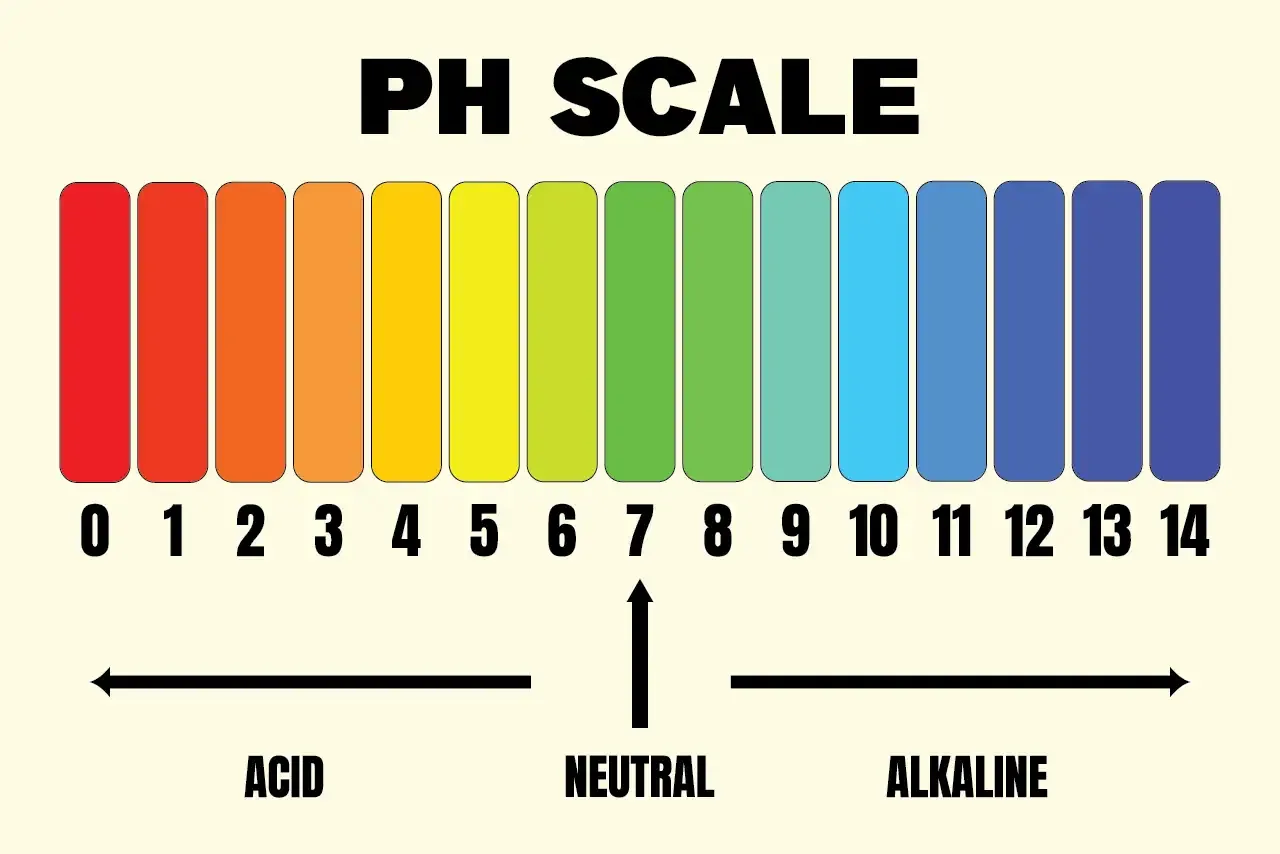
pH measures acidity or alkalinity on a scale from 0 to 14, with 7 representing neutral.
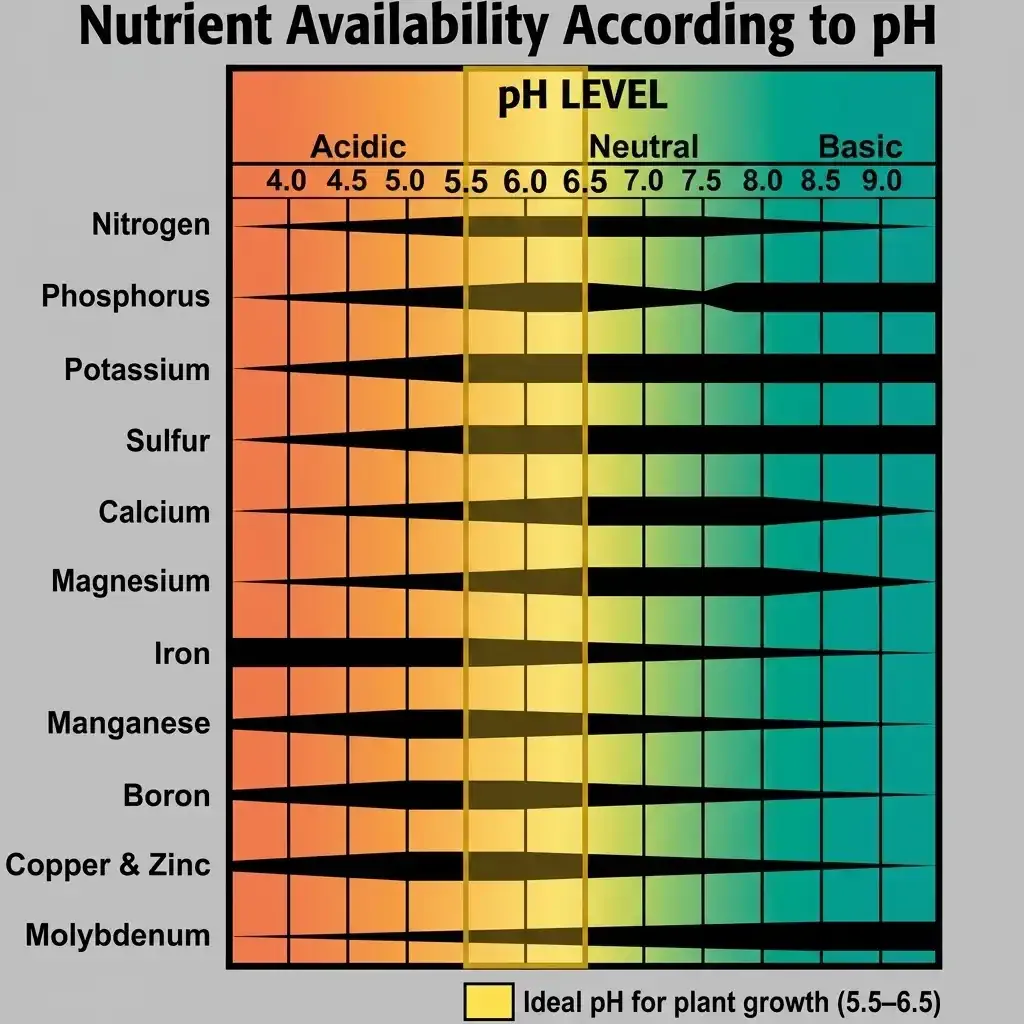
For hydroponics, most crops thrive between pH 5.5 and 6.5. Within this slightly acidic window, essential elements (nitrogen, phosphorus, potassium, calcium, magnesium, iron, and zinc) dissolve into ionic forms roots can absorb. Outside this range, minerals precipitate into insoluble compounds that plants cannot take up.
Nutrient behavior at pH extremes:
- High pH (above 6.5): Iron, manganese, zinc, and phosphorus precipitate out. Plants develop interveinal chlorosis and stunted growth despite adequate fertilizer in the reservoir.
- Low pH (below 5.5): Calcium, magnesium, and molybdenum uptake drops sharply. Leaf tip burn and blossom end rot in fruiting plants frequently follow.
Unlike garden soil, which naturally buffers against pH swings, a hydroponic reservoir contains no soil buffering capacity. Any chemical shift persists until corrected.
pH Preferences by Crop
Target ranges vary slightly by species (for a complete species reference, see our guide on Optimal pH and EC Values for Hydroponic Herbs and Plants):
| Crop | Ideal pH Range | Notes |
|---|---|---|
| Lettuce | 6.0–7.0 | High tolerance; widest acceptable window of any common crop |
| Tomatoes | 5.5–6.5 | Standard range; monitor closely during heavy fruit load |
| Basil | 5.5–6.0 | Sensitive to alkaline drift; tip burn appears quickly above 6.5 |
| Strawberries | 5.5–6.0 | Sensitive; alkaline solution causes rapid iron chlorosis |
| Cucumber | 5.5–6.0 | Prefers lower half of the standard range |
| Spinach | 6.0–7.0 | Tolerates neutral conditions well, similar to lettuce |
Selecting Compatible Nutrients: Formulated hydroponic nutrients behave differently in solution and directly impact pH stability. See our review on How to Choose the Best Hydroponic Nutrients for Your Garden for guidance on buffering agents and mineral balance.
How to Test pH in a Hydroponic System
Testing pH requires reliable testing tools:
- pH Test Strips: Inexpensive, but lack the precision needed for hydroponics. Color gradations are difficult to read and only provide rough approximations.
- Liquid Indicator Drops: Adding reagent drops to a water vial produces a color shift compared against a reference card. Adequate for quick secondary verification.
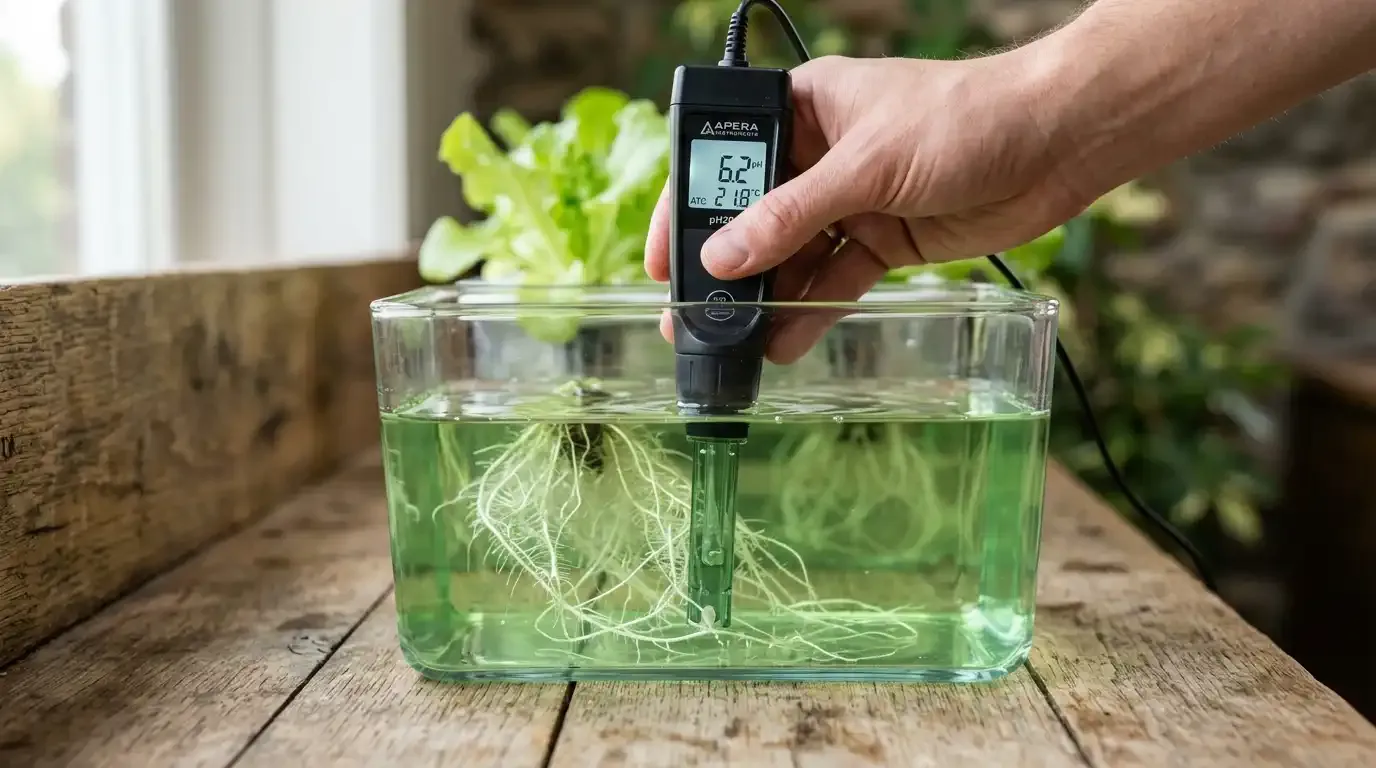
- Digital pH Meter: The standard tool for serious growers. Delivers fast readings accurate to 0.01 pH units. Calibrate monthly using 4.01 and 7.00 reference solutions, and store the glass electrode in KCl storage solution to prevent sensor dehydration.
Tip
Never store a digital pH probe in distilled water or dry air. Dedicated storage solution preserves sensor glass sensitivity and prevents premature probe failure.
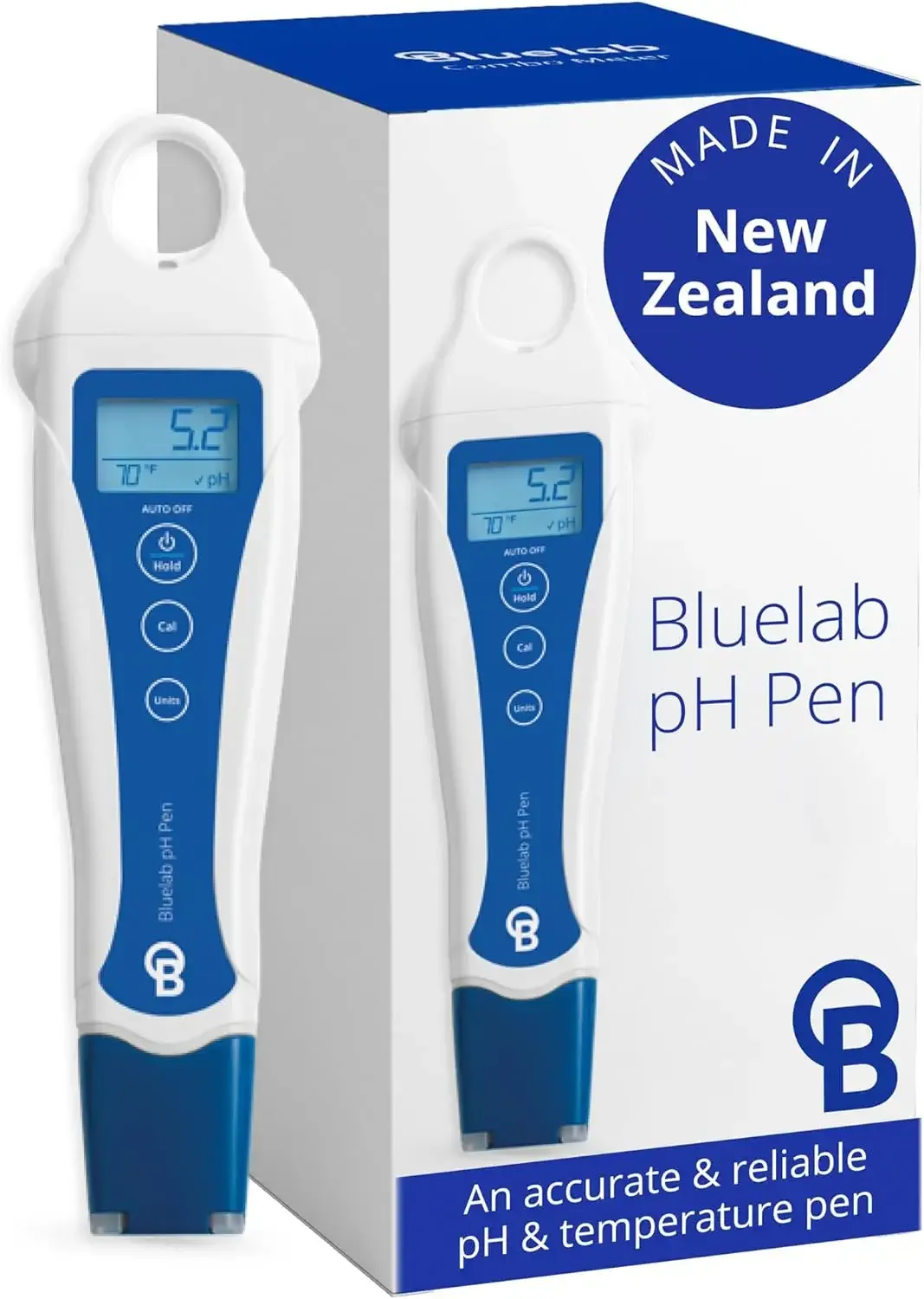
Bluelab pH Pen
I've been using this pen daily in a DWC setup for over a year, the probe tip is still accurate and hasn't needed replacing, which is the main failure point on cheaper meters. The waterproof body, automatic temperature compensation and straightforward two-point calibration make it the meter I'd recommend to anyone setting up their first system.
System Types and Drift: Active recirculating systems with large root masses drift faster than passive setups. If you are comparing configurations, our guide on Hydroponics Systems Explained: A Beginner’s Guide outlines how reservoir dynamics differ across methods.
How to Adjust Hydroponic pH
Once you verify reservoir readings, adjust using dedicated chemical buffers:
To lower pH:
- pH Down Solution: Commercial formulas based on phosphoric acid or citric acid provide predictable, concentrated adjustment with minimal dosing.
- Vinegar or Lemon Juice: Household acids break down rapidly under microbial action and introduce organic compounds that feed bacteria. Reserve for temporary emergencies only.
To raise pH:
- pH Up Solution: Potassium hydroxide-based solutions raise pH smoothly while providing supplemental potassium.
- Baking Soda: Introduces excess sodium that accumulates in the reservoir and stresses root tissue. Use potassium hydroxide instead.
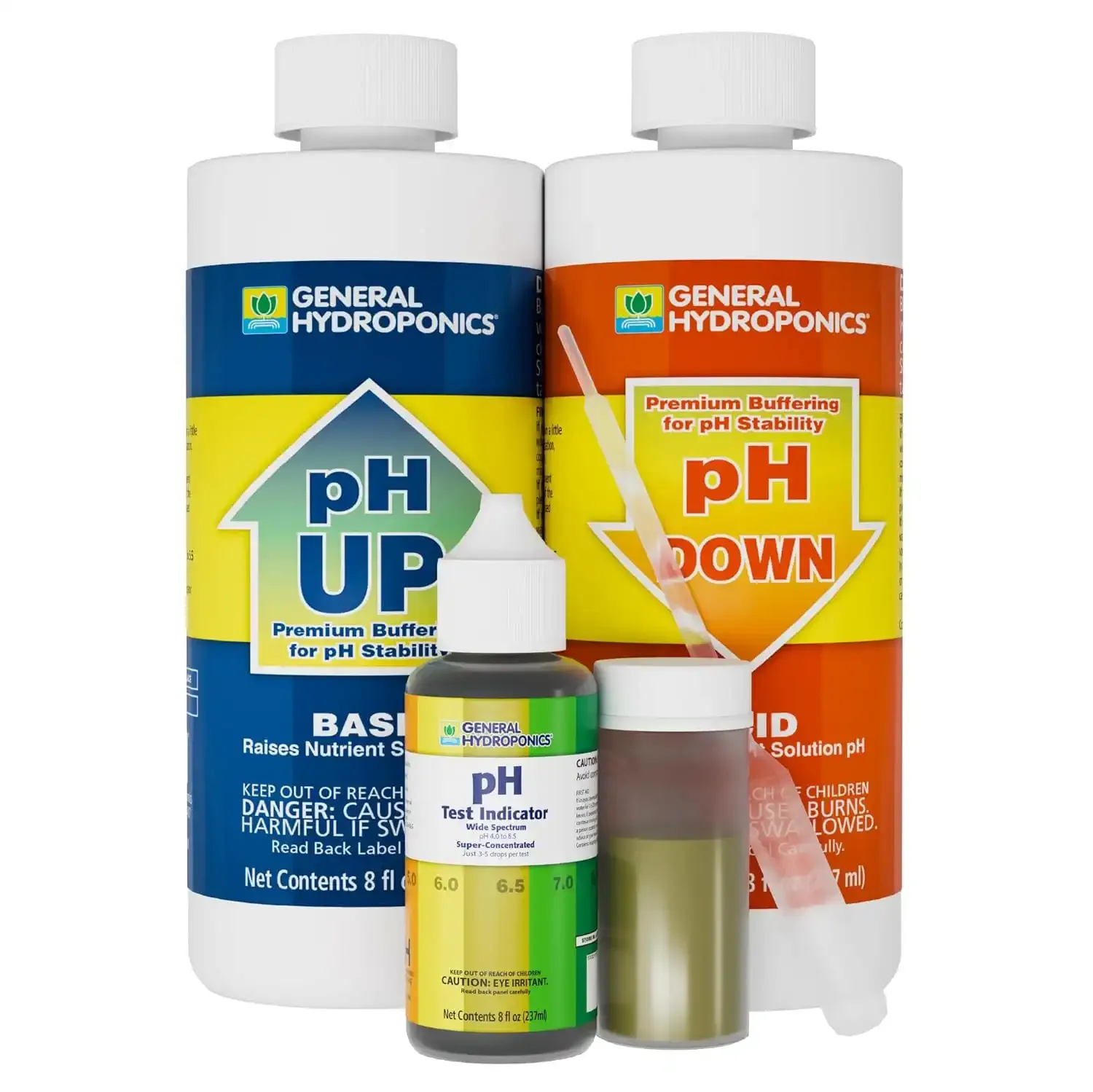
General Hydroponics pH Control Kit
This kit has been my reliable baseline for adjusting reservoir pH for years. While digital pens are great for testing, you still need the chemical solutions to make the adjustments. The 8 oz bottles of pH Up and Down last through dozens of reservoir changes since you only need a few drops at a time and the included liquid test indicator serves as a crucial backup to double-check digital meters when their calibration starts to drift.
Tip
Always adjust pH after mixing nutrients, never before. Fertilizer salts shift water acidity upon dissolution. Add adjusters in small increments (1–2 mL at a time), allow the pump to circulate the reservoir for 15 minutes, and retest before adding more.
Hydroponic pH Too High: How to Fix It
When reservoir pH exceeds 6.5, crops risk rapid nutrient lockout:
Symptoms of Prolonged High pH
- Interveinal Chlorosis: Leaf tissue turns yellow while primary veins stay dark green (iron lockout).
- Stunted Vegetative Growth: New shoots emerge small and distorted.
- Algae Blooms: Alkaline water speeds algae multiplication if light reaches the reservoir.
Common Causes of High pH
- Hard Tap Water: Dissolved calcium carbonate acts as an alkaline buffer, steadily pulling pH upward.
- Unbuffered Substrates: Inadequately rinsed expanded clay pebbles or fresh rockwool leach alkaline dust into the water.
- Selective Anion Uptake: Fast-growing plants absorb nitrate ions rapidly, releasing hydroxide ions that raise solution pH.
Step-by-Step Correction
- Dose Phosphoric Acid: Add commercial pH Down in small amounts (1–2 mL per 10 gallons of water).
- Circulate Solution: Run the reservoir pump for 10 to 15 minutes to disperse the acid evenly.
- Target 5.8: Aim for 5.8 to allow the reservoir natural upward drift before reaching the 6.5 lockout threshold.
Monitoring pH and EC Together
pH and electrical conductivity (EC) work in tandem. EC measures total dissolved fertilizer salts. As plants consume water and nutrients, both readings shift:
- Rising EC with dropping water level: Plants are drinking water faster than consuming salts. Top off with plain, pH-adjusted water.
- Dropping EC with stable pH: Plants are actively feeding; replenish with diluted nutrient mix.
- Crashing pH with foul odor: Root pathogens are actively breaking down root tissue. Check root color immediately.
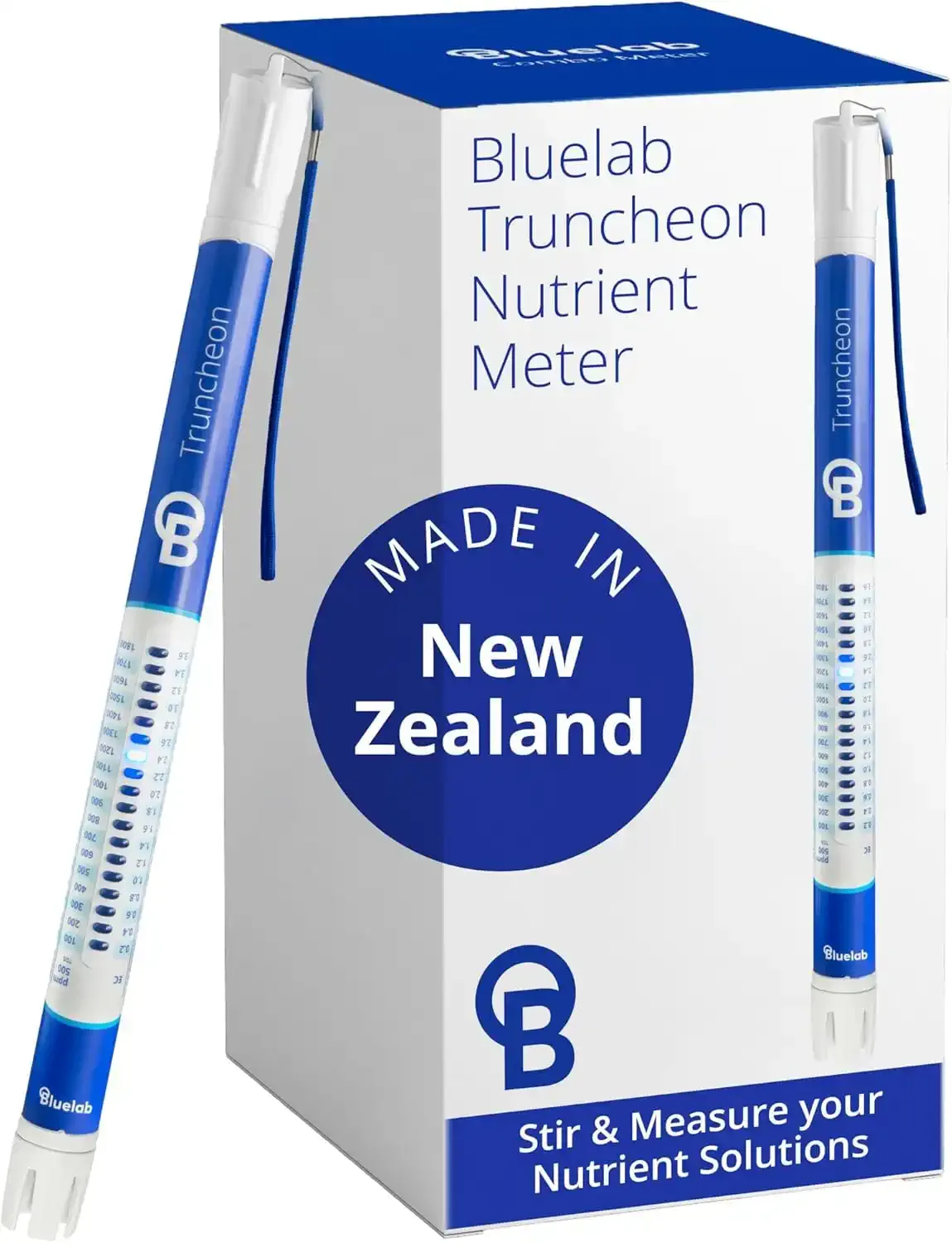
Bluelab Truncheon EC Meter
An EC meter tracks the dissolved mineral strength in your reservoir. It provides instant PPM and EC readings to prevent overfeeding and salt burn.
How to Maintain Stable pH Long-Term
- Check pH Daily in New Setups: Monitor daily for the first two weeks or following any full reservoir change. Once the root ecosystem stabilizes, check every other day.
- Use Buffered Nutrients: High-grade hydroponic nutrients include chemical buffers that resist rapid pH swings.
- Maintain Solution Temperatures: Keep water between 18°C and 24°C (65°F–75°F). Higher temperatures reduce dissolved oxygen and increase root stress, accelerating pH drift.
- Flush the Reservoir Periodically: Complete water changes every 2–3 weeks remove accumulated unconsumed ions and organic root exudates.
Tip
In healthy DWC systems, pH drifts downward over time as roots release organic hydrogen ions during cation absorption. Dosing pH Up is standard practice in vigorous systems. If your reservoir constantly drifts upward instead, check source water hardness or inspect for unbuffered growing media.
Troubleshooting Drift Patterns
If problems extend beyond pH drift into root discoloration or foliage chlorosis, consult our comprehensive guide on How to Troubleshoot Common Hydroponic Problems.
Rapid pH Drop (more than 0.5 units overnight): Sudden acid spikes usually indicate anaerobic decomposition from root rot. Healthy roots appear white or ivory and feel firm. Diseased roots turn dark brown, mushy, and foul-smelling. If rot is present, prune damaged root sections, treat the water with 3% hydrogen peroxide (3 mL per liter), and verify air pump output. Adequate air pumping is the primary defense against root rot in DWC systems.
Continuous Upward pH Drift: Common with hard source water high in bicarbonates. Using reverse osmosis (RO) filtration or pre-adjusting tap water 24 hours prior to nutrient mixing prevents carbonate buffering from skewing the tank.
Erratic Shifts After Dosing: Adding multi-part nutrients out of sequence causes chemical precipitation. Always dissolve calcium components first, dilute thoroughly, and then add phosphorus and potassium components.
For additional prevention steps, review Common Hydroponic Mistakes Beginners Make and How to Avoid Them.
Daily Habits for Stable Water Chemistry
Check reservoir pH daily for the first two weeks of any cycle. Tracking drift patterns early catches mineral imbalances before foliage displays deficiency symptoms. Once you establish the baseline consumption of your crop, checking every other day keeps the system stable.
A dependable digital meter, small bottles of pH Up and pH Down, and a two-minute daily check protect your plants from the most common hydroponic stumbling block.
Editor’s Note: Parts of this guide were structured and optimized with the assistance of AI, then thoroughly reviewed, edited and expanded with first-hand growing experience by our author Raymond to ensure practical, real-world accuracy.
Frequently Asked Questions
What happens if hydroponic pH is too high?
When pH rises above 6.5, nutrients like iron, manganese, zinc and phosphorus become chemically unavailable, even if they're present in the solution. You'll start seeing yellowing between leaf veins (interveinal chlorosis) and stunted growth, the classic signs of iron deficiency. The fix is to add pH Down in small increments until you're back in the 5.5–6.5 range, then retest after the solution circulates for a few minutes.
What happens if hydroponic pH is too low?
Below pH 5.5, calcium, magnesium and molybdenum absorption drops sharply. You'll often see leaf tip burn, blossom end rot in fruiting plants and generally slow growth. Very low pH (below 5.0) can also damage root cells directly. Raise pH with pH Up solution in small doses and retest before adding more.
How often should I check pH in hydroponics?
Check pH daily for the first two weeks of a new system or after a nutrient change. Once the system stabilises, every other day is sufficient. In summer, heat accelerates pH drift and drops dissolved oxygen, check more frequently if your reservoir is in a warm spot.
Why does my hydroponic pH keep dropping?
In healthy DWC systems, pH naturally drifts downward because plant roots release organic acids as a byproduct of nutrient uptake. This is normal, expect to use pH Up more often than pH Down in an active, healthy system. A sudden large drop (more than 0.5 pH units overnight) with no new inputs is a different problem: that usually signals active root rot. Lift the net cups and check the roots.
Can I use vinegar to lower pH in hydroponics?
Technically yes, but it's not recommended for ongoing use. Vinegar (acetic acid) is unstable and breaks down quickly, so you'll need to correct more frequently. It can also introduce organic compounds that feed bacterial growth. Commercial pH Down solutions (usually phosphoric or citric acid) are far more stable and cost only a few pounds more. Use vinegar only in a pinch.
Our Amazon Storefront
Browse all our recommended tools & supplies
Everything we personally use and trust, hand-picked for gardeners like you.

I've been running DWC and Kratky systems for several years and write about what actually works, not textbook theory. Follow along for honest product reviews, practical guides and real grow results.