
As an Amazon Associate, I earn from qualifying purchases. Some links in this article are affiliate links, if you buy through them I may earn a small commission at no extra cost to you.
Quick Summary
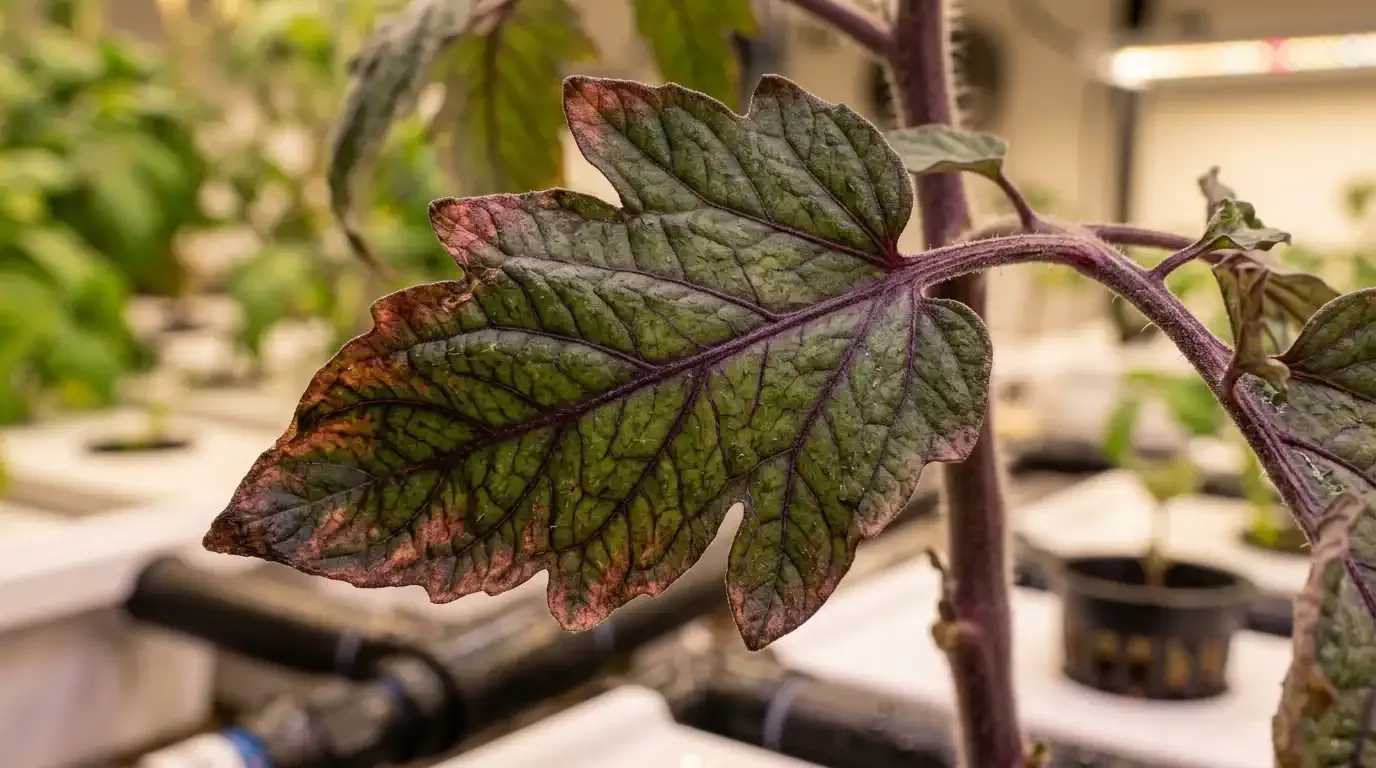
- Phosphorus goes purple, not yellow: Older leaves darken and develop purple, bronze or red tints, especially on undersides and stems. Growth slows across the whole plant.
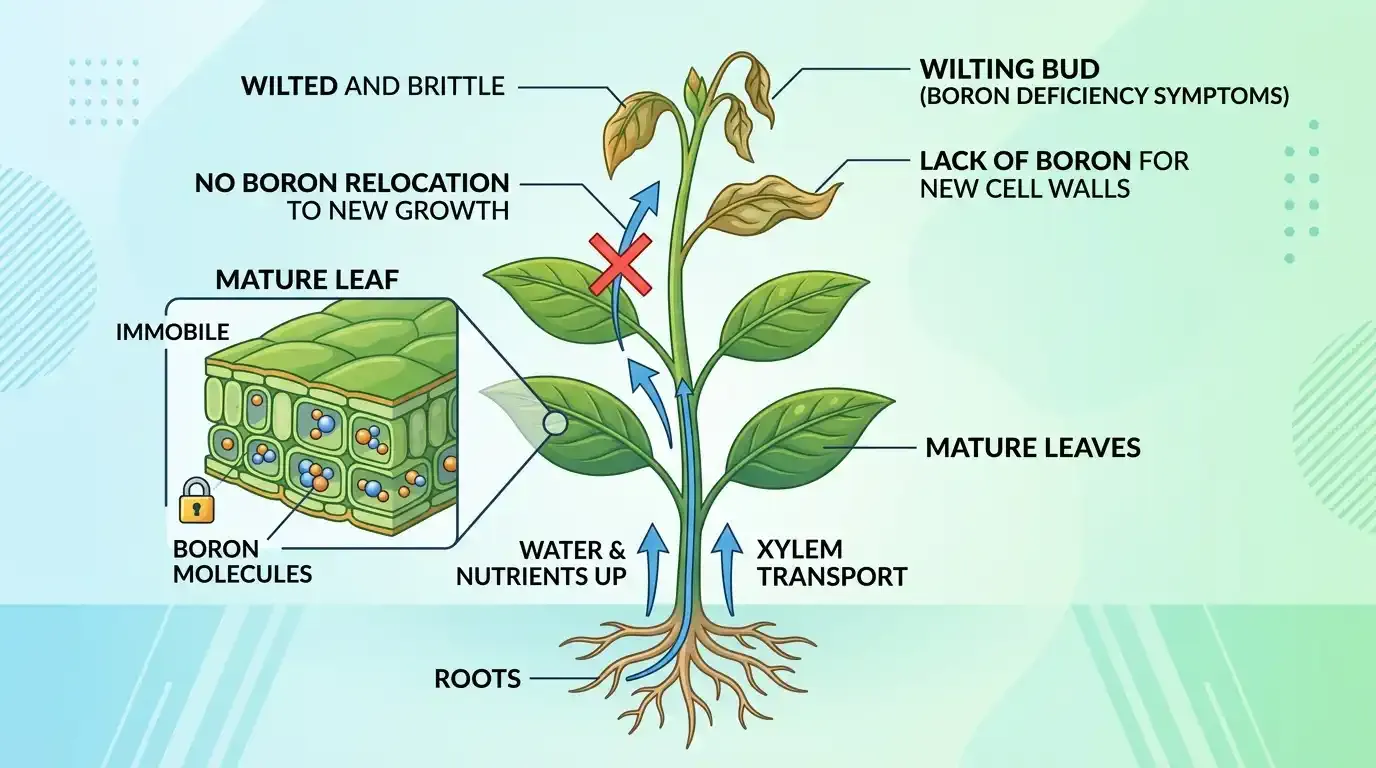
- Boron hits growing points: New shoots come in brittle and distorted; roots turn thick and stunted. It’s immobile, so old leaves look fine.
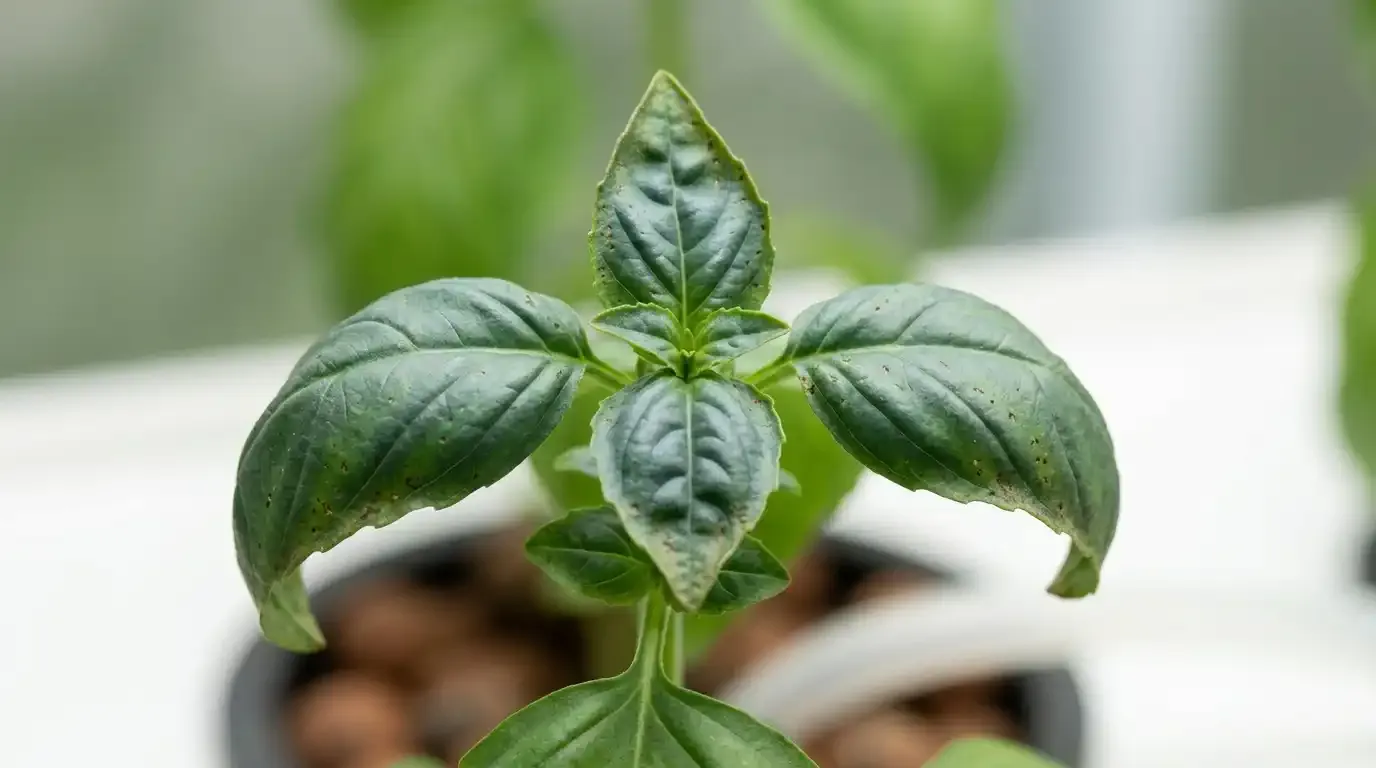
- Copper is rare but distinctive: New growth looks stunted, wilted or bluish-green with small dead spots. Usually only appears in heavily diluted or low-EC systems.
- Mobility tells you where to look: Phosphorus (mobile) shows on old leaves first; boron and copper (immobile) show on new growth and roots.
- Both boron and copper have narrow toxicity windows: Go slow with corrections, too much of either causes damage that looks like the deficiency itself.
Most nutrient deficiency guides focus almost exclusively on chlorosis (yellowing). However, several key mineral deficiencies manifest as purple pigmentation, brittle shoots, or bluish-green stunted foliage. Recognizing how phosphorus, boron, and copper affect plant tissue prevents misdiagnosing these conditions as environmental or genetic flaws.
Note
Understanding Nutrient Mobility:
- Mobile nutrients (such as Phosphorus, Nitrogen, Potassium, and Magnesium) can be relocated by the plant from older leaves to support new growth. Deficiencies in these elements always appear on older, lower leaves first.
- Immobile nutrients (such as Boron, Copper, Calcium, and Iron) become fixed within cell walls and cannot be reused. Deficiencies in these elements always show up on new growth, growing tips, and roots first.
Phosphorus: Darkening Foliage, Purple Veins, and Stunted Stems
Phosphorus deficiency does not fade leaves to pale yellow. Instead, foliage darkens to a deep blue-green before developing distinct purple, bronze, or reddish pigmentation along petiole undersides and main leaf veins. Overall vegetative expansion slows, producing rigid, stunted stems.
Because phosphorus is a mobile element, symptoms appear on older, mature foliage first as the plant redirects stored reserves to new shoots. Deficiencies frequently occur in cold reservoir conditions below 18°C (64°F), which inhibit root uptake even when the mineral is abundant in solution. Maintaining reservoir pH between 5.5 and 6.5 ensures phosphates remain soluble and bioavailable.
Corrective Action: Increase phosphorus ratios using a bloom-stage formula or monopotassium phosphate (MKP). If water temperatures run cool, warming the reservoir to 20°C (68°F) often restores uptake without changing fertilizer concentrations.
Boron: Brittle Growing Points and Thickened Roots
Boron deficiency impacts active meristematic zones. New shoot tips emerge twisted, thick, and brittle, often developing an abnormal cluster of secondary side shoots known as witch’s broom. Root systems stall, growing thick and blunt rather than branching into fine feeder roots.
Because boron is immobile, older leaves remain completely healthy while newly expanding foliage exhibits severe deformation. Growers frequently misdiagnose boron deficiency as broad mite damage or genetic mutation.
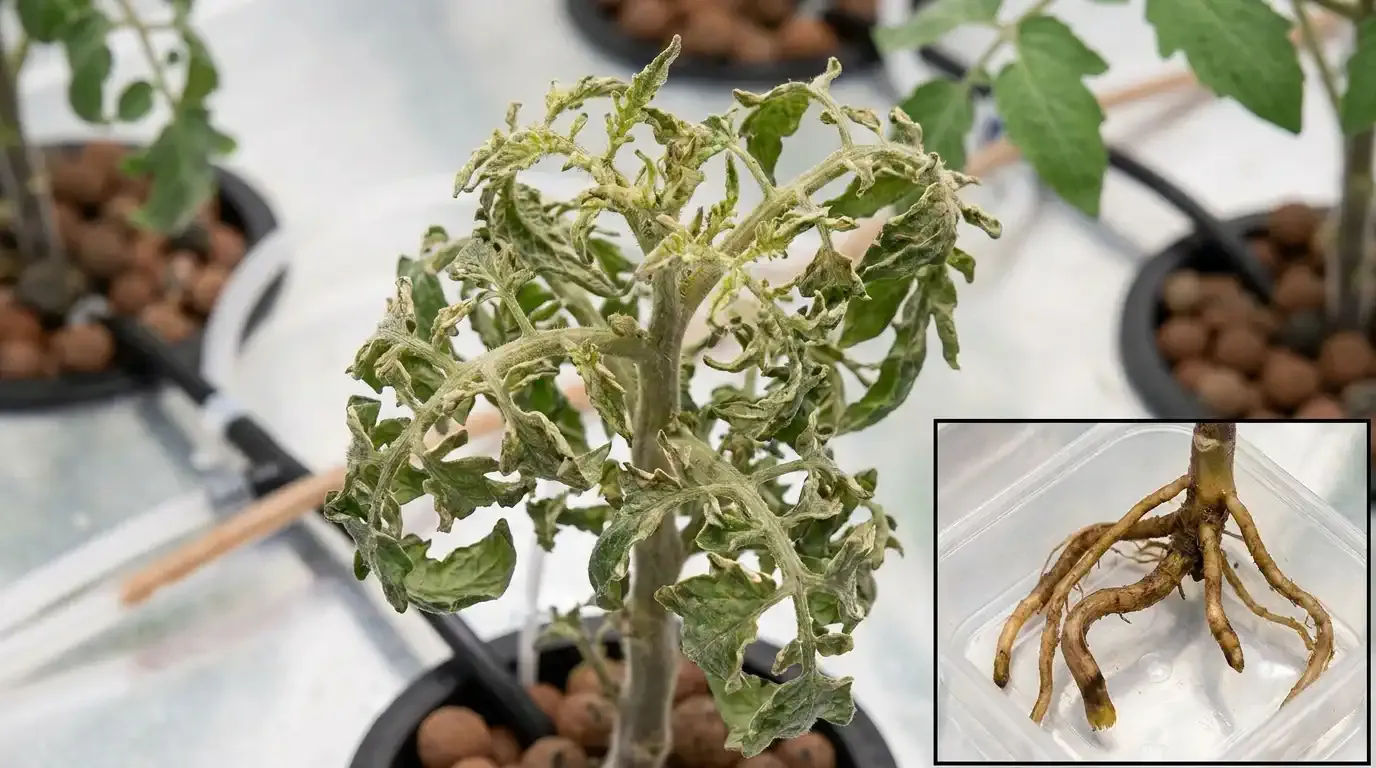
Corrective Action: Dose with an extremely dilute solution of boric acid or solubor. Measure precisely: the margin between boron deficiency and toxic burn is exceptionally narrow. Excessive boron causes severe necrotic leaf margins that resemble salt burn.
Copper: Bluish-Green Cast and Distorted Shoot Margins
Copper deficiency causes young leaves to curl, lose turgidity, and take on an atypical bluish-green sheen accompanied by small necrotic lesions. While rare in hydroponics due to trace inclusions in standard formulations, copper shortages occasionally surface in ultra-low EC recirculating systems or setups utilizing unbuffered reverse osmosis water.
Corrective Action: Apply a dilute copper sulfate foliar spray (0.1 g per liter) or replace the reservoir with fresh, completely mineralized nutrient solution. Use caution with supplemental copper, as toxic accumulations damage root hairs quickly.
Quick-Reference Diagnostic Summary
| Nutrient | Mobility | Affected Tissue | Diagnostic Pattern |
|---|---|---|---|
| Phosphorus (P) | Mobile | Lower, older leaves | Dark green turning purple, bronze, or red |
| Boron (B) | Immobile | Shoot tips and root ends | Brittle, twisted growing tips; thick stubby roots |
| Copper (Cu) | Immobile | Newly expanding leaves | Stunted, limp, bluish-green hue with necrotic flecks |
Diagnosing Chlorosis and Fruit Disorders
If your leaves display chlorosis (interveinal yellowing, bleached centers, or burnt leaf margins), the issue involves other essential minerals. Consult our comprehensive hydroponic nutrient deficiency chart to diagnose iron, magnesium, nitrogen, and potassium lockouts by leaf location.
If foliage remains healthy but developing fruit exhibits dark, leathery patches on the bottom, the problem is blossom-end rot, which stems from transpiration disruption rather than simple mineral starvation.
Editor’s Note: Parts of this guide were structured and optimized with the assistance of AI, then thoroughly reviewed, edited and expanded with first-hand growing experience by our author Raymond to ensure practical, real-world accuracy.
Frequently Asked Questions
Why are my hydroponic plant leaves turning purple?
Purple, bronze or reddish discolouration on older, lower leaves is the classic sign of phosphorus deficiency. Unlike most deficiencies, phosphorus doesn't fade leaves to yellow, it darkens them. Check that your pH is in the 5.5–6.5 range (phosphorus locks out quickly outside this window) and consider switching to a bloom-phase or phosphorus-boosted formula. If your reservoir is running cool, warming it slightly can also improve uptake.
What does boron deficiency look like in hydroponics?
Boron deficiency hits new growth hardest. Shoot tips become brittle and distorted, sometimes producing a dense cluster of stunted secondary growth called witch's broom. Roots can turn thick and stubby rather than extending normally. Because boron is immobile, you'll never see these symptoms on older leaves, only on the newest growth and root tips.
How do I fix boron deficiency without causing toxicity?
Use a very diluted borax or boric acid solution and measure carefully. The gap between deficient and toxic is narrow with boron, too much causes leaf tip burn and root damage that looks similar to the deficiency itself. Treat it as a small, one-off correction and reassess before adding more.
What causes copper deficiency in hydroponics?
Copper deficiency is rare in hydroponic systems because most complete nutrient lines include enough to cover normal demand. It's most likely to appear in heavily diluted feeding schedules or systems running unusually low EC over a prolonged period. Symptoms are new leaves that appear stunted, wilted or take on a bluish-green cast, sometimes with small necrotic spots.
Can I use a foliar spray to fix copper or boron deficiency?
Yes, carefully. A diluted copper sulfate foliar spray works as a targeted correction for copper deficiency and boric acid can be applied similarly for boron. Both nutrients have a narrow window between effective and toxic doses, so use sparingly and don't make them standing additions to your regular feed.
Our Amazon Storefront
Browse all our recommended tools & supplies
Everything we personally use and trust, hand-picked for gardeners like you.

I've been running DWC and Kratky systems for several years and write about what actually works, not textbook theory. Follow along for honest product reviews, practical guides and real grow results.