As an Amazon Associate, I earn from qualifying purchases. Some links in this article are affiliate links, if you buy through them I may earn a small commission at no extra cost to you.
Quick Summary
- Maximalist Gardening Trend: Dense, vertical hydroponic plant walls and towers are replacing stark, sterile kitchen designs.
- Vertical and Clean: Hydroponic systems allow massive plant density without dirt, potting mess, or soil pests in food preparation spaces.
- Lemonading: Indoor growers turn spatial limits and low light into design features using compact towers and integrated grow lights.
- Layered Planting: A balanced kitchen setup mixes leafy greens for volume, herbs for cooking, and compact fruiting varieties for visual impact.
- Daily Ritual: Tending a hydroponic setup offers a calming routine of checking water, trimming greens, and tracking steady physical growth.
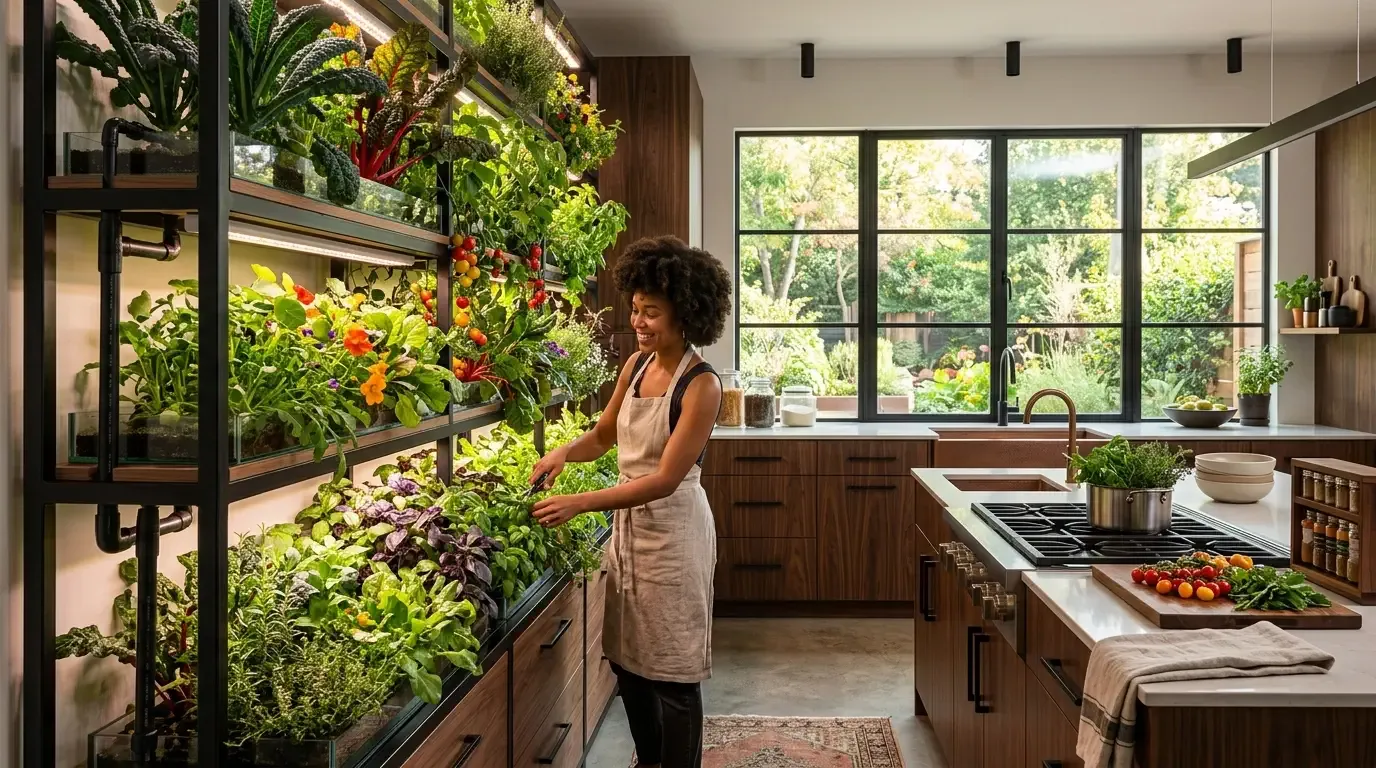
Walk into a contemporary kitchen and you are increasingly likely to find more than an isolated potted plant on a windowsill. You will see basil climbing along a wall trellis, countertop towers producing fresh strawberries, and tiers of leafy greens thriving under balanced full-spectrum LED fixtures.
This is maximalist gardening: an intentional shift away from sterile kitchen counters toward lush, productive indoor habitats.
The Movement Away From Bare Counters
For years, modern kitchen design prioritized empty quartz islands and open shelves holding a few ceramic plates. If a plant appeared at all, it was often an isolated, carefully pruned succulent.
Growers and homeowners grew tired of sterile spaces. A kitchen that functions like a showroom lacks aroma, fresh ingredients, and seasonal change. Maximalist gardening takes the opposite approach: higher plant density, visible biological life, and purposeful integration into living spaces.
Hydroponics makes this density practical indoors. Soil pots take up substantial horizontal surface and risk tracked dirt, fungus gnats, and messy water runoff. A vertical hydroponic tower, wall rail, or compact countertop unit stacks dozens of planting sites vertically while keeping water and nutrients contained in clean, closed reservoirs.
Turning Space Constraints Into Design Features
Growers living in a 500-square-foot apartment rarely start with ideal outdoor plots. Instead, they adapt indoor spaces to their advantage.
This approach treats physical limitations as design parameters rather than roadblocks. When floor space is tight, vertical towers utilize open ceiling height. When windows face north or receive limited direct sun, efficient LED grow lights supply consistent daily light integrals. When travel schedules are demanding, automated reservoirs handle watering for a week or more without intervention.
The constraint becomes the design brief. Hydroponics delivers capabilities an outdoor plot cannot match: fresh culinary herbs in midwinter, crisp salad greens that never bolt in summer heat, and indoor crops protected from garden pests.
Renters benefit significantly from this modularity. Freestanding towers on casters, lightweight wall rails mounted on simple hooks, and compact countertop units can be drained, packed, and relocated without leaving structural damage behind.
Plants That Thrive in Dense Kitchen Systems
Modern indoor culinary setups typically layer three categories of crops:
- Leafy greens for volume: Looseleaf lettuce, kale, and bok choy develop rapidly, filling tower pockets with bright foliage within three to four weeks.
- Herbs for everyday cooking: Genovese basil, spearmint, cilantro, and chives placed within arm’s reach of the cutting board allow you to harvest fresh sprigs while cooking.
- Fruiting showpieces: Compact alpine strawberries or micro-dwarf cherry tomatoes add striking color and fresh fruit indoors throughout the year.
Plant density creates the aesthetic. A single tower with 20 or 30 planting sites forms a continuous column of green, establishing a vibrant focal point through contrasting leaf shapes and textures.
The Routine of Daily Maintenance
Growers who maintain indoor systems long-term often point to daily routine rather than raw harvest volume as the main appeal. Spending ten minutes checking reservoir levels, adjusting pH, and inspecting new growth provides a grounded physical rhythm.
Caring for plants requires calm, focused attention. You test the nutrient solution, top off water, and watch seedlings advance day by day. Unlike screen-based tasks and constant notifications, biological growth cannot be rushed. It rewards consistent, small actions.
Taking a few quiet minutes with a vertical garden grounds the morning routine. You observe real, tangible progress in a controlled environment where small daily care produces clear results.
Building Your Own System
You do not need an entire living wall to begin. A simple countertop unit with four to six planting sites provides an easy entry point to test plant varieties and learn reservoir maintenance.
Start Small with Countertop Units
Begin with a self-contained kit featuring built-in LED lighting and an integrated water-level indicator. Countertop units require minimal footprint and keep nutrient monitoring straightforward while you develop your indoor growing routine.
Scaling Up to Maximalist Walls
Once you understand basic nutrient and lighting needs, expanding vertically becomes natural. Modular vertical towers increase plant counts dramatically on the same two-square-foot footprint. At this scale, tracking electrical conductivity (EC) and balancing liquid nutrients ensures both heavy-feeding fruiting crops and fast greens thrive side by side.
Traditional Kitchen Pots vs. Hydroponic Systems
| Feature | Traditional Kitchen Pots | Maximalist Hydroponic System |
|---|---|---|
| Footprint | Consumes broad counter or windowsill space | Utilizes vertical verticality (walls, corners) |
| Cleanliness | Soil spills, water rings, potential for gnats | Soil-free, self-contained water reservoirs |
| Yield | Low (primarily garnishes and small herbs) | High (supports dense salad heads and fruiting crops) |
| Lighting | Reliant on seasonal natural sunlight | Consistent, automated LED grow lights |
Kitchens are evolving from spaces dedicated solely to meal preparation into environments where fresh food actively grows, creating cleaner, greener, and more functional homes.
Editor’s Note: Parts of this guide were structured and optimized with the assistance of AI, then thoroughly reviewed, edited and expanded with first-hand growing experience by our author Raymond to ensure practical, real-world accuracy.
Frequently Asked Questions
What is maximalist gardening?
Maximalist gardening is the design trend of packing a space with dense, layered and diverse plant life. In the kitchen, it replaces the stark minimalist look with lush, floor-to-ceiling greenery, often enabled by vertical hydroponic systems.
What does 'lemonading' mean in indoor gardening?
Lemonading is when growers take constraints, like limited space or poor sunlight and design a system specifically for that problem, rather than settling for a sub-par traditional garden. It turns the constraint into a feature.
What plants are best for a maximalist hydroponic kitchen?
A well-planned setup layers fast-growing leafy greens for volume, aromatic herbs for culinary use and one or two showpiece fruiting plants, like compact cherry tomatoes or strawberries, to create a dense and visually striking habitat.
Are maximalist hydroponic systems noisy?
No, most modern systems are designed for living spaces. While some use small water pumps, they are usually whisper-quiet and passive wicking systems produce no noise at all.
Our Amazon Storefront
Browse all our recommended tools & supplies
Everything we personally use and trust, hand-picked for gardeners like you.

I've been running DWC and Kratky systems for several years and write about what actually works, not textbook theory. Follow along for honest product reviews, practical guides and real grow results.