As an Amazon Associate, I earn from qualifying purchases. Some links in this article are affiliate links, if you buy through them I may earn a small commission at no extra cost to you.
Quick Summary
- Space Efficiency: Grow up to 30+ plants in a vertical footprint of just 2-3 square feet.
- Misting Cycles: Set pump timers to run for 30 seconds on and 3-5 minutes off to feed roots without drowning.
- Water Conservation: Recycle 90%+ of the water compared to traditional in-ground farming.
- Oxygenation: Maximize root access to oxygen, accelerating growth rates and boosting yields.
- Best Crops: Grow leafy greens, strawberries, herbs and small bush vegetables vertically.
Plant roots absorb water, mineral ions, and dissolved oxygen simultaneously. In soil, water fills pore spaces and displaces air; saturation limits oxygen uptake. Aeroponic towers suspend plant roots inside an enclosed, hollow column. Internal nozzles spray a fine mist of nutrient solution directly onto the root mass at timed intervals, keeping roots exposed to air while delivering water and minerals.
Crops grown in aeroponic setups often mature 20–30% faster than soil-grown equivalents because roots take up atmospheric oxygen directly between misting events.
Quick Grow Stats
| Parameter | Target Range |
|---|---|
| pH | 5.5–6.5 |
| EC (Leafy Greens / Herbs) | 1.2–1.8 mS/cm |
| EC (Fruiting Crops) | 1.8–2.2 mS/cm |
| Misting Interval (consumer tower) | 30 sec on / 3–5 min off |
| True Aeroponics Droplet Size | 50–100 microns |
| True Aeroponics Pump Pressure | 80–100+ PSI |
What Are Aeroponic Towers?
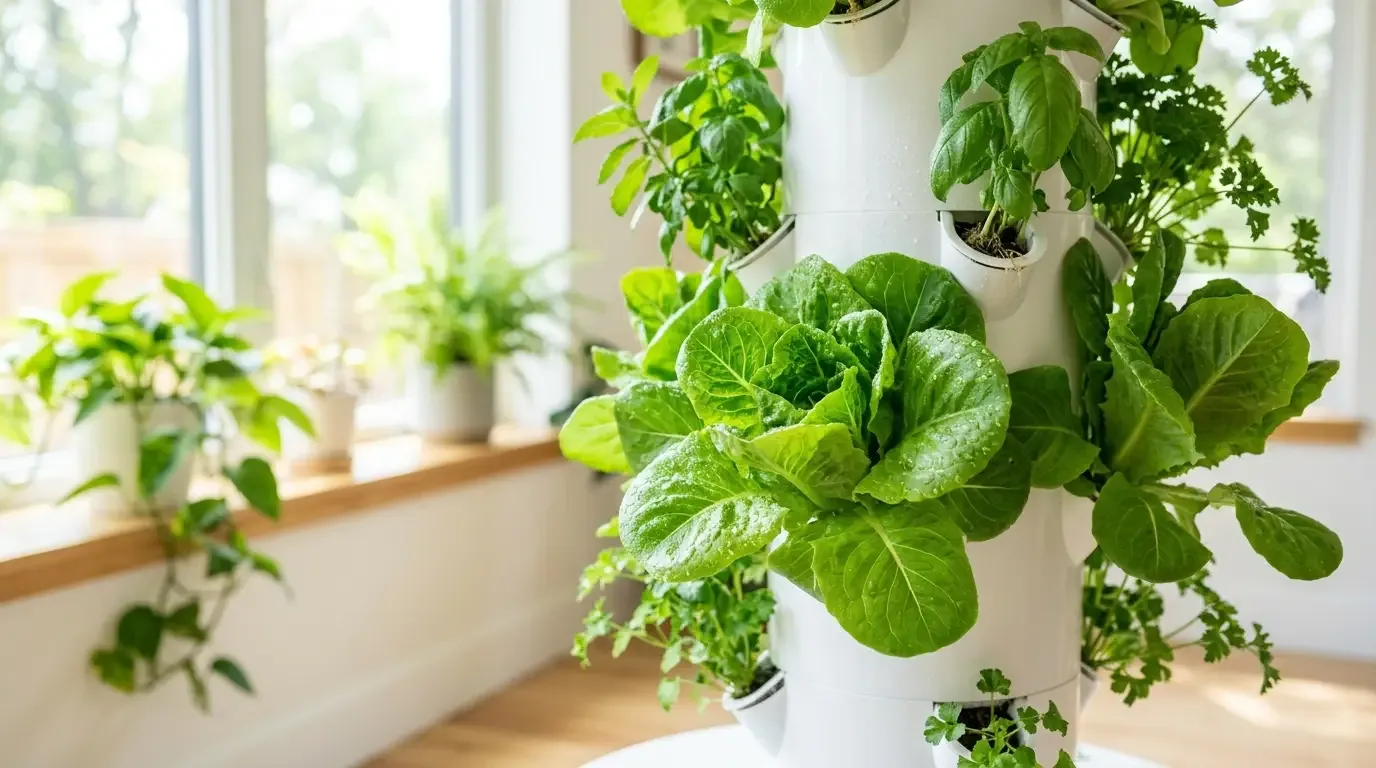
Aeroponic towers are vertical, soil-free columns that deliver water and fertilizer directly to exposed roots through internal misters. Net pots hold plant stems along the outer wall, while root systems hang inside the central cylinder. A submersible pump in the base reservoir lifts nutrient water through a central riser tube, atomizing it across internal spray nozzles before runoff drains back into the reservoir.
Suspending roots in air eliminates compaction. Unrestricted access to oxygen accelerates cellular metabolism, allowing plants to convert light and nutrients into vegetative growth quickly.
The Science Behind Aeroponic Towers
Aeroponics prioritizes root oxygenation. In Deep Water Culture (DWC), submerged roots depend entirely on dissolved oxygen pumped through submerged air stones. In an aeroponic tower, root tissue absorbs gaseous oxygen from ambient air inside the column.
Droplet diameter influences absorption efficiency:
- High-Pressure Aeroponics (HPA): Operating between 80 and 100+ PSI, high-pressure diaphragms shatter water into 30-to-80-micron droplets. This fine fog clings to root hairs without creating heavy liquid films, leaving air channels open.
- Low-Pressure Aeroponics (LPA): Consumer towers run centrifugal magnetic pumps under 30 PSI, creating coarser droplets (200–500 microns). These operate similarly to high-frequency vertical drip showers. While less efficient than laboratory HPA, low-pressure setups still deliver significantly more oxygen than submerged water systems.
Recirculation retains water: droplets that do not adhere to root hairs roll down internal walls back into the basin, reducing overall water consumption by roughly 90% compared to open soil beds.
True Aeroponics vs. Consumer Tower Systems
Retail garden towers (such as Tower Garden and Aerospring) use low-pressure centrifugal pumps. Industrial commercial aeroponics relies on high-pressure accumulator tanks, solenoid valves, and micro-fine brass nozzles.
Low-pressure consumer towers offer distinct practical benefits for residential growers: they operate quietly, avoid high-pressure line blowouts, and use wider nozzle orifices that resist clogging from hard tap water. While consumer units do not match laboratory droplet micron targets, their compact vertical yields outperform flat soil gardens.
Benefits of Aeroponic Towers
- High Plant Density: A vertical tower holding 30 to 44 crop slots occupies roughly two to three square feet of floor space.
- Closed-Loop Water Conservation: Recirculating reservoirs reuse unabsorbed spray runoff, cutting water consumption.
- Pathogen Reduction: Eliminating soil removes damping-off fungi, soil-borne nematodes, and weed seed contamination.
- Rapid Turnaround: Aerated root systems speed leaf development, allowing growers to harvest head lettuce in 25 to 30 days from transplant.
Setting Up an Aeroponic Tower
- Choose Your Tower: For residential growers, a vertical aeroponic tower systemView on Amazon holding 20 to 36 planting ports balances crop volume with manageable reservoir maintenance. Confirm the unit uses food-grade, UV-stabilized polypropylene.
- Assemble the Tower: Lock stacked segments into the base basin. Feed the riser pipe through the center and secure spray manifolds according to assembly schematics.
- Prepare Nutrient Solution: Fill the reservoir with filtered water, dissolve two-part or three-part hydroponic fertilizers, and target an EC of 1.2–1.6 mS/cm for salad greens. Adjust pH between 5.5 and 6.5. See our pH and EC management guide for specific crop calibrations.
- Insert Seedlings: Insert root plugs into net pots. Fill gaps with expanded clay pebbles to support crowns upright while keeping root filaments hanging free in the mist chamber.
- Calibrate Pump Cycles: Set digital timers to run for 30 seconds every 3 to 5 minutes. Observe root hydration after two hours to confirm droplets coat all levels.
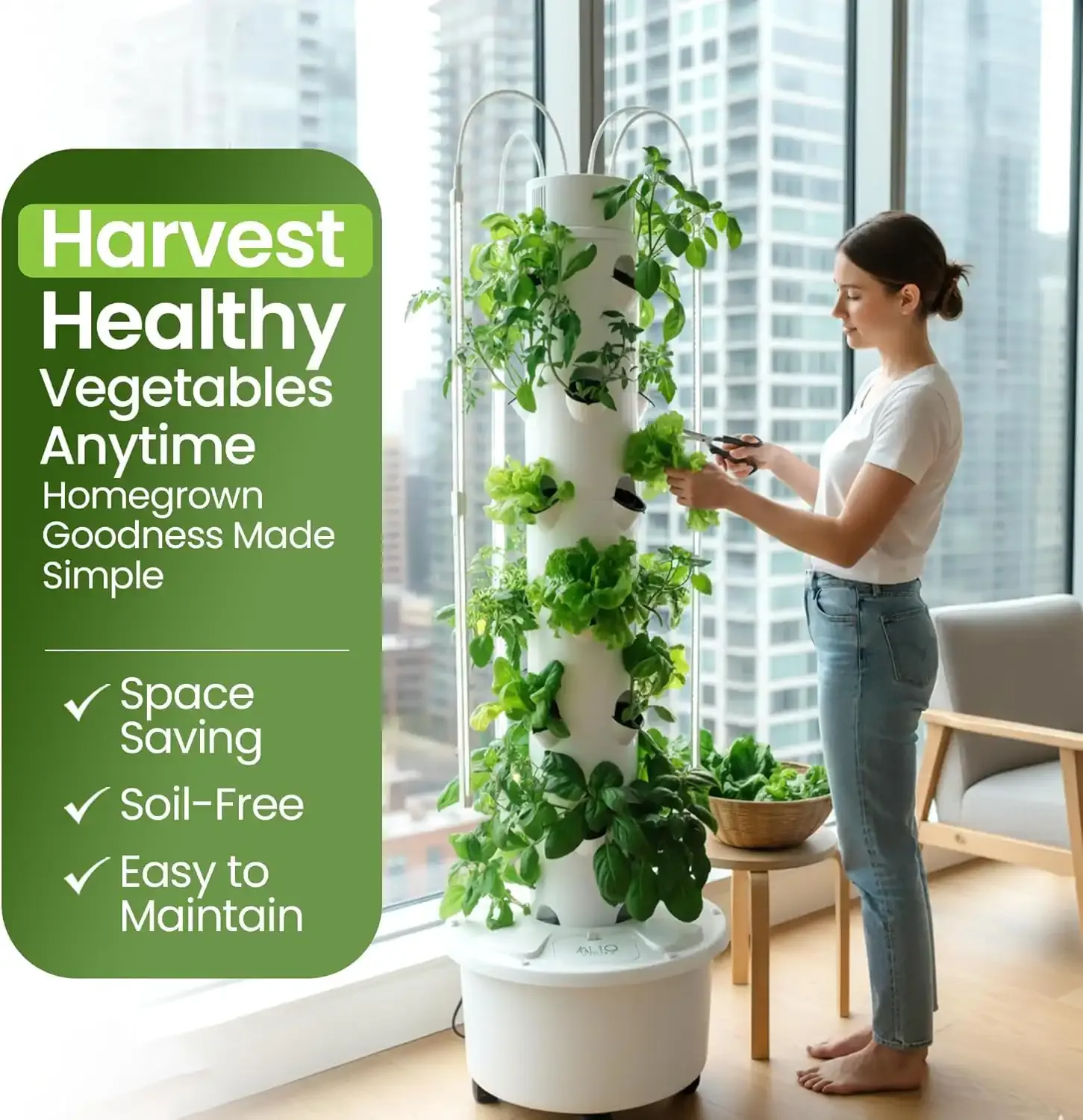
GX Hydroponic Tower
The GX Hydroponic Tower packs 24 plant slots into under three square feet and comes with everything you need to start on day one: adjustable LED grow lights with a built-in timer, a water pump with its own timer, 24 net pots, 30 rockwool cubes, A+B nutrients and a digital pH pen. That's the complete kit, no separate purchases to get growing. The build quality stands out too, 2mm thick tower walls with solid 360-degree construction means no leaky joints between sections, which is a common frustration with cheaper towers. One thing worth calling out: there's no monthly subscription. Some competing systems charge several hundred dollars a year to unlock features; GX doesn't. If you want a fully contained system that you own outright, this is the one I'd point beginners toward.

15-Pack Lettuce & Salad Greens Seeds Variety Pack
Leafy greens and lettuces are the most productive crops you can grow in a vertical tower and this variety pack gives you 15 different types, including romaine, buttercrunch, arugula, spinach and kale. It comes in a waterproof resealable bag with individual packets, which is handy for keeping seeds dry in damp grow rooms. The kit also includes some helpful mini gardening tools like leaf clippers, tweezers and a seed dibber tool that make handling tiny seeds and pruning seedlings much easier. With a tested germination rate of over 90%, you'll get very few duds in your rockwool plugs.
For seed starting protocols, read How to Germinate Seeds for Hydroponics for propagation methods using rockwool plugs and peat sponges.
Maintenance
Consistent tower maintenance requires three routine procedures:
- Monitor Solution Chemistry: Check pH and EC every two days. Transpiration causes water levels to drop and salt concentrations to rise. Top off with fresh dechlorinated water between full drain-and-refill cleanings every 14 days.
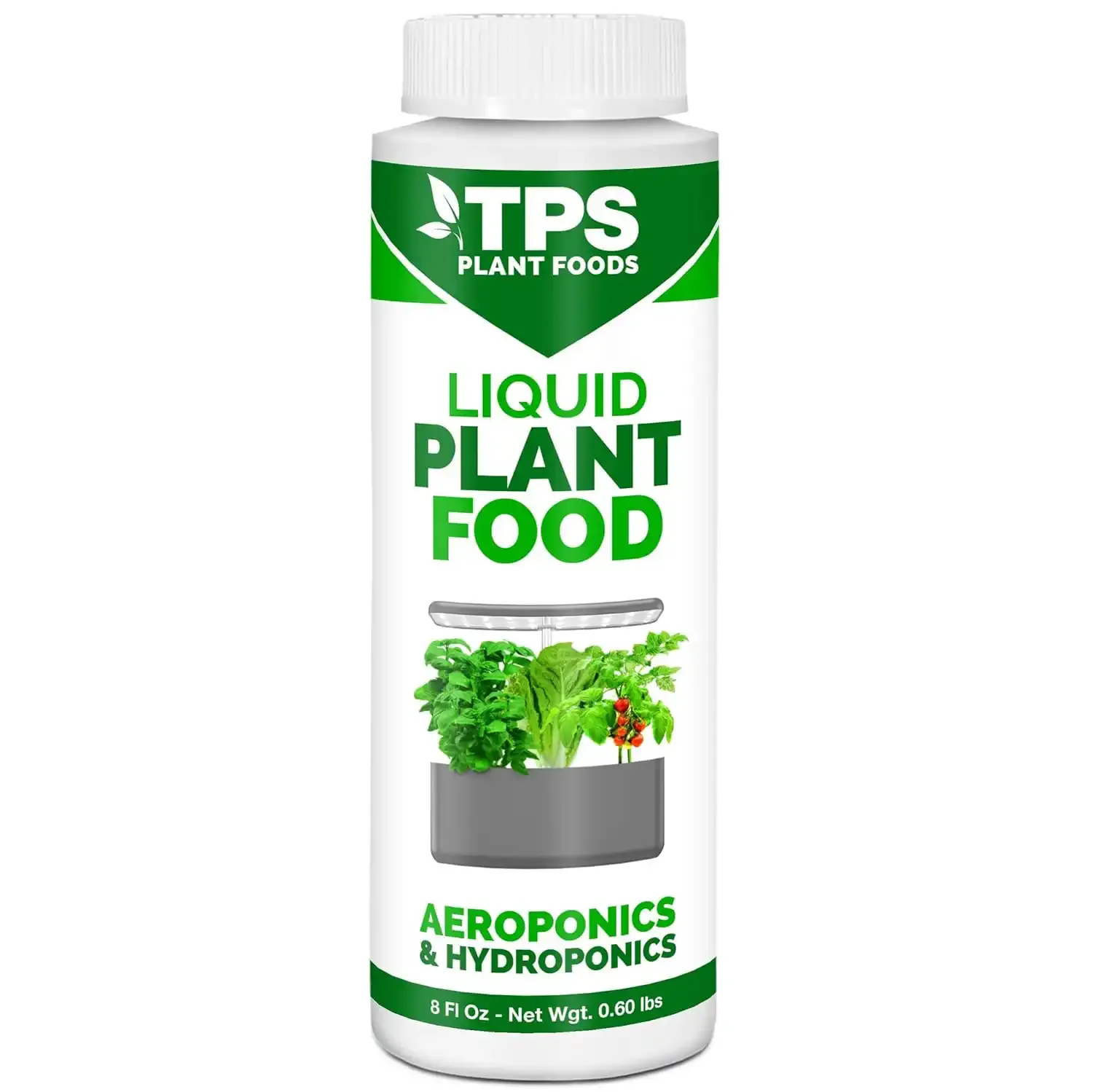
TPS Nutrients Liquid Plant Food
If you are running a countertop garden or a small indoor tower, a clean, fully water-soluble liquid nutrient is essential to prevent pump clogs. I like this TPS liquid plant food because it's formulated specifically for indoor hydroponic systems and mixes cleanly without leaving a heavy mineral crust in the reservoir. It provides balanced nutrition that supports both steady leaf growth and strong root systems for leafy greens and herbs. Because it is a pre-mixed liquid rather than a dry powder, it is much easier to measure out for quick reservoir top-offs.
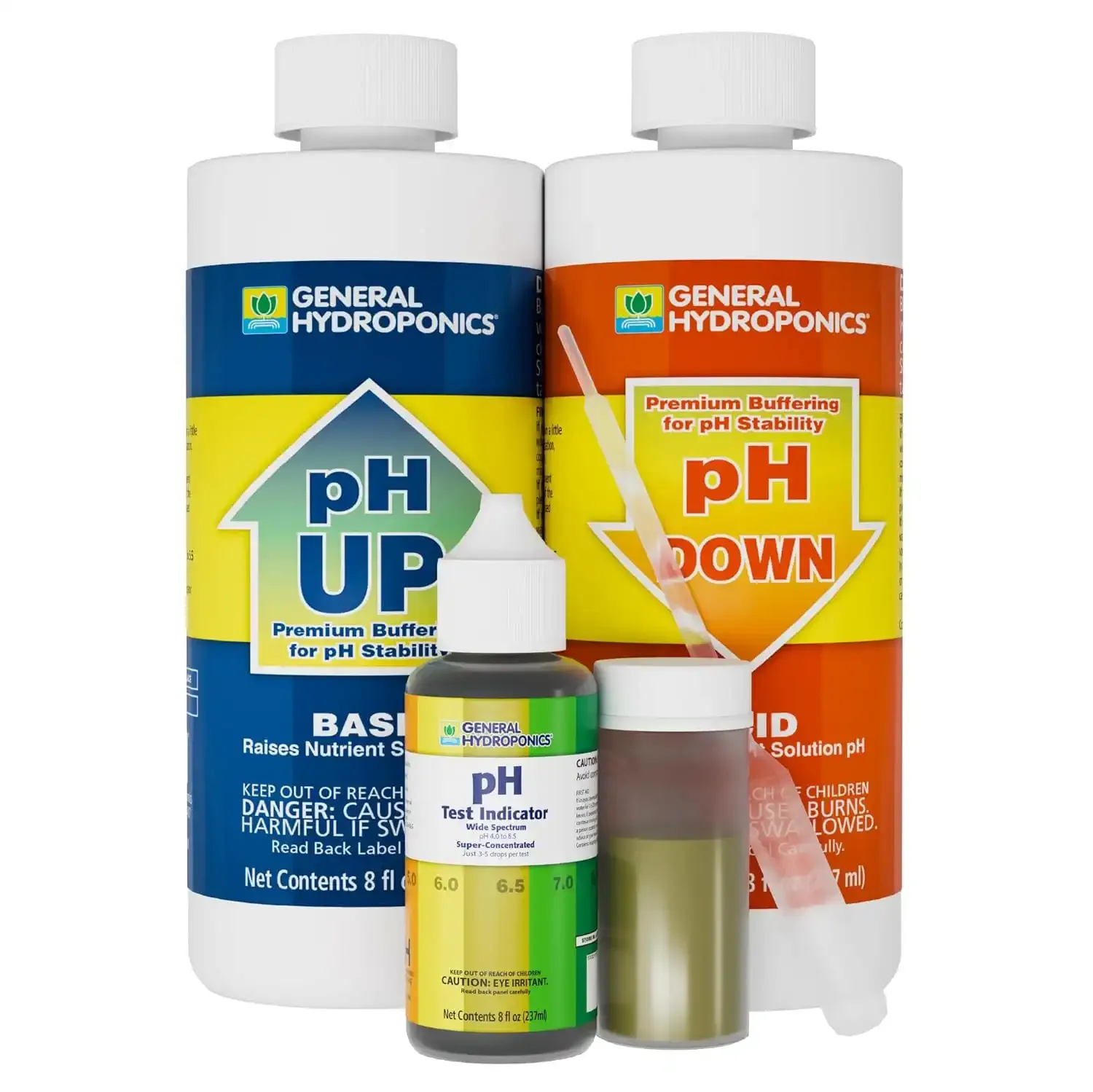
General Hydroponics pH Control Kit
Because vertical towers recirculate water, the pH of your nutrient solution will naturally drift. Keeping a pH control kit on hand is essential for keeping the water in the optimal 5.5–6.5 range. This kit includes pH Up and pH Down solutions, a test indicator bottle and a small vial. It is a simple, highly reliable liquid test kit that works as a backup or alternative to digital pens, giving you clear, color-coded results so you know exactly when to adjust your reservoir.
- Inspect Internal Nozzles: Remove clogged nozzles every two weeks and soak in warm vinegar to dissolve calcium and phosphate crusts. Using filtered or reverse osmosis water minimizes mineral precipitation.
- Examine Root Health: Pull two net pots weekly. Healthy aeroponic roots appear crisp, firm, and white. Brown, limp strands indicate fungal Pythium infections. If root rot begins, flush the reservoir, lower ambient water temperatures below 68°F (20°C), and dose food-grade hydrogen peroxide. For deeper diagnostic protocols, consult our guide to Troubleshooting Advanced Hydroponic Systems.
Common Challenges
- Power Vulnerability: Because roots hang in air without a water buffer, pumps that lose power dry out root hairs within 30 to 45 minutes. Connect tower pumps to an uninterruptible power supply (UPS) or battery backup.
- Nozzle Clogging: Salt buildup blocks mist output, starving individual plant tiers. Inspect internal manifolds bi-weekly.
- Nutrient Lockout: A drift in pH above 6.5 inhibits iron absorption, causing pale yellow striping on new leaf tissue (interveinal chlorosis). Balance pH before adding supplemental fertilizer.
Ideal Plants for Aeroponic Towers
Vertical columns favor plants with fibrous root systems and compact canopies:
- Leafy Greens: Romaine, butterhead, red oak leaf, kale, arugula, and Swiss chard flourish under intermittent misting.
- Culinary Herbs: Sweet basil, mint, oregano, cilantro, and chives produce dense foliage with high aromatic oil content.
- Day-Neutral Strawberries: Vertical columns keep strawberry runners and berries off wet surfaces, preventing fruit mold.
For broader species guidelines, consult The Best Hydroponic Plants for Beginners. If you are dedicating a tower to culinary seasonings, read 10 Easy-to-Grow Herbs You Can Grow Hydroponically Indoors.
System Comparison & Next Steps
Vertical aeroponic towers offer superior vertical density compared to horizontal troughs. While Deep Water Culture (DWC) remains simpler and more tolerant of power outages, towers produce more harvestable foliage per square foot of indoor space.
Once your tower frame is assembled, selecting clean, residue-free liquid fertilizers ensures pump lines stay clear. Our guide on How to Choose the Best Hydroponic Nutrients breaks down mineral formulations for indoor crops.
Editor’s Note: Parts of this guide were structured and optimized with the assistance of AI, then thoroughly reviewed, edited and expanded with first-hand growing experience by our author Raymond to ensure practical, real-world accuracy.
Frequently Asked Questions
How often should I mist roots in an aeroponic tower?
Most consumer aeroponic towers cycle misting pumps intermittently: 30 seconds of spraying followed by 3 to 5 minutes off. Roots should remain damp without water pooling at the base. If roots feel dry or tips turn white, shorten off-cycle intervals.
What nutrients do aeroponic towers need?
Aeroponic towers use fully water-soluble hydroponic fertilizers. Multi-part liquid mineral concentrates prevent nozzle clogs better than dry powders. Target an EC of 1.2–1.6 mS/cm for leafy greens and 1.6–2.2 mS/cm for fruiting crops like strawberries, maintaining pH between 5.5 and 6.5.
Can you grow tomatoes in an aeroponic tower?
Compact determinate dwarf varieties (such as Micro Tom or Tiny Tim) grow successfully in vertical towers. Indeterminate vining tomatoes develop root masses too large for tower chambers and become top-heavy without external trellis cages.
What is the difference between true aeroponics and consumer tower systems?
True high-pressure aeroponics operates at 80–100+ PSI with atomizing nozzles that produce 50-micron droplet fogs. Consumer garden towers operate at low pressure (under 30 PSI) using submersible pumps that spray larger droplets. Low-pressure towers function as hybrid mist-drip systems that remain productive for home gardens.
How do I prevent clogged misting nozzles in my aeroponic tower?
Mineral scale and precipitated fertilizer salts cause nozzle clogs. Flush reservoirs with fresh water every two weeks. If sprayers clog, soak removable nozzles in a 50/50 white vinegar and warm water bath for one hour. Reverse osmosis water eliminates calcium scaling.
Our Amazon Storefront
Browse all our recommended tools & supplies
Everything we personally use and trust, hand-picked for gardeners like you.

I've been running DWC and Kratky systems for several years and write about what actually works, not textbook theory. Follow along for honest product reviews, practical guides and real grow results.