As an Amazon Associate, I earn from qualifying purchases. Some links in this article are affiliate links, if you buy through them I may earn a small commission at no extra cost to you.
Quick Summary
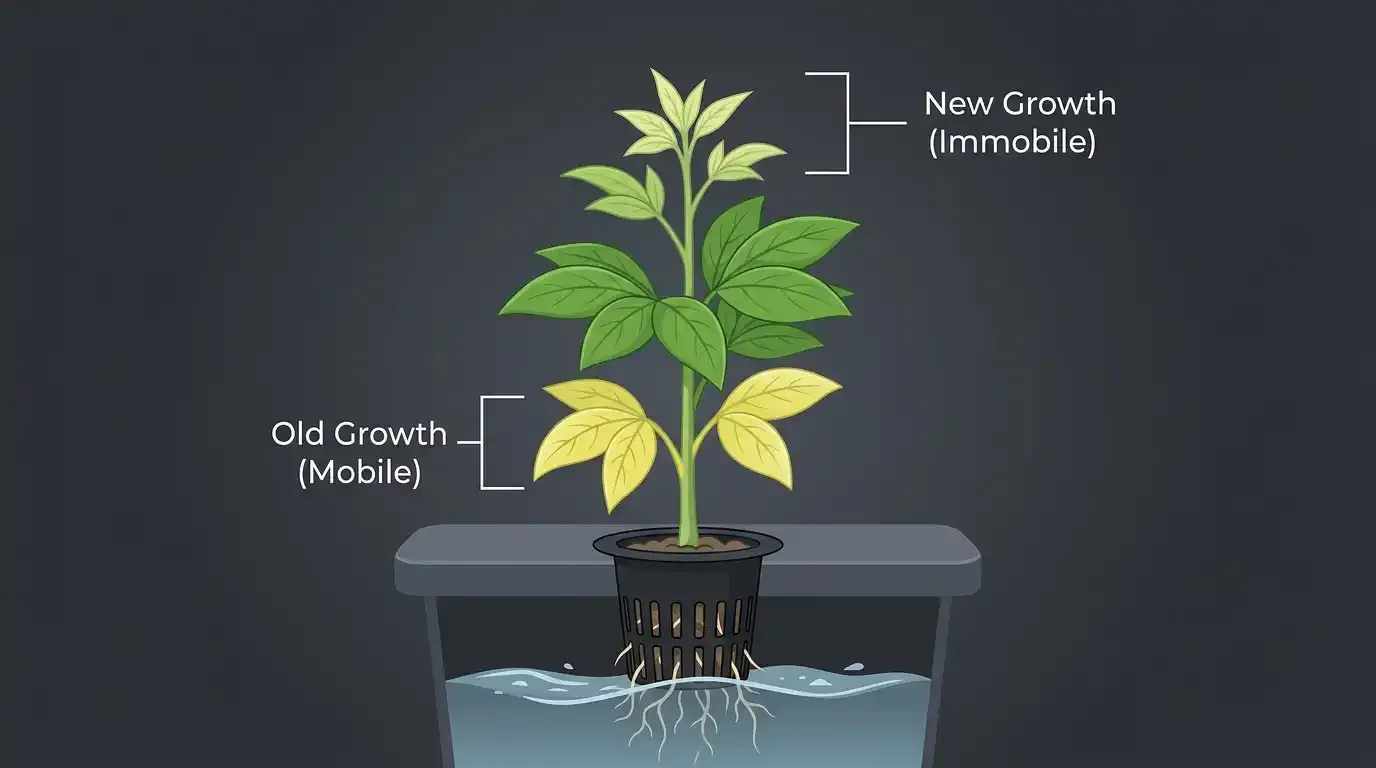
- Read the leaf position first: Mobile nutrients (N, P, K, Mg) show deficiency on old lower leaves; immobile nutrients (Fe, Ca, S, Mn) show it on new upper growth.
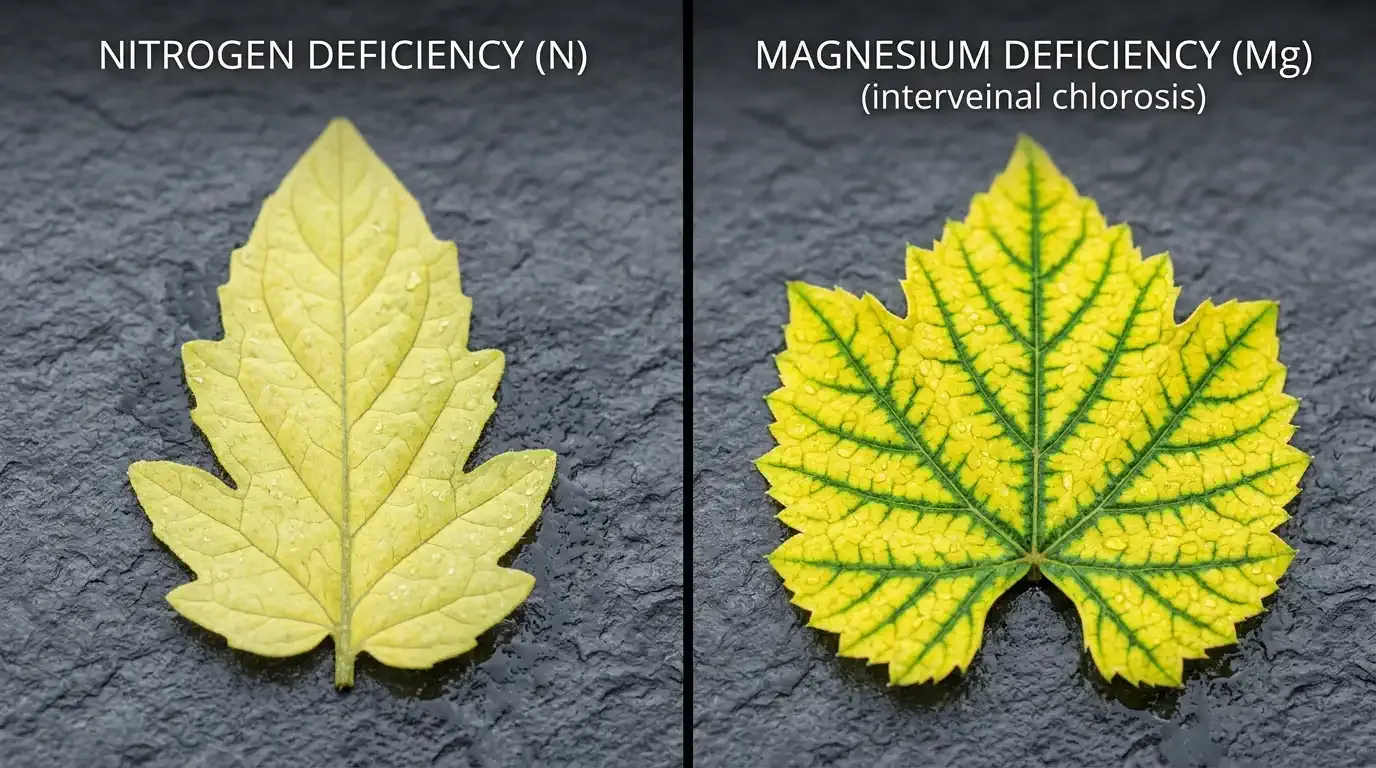
- Check vein colour: Interveinal chlorosis (yellow tissue, green veins) points to magnesium or iron; uniform yellowing veins included points to nitrogen or sulfur.
- pH before nutrients: Most “deficiencies” are lockouts caused by pH drift above 6.5, confirm pH and EC are in range before adding any supplement.
- The big four: Nitrogen (whole-leaf fade, bottom up), magnesium (green veins, lower leaves), iron (near-white interveinal, top growth), potassium (edge burn, older leaves).
- One change at a time: Make a single adjustment and allow a few days, new growth coming in healthy within a week confirms the correct fix.
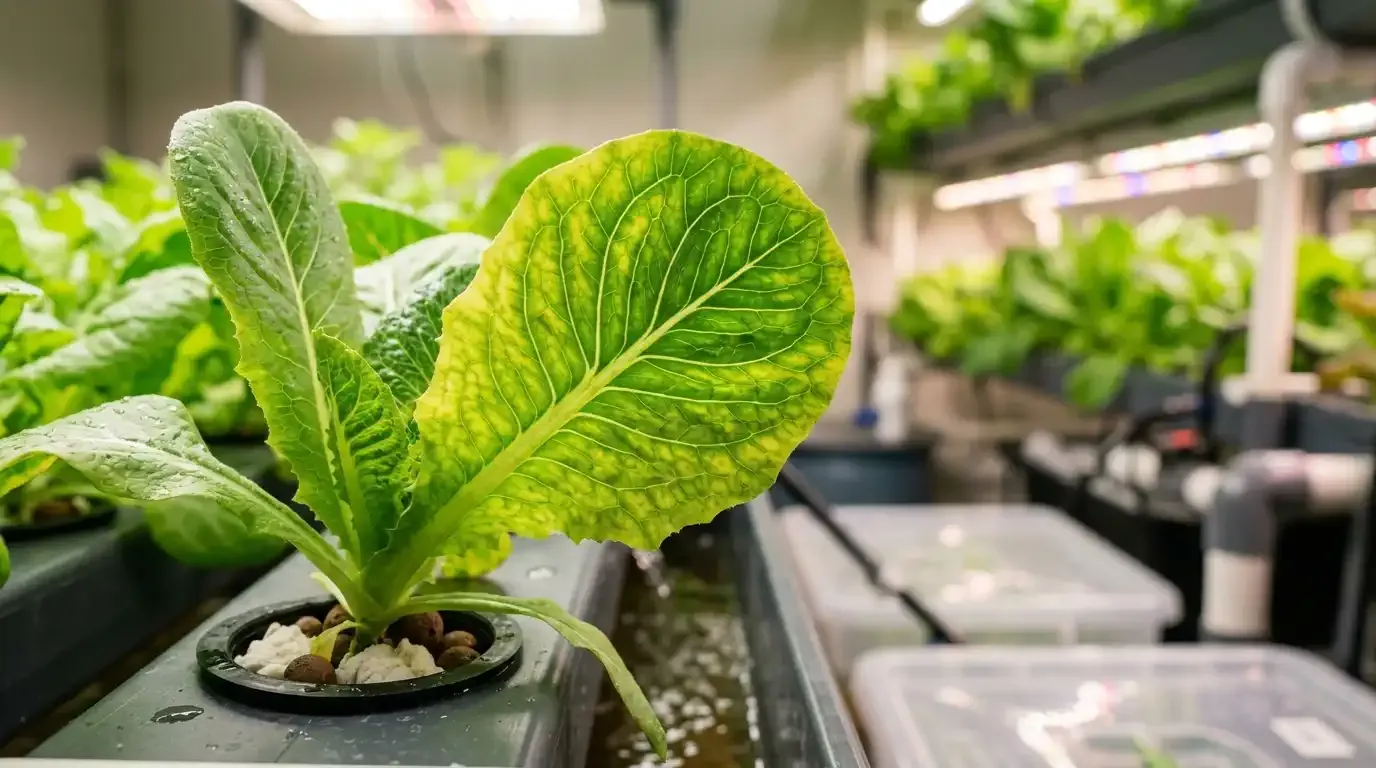
When hydroponic leaves begin yellowing, guessing at fertilizer additions can exacerbate underlying imbalances. Leaf chlorosis follows distinct biological patterns depending on whether the missing mineral is mobile or immobile within plant vascular tissue. By evaluating leaf position, vein coloration, and margin health, you can diagnose specific elemental deficiencies and apply targeted corrections.
Read the Leaf Before Adjusting the Reservoir
Two diagnostic observations narrow down the cause immediately:
Where on the plant does chlorosis appear? Mobile nutrients (nitrogen, phosphorus, potassium, magnesium) can be relocated by the plant from older leaves to support new vegetative growth. Deficiencies in these elements manifest on lower, mature foliage first. Immobile nutrients (iron, calcium, sulfur, manganese) remain bound in older cell walls; shortages appear on newly emerging top leaves and shoot tips.
Are the veins green or yellow? Interveinal chlorosis (chlorotic leaf tissue between dark green veins) indicates magnesium deficiency on lower leaves, or iron and manganese deficiency on new upper growth. Uniform yellowing across the entire leaf blade, including primary and secondary veins, points to nitrogen or sulfur deficiency.
Note
Understanding Nutrient Mobility:
- Mobile nutrients (Nitrogen, Potassium, Magnesium, and Phosphorus) can be relocated from older tissue to sustain growing tips. Deficiencies develop on lower, mature leaves first.
- Immobile nutrients (Iron, Calcium, Sulfur, Boron, and Copper) become permanently fixed in cellular walls. Deficiencies manifest exclusively on new foliage, active meristems, and roots.
Quick-Reference Diagnostic Chart
| Nutrient | Leaf Position | Visual Chlorosis Pattern | Corrective Action |
|---|---|---|---|
| Nitrogen (N) | Older, lower leaves | Uniform pale yellow; entire leaf fades, veins included | Increase base nitrogen or adjust vegetative formulation |
| Magnesium (Mg) | Older, lower leaves | Interveinal chlorosis; veins stay dark green; reddish margins | Supplement with Cal-Mag or Epsom salt (magnesium sulfate) |
| Potassium (K) | Older, lower leaves | Marginal chlorosis starting at tips, progressing to necrotic burn | Increase potassium ratio during flowering and fruiting stages |
| Iron (Fe) | New, upper shoots | Severe interveinal chlorosis; fine veins remain green, tissue turns ivory | Lower reservoir pH below 6.5; dose chelated iron (Fe-EDDHA) |
| Sulfur (S) | New, upper shoots | Uniform pale yellowing resembling nitrogen, but starts at top | Add sulfate-based minerals (calcium sulfate or magnesium sulfate) |
| Calcium (Ca) | Growing tips & new leaves | Hooked margins, stunted tips, brown necrotic spotting | Add Cal-Mag; stabilize reservoir temperature and transpiration |
| Manganese (Mn) | New, upper shoots | Interveinal yellowing with distinct mottled or checkered spots | Add trace mineral mix; verify solution pH is between 5.5 and 6.2 |
Note: For symptoms involving dark purple leaves, brittle stems, or bluish hues rather than yellow chlorosis, see our guide on non-yellow hydroponic deficiencies.
The Four Most Frequent Deficiencies
Nitrogen: The most common macronutrient deficit. Because nitrogen is highly mobile, symptoms always start on the lowest, oldest leaves. The entire leaf blade fades from deep green to light lime-green, eventually bleaching to pale yellow. Vegetative crops require high nitrogen ratios; deficiencies often occur when transitioning prematurely to low-nitrogen bloom fertilizers. For stage-specific mixing advice, consult our guide on choosing the best hydroponic nutrients for your garden.
Magnesium: Easily mistaken for nitrogen deficiency at a casual glance. The critical distinction is vein retention: magnesium-deficient leaves keep their vascular veins dark green while interveinal tissue yellows, sometimes developing bronzed margins before dropping. Reverse osmosis filtration and rainwater systems frequently show magnesium deficiencies unless supplemented with a Cal-Mag additive.
Iron: Manifests exclusively on new upper leaves because iron cannot be mobilized from mature tissue. The interveinal chlorosis can become so pronounced that new leaves appear bleached white against fine green veins. In most hydroponic setups, this is caused by high pH (above 6.5) converting dissolved iron into an insoluble precipitate rather than an actual absence of iron salts.
Potassium: Displays as marginal yellowing along the outer edges of older leaves. As deficiency progresses, margins scorch and curl upward into dry, brittle edges. Heavy fruiting crops like tomatoes and peppers consume potassium rapidly during fruit swell, requiring higher concentrations mid-cycle.
Non-Nutrient Causes of Leaf Yellowing
Foliage yellowing is not always caused by nutrient shortages. Non-nutritional factors frequently trigger identical symptoms:
- pH Lockout: If reservoir pH drifts above 6.5 or below 5.5, roots cannot absorb dissolved minerals regardless of fertilizer concentration. Review our guide to managing hydroponic pH levels to stabilize reservoir acidity before altering nutrient dosing.
- Root Hypoxia and Algae: If yellowing occurs alongside water cloudiness, slimy root coats, or low dissolved oxygen, opportunistic algae or root rot pathogens are likely choking root respiration. Consult our algae prevention guide for sanitation steps.
- Insect Feeding: Stippled yellow dots, fine webbing, or sticky honeydew indicate pest colonies feeding on plant sap. Review our breakdown of common hydroponic pests and how to manage them to identify mites, aphids, and thrips.
Diagnostic Verification Protocol
Before adding mineral supplements, verify both pH and EC. Most apparent deficiencies stem from pH-induced lockouts rather than actual mineral shortages in the water. Adding concentrated supplements to an out-of-range reservoir elevates EC without restoring uptake.
If pH (5.5–6.5) and EC are verified within target ranges for your crop stage, make one single targeted nutrient adjustment. Allow 3 to 5 days to observe results: while existing chlorotic leaf tissue may not fully recover, newly emerging shoots will show clean, vibrant green growth.
Editor’s Note: Parts of this guide were structured and optimized with the assistance of AI, then thoroughly reviewed, edited and expanded with first-hand growing experience by our author Raymond to ensure practical, real-world accuracy.
Frequently Asked Questions
Why are my hydroponic leaves turning yellow?
Yellow leaves in hydroponics are most commonly caused by nitrogen deficiency, pH-induced nutrient lockout, magnesium deficiency or iron deficiency. Check pH first, if it has drifted outside 5.5–6.5, nutrients become chemically unavailable even when they're present in the reservoir. Then examine which leaves are affected: old leaves yellowing uniformly points to nitrogen or magnesium; new growth yellowing with green veins points to iron or manganese.
How do I tell the difference between nitrogen and magnesium deficiency?
Both start on older, lower leaves, but the vein colour gives it away. Nitrogen deficiency causes the entire leaf, veins included, to fade to pale yellow-green. Magnesium deficiency causes interveinal chlorosis, the tissue between the veins yellows while the veins themselves stay green, sometimes progressing to a rust or purple tinge at the leaf edges.
Why does iron deficiency show up on new leaves, not old ones?
Iron is an immobile nutrient, once it is fixed in older leaf tissue, the plant cannot relocate it to new growth. So when iron supply runs short, new leaves at the top of the plant show the deficiency first, with interveinal yellowing so severe the leaves can look almost white. In most cases the problem is not an iron shortage but pH above 6.5 locking iron out at the root.
Should I add more nutrients when I see yellow leaves?
Not immediately. First check pH and EC. A large share of apparent deficiencies are lockouts caused by pH drift; adding more nutrients to a reservoir that already has enough simply raises EC without fixing the absorption problem. Confirm pH is in range and EC matches your growth stage, then make one targeted adjustment and allow a few days before evaluating.
What causes yellowing at leaf edges and tips in hydroponics?
Edge and tip yellowing on older leaves is the classic sign of potassium deficiency. It begins as yellowing at the margins and tips, then progresses to brown, crispy edges as the tissue dies. It is most common mid-to-late bloom when heavy-fruiting plants pull potassium faster than a standard feed schedule replenishes it.
Our Amazon Storefront
Browse all our recommended tools & supplies
Everything we personally use and trust, hand-picked for gardeners like you.

I've been running DWC and Kratky systems for several years and write about what actually works, not textbook theory. Follow along for honest product reviews, practical guides and real grow results.