As an Amazon Associate, I earn from qualifying purchases. Some links in this article are affiliate links, if you buy through them I may earn a small commission at no extra cost to you.
Quick Summary
- Key Pests: Learn to identify aphids, spider mites, whiteflies, thrips and fungus gnats early.
- Prevention First: Quarantine new plants and keep the grow room clean to avoid infestations.
- Biological Controls: Use beneficial insects like ladybugs and predatory mites to combat pests naturally.
- Organic Sprays: Apply neem oil, insecticidal soap or horticultural oils to treat outbreaks.
- Sticky Traps: Hang yellow sticky cards to monitor flying pests and reduce adult populations.
Hydroponic pests are insects and mites that colonize indoor growing environments. Because indoor grow rooms lack outdoor predators, parasitic wasps, and soil-dwelling competitors, pest populations can multiply rapidly once introduced.
What begins as a few stray aphids on a single plant can quickly expand across an entire recirculating system if left unaddressed. Fortunately, controlled indoor systems allow for rigorous daily monitoring and targeted intervention before colonies spread.
Hydroponic Pests at a Glance
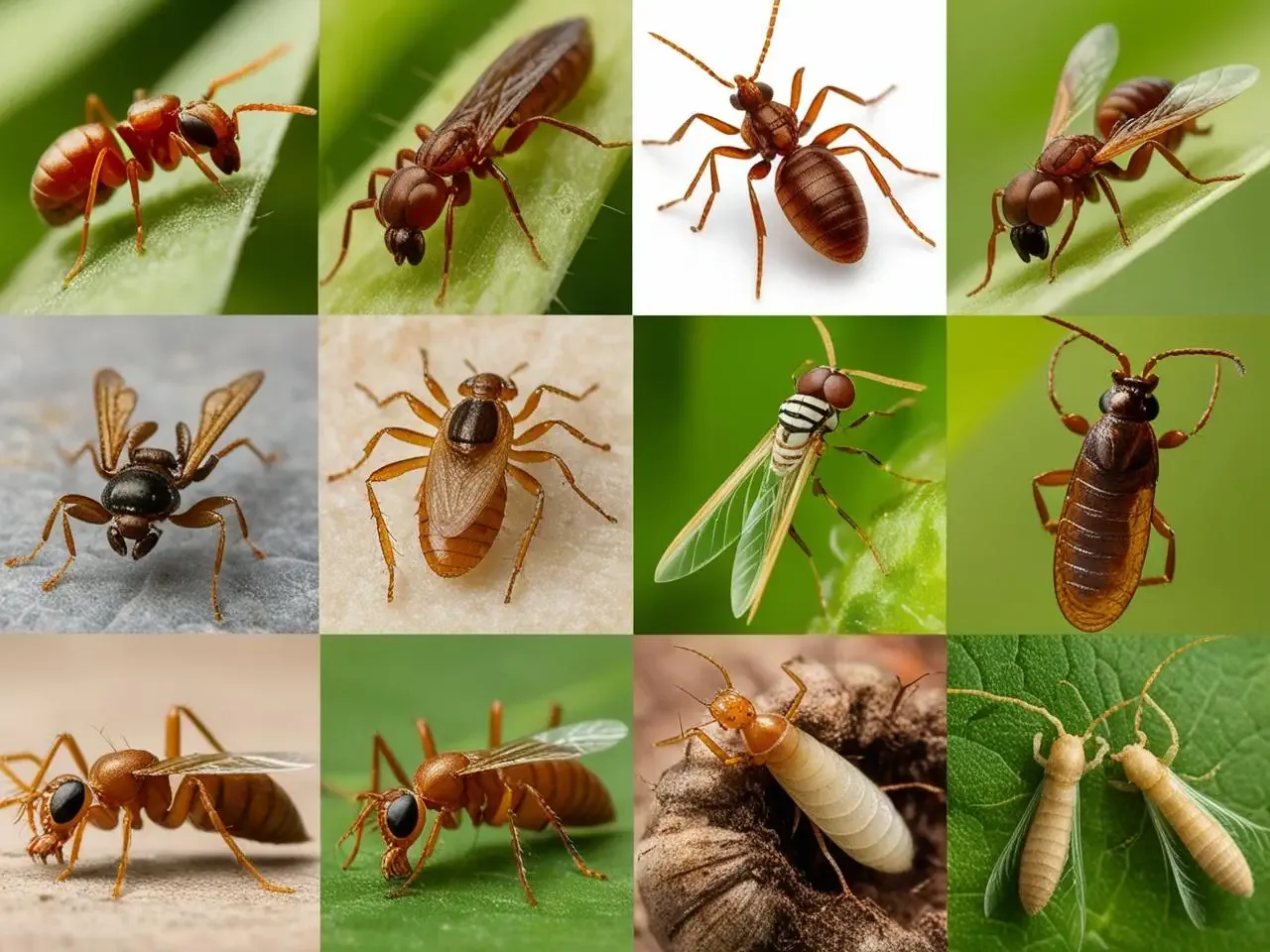
The table below outlines identification marks and primary treatments for common indoor pests:
| Pest | Identifying Marks | Primary Treatment |
|---|---|---|
| Aphids | Pear-shaped, clustered on new shoots; curled leaves | Insecticidal soap, neem oil spray, ladybugs |
| Spider Mites | Fine webbing between petioles; bronze leaf stippling | Miticide spray, alcohol wipe, raise humidity |
| Whiteflies | Cloud of tiny white moths when disturbed; sticky honeydew | Yellow sticky cards, insecticidal soap |
| Thrips | Silvery or bronze feeding streaks; slender, rapid crawling | Blue sticky cards, predatory pirate bugs |
| Fungus Gnats | Small black gnats near media; root hair damage | 3% hydrogen peroxide drench, yellow cards |
| Root Aphids | Pale, waxy insects on root mass; stalled uptake | Full reservoir sanitization, root drench |
Here is how to identify and control each of these six common pests.
1. Aphids
Identification
Small, pear-shaped insects ranging in color from pale green and yellow to black. They cluster on tender young shoots and leaf undersides, extracting sap and causing foliage to cup and curl. In a passive Kratky lettuce setup, an uncontrolled colony can ruin leaf quality in less than a week.
Prevention and Control
- Beneficial Predators: Ladybugs (Hippodamia convergens) and green lacewing larvae work well inside enclosed grow tents. Introduce predators early when populations are low; biological controls cannot overwhelm established infestations.
- Neem OilView on Amazon: Dilute cold-pressed neem oil to 1–2% in warm water with a drop of unscented liquid soap as an emulsifier. Spray leaf undersides thoroughly when grow lights turn off to prevent leaf scorch.
- Yellow Sticky TrapsView on Amazon: Hang cards level with the crop canopy to intercept winged adults moving between plants.
2. Spider Mites
Identification
Microscopic arachnids that reveal themselves through fine webbing between stems and petioles. Feeding appears as tiny yellow stippling or a bronze sheen on upper leaf surfaces. Spider mites reproduce rapidly in warm, dry environments with low air movement.
Prevention and Control
- Humidity and Airflow: Spider mites struggle to reproduce when relative humidity stays above 60%. Oscillating canopy fans create continuous air movement that disrupts webbing.
- Isopropyl AlcoholView on Amazon: Dilute 70% alcohol with equal parts water and wipe affected leaves with a soft cloth for isolated infestations.
- Targeted Miticides: For severe outbreaks, use an organic miticide formulated with sulfur or pyrethrins. Rotate between two different active modes of action to prevent resistant mite strains.
3. Whiteflies
Identification
Minute, powdery-white insects that flutter upward in a cloud when the canopy is shaken. Both nymphs and adults feed on plant sap and secrete sticky honeydew, which fosters black sooty mold on foliage.
Prevention and Control
- Yellow Sticky TrapsView on Amazon: The most reliable passive control for adult whiteflies. Place cards directly above the plant canopy and replace once filled.
- Insecticidal SoapView on Amazon: Spray directly onto leaf undersides to smother nymphs and feeding adults. Repeat applications every 4–5 days across two full weeks to target newly hatched generations.
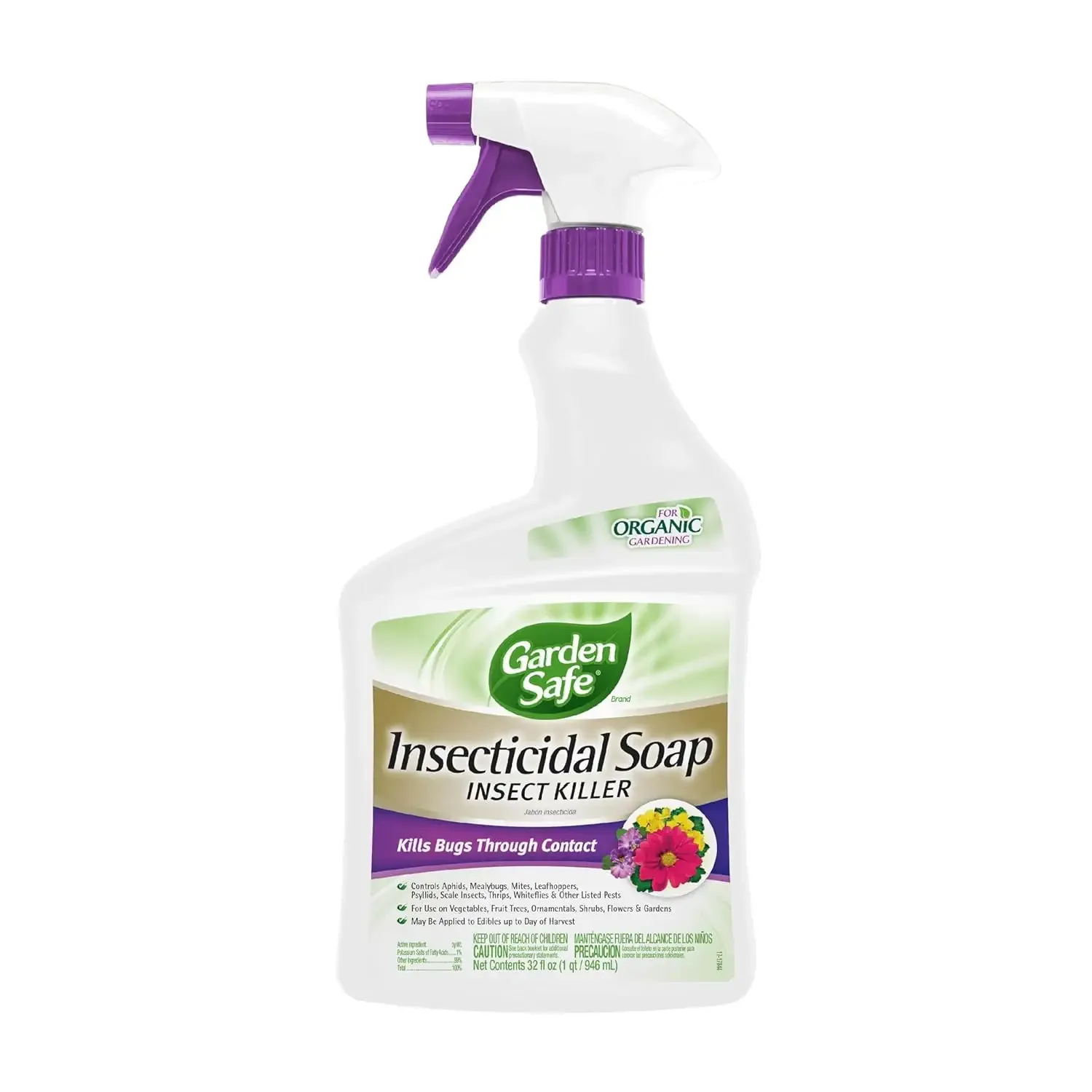
Garden Safe Insecticidal Soap
Works against soft-bodied pests including whiteflies, aphids and spider mites on contact. I use the ready-to-use spray in the grow tent, it's effective on whiteflies and aphids, less so on spider mites once they're established. Apply to undersides of leaves, not just the canopy tops and repeat every 4–5 days for two full cycles. It doesn't kill eggs, so consistency matters more than dose.
4. Thrips
Identification
Slender, fast-crawling insects measuring 1–2mm with fringed wings. Thrips puncture plant cells and scrape out fluids, leaving behind irregular, silvery scars peppered with tiny black fecal spots. On fruiting crops like tomatoes and peppers, feeding distorts blossoms and scars developing fruit.
Prevention and Control
- Blue Sticky TrapsView on Amazon: Thrips are drawn more strongly to blue wavelengths than yellow. Hang blue cards at canopy level to monitor incoming populations.
- Predatory Bugs: Minute pirate bugs (Orius insidiosus) actively hunt thrips across all life stages and adapt well to greenhouse and tent conditions.
- Spinosad SpraysView on Amazon: A fermentation-derived soil bacterium that provides effective organic knockdown of feeding thrip nymphs.
5. Fungus Gnats
Identification
Small, dark, mosquito-like gnats that fly weakly around growing media and reservoir lids. While adult gnats cause little direct harm, their subterranean larvae consume fine root hairs and organic sediment. Damage weakens water uptake and opens root tissue to fungal pathogens. In rockwool and clay pebble setups, infestations remain rare unless decaying algae or roots accumulate; they appear more frequently in coco coir and peat plugs.
Prevention and Control
- Yellow Sticky Traps: Position sticky cards flat against net cup covers to catch egg-laying adults.
- Hydrogen Peroxide DrenchView on Amazon: Drench media with a 3% hydrogen peroxide solution (1 part H2O2 to 4 parts water) to eliminate larvae on contact.
- Beneficial Nematodes: Inoculate media with Steinernema feltiae nematodes, which seek out and consume gnat larvae in the root zone.
6. Root Aphids
Identification
Unlike foliar aphids, root aphids live entirely below the collar in root zones. Because they stay hidden, infestations are rarely discovered until crops exhibit severe nutrient deficiencies, leaf chlorosis, and stunting that fail to respond to EC corrections. Inspect root balls and reservoir walls for small, waxy, pale insects moving along root strands.
Prevention and Control
- Strict Quarantine: Root aphids enter setups almost exclusively via outdoor plants, cuttings, or unsterilized equipment. Isolate incoming clones for 14 days before introducing them to your system.
- Complete System Sanitization: Once confirmed, harvest mature crops, drain the reservoir, and sanitize all plumbing with a dilute bleach or peroxide solution. Learn full sterilization steps in our guide on preventing algae and system pathogens.
- Botanical Root Drench: Submerge roots in an organic pyrethrin or azadirachtin solution during active vegetative cycles.
Proactive Pest Prevention Practices
- Sanitize Hardware Between Cycles: Clean trays, reservoirs, submersible pumps, and airlines with a 10% bleach solution between runs to destroy lingering eggs.
- Maintain Plant Health: Robust, healthy crops resist pest feeding far better than stressed plants. Keep reservoir pH and EC in optimal balance to prevent physiological stress signals that attract insects.
- Quarantine New Stock: Never transfer an outdoor plant or uninspected clone directly into an active hydroponic reservoir.
- Inspect Undersides Daily: Make a quick morning check of lower leaf surfaces and sticky trap counts part of your standard routine.
If crops continue to exhibit yellowing or leaf drop despite negative pest checks, the underlying issue is likely chemical rather than biological. Consult our step-by-step walkthrough on how to troubleshoot common hydroponic problems to diagnose root rot, pH lockouts, and salt burn.
Editor’s Note: Parts of this guide were structured and optimized with the assistance of AI, then thoroughly reviewed, edited and expanded with first-hand growing experience by our author Raymond to ensure practical, real-world accuracy.
Frequently Asked Questions
How can I prevent fungus gnats in my indoor garden?
Avoid leaving standing water or wet organic media exposed and use yellow sticky cards to trap flying adults before they lay eggs. In rockwool or clay pebble systems, there's very little for larvae to feed on, so infestations rarely take hold unless there's decaying organic matter present.
Is neem oil safe for hydroponic crops?
Yes, organic cold-pressed neem oil is safe and effective for treating soft-bodied pests like aphids and spider mites when diluted with water and mild soap. Avoid spraying directly into your reservoir, apply only to foliage and rinse leaves with clean water 24 hours after treatment to avoid any residue buildup in the solution.
How do I tell fungus gnats apart from fruit flies?
Fungus gnats are slightly smaller, with longer legs and a more delicate, mosquito-like body. Fruit flies are rounder and faster-moving. More reliably: if you find them near your growing medium rather than near ripe fruit, they're almost certainly fungus gnats. The larvae, not the adults, are the real problem and they'll be in the root zone.
When should I escalate from organic treatment to something stronger?
If you've done two full rounds of neem oil or insecticidal soap applications (roughly 5–7 days apart) and the infestation isn't visibly reducing, it's time to escalate. At that point, isolate the affected plants if possible and switch to a targeted miticide or pyrethrin-based spray. Continuing ineffective organic treatment just gives the colony more time to spread.
Why do spider mites keep appearing in my indoor grow tent?
Spider mites thrive in hot, low-humidity environments with poor air circulation. You can prevent them by keeping your relative humidity above 60% and using oscillating fans to constantly disrupt the canopy air, making it difficult for them to establish their webs.
Our Amazon Storefront
Browse all our recommended tools & supplies
Everything we personally use and trust, hand-picked for gardeners like you.

I've been running DWC and Kratky systems for several years and write about what actually works, not textbook theory. Follow along for honest product reviews, practical guides and real grow results.