As an Amazon Associate, I earn from qualifying purchases. Some links in this article are affiliate links, if you buy through them I may earn a small commission at no extra cost to you.
Quick Summary
- LED Dominance: Choose LED grow lights over HID for lower electricity bills and minimal heat output.
- Key Metrics: Ignore generic ‘wattage equivalents’ and focus on actual power draw and PPFD maps.
- Full Spectrum: Select full-spectrum LEDs that emit white light containing blue, red and far-red wave lengths.
- Light Height: Keep grow lights 12-24 inches away from seedlings to prevent leaf scorch and heat stress.
- Coverage Area: Size your light footprint to match your physical grow tent or shelf dimensions.
Selecting an LED grow light requires matching fixture intensity to canopy surface area. An oversized panel over a desktop jar wastes electricity and scorches seedlings, while an underpowered clip-on produces weak, leggy crops that stretch toward the ceiling.
Here is an evaluation of PAR, PPFD, and true wattage draw, along with five beginner-tested fixtures for various indoor footprints.
1. Why LED Fixtures Fit Indoor Hydroponics
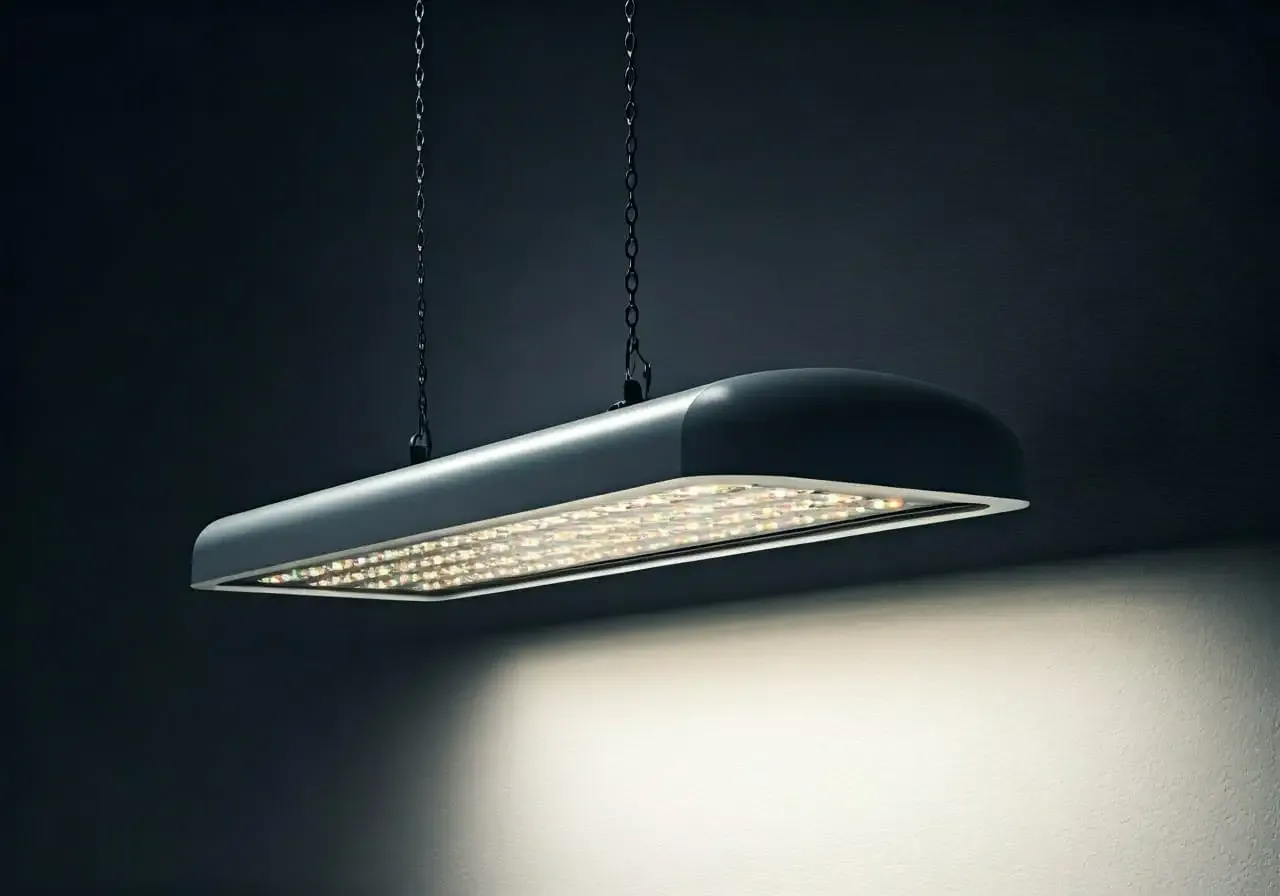
LED fixtures emit photosynthetically active wavelengths while drawing significantly less current than legacy metal halide (MH) or high-pressure sodium (HPS) fixtures. In enclosed indoor setups, cooler running temperatures prevent reservoir water from heating above 70°F (21°C), protecting roots from fungal rot.
2. Technical Evaluation Criteria
- Light Spectrum: Full-spectrum white LEDs combine 400–500nm blue photons (which prevent stretching during early vegetative growth) with 600–700nm deep red photons (which fuel dense foliage and fruiting).
- PAR and PPFD: Photosynthetically Active Radiation (PAR) designates the 400–700nm spectrum plants assimilate. Photosynthetic Photon Flux Density (PPFD) measures photon density delivered to the canopy per second (µmol/m²/s). Aim for 200–350 µmol/m²/s for seedlings and herbs, and 500–700 µmol/m²/s for mature fruiting canopies.
- True Power Draw vs. Equivalent Ratings: Ignore deceptive “1,000-watt equivalent” labels on packaging. Look exclusively at wall-plug power consumption (true watts). A reliable baseline is 30 to 40 true watts per square foot of illuminated canopy.
- Thermal Management: Aluminum heatsinks dissipate heat passively from driver boards without noisy fans. Ensure your grow area maintains air circulation to prevent heat buildup. For auxiliary gear, see our guide on 10 must-have tools for hydroponics.
3. Top 5 LED Grow Lights for Beginners
1. LBW Desk Grow LightView on Amazon
- Specifications: 214 full-spectrum diodes (380nm–780nm), gooseneck arm, integrated 4/8/12-hour cycle timer, 6 brightness steps.
- Testing Notes: The clamp and gooseneck arm hold position securely over desktop reservoirs. At 12 inches above canopy, seedlings develop tight internodal spacing without leaf curl.
- Pros: Integrated timer and versatile height adjustment.
- Cons: Dual-head panel takes up table area; limited to one or two containers.
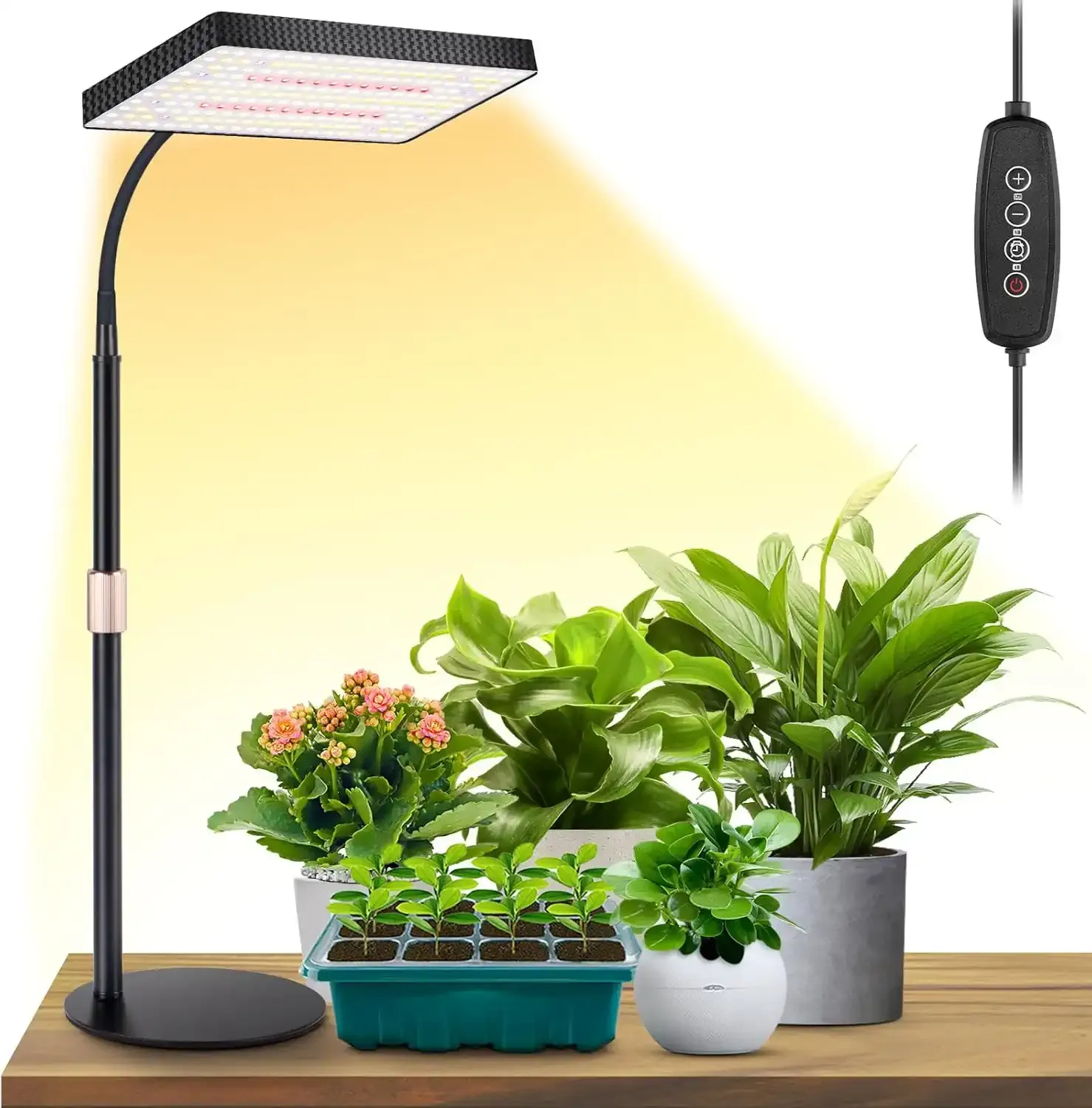
LBW Desk Grow Light
Full Spectrum Plant Light for Indoor Plants, Grow Lamps with 4/8/12H Timer, Height Adjustable, 6 Brightness Levels
2. DOMMIA LED Grow LightView on Amazon
- Specifications: Lightweight clip-on frame, USB power interface, full-spectrum diodes, integrated timer.
- Testing Notes: Operates from standard USB power adapters. Heat output is negligible, making it practical for windowsill seed trays. Due to low PPFD output, mature plants stretch if not placed in ambient room light.
- Pros: Simple setup with low power draw.
- Cons: Low photon intensity; best reserved for propagation trays and small microgreens.
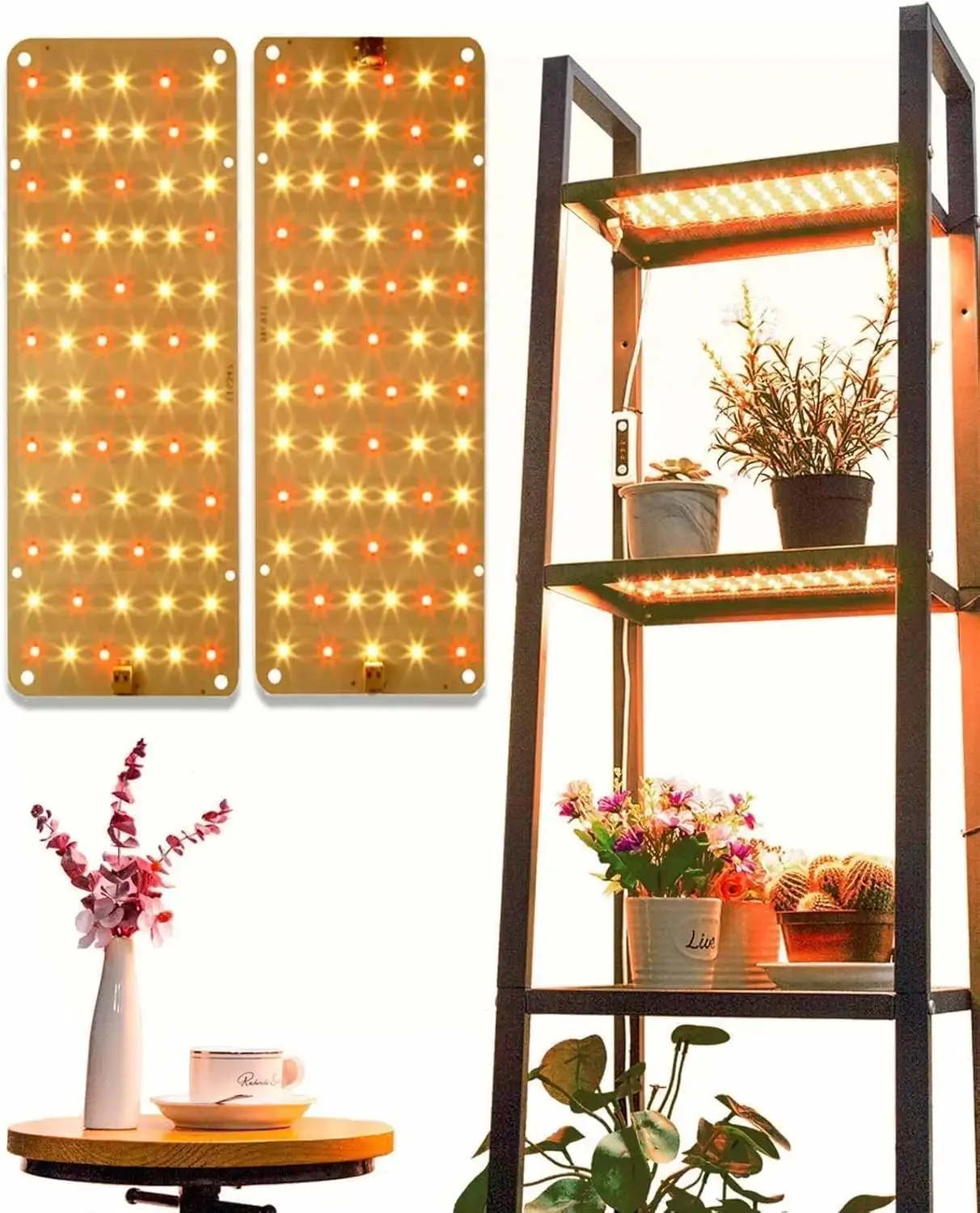
DOMMIA LED Grow Light
Compact clip-on full-spectrum grow light with built-in timer and USB power. Best for seedlings and small herb setups.
3. FECiDA 6000 Lumen Dimmable Grow LightView on Amazon
- Specifications: Quantum board style panel with red and blue diodes, 10–100% dimmer dial, daisy-chain power ports.
- Testing Notes: Suspended 18 inches above a DWC lettuce tray at 80% power, this panel accelerates head development compared to clip-on lights. The passive aluminum heatsink runs warm but requires no internal fan.
- Pros: Strong coverage for a 1.5×1.5 ft area; daisy-chain port simplifies adding secondary panels.
- Cons: Requires overhead suspension hooks or a rack frame.
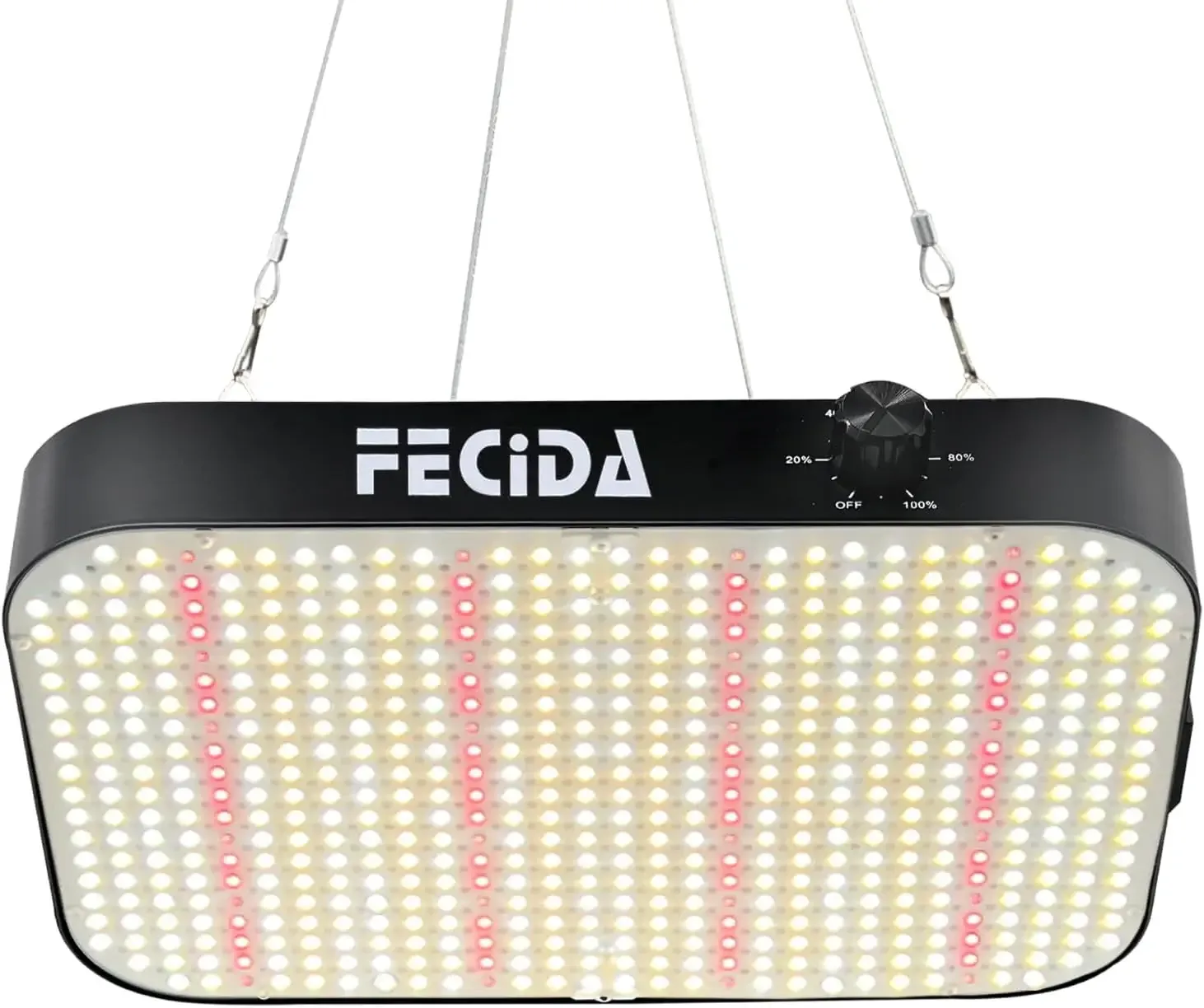
FECiDA 6000 Lumen Dimmable Grow Light
Full spectrum panel with red and blue LEDs, adjustable brightness and daisy chain function. Solid coverage for small hydroponic gardens.
4. GE BR30 LED Grow Light BulbView on Amazon
- Specifications: Standard BR30 bulb housing, standard E26 screw-in base, balanced full-spectrum output.
- Testing Notes: Screws directly into standard desk lamps, architect swing-arm fixtures, or clamp sockets. It provides balanced spectrum for an individual Kratky basil jar without adding specialized mounting hardware.
- Pros: Uses existing household lamp fixtures; unobtrusive in living spaces.
- Cons: Focused beam angle limits coverage to a single container.
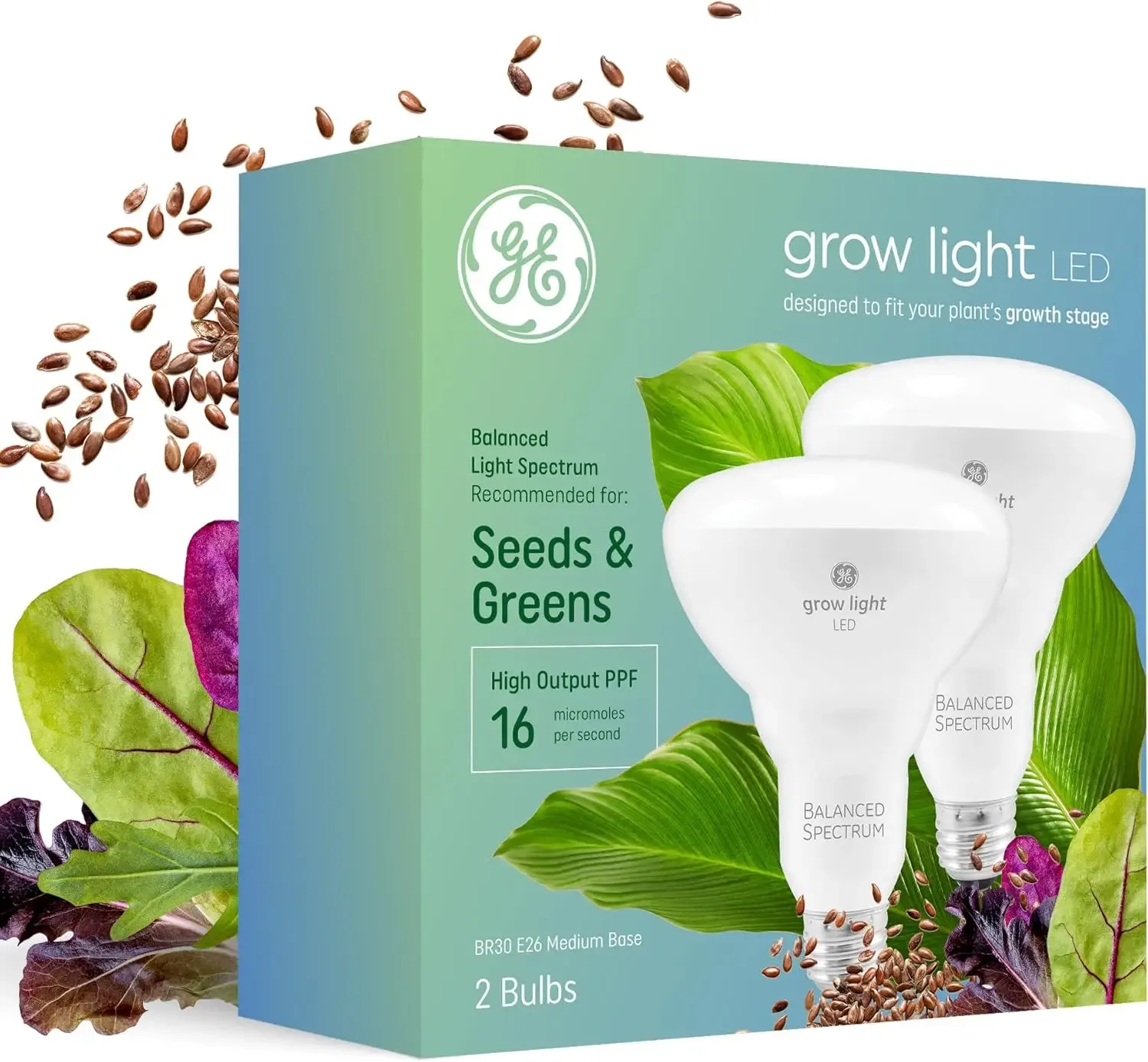
GE BR30 LED Grow Light Bulb
Standard screw-in grow light bulb for E26 sockets. Drop into any lamp you already own. Best for a single plant or small Kratky jar.
5. VIVOSUN LumaLight 100W LED Grow LightView on Amazon
- Specifications: 100W true power draw, Samsung full-spectrum diodes (3000K, 5000K, 660nm red, 730nm far-red), Bluetooth app control.
- Testing Notes: Delivers uniform 500–700 µmol/m²/s PPFD across a 2×2 foot canopy. App-based scheduling eliminates external mechanical timers, and onboard far-red diodes support flowering transitions.
- Pros: Complete coverage for standard 2×2 ft grow tents; app-based dimming.
- Cons: Higher initial cost; excess power for simple windowsill herbs.
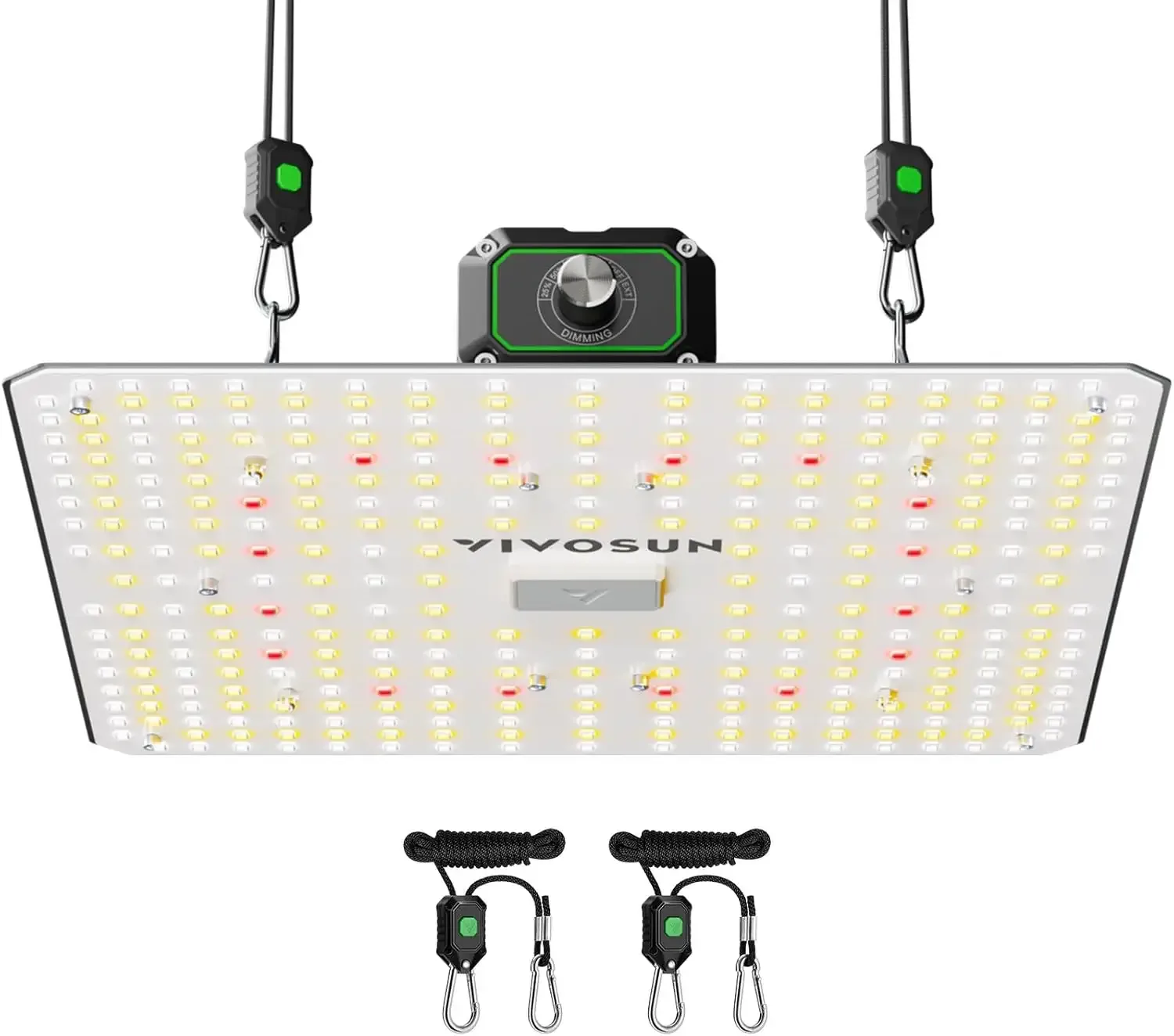
VIVOSUN LumaLight 100W LED Grow Light
100W full-spectrum LED with app-based scheduling, 2×2 ft coverage and far-red LEDs for full-cycle growing. The right choice for a proper tent setup.
Coverage and Output Comparison
| Fixture | Canopy Footprint | PPFD at 18 Inches | Price Range | Recommended Application |
|---|---|---|---|---|
| GE BR30 Bulb | 0.5 sq ft | 150–250 µmol/m²/s | $20–$25 | Single Kratky mason jar |
| DOMMIA Clip-On | under 1 sq ft | 100–200 µmol/m²/s | $20–$30 | Seedling propagation trays |
| LBW Desk Light | 1.0 sq ft | 200–350 µmol/m²/s | $25–$35 | 2–3 desktop herb containers |
| FECiDA 6000 | 1.5×1.5 ft | 300–500 µmol/m²/s | $40–$50 | Shallow shelf or DWC tray |
| VIVOSUN 100W | 2.0×2.0 ft | 500–700 µmol/m²/s | $80–$100 | Enclosed 2×2 ft grow tent |
4. Operational Setup and Positioning
- Hanging Distance: Position high-output panels 18 to 24 inches above seedling canopies. Lower fixtures to 12 to 18 inches as vegetative growth thickens. Bleached or curled leaf margins indicate excessive photon flux.
- Photoperiod Calibration: Run timers for 14 to 16 hours daily for leafy greens and herbs. Do not run lights 24 hours continuously; crops require dark periods for metabolic respiration.
- Electrical Safety: Route cords away from nutrient basins and secure drip loops below outlets to prevent water migration.
For enclosed setups, review our guide to the best grow tent kits for indoor gardening.
Frequently Asked Questions
How many watts do I need for my space? Plan for 30 to 50 true wall-draw watts per square foot of canopy area. A 2×2-foot tent requires 120 to 150 true watts of LED output.
Can regular household LEDs work as grow lights? Standard household bulbs emit light balanced for human eye sensitivity (green-yellow spectrum) rather than plant chlorophyll absorption. Full-spectrum horticultural LEDs supply the targeted blue and red wavelengths needed for vegetative growth and flowering.
What light spectrum do seedlings require? Blue-dominant light (400–500nm) promotes short, stocky stems and prevents seedling stretching. Most full-spectrum white LEDs contain sufficient blue light for propagation.
Summary
Choose a screw-in bulb or clip-on light for individual desktop jars, and step up to a 100W quantum panel when lighting a 2×2-foot tent or multi-site DWC tray. Once lighting is calibrated, review our hydroponics 101 guide and nutrient management overview to dial in solution chemistry.
Editor’s Note: Parts of this guide were structured and optimized with the assistance of AI, then thoroughly reviewed, edited and expanded with first-hand growing experience by our author Raymond to ensure practical, real-world accuracy.
Frequently Asked Questions
How far should LED grow lights be from plants?
For seedlings, position lights 18 to 24 inches above the canopy. As crops mature and leaf tissue toughens, lower fixtures to 12 to 18 inches depending on optical intensity.
How many hours a day should I run grow lights?
Leafy greens and culinary herbs need 14 to 16 hours of daily light. Fruiting crops require 16 to 18 hours during vegetative growth and 12 hours during flowering cycles.
Our Amazon Storefront
Browse all our recommended tools & supplies
Everything we personally use and trust, hand-picked for gardeners like you.
I've been running DWC and Kratky systems for several years and write about what actually works, not textbook theory. Follow along for honest product reviews, practical guides and real grow results.