As an Amazon Associate, I earn from qualifying purchases. Some links in this article are affiliate links, if you buy through them I may earn a small commission at no extra cost to you.
Quick Summary
- Core Difference: DWC suspends roots directly in standing, oxygenated water. NFT runs a thin film of nutrient solution past roots that hang mostly in open air.
- Best For Space: DWC works well for a handful of large plants (tomatoes, peppers). NFT is built for rows of smaller plants (lettuce, herbs, strawberries).
- Maintenance: DWC needs an air pump running constantly, no exceptions. NFT depends on a water pump that must never fail, even briefly.
- Failure Risk: A DWC air pump outage gives you hours before roots suffer. An NFT water pump outage can stress roots within 15–30 minutes since there’s no reservoir buffer.
- Cost to Start: DWC is cheaper to build at small scale. NFT gets more cost-effective as you scale up to many plants on one system.
A quick note before we get into it: my own hands-on experience is with DWC and Kratky systems, not NFT. Everything below on NFT is built from manufacturer documentation, commercial grower resources and cross-referencing against what I know works and fails in DWC, where the two systems actually share mechanics. Where I’m speaking from direct experience, I’ll say so. Where I’m not, I’ll say that too.
Both of these systems solve the same basic problem, keeping roots fed and oxygenated without soil, using almost opposite methods. Knowing which one fits your setup means understanding not just how each works, but where each one breaks.
How Deep Water Culture Actually Works
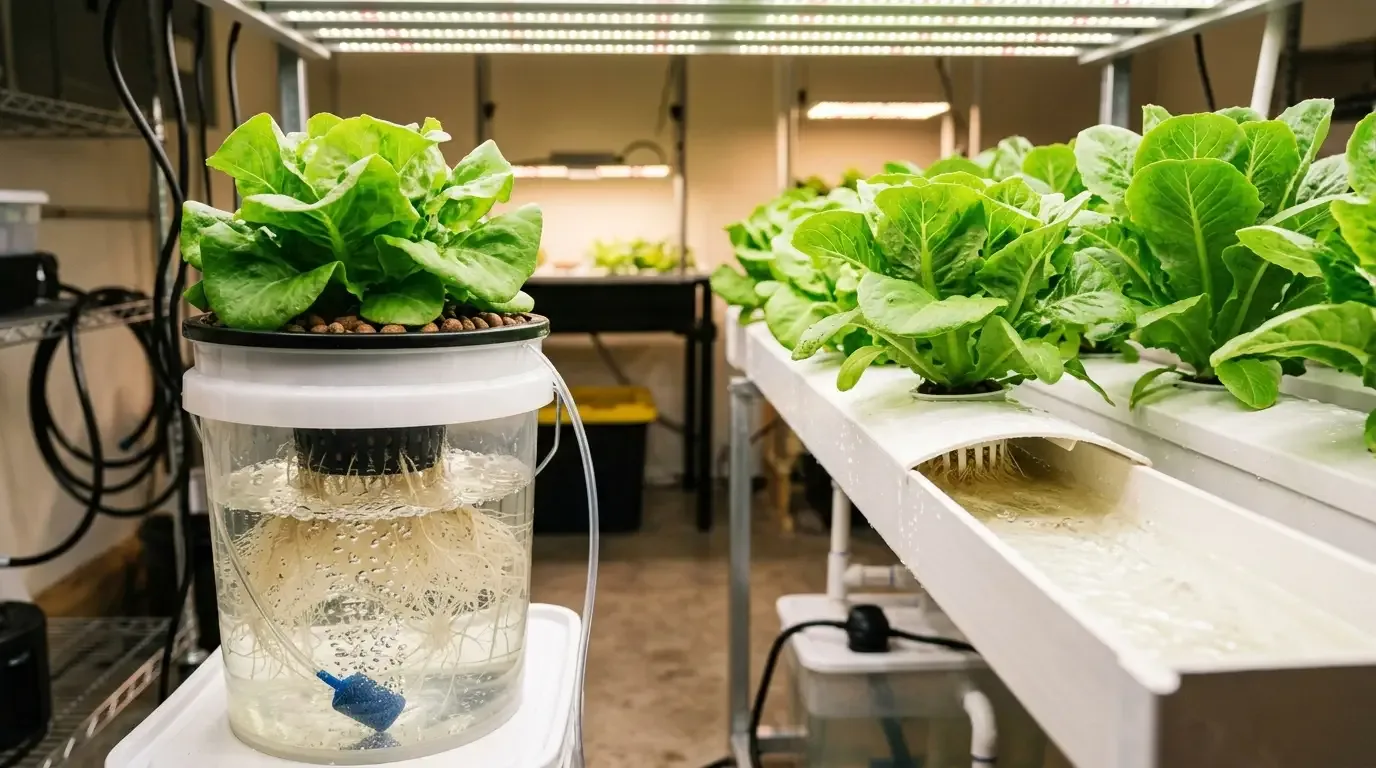
In a DWC system, plants sit in net pots with their roots hanging directly into a reservoir of nutrient solution. The roots are fully submerged, all the time. That sounds like it should drown a plant and it would, except for one critical piece of equipment: an air pump connected to an air stone sitting at the bottom of the reservoir.
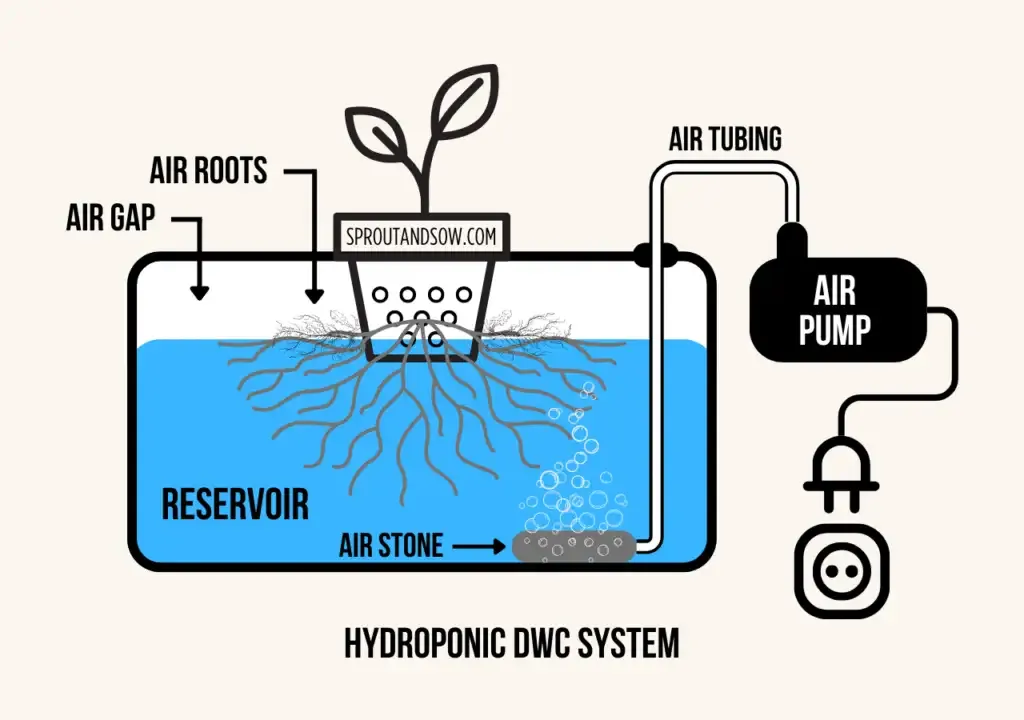
The air stone pumps a constant stream of fine bubbles through the water. This does two things. It oxygenates the water so roots don’t suffocate and it keeps the solution gently circulating so nutrients don’t stratify. Pull the air pump for more than a few hours and you’ll start to see it: roots turn brown and slimy as they begin to suffocate and rot.
This is the system I’ve actually run for years and the thing nobody tells you upfront is how much the size of your air pump matters. An air pump rated for a 10-gallon aquarium will not keep a 20-gallon reservoir properly oxygenated. Undersized air pumps are, in my experience, the single most common reason first-time DWC growers get stunted growth and root rot despite doing everything else right. If you want to understand the physics of dissolved oxygen and how to size your setup correctly, we go deep into the mechanics in our guide on the importance of air pumping in hydroponics.
How Nutrient Film Technique Actually Works
NFT takes a different approach. Instead of submerging roots, plants sit in a sloped channel or tube and a water pump continuously feeds a thin film of nutrient solution across the bottom of that channel. The film is shallow, often just a few millimeters deep, so most of each plant’s root mass hangs in the humid air above the film rather than sitting in standing water.
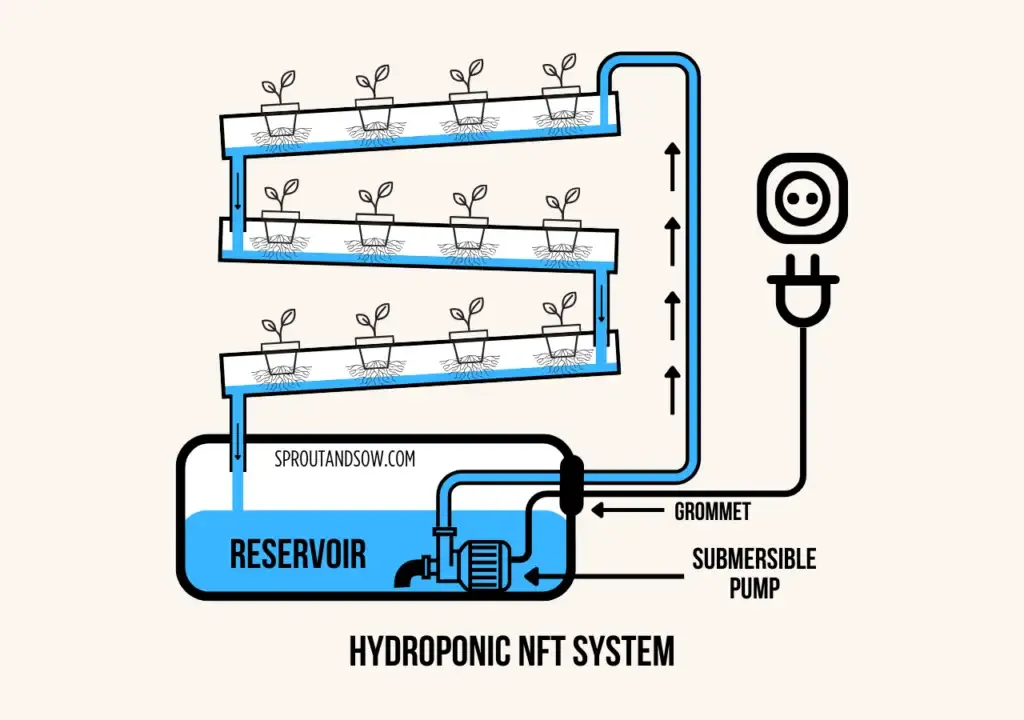
That thin film is the entire point. Roots get constant access to nutrients from the moving film below, while the exposed upper roots pull oxygen directly from the air inside the channel. There’s no air pump or air stone in a standard NFT setup, oxygenation happens through exposure, not aeration.
This is also NFT’s biggest structural risk. The film only works if the water pump runs continuously and the channel stays level enough for the film to flow evenly. If the pump stops, there’s no reservoir of standing water around the roots to buy you time, the thin film dries up fast and exposed roots that were designed to be in humid air, not dry air, start stressing within minutes. Commercial growers running NFT typically treat pump backup and float-switch alarms as non-negotiable for exactly this reason.
Side-by-Side Comparison
| Factor | Deep Water Culture (DWC) | Nutrient Film Technique (NFT) |
|---|---|---|
| Root environment | Fully submerged in aerated water | Thin film across roots, mostly air-exposed |
| Required pump | Air pump + air stone | Water pump (continuous) |
| Failure tolerance | Hours before roots suffer if air pump stops | Minutes before roots stress if water pump stops |
| Best plant types | Larger, longer-season plants (tomatoes, peppers, cucumbers) | Smaller, fast-growing plants (lettuce, herbs, strawberries) |
| Space efficiency | Moderate, one bucket per plant or a shared reservoir for a few plants | High, many plants per channel, channels can stack vertically |
| Startup cost (small scale) | Lower, a bucket, net pot and air pump can cost under $30 | Higher, requires channels, a reliable pump and usually a stand or frame |
| Cost at scale | Rises steadily per plant added | Becomes more efficient per plant as channel length increases |
| Water changes | Full reservoir change every 1–2 weeks recommended | Smaller reservoir, but needs monitoring for nutrient concentration drift |
| Beginner forgiveness | More forgiving of short lapses in attention | Less forgiving, punishes inconsistency quickly |
Which Plants Actually Fit Each System
DWC’s standing reservoir gives roots room to grow large and dense, which is exactly what heavier plants need. Tomatoes, peppers, cucumbers and other long-season fruiting crops do well in DWC because the system can support a substantial root mass over months of growth.
NFT works against that. The thin film and shallow channel don’t give roots room to develop the kind of mass a tomato plant needs and the channel itself isn’t built to support the weight of a large fruiting plant. NFT is built for exactly the opposite profile: fast-growing, shallow-rooted plants like lettuce, most leafy greens, herbs and strawberries, crops that finish or get harvested continuously before they’d ever need the root space DWC provides.
If you’re trying to decide based on what you actually want to grow, that’s often the faster answer than comparing pumps and reservoirs. Growing mostly herbs and salad greens points toward NFT. Growing a few tomato or pepper plants points toward DWC or toward Kratky if you want something even simpler to start with (more on that below).
Cost and Complexity as You Scale
At the scale most home growers start at, one to four plants, DWC is nearly always the cheaper and simpler build. A 5-gallon bucket, a net pot and a basic air pump is a functional system for under $30 and it’s the same mechanical principle whether you’re running one bucket or four separate ones side by side.
NFT’s economics flip as the plant count goes up. Building a single channel to hold twenty lettuce plants costs more upfront than twenty individual DWC buckets would suggest, channels, tubing and a pump strong enough to serve the whole run, plus usually some kind of frame or stand. But once that channel exists, adding plants along its length costs very little in additional infrastructure. This is why NFT dominates commercial leafy-green production and DWC is comparatively rare at that scale, NFT’s cost curve rewards volume in a way DWC’s doesn’t.
Important
Pump Redundancy Isn’t Optional for NFT: Because NFT roots dry out within minutes of a pump failure, commercial operations typically run backup pumps, float switches or alarms tied to flow sensors. If you’re building a home NFT system, at minimum plan for a way to notice a pump failure quickly, a system running unattended for a full workday is a real risk in a way it simply isn’t for DWC.
If You’re Just Starting Out
If you’re weighing DWC against NFT as your very first hydroponic system, it’s worth stepping back one level further. Both of these are active systems that depend on a pump running correctly, which means both come with a failure mode a beginner hasn’t seen yet. If you want to learn the fundamentals of how a soil-free root zone actually behaves without betting a harvest on a pump staying on, we suggest starting with the Kratky method first. No pump, no power and the same core lesson in how roots use water and oxygen, just with a much larger margin for error while you’re learning.
Once you’ve got a Kratky grow or two under your belt, moving to DWC is a fairly natural next step, it’s mechanically simple and shares Kratky’s core logic of roots in standing water, just with active aeration added. NFT is a bigger jump, both in build complexity and in how little room it leaves for mistakes; if you are considering stepping up to one of these higher-maintenance systems, we compare their technical requirements directly in our breakdown of aeroponics vs. NFT.
Nutrient Management for Both Systems
Whichever system you land on, getting the nutrient solution right matters more here than in soil, there’s no buffer to absorb a mistake. Both DWC and NFT need their EC and pH checked regularly and target values shift depending on what you’re growing. Our EC and pH reference guide has searchable target ranges for over 100 plants, worth bookmarking regardless of which system you build.
If you’re new to mixing nutrient solutions in general, our guide to choosing hydroponic nutrients covers the basics of liquid versus dry concentrates and how to avoid the most common beginner dosing mistakes.
Frequently Asked Questions
Can I convert a DWC system into an NFT system or vice versa?
Not easily. The two systems rely on fundamentally different mechanics, standing aerated water versus a flowing thin film, so the hardware doesn't cross over. You can usually reuse net pots and growing medium, but the reservoir, pump type and channel structure are built for one system, not both.
Which system handles a power outage better?
DWC, by a wide margin. A DWC reservoir holds enough standing water that roots have hours before oxygen depletion becomes a real problem. NFT's thin film offers no such buffer, an extended outage can stress roots within 15–30 minutes.
Is NFT worth it for a small home setup or is it really just a commercial system?
NFT scales down fine mechanically and small NFT kits exist for home growers. The honest answer is that it's usually not the most efficient choice at small scale, DWC or Kratky will get a beginner growing lettuce or herbs with less cost and less risk. NFT starts to make more sense once you're running enough plants that its channel-based efficiency outweighs its lower tolerance for pump failure.
Do both systems need the same nutrients?
Yes, the nutrient formulation itself doesn't change based on which system delivers it. What changes is monitoring frequency, NFT's smaller water volume can shift in concentration faster than DWC's larger reservoir, so it typically needs more frequent EC checks.
Our Amazon Storefront
Browse all our recommended tools & supplies
Everything we personally use and trust, hand-picked for gardeners like you.

I've been running DWC and Kratky systems for several years and write about what actually works, not textbook theory. Follow along for honest product reviews, practical guides and real grow results.