As an Amazon Associate, I earn from qualifying purchases. Some links in this article are affiliate links, if you buy through them I may earn a small commission at no extra cost to you.
Quick Summary
- Start fast growers immediately: Lettuce, spinach, Swiss chard, and kale provide early harvests after winter downtime.
- Start slow fruiting crops early: Tomatoes and peppers need long runways. Start them now for summer harvests.
- Skip root vegetables: Carrots and beets require deep channels missing from NFT or DWC setups.
- Check baseline EC: Idle winter reservoirs accumulate mineral drift that skews starting points.
- Ramp up EC gradually: Seedlings and fast greens require the low end of EC ranges. Increase EC as plants mature.
Spring provides a natural reset for indoor growers. If your system sat idle or ran at half capacity over the winter, now is the time to clean the reservoir, check water quality, and map out a planting schedule that pairs rapid greens with long-season fruiting crops.
The vegetables below fit a spring hydroponic push: fast growers that deliver immediate harvests within weeks, and slower fruiting crops that need an early head start to yield by summer.
Hydroponic EC & pH Target Ranges for Spring Crops
| Crop | Type | Target EC (mS/cm) | Target pH |
|---|---|---|---|
| Lettuce | Fast Grower | 0.8–1.2 | 5.5–6.5 |
| Spinach | Fast Grower | 1.8–2.3 | 6.0–7.0 |
| Swiss Chard | Fast Grower | 1.8–2.3 | 6.0–6.5 |
| Kale | Fast Grower | 1.25–1.75 | 5.5–6.5 |
| Tomatoes | Slower Crop | 2.0–3.5 | 5.5–6.5 |
| Peppers | Slower Crop | 2.0–2.5 | 5.5–6.5 |
| Cucumbers | Slower Crop | 1.7–2.5 | 5.5–6.0 |
For broader multi-crop targets, review our comprehensive optimal pH and EC database.
Fast Growers: Worth Starting Immediately
These crops establish quickly and provide continuous kitchen harvests while longer-season plants mature:
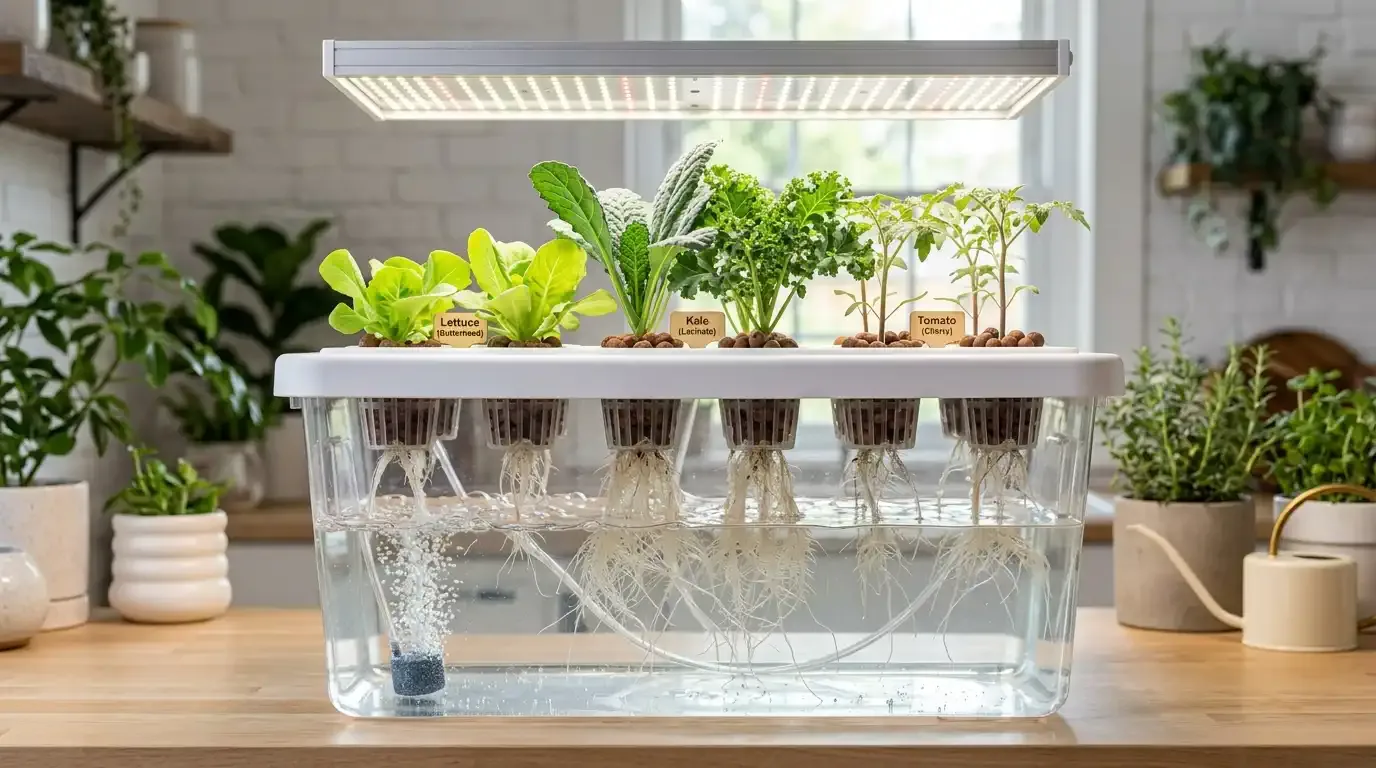
- Lettuce and leafy greens: The benchmark crop for home water culture. Seeds germinate in 48 hours and heads mature within 30 to 40 days. For complete variety picks and lighting setups, read our hydroponic lettuce growing guide.
- Spinach: Prefers cool water temperatures between 60°F and 65°F. Early spring provides the ideal window before ambient room heat prompts premature bolting.
- Swiss chard: Handles minor heat spikes better than spinach. Harvest outer leaves continuously to extend production over several months.
- Kale: Extremely resilient to nutrient swings. It tolerates higher electrical conductivities while you dial in multi-plant reservoirs.
Slower Crops: Start Now for Summer Yields
Begin germinating these crops now to establish strong root frameworks before summer:
- Tomatoes: Heavy feeders that require sturdy trellising and intense lighting. Early spring starts give plants time to establish sturdy main stems before high summer temperatures place heavy transpiration demands on the system.
- Peppers: Peppers demand consistent warmth to germinate, taking 14 to 21 days to sprout without a heat mat. Starting them in early spring prevents late-season fruiting bottlenecks.
- Cucumbers: Vine quickly once root systems develop. They bridge the harvest gap between leafy greens and slow-ripening nightshades, producing crisp fruit in 50 to 60 days.
Crops to Avoid in Standard Systems
Root vegetables such as carrots, beets, and parsnips do not develop properly in shallow NFT channels or open DWC net pots. They require deep perlite or coarse sand media beds to form straight taproots.
Large winter squash and sprawling melons require significant space. Unless you have heavy-duty trellises and fruit slings ready to bear 15-pound loads, reserve limited indoor capacity for compact bush varieties.
Managing Reservoir Nutrients in Spring
Restarting your equipment in spring requires careful nutrient management. Read our complete checklist on starting a hydroponic garden in spring for detailed system sanitation:
- Test Source Water Baseline: Always measure your starting tap or well water EC before adding mineral salts. Winter pipes often carry higher dissolved sediment.
- Start Seedlings Low: Young starts require a dilute nutrient solution (0.8–1.0 mS/cm EC). Pushing full-strength bloom fertilizers onto tender roots causes osmotic stress and burned tips.
- Balance Shared Reservoirs: When growing mixed crops in a single tank, balance the solution to protect the lowest-demand plant. Read our rules on the best companion plants for hydroponic gardens to match crops without burning delicate greens.
Setting Up Your Spring Schedule
Sow lettuce, spinach, and chard seeds during the first week. Start tomato and pepper seeds under domes the same week so their longer timelines run concurrently. Introduce cucumber seeds two to three weeks later once early salad greens approach their first cut.
To align your indoor starts with outdoor soil plantings, check out our full spring gardening guide.
Frequently Asked Questions
What is the easiest hydroponic spring vegetable?
Lettuce and leafy greens provide the standard starting crop. They germinate quickly, tolerate wide nutrient ranges, and reach harvest in 4–6 weeks.
Can I grow tomatoes and lettuce in the same hydroponic system?
Yes, but target the lower-demand crop's EC range for the shared reservoir and supplement heavier feeders like tomatoes individually, rather than pushing the whole system to match your most demanding plant.
Why start tomatoes and peppers early?
Both mature slowly. Peppers can take 2–3 weeks to germinate. Early spring starts give fruiting plants time to mature before summer heat stresses the system.
Can standard systems grow root vegetables?
No. Root vegetables require deep media beds that standard NFT or DWC systems lack.
Our Amazon Storefront
Browse all our recommended tools & supplies
Everything we personally use and trust, hand-picked for gardeners like you.

I've been running DWC and Kratky systems for several years and write about what actually works, not textbook theory. Follow along for honest product reviews, practical guides and real grow results.