As an Amazon Associate, I earn from qualifying purchases. Some links in this article are affiliate links, if you buy through them I may earn a small commission at no extra cost to you.
Quick Summary
- Oxygenation: Roots must absorb oxygen to perform cellular respiration and uptake nutrients.
- Air Stone Setup: Connect a reliable air pump to submerged air stones to create tiny oxygen bubbles.
- Prevent Root Rot: High oxygen levels stop pythium and anaerobic bacteria from rotting roots.
- Nutrient Absorption: Active aeration increases water movement, preventing nutrient stagnation in the reservoir.
- Pump Sizing: Choose an air pump rated for at least 1 watt per gallon of nutrient water.
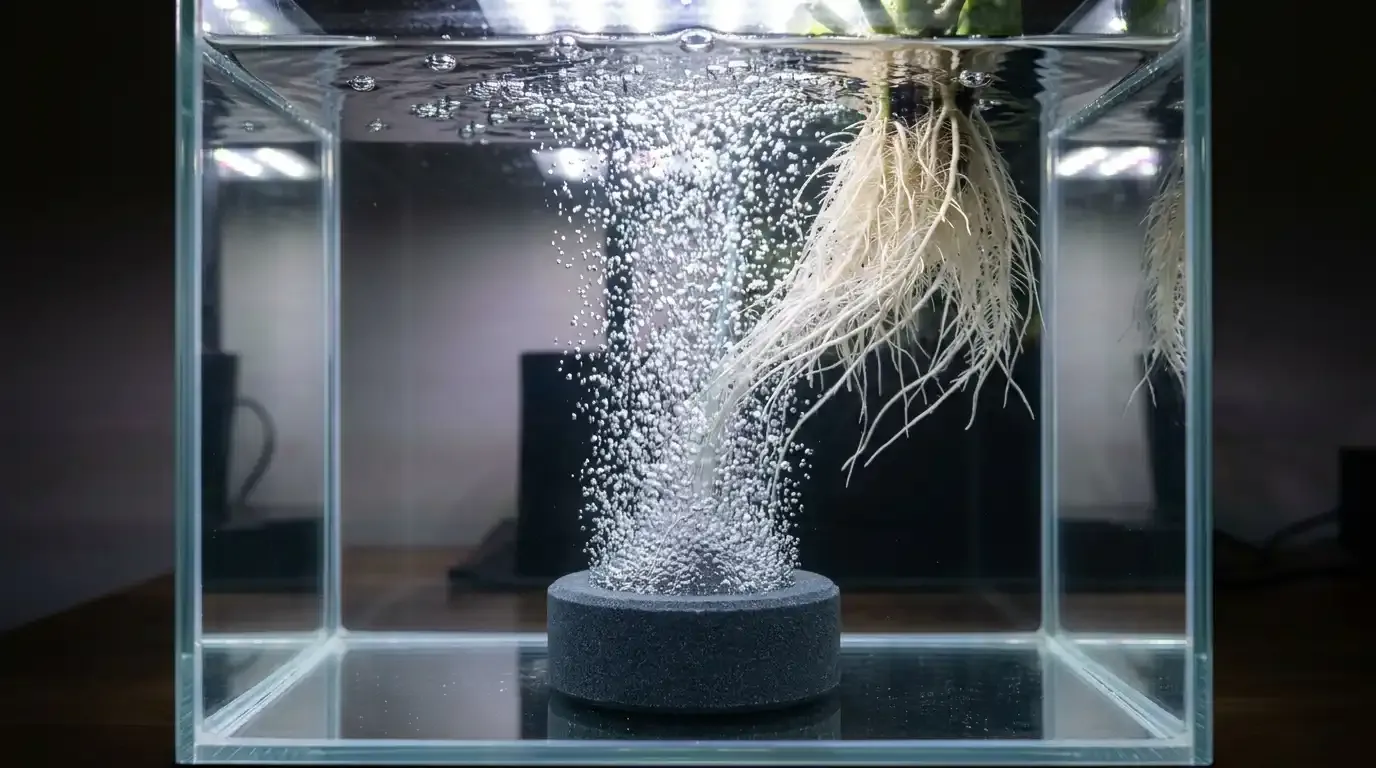
When plant roots remain submerged in a standing water reservoir without aeration, dissolved oxygen levels fall within 48 hours. Deprived of oxygen, root cells fail to perform cellular respiration, active ion transport stops, and opportunistic water molds attack tissue. Active aeration maintains dissolved oxygen levels, preventing root rot and supporting steady nutrient absorption.
Here is how aeration works, how to size pumps correctly, and how to maintain high oxygenation in recirculating reservoirs.
Why Air Pumping Matters in Hydroponics
1. Root Oxygenation
Soil particles maintain air gaps that allow gas exchange around root hairs. In active hydroponics like Deep Water Culture (DWC), water replaces soil. Without mechanical bubbling, stagnant water quickly depletes its dissolved oxygen. Aerators deliver a continuous stream of air bubbles, replenishing oxygen at the root surface.
2. Prevention of Root Rot
Anaerobic pathogens such as Pythium thrive in stagnant, oxygen-poor water. Active aeration maintains dissolved oxygen above 6 to 8 PPM, establishing conditions that suppress anaerobic fungi. If you are diagnosing discolored root tissue, read our guide to troubleshooting common hydroponic problems for step-by-step sanitation procedures.
3. Nutrient Ion Absorption
Root cells require metabolic energy (ATP) to absorb essential cations like calcium, potassium, and magnesium against concentration gradients. Oxygen powers the cellular respiration required to generate this energy. When dissolved oxygen falls below 4 PPM, nutrient uptake slows regardless of fertilizer concentration in the reservoir.
4. Solution Mixing and Temperature Equalization
Rising bubble columns circulate the water column, preventing dense mineral salts from stratifying at the tank floor. Continuous circulation also distributes temperature evenly, eliminating warm pockets under grow lights. If you are comparing aerated tanks with passive methods, our beginner’s guide to hydroponic systems outlines which layouts require pumps and which operate passively like the Kratky method.
Aeration Hardware and Sizing
Aeration is typically achieved through submerged diffusers or inline venturi valves:
| Aeration Method | Typical Cost | Noise Profile | Best Applications |
|---|---|---|---|
| Air Pump & Air Stones | $15–$40 | Low to Moderate | DWC buckets, 10–20 gallon tanks |
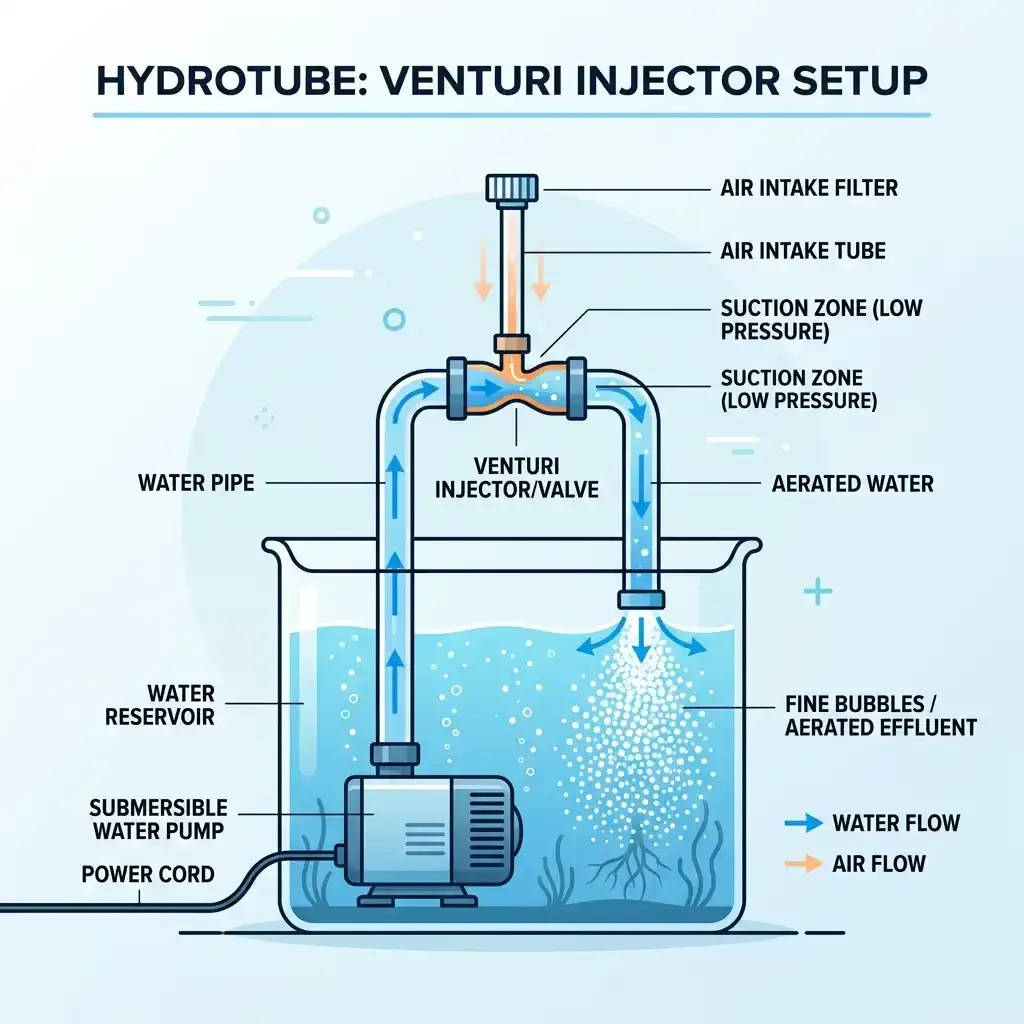
| Venturi Injector | $40–$100 | Low | High-flow commercial loops |
1. Air Stone and Diaphragm Pump
A diaphragm air pump outside the reservoir pushes air through flexible silicone tubing to porous carborundum or ceramic air stones. The diffusers break the stream into fine micro-bubbles. Smaller bubbles provide a higher surface-area-to-volume ratio, increasing gas transfer into the liquid.
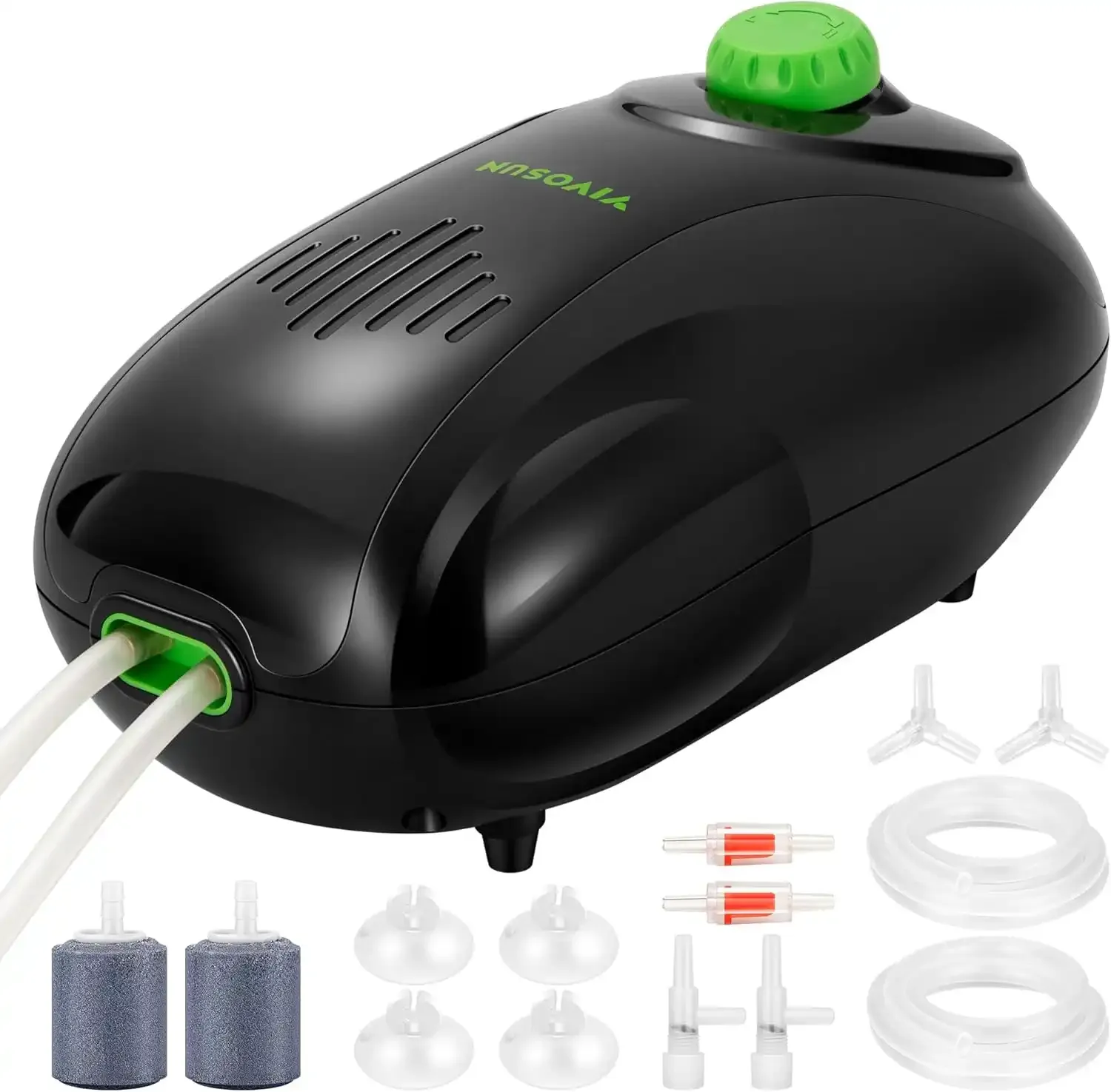
VIVOSUN Air Pump Kit
A complete aeration kit with a 4-outlet commercial air pump, four air stones and non-kink tubing. Delivers up to 950 GPH (8W) with adjustable speed control to easily oxygenate multiple reservoirs or DWC buckets. Solid metal housing dampens noise and runs cool 24/7.
2. Venturi Injectors
Venturi assemblies utilize existing submersible water pumps. As water flows through a constriction in the valve, it creates a pressure drop that draws ambient air through a breather tube, shearing bubbles directly into the outgoing water stream.
3. Duty Cycle and Runtime
In active systems like DWC, run aeration pumps 24 hours a day. Oxygen demand does not stop at night; shutting pumps off during dark hours allows dissolved oxygen to drop when plants transpire less, creating windows for pathogen colonization. For a detailed look at how aeration interacts with flow mechanics, see our comparison of Nutrient Film Technique vs. Deep Water Culture.
Note
Understanding Pythium: Pythium is an oomycete water mold responsible for root rot. It flourishes in warm, stagnant, oxygen-depleted solutions. Infested root systems turn dull brown and shed their outer cortex, preventing water and mineral absorption.
Summary
Maintain air stones at the bottom of your reservoir and run pumps continuously. Healthy roots remain firm, fibrous, and white. If roots discolor or reservoir temperatures rise above 68°F (20°C), increasing air output is your primary corrective measure.
Editor’s Note: Parts of this guide were structured and optimized with the assistance of AI, then thoroughly reviewed, edited and expanded with first-hand growing experience by our author Raymond to ensure practical, real-world accuracy.
Frequently Asked Questions
Can you over-oxygenate a hydroponic reservoir?
No. Water has a physical dissolved oxygen saturation limit dictated by temperature and atmospheric pressure. Once saturation is reached, excess air escapes into the atmosphere without harming root tissue.
Do Kratky systems need an air pump?
No. The Kratky method relies on passive air zones, where the upper portions of roots absorb atmospheric oxygen while lower tips drink nutrient water. Adding an air pump converts the container into a Deep Water Culture (DWC) system, accelerating growth rates.
How does water temperature affect oxygen levels?
Cooler water holds higher concentrations of dissolved oxygen. Water at 65°F (18°C) holds roughly 20% more dissolved oxygen than water at 75°F (24°C). Keeping reservoir temperatures below 68°F suppresses anaerobic pathogens.
Our Amazon Storefront
Browse all our recommended tools & supplies
Everything we personally use and trust, hand-picked for gardeners like you.

I've been running DWC and Kratky systems for several years and write about what actually works, not textbook theory. Follow along for honest product reviews, practical guides and real grow results.