
As an Amazon Associate, I earn from qualifying purchases. Some links in this article are affiliate links, if you buy through them I may earn a small commission at no extra cost to you.
Quick Summary
- Nutrient Lockout: Check pH first when plants show yellow leaves, as incorrect pH blocks nutrient absorption.
- Root Rot: Sniff the reservoir; brown, slimy, smelly roots indicate pythium (root rot) from low oxygen.
- Algae Management: Light-proof all reservoirs and tubing to starve algae of light.
- System Blocks: Flush pipes and drip emitters regularly with pure water to clear salt buildup.
- Pest Check: Inspect leaf undersides daily for small pests like spider mites and aphids.
Troubleshooting common hydroponic problems involves identifying the root causes of plant stress, such as pH imbalances, nutrient deficiencies, low oxygen, or pests, and systematically adjusting your water chemistry, airflow, or lighting to restore a healthy growing environment.
When crops show stress in hydroponics, disparate issues produce similar symptoms: yellowing foliage, wilting stems, and stalled growth. Distinguishing nutrient lockout from actual mineral deficiencies requires methodical diagnostic checks. Testing water parameters before altering fertilizer inputs prevents compounding problems.
1. Nutrient Deficiencies in Hydroponics
Symptoms: Yellowing foliage (particularly on lower, older leaves first), thin stems, slowed development, or localized leaf spots. Interveinal chlorosis, where leaf tissue yellows while veins stay dark green, typically signals iron or magnesium lockout.
Solution:
- Test pH First: Nutrient availability depends directly on solution pH. Most hydroponic crops require a range between 5.5 and 6.5. Outside this window, minerals precipitate out and become unavailable to roots. A deficiency symptom caused by improper pH will not resolve by adding fertilizer; increasing nutrient concentration only accelerates salt burn.
- Measure Electrical Conductivity (EC): If pH is in range, check nutrient concentration. A reading that has dropped substantially since your last check indicates plants have consumed dissolved salts. Replenish with diluted nutrient mix rather than plain water.
- Adjust Concentration Gradually: If EC is low, raise fertilizer strength by 10–15% and observe new growth for 48 hours before dosing further.
For crop-specific target ranges, consult our Optimal pH and EC Values for Hydroponic Herbs and Plants guide.
2. pH Imbalances and Drift
Symptoms: Persisting nutrient deficiencies, stunted leaf expansion, and dull foliage that fail to respond to added fertilizer. When EC adjustments yield no improvement, pH drift is almost always the cause.
Solution:
- Check pH Daily: Solution pH shifts as plants consume water and ionic nutrients. In warm ambient environments, reservoir pH can drift half a point overnight.
- Dose Adjusters Conservatively: Add pH Up or pH Down in small increments (1–2 mL per 10 gallons), circulate thoroughly with the pump, and wait 15 minutes before retesting.
- Use a Calibrated Digital Meter: Color test strips lack the precision required for hydroponic diagnosis. A dependable digital meter gives exact readings to a tenth of a pH unit. For long-term stabilization strategies, read our guide on managing hydroponic pH levels.

Bluelab pH Pen
I've been using this pen daily in a DWC setup for over a year, the probe tip is still accurate and hasn't needed replacing, which is the main failure point on cheaper meters. The waterproof body, automatic temperature compensation and straightforward two-point calibration make it the meter I'd recommend to anyone setting up their first system.
3. Root Rot (Pythium)
Symptoms: Roots turn dark brown, mushy, or stringy, accompanied by a swampy, foul odor from the reservoir. Plants wilt under bright lights despite adequate water volume. Healthy roots appear ivory or white and feel crisp.
Solution:
- Increase Dissolved Oxygen Immediately: Pythium is an opportunistic anaerobic pathogen that multiplies in low-oxygen, warm water. Adding an air pump pushing high CFM through quality air stones is the primary defense. Learn more about oxygenation requirements in our article on why air pumps matter in hydroponic systems.
- Drain, Sanitize, and Flush: Remove the plant, gently rinse diseased root tissue under cool tap water, and dip roots briefly in a dilute 3% hydrogen peroxide solution (1–2 mL per liter). Sanitize the reservoir container and refill with fresh, cool nutrient solution.
- Inoculate with Beneficial Microbes: Products containing Bacillus amyloliquefaciens or Trichoderma establish protective biofilms around healthy root hairs, outcompeting pathogens. Introduce inoculants 24–48 hours after any hydrogen peroxide treatment.
4. Algae Colonization
Symptoms: Slippery green or dark brown film coating net cups, container walls, or clay pebbles, accompanied by musty odors. Algae consumes dissolved oxygen at night and competes for fertilizer salts.
Solution:
- Block All Light Leaks: Algae requires light to photosynthesize. Seal reservoirs with opaque lids, wrap translucent bins in foil or dark vinyl, and replace clear tubing with black vinyl or silicone lines. Light-proofing provides a permanent solution.
- Wipe Down Surfaces Biweekly: Clean reservoir walls during routine nutrient flushes to disrupt biofilm formation.
- Maintain Cool Solution Temperatures: Water kept below 20°C (68°F) slows algal cell division while maximizing dissolved oxygen capacity.
For detailed light-proofing and sanitization workflows, see our dedicated guide on how to prevent algae growth in your hydroponic system.
5. Insect Pests
Symptoms: Stippled leaves, fine webbing, sticky honeydew secretions, or small insects clustered on leaf undersides and around net cups. For species-specific identification, consult our guide to common hydroponic pests and how to manage them.
Solution:
- Conduct Daily Underside Inspections: Spider mites, thrips, and aphids congregate on leaf undersides. Early detection allows localized treatment before colonies spread across the canopy.
- Apply Organic Insecticidal Soap: Potassium salts of fatty acids disrupt soft-bodied insects without leaving synthetic chemical residues on edible crops. Spray in the evening after grow lights turn off to prevent leaf scorch.
- Deploy Sticky Monitoring Cards: Hang yellow sticky cards at canopy height to capture fungus gnats and whiteflies; use blue cards for thrips.
- Clear Decaying Foliage: Remove fallen leaves and dead root strands immediately. Decomposing organic debris attracts and feeds fungus gnat larvae.
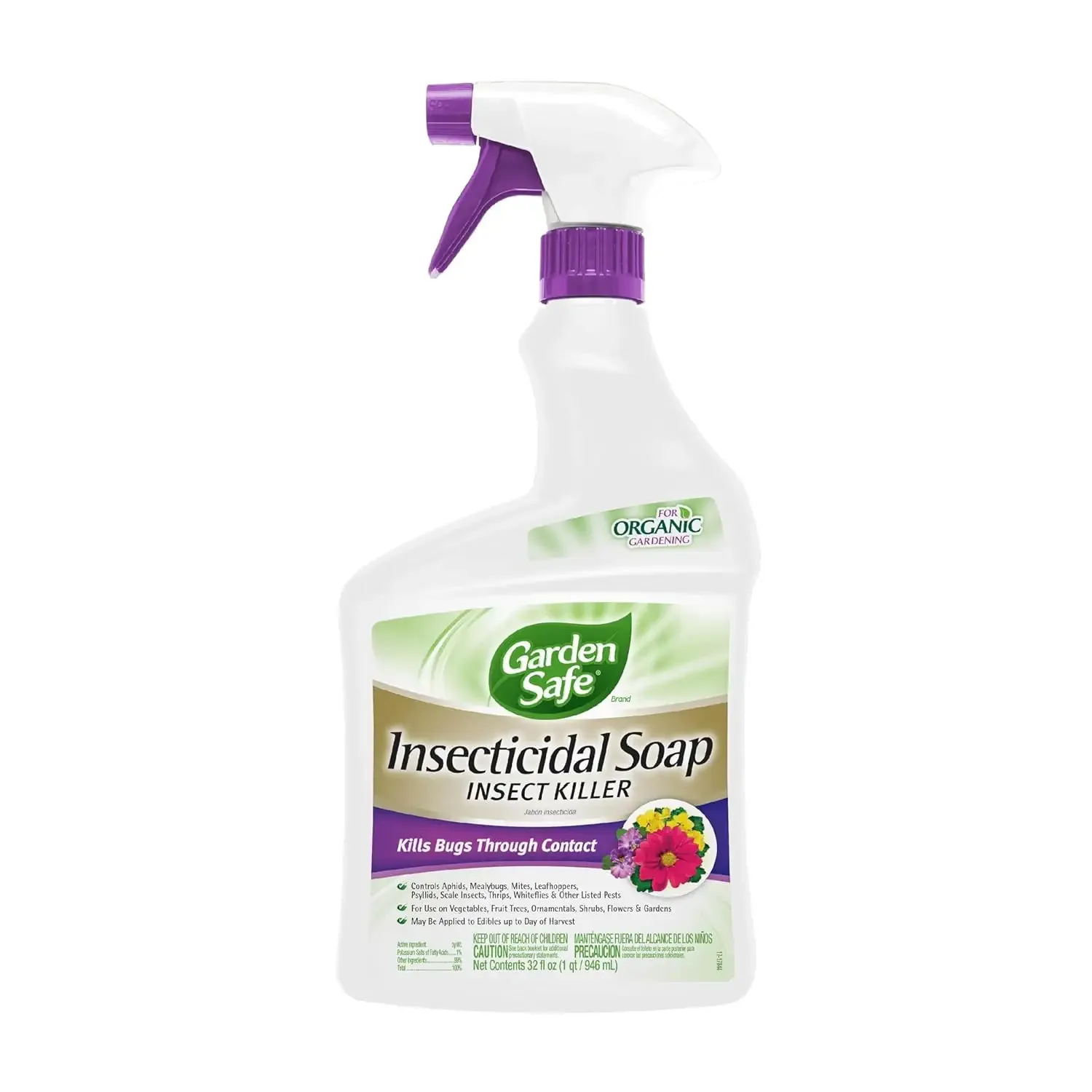
Garden Safe Insecticidal Soap
An essential organic pest control spray for dealing with aphids and spider mites. Because it breaks down quickly, it's safe to use on edible hydroponic crops up until the day of harvest.
6. Slow or Stunted Growth
Symptoms: Seedlings or vegetative plants stall despite adequate light. Stems remain thin, internodes stretch, or leaf size remains dwarfed.
Solution:
- Check Vapor Pressure Deficit (VPD): Maintain air temperatures between 18°C and 27°C (65°F–80°F) and relative humidity between 50% and 70%. Extreme heat or excessively dry air forces plants to close stomata, halting transpiration and nutrient uptake.
- Audit Light Intensity and Photoperiod: Leafy greens need 14–16 hours of light daily at 200–300 µmol/m²/s PPFD; fruiting crops require 400–600+ µmol/m²/s. Inadequate light limits photosynthetic carbohydrate production.
- Verify Osmotic Balance: Overly concentrated nutrient solutions draw water out of plant roots via reverse osmosis, causing stunted foliage. For foundational setup pitfalls, review our breakdown of common hydroponic mistakes beginners make.
7. Foliage Wilting with Wet Media
Symptoms: Plants droop and wilt despite reservoirs being full of water. Leaves feel limp rather than crisp.
Solution:
- Check Water Temperature: Water above 22°C (72°F) holds substantially less dissolved oxygen. Warm root zones suffocate plants, inducing drought-like wilting even in saturated water. Target 18°C–20°C (65°F–68°F).
- Increase Air Delivery: Add higher-output air stones to boost dissolved oxygen saturation throughout the root column.
- Inspect Root Health: Limp foliage in wet systems frequently points to damaged root hairs from salt burn, extreme pH, or advancing root rot.
Diagnostic Priority Order
When confronting unexplained plant stress, troubleshoot in strict order: pH first, then EC, then dissolved oxygen. These three parameters account for the vast majority of hydroponic failures. Verify each metric using a quality pH and EC combo meterView on Amazon before making radical changes to lighting or fertilizer formulas.
Editor’s Note: Parts of this guide were structured and optimized with the assistance of AI, then thoroughly reviewed, edited and expanded with first-hand growing experience by our author Raymond to ensure practical, real-world accuracy.
Frequently Asked Questions
What should I do if my plant leaves are turning yellow?
First, test the pH of your nutrient solution. If the pH is outside the 5.5–6.5 range, adjust it; if the pH is correct, check your EC levels for nutrient deficiency.
How can I identify and treat root rot?
Root rot shows as brown, mushy, foul-smelling roots. Treat it by rinsing roots, sterilizing the reservoir, adding fresh oxygenated water and using beneficial root inoculants.
How do I know if my EC is too high or too low?
Brown or curled leaf tips with otherwise healthy growth usually means EC is too high (nutrient burn). Pale, slow-growing plants with no pH issue suggest EC is too low. Most leafy greens do well at EC 1.2–2.0; fruiting crops like tomatoes push toward 2.0–3.5 in the fruiting stage.
Can I fix root rot without emptying the whole reservoir?
You can improve oxygenation immediately by adding a stronger air stone and raising the air pump output, which slows the progression. But for a full recovery, a complete reservoir drain, root rinse with diluted hydrogen peroxide and refill with fresh solution is the most reliable fix.
Our Amazon Storefront
Browse all our recommended tools & supplies
Everything we personally use and trust, hand-picked for gardeners like you.

I've been running DWC and Kratky systems for several years and write about what actually works, not textbook theory. Follow along for honest product reviews, practical guides and real grow results.