As an Amazon Associate, I earn from qualifying purchases. Some links in this article are affiliate links, if you buy through them I may earn a small commission at no extra cost to you.
Quick Summary
- Ditch the ‘Blurple’: Never buy blue/purple grow lights for a living space. Full-spectrum white LEDs look like natural sunlight and blend seamlessly with your home decor.
- Automate with Smart Timers: Plants need 14-16 hours of light. Put your lights on a smart plug so they turn on at sunrise and turn off right before you sit down to watch a movie.
- Build Light Baffles: If glare is blinding you, attach a small piece of wood, opaque acrylic or cardboard to the edge of your shelf to block horizontal light spill.
- Lower the Lights: Keeping your LEDs as close to the plant canopy as safely possible reduces light pollution in the rest of the room and increases growth efficiency.
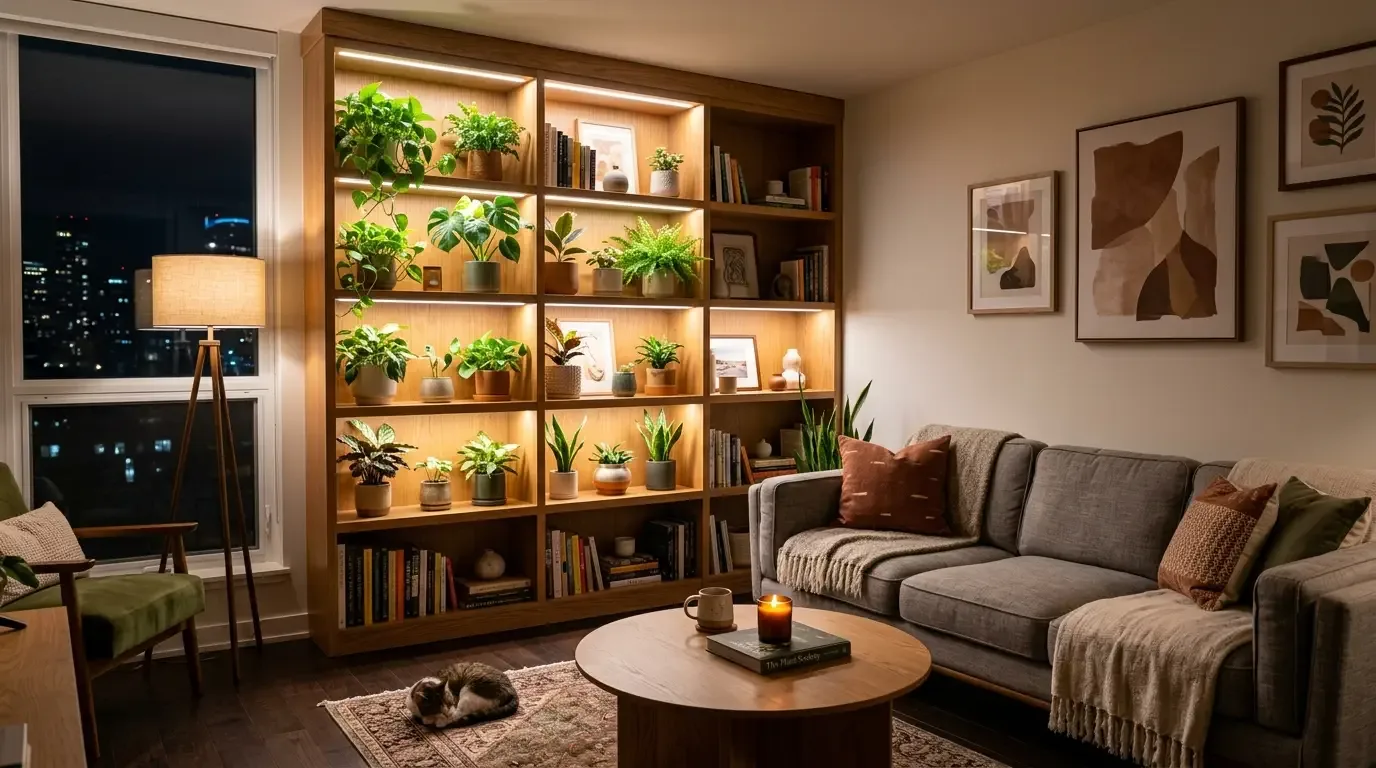
Crops cultivated indoors require 12 to 16 hours of intense light daily. While dedicated grow tents conceal bright fixtures, setting up plants on living room shelves or kitchen counters means managing horizontal light spill and glare.
If you are designing an indoor garden layout, read our ultimate guide to apartment hydroponics for spatial planning. For aesthetic hardware choices, review our guide to the most aesthetically pleasing hydroponic systems.
Here is how to control glare, automate photoperiods, and integrate horticultural lighting into open living areas.
Indoor Lighting Comparison
| Light Format | Visual Comfort | Photosynthetic Quality | Best Application |
|---|---|---|---|
| Narrow-Band “Blurple” LEDs | Poor (Harsh magenta glare) | Moderate | Sealed grow tents and utility closets |
| Full-Spectrum White LEDs | High (Clean sunlight tone) | High | Open living rooms and kitchen counters |
| Screw-In LED Spotlights | High (Concealed inside shades) | Moderate | Individual accent containers and herbs |
1. Avoid Narrow-Band Magenta Diodes
Early horticultural panels combined dedicated blue (450nm) and red (660nm) diodes to maximize photon absorption per watt. While biologically effective, these “blurple” panels cast an intense magenta hue across walls and furniture.
Modern horticultural white LEDs emit a broad, continuous spectrum across the 400–700nm waveband. They stimulate healthy plant development while providing warm 3,500K to 4,000K illumination that blends with residential ambient lighting. To compare diode brands and outputs, see our guide to the best LED grow lights for beginners.
2. Automate Photoperiods with Smart Plugs
Plants require consistent day-night photoperiods, but the schedule can be shifted to align with your daily household routine.
Scheduling lights to run while you are at work ensures plants receive their required 14 hours of illumination without lighting up your living room late in the evening:
- Morning Activation: 6:00 AM
- Evening Shutdown: 8:00 PM
Using automated Wi-Fi smart plugs prevents missed schedules and eliminates clicking mechanical timers.
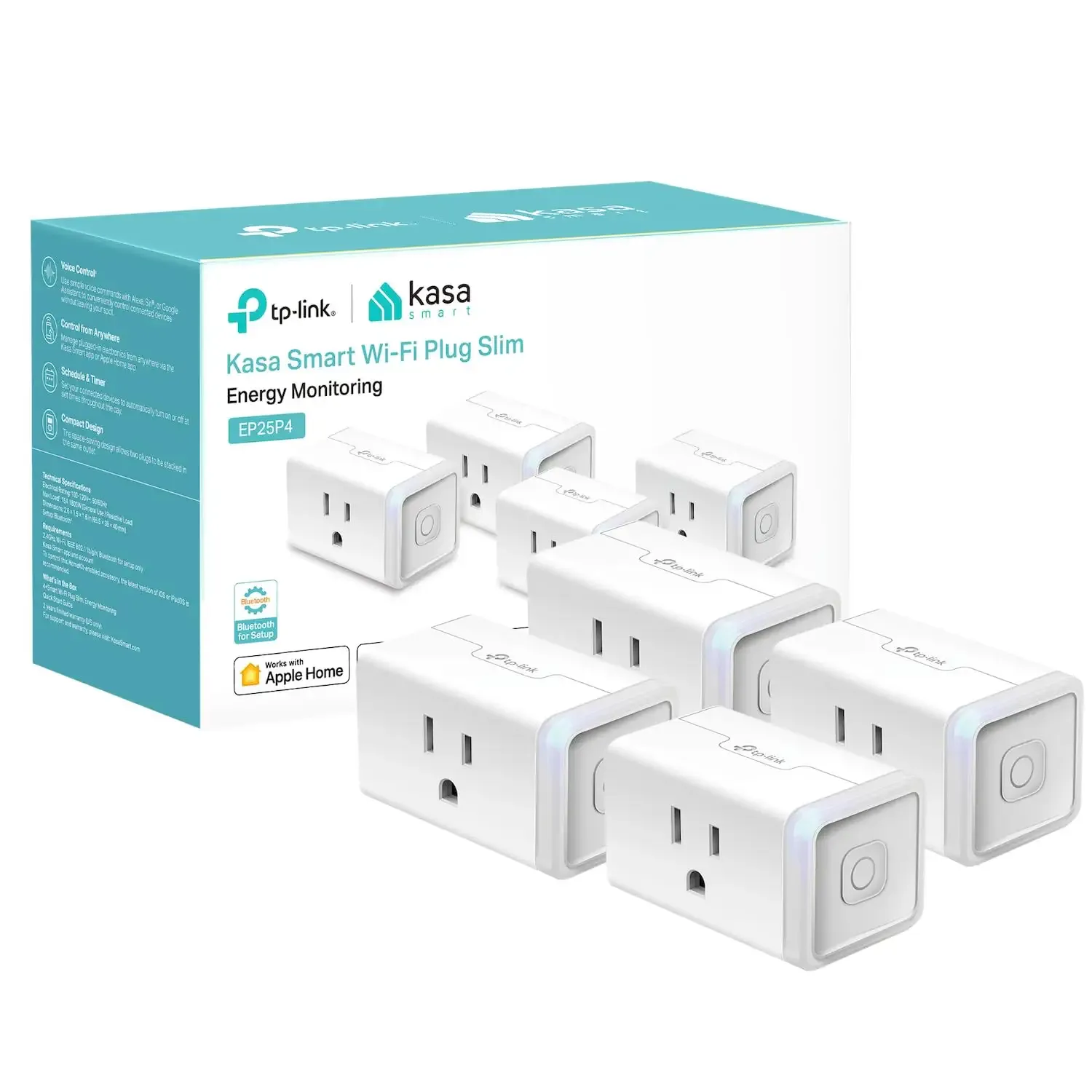
Kasa Smart Plug Mini (4-Pack)
Don't trust manual dial timers. These connect to WiFi, allowing you to set precise schedules from your phone. You can easily turn the lights off early with voice commands if you are watching a movie.
3. Light Baffles and Canopy Proximity
The most common complaint with open shelving is horizontal light spill into eyes and television screens. Two adjustments eliminate excess glare:
- Install Front Fascia Trim: Fasten a 2-inch strip of matching wood molding, opaque plastic, or cardstock along the lower front lip of the shelf. This creates an optical valance that hides direct diode visibility from seated eye level while directing photons downward onto leaves.
- Maintain Close Canopy Clearance: Mounting lights 18 to 24 inches above small herbs spreads light broadly into the room. Lowering panels to 6 to 10 inches above foliage concentrates photon flux on plant surfaces and prevents horizontal spill.
4. Directional Fixtures and Deep Shades
For isolated corner plants or single countertop jars, skip hanging industrial panels. Install a directional full-spectrum grow bulb (such as a PAR38 or BR30 LED) into an architectural desk lamp or floor gooseneck fixture with an opaque metal cone shade. The shade reflects all light downward onto the foliage without scattering glare into the room.
Full-spectrum white diodes, front shelf valances, and scheduled timers keep indoor crops productive without turning living quarters into brightly lit grow rooms.
Editor’s Note: Parts of this guide were structured and optimized with the assistance of AI, then thoroughly reviewed, edited and expanded with first-hand growing experience by our author Raymond to ensure practical, real-world accuracy.
Frequently Asked Questions
Do grow lights have to be purple?
No. Blue and red 'blurple' diodes were common in early commercial fixtures to save energy. Modern full-spectrum white LEDs emit balanced light that supports all plant stages while appearing like natural sunlight in living rooms.
Can I just leave my grow lights on 24/7?
No. Plants require an uninterrupted dark period to perform cellular respiration and translocate photosynthates. Most leafy crops require 6 to 8 hours of darkness daily.
How do I stop the grow light glare from blinding me on the couch?
Install a shallow light baffle along the front edge of the shelf to block horizontal line-of-sight glare, and lower fixtures closer to the plant canopy to keep light focused downward.
Will sitting next to a grow light give me a sunburn?
No. Standard horticultural white LEDs emit photosynthetically active radiation (400–700nm) without harmful levels of ultraviolet (UV-A or UV-B) radiation. They are safe to operate near desks and sofas.
Our Amazon Storefront
Browse all our recommended tools & supplies
Everything we personally use and trust, hand-picked for gardeners like you.

I've been running DWC and Kratky systems for several years and write about what actually works, not textbook theory. Follow along for honest product reviews, practical guides and real grow results.