As an Amazon Associate, I earn from qualifying purchases. Some links in this article are affiliate links, if you buy through them I may earn a small commission at no extra cost to you.
Quick Summary
- Monitor the Baseline: Buy a digital hygrometer before investing in dehumidifiers; identify the room’s baseline Relative Humidity (RH) first.
- Target Range: Aim for 45% to 55% RH. This provides ideal transpiration for plants while keeping surfaces dry enough to inhibit mold spores.
- Airflow is Critical: Stagnant air allows humid microclimates to collect beneath dense foliage. A small oscillating fan disrupts these pockets and deters powdery mildew.
- Cover Your Reservoirs: Open water surfaces drive rapid evaporation. Ensure all net pot holes and reservoir access ports remain sealed.
Indoor gardens change the microclimate of living spaces. Plants constantly absorb water through their roots and transpire moisture through microscopic leaf stomata. In recirculating hydroponics, open reservoir evaporation adds water vapor directly to room air.
A single countertop system will not affect ambient room humidity significantly. In dry winter climates, slight moisture release can improve indoor comfort. However, multiple Deep Water Culture buckets or enclosed grow tents in unventilated spaces can trigger mold, powdery mildew, and wall condensation if left unchecked.
To design compact, moisture-controlled setups, review our guide to apartment hydroponics and our diagnostic guide to troubleshooting common hydroponic problems.
1. Monitor Relative Humidity Before Buying Equipment
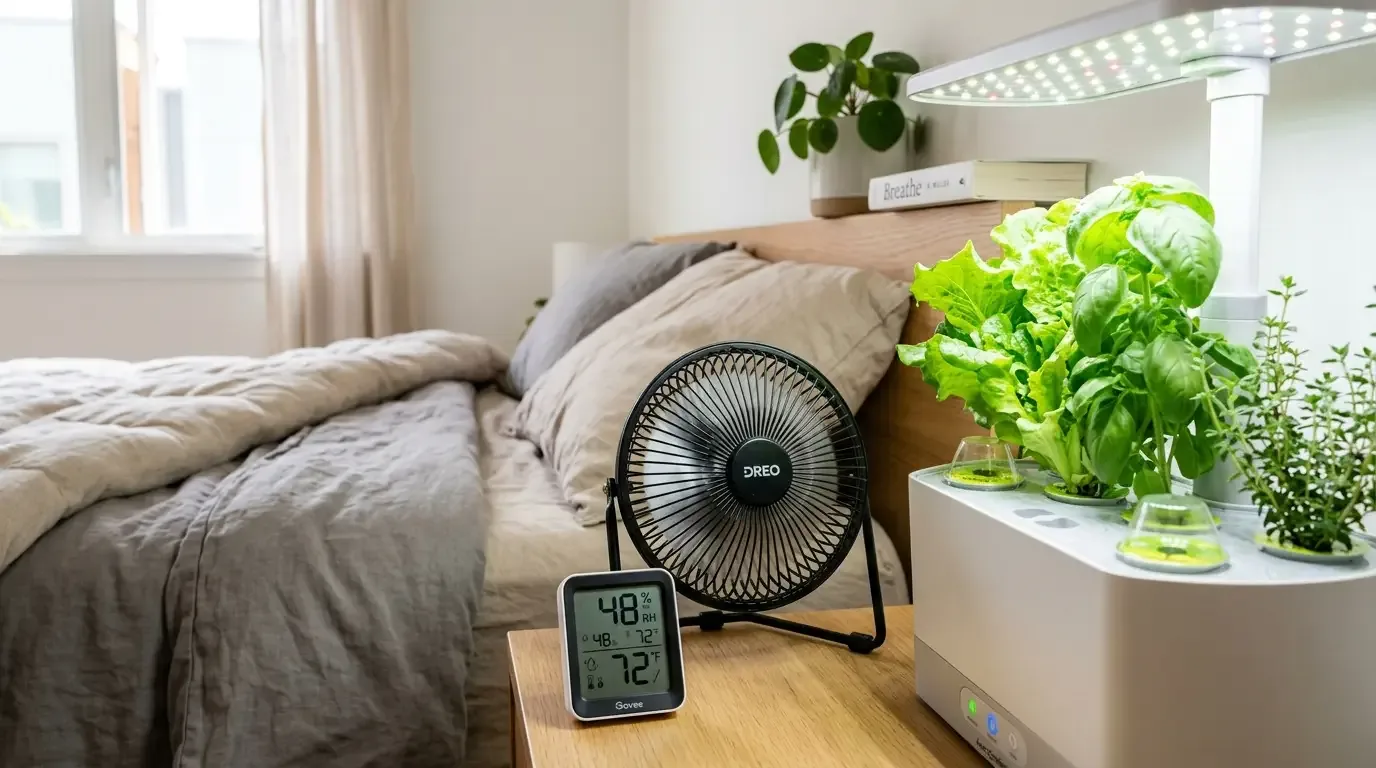
Human skin is poor at detecting small shifts in Relative Humidity (RH). Before purchasing mechanical dehumidifiers, place an accurate digital hygrometer at canopy level.
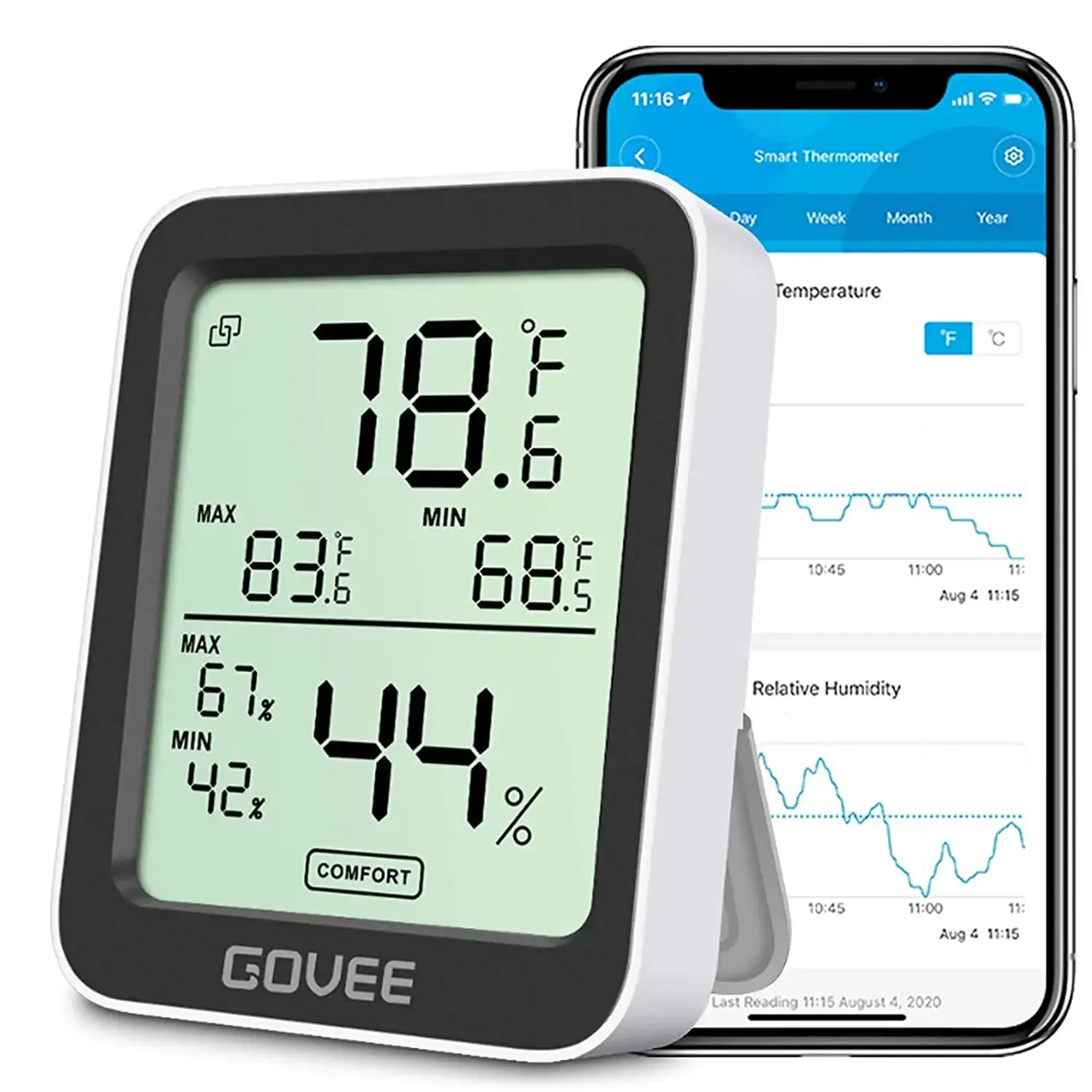
Govee Digital Indoor Hygrometer
A cheap, highly accurate Bluetooth hygrometer. Keep it right next to your plants so you know the exact temperature and humidity of the plant canopy.
Target Humidity Windows:
- Ideal Zone (45%–55% RH): Optimal transpiration rate; prevents fungal spores from establishing.
- Low Humidity (under 40% RH): Plants consume water rapidly to compensate for transpiration; risk of leaf tip burn.
- High Humidity (over 65% RH): Transpiration stalls, moisture condenses on leaves, and fungal pathogens proliferate.
2. Eliminate Humid Canopy Microclimates
Even if an ambient room hygrometer reads 50% RH, the air trapped beneath a dense bed of lettuce or basil can exceed 80% RH. This localized moisture pocket creates the environment powdery mildew requires.
The Role of Continuous Air Circulation
Continuous airflow disrupts moisture layers surrounding leaf surfaces. Mount a small oscillating desk fanView on Amazon near your garden.
Aim the air current slightly across the upper canopy. A gentle, continuous breeze circulates moisture without causing windburn, while mechanical motion stimulates stronger stems.
3. Seal Hydroponic Reservoirs
Uncovered water surfaces allow direct evaporation into your living space, increasing humidity while concentrating nutrient salts in the reservoir.
- Fit Lids Tightly: Ensure bucket and tote lids click firmly into place. Route airline tubing and irrigation lines through rubber grommets rather than open holes.
- Cap Unused Ports: In multi-pod systems, cover empty net pot slots with opaque net pot covers, rubber plugs, or golf balls. Blocking light also helps prevent algae growth in the reservoir.
4. Selecting Mechanical Dehumidifiers
If reservoirs are sealed, fans are running, and ambient RH remains above 65%, active mechanical extraction is necessary.
Compressor vs. Thermoelectric Models
| Feature | Thermoelectric (Peltier) | Compressor (Refrigerant) |
|---|---|---|
| Technology | Solid-state heat sink | Condenser coils and refrigerant compressor |
| Extraction Capacity | 8 to 16 ounces per 24 hours | 20 to 50 pints per 24 hours |
| Operating Sound | Whisper quiet (fan only) | Audible compressor hum |
| Suitability | Small storage closets | Living rooms, bedrooms, and multi-light grow areas |
For setups with multiple tanks or large vegetative canopies, miniature desktop Peltier dehumidifiers lack the extraction power to keep pace with plant transpiration. A compressor-based unit with a built-in humidistat automatically maintains the target 50% RH threshold.
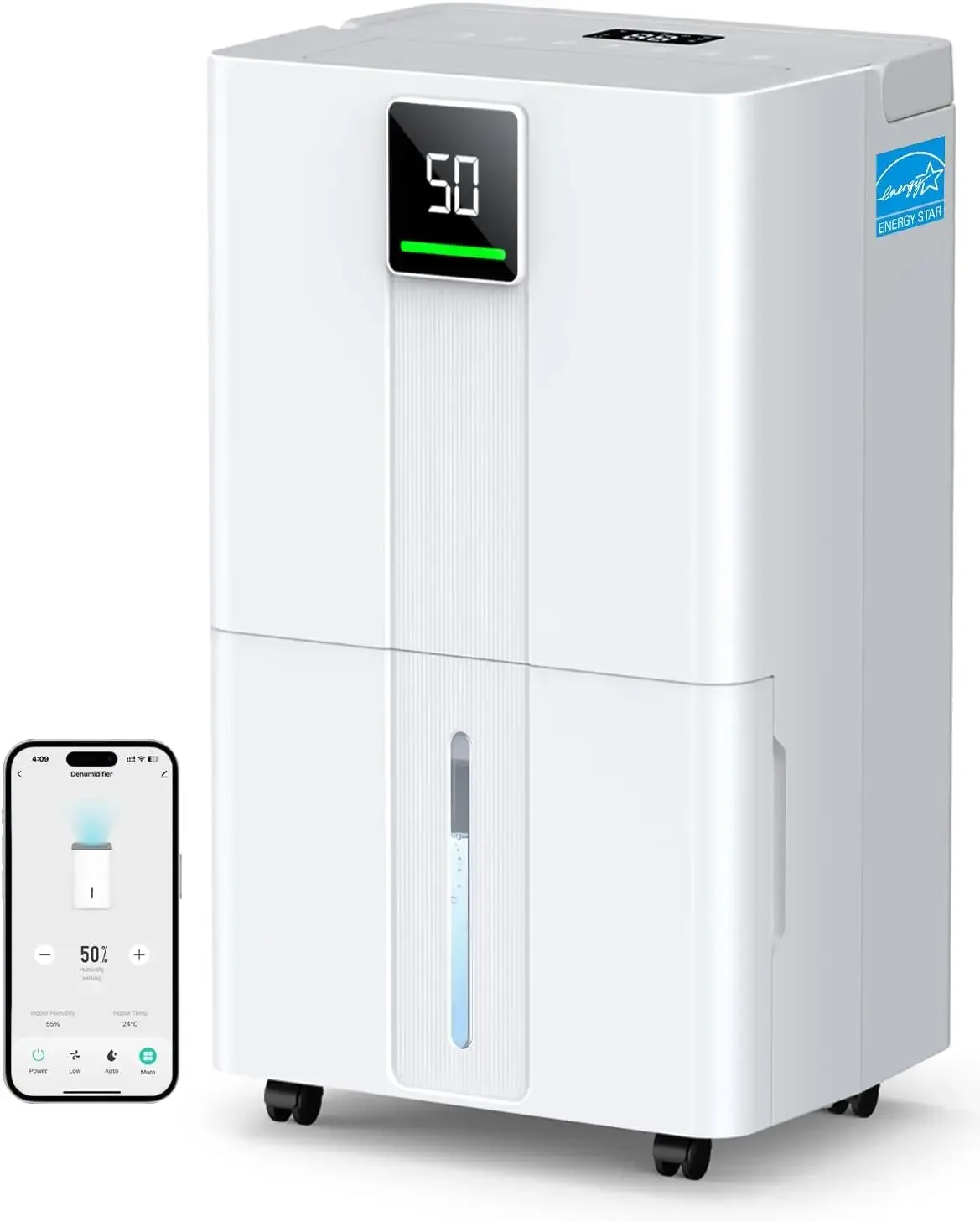
Smart Compressor Dehumidifier with Intelligent Humidistat
This ultra-quiet, Wi-Fi-enabled compressor pulls up to 100 pints of moisture per day and features smart app scheduling, a 36dB sleep mode and a continuous drain hose for hassle-free humidity control.
For most small apartment gardens with one or two countertop systems, sealed reservoirs and a modest circulation fan are sufficient to keep the space dry and mold-free.
Frequently Asked Questions
Will a small hydroponic system cause mold on my apartment walls?
No. A single countertop system or a 5-gallon bucket does not produce enough evaporation to alter the humidity of an entire apartment. Mold risks emerge primarily when running multi-light grow tents in unventilated, carpeted rooms.
What should the humidity be for indoor plants?
Most leafy greens and herbs thrive in a relative humidity (RH) of 40% to 60%. If humidity drops below 30% in winter, leaf margins turn crisp. If it stays above 70%, powdery mildew becomes a significant risk.
How do I get rid of white powdery mildew on my plant leaves?
Powdery mildew thrives in stagnant, humid air. Increase airflow immediately with a small oscillating fan. You can wipe affected foliage with a diluted 3% hydrogen peroxide solution (1 part peroxide to 3 parts water), but continuous air circulation is the permanent fix.
Do dehumidifiers use a lot of electricity in small apartments?
Small thermoelectric (Peltier) units draw little power (20–40 watts) but remove negligible moisture from plant canopies. Compressor-based dehumidifiers draw more power (300–500 watts) but run intermittently via a humidistat, cycling off once the target RH is achieved.
Our Amazon Storefront
Browse all our recommended tools & supplies
Everything we personally use and trust, hand-picked for gardeners like you.

I've been running DWC and Kratky systems for several years and write about what actually works, not textbook theory. Follow along for honest product reviews, practical guides and real grow results.