As an Amazon Associate, I earn from qualifying purchases. Some links in this article are affiliate links, if you buy through them I may earn a small commission at no extra cost to you.
Quick Summary
- Zero Mess: Hydroponics removes soil from the equation, eliminating dirt spills, heavy pots and common apartment pests like fungus gnats.
- Space Efficiency: You can grow more food per square foot hydroponically because plant roots don’t need to spread out to search for nutrients.
- System Choice Matters: Countertop all-in-one systems are perfect for kitchens, while vertical setups and DWC buckets maximize empty floor corners.
- Controlling the Environment: You can successfully mitigate apartment-specific hurdles like pump vibration noise, bright grow lights and humidity with basic, inexpensive gear.
- Pick the Right Plants: Focus on dwarf genetics, compact herbs and fast-growing leafy greens to get the highest return on your limited footprint.
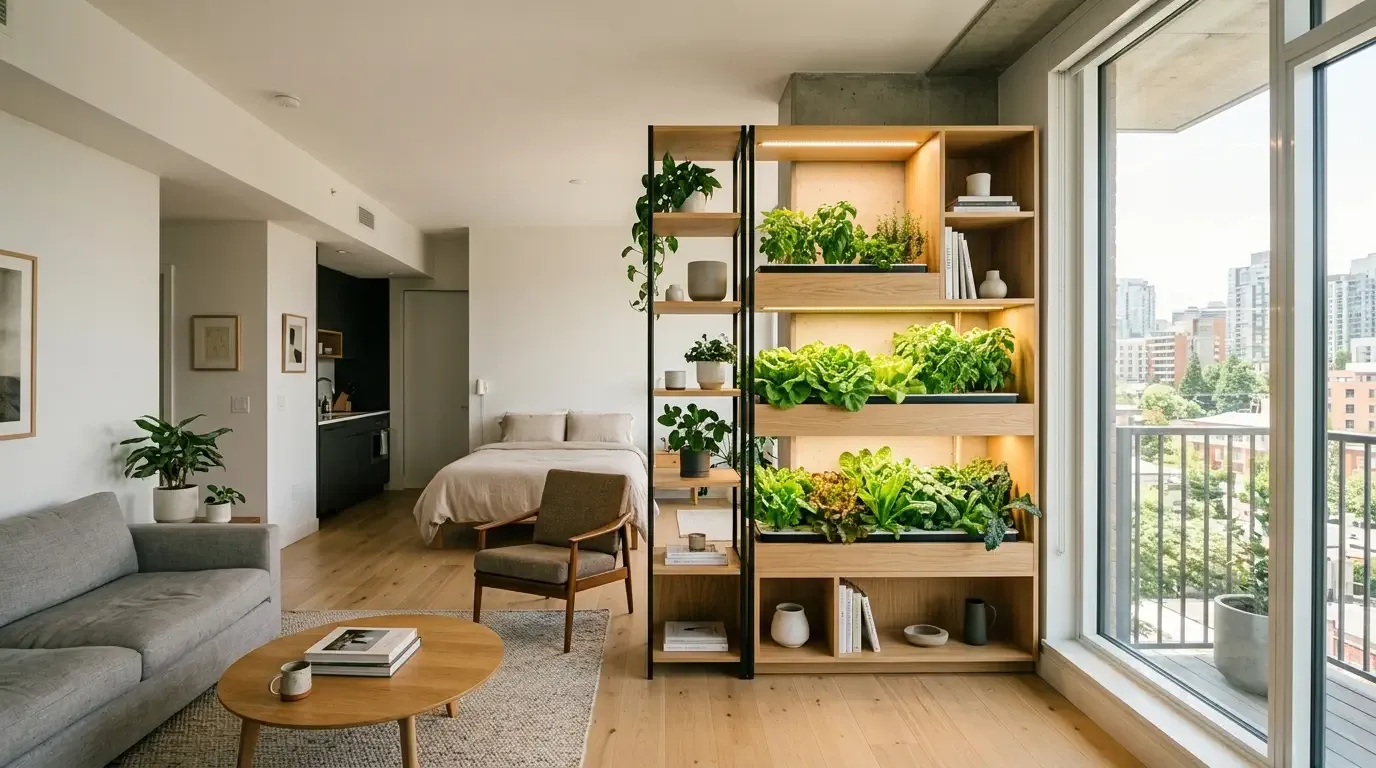
Living in an apartment limits outdoor garden space, but indoor hydroponics allows you to grow fresh produce year-round on countertops, open shelves, and compact floor footprints.
Growing vegetables in soil indoors introduces distinct challenges: dragging heavy bags of potting mix up stairs, managing drainage runoff on hardwood floors, and battling recurring fungus gnat infestations. Hydroponics replaces soil with recirculating water and mineral salts, producing clean, compact yields without loose dirt.
Here is how to evaluate indoor spaces, select quiet hardware, control lighting spill, and choose high-yield compact crops.
Why Hydroponics Fits Rental Spaces
Indoor hydroponics offers several operational advantages for apartments:
- No Loose Soil or Soil Pests: Eliminating potting dirt prevents staining and deprives fungus gnats and root aphids of the soil environment they require to reproduce.
- Higher Yield Density: Because dissolved minerals surround root hairs directly, plants do not expend energy building expansive root networks. Crops can be spaced closely in compact basins.
- Simplified Moving and Disposal: When you relocate, drain the water into the sink. There is no heavy wet soil to haul down stairs or elevators.
Assessing Your Apartment Layout
Before ordering hardware or seed packets, identify your available surface area and power access:
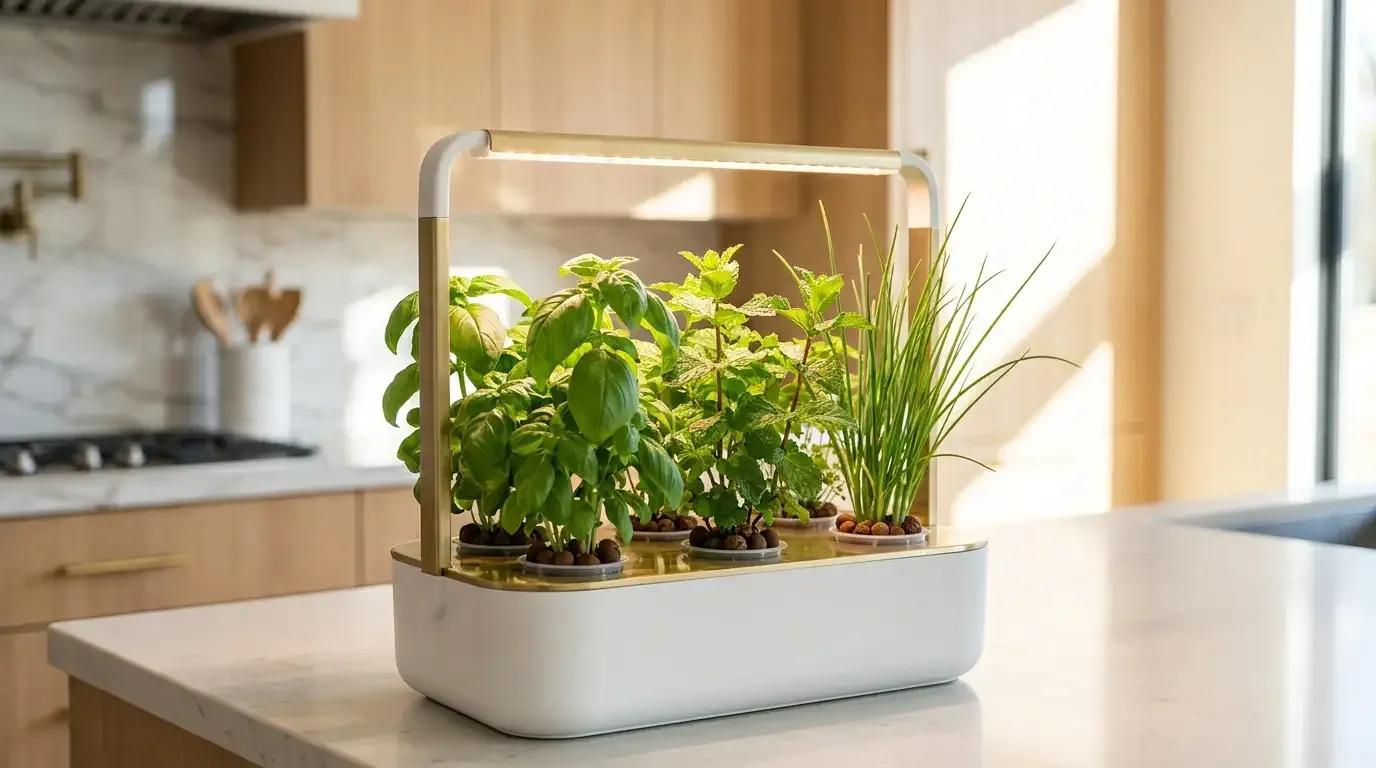
The Kitchen Countertop
- Advantages: Immediate access to water and sinks for simple reservoir flushes. Keeps culinary herbs adjacent to prep surfaces.
- Best Systems: All-in-one desktop smart gardens and passive Kratky mason jars.
Corner Floor Space
- Advantages: Provides vertical clearance for tall fruiting crops like dwarf tomatoes and bell peppers.
- Best Systems: Deep Water Culture (DWC) buckets or compact grow tents. If you want a fully enclosed space, read our guide to the best grow tent kits for indoor gardening.
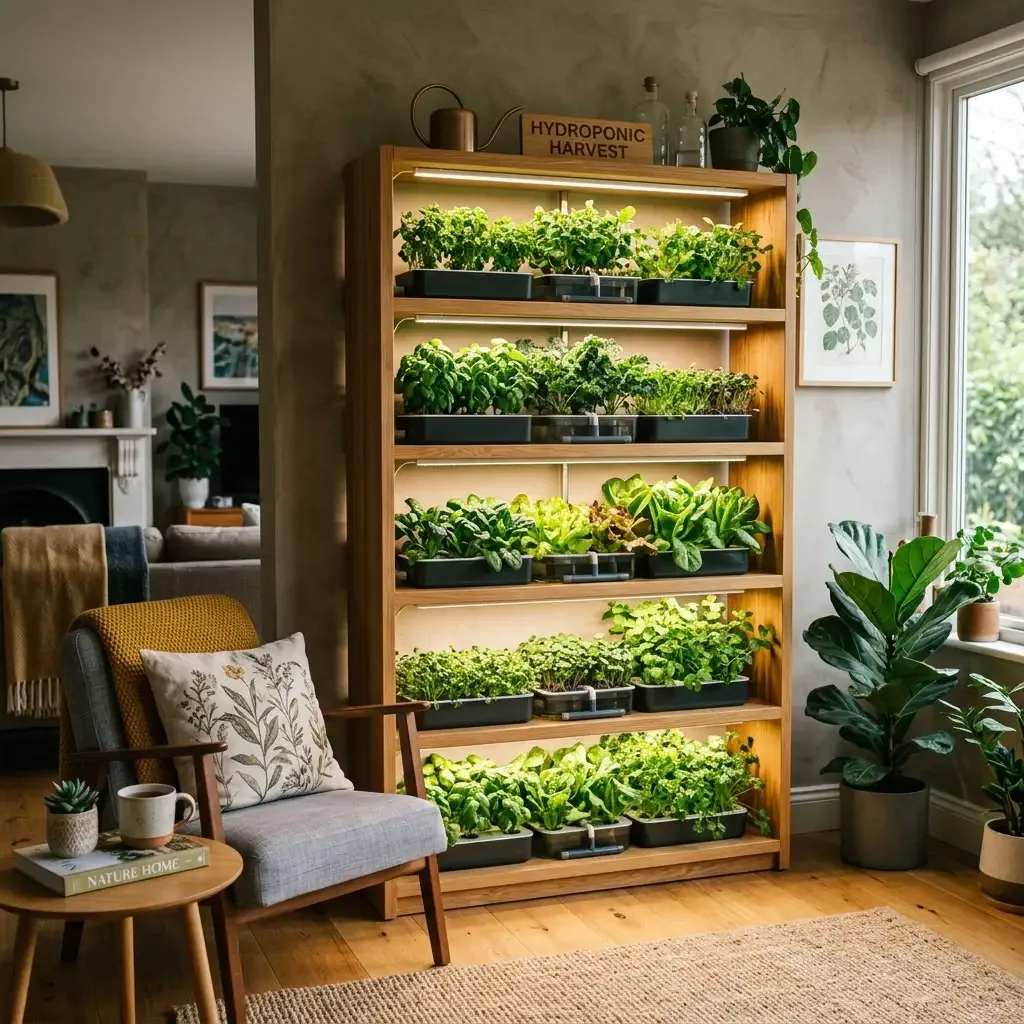
Wall Shelves and Bookshelves
- Advantages: Uses vertical wall area without consuming floor space.
- Best Systems: Microgreen propagation trays, shallow lettuce channels, and under-shelf LED strip lights.
Choosing an Apartment-Friendly System
Indoor hydroponics spans three primary formats suited to residential living:
| System Type | Best Placement | Spatial Footprint | Equipment Cost | Maintenance Demands |
|---|---|---|---|---|
| Countertop All-in-One | Kitchen counters | Under 2 sq ft | $70–$250 | Low (automated sensors) |
| Passive Kratky Jars | Windowsills / Shelves | Under 1 sq ft | $15–$30 | Low (fill and wait) |
| Deep Water Culture (DWC) | Floor corners / Closets | 2–4 sq ft | $30–$80 | Moderate (daily checks) |
1. Countertop All-in-One Units
Integrated units combine water basins, submersible pumps, and adjustable overhead LED hoods in a single molded chassis. Automated sensors notify you when to replenish water and liquid nutrients.
- Review our tested models in the best hydroponic systems for apartments.
- For head-to-head brand evaluations, read AeroGarden vs. Click & Grow for tiny kitchens.
2. Passive Kratky Method
The Kratky method operates without electricity, pumps, or moving parts. Plant roots sit suspended in net pots above a nutrient basin. As the crop drinks water, the liquid level drops, creating an air zone for root oxygenation. It runs completely silent and fits onto narrow window ledges.
3. Deep Water Culture (DWC)
DWC uses an active air pump to deliver dissolved oxygen to roots submerged in a 5-gallon bucket. It accommodates larger root masses, making it ideal for productive fruiting crops.
Overcoming Apartment Environmental Constraints
Growing inside living quarters introduces three acoustic and visual factors that require management:
1. Managing Pump Hum
Diaphragm air pumps oscillate rapidly, creating a low-frequency hum when placed on hardwood floors or hollow desks.
- The Solution: Set pumps on high-density silicone vibration pads, or suspend them with an elastic cord.
- Read our step-by-step techniques in how to silence a noisy hydroponic setup.
2. Managing Grow Light Glare
Indoor vegetables require 12 to 16 hours of daily illumination. Cheap LEDs casting purple or pink hues create harsh visual glare in living rooms.
- The Solution: Use full-spectrum white LEDs that emit clean 4,000K to 5,000K light. Put lights on digital outlet timers so they switch off before bedtime.
- Review our setup guidelines in managing grow lights in living spaces.
3. Moisture and Condensation
Transpiring canopies release water vapor into enclosed rooms.
- The Solution: Single countertop basins have negligible impact on ambient humidity. For multi-bucket systems or grow tents, run an oscillating fan to keep air circulating and deploy a small room dehumidifier to maintain humidity between 50% and 60%.
- For prevention strategies, read preventing mold and managing humidity in indoor gardens.
Recommended Crops for Small Spaces
In compact spaces, prioritize crops that produce high harvest volume per square foot:
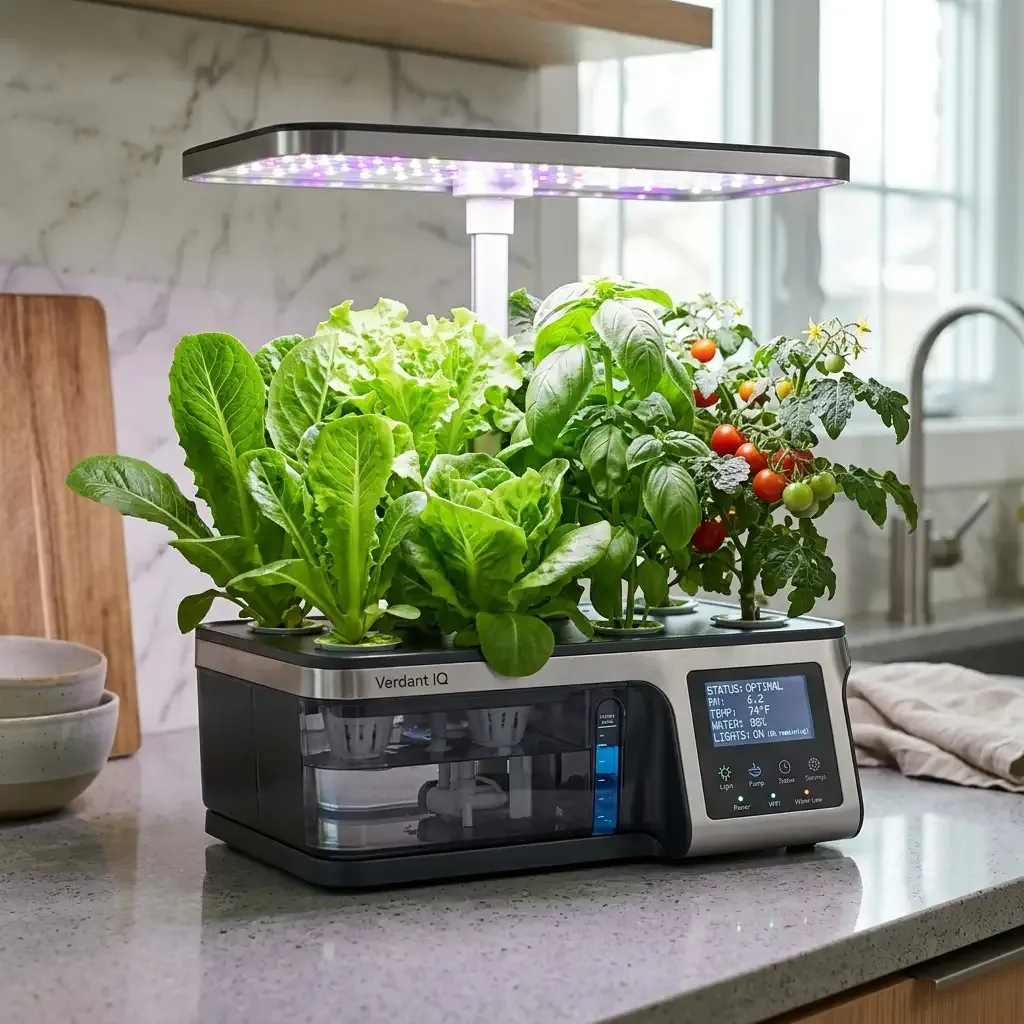
- Salad Greens and Culinary Herbs: Loose-leaf lettuces, arugula, sweet basil, mint, and cilantro grow quickly and allow continuous cut-and-come-again harvesting for months. Read our guide to 10 easy herbs to grow hydroponically indoors.
- Micro-Dwarf Vegetables: Standard indeterminate tomato vines reach six to eight feet in height and quickly outgrow apartments. Select true dwarf genetics (such as Tiny Tim or Micro Tom) that fruit heavily on 10-to-12-inch plants. See countertop foodscaping: 7 dwarf vegetables and compact herbs.
- Low-Light Decorative Plants: For decorative greenery under ambient light, review our list of the best low-light indoor plants for apartments.
Summary and Next Steps
To launch your apartment garden:
- Identify a 2x2-foot space with a nearby electrical outlet.
- Select fast-turnover herbs or salad greens for your initial harvest.
- Start with an all-in-one countertop unit or build a low-cost Kratky jar setup to learn solution management.
With full-spectrum white LEDs and vibration-dampened pumps, an apartment garden delivers fresh, clean produce without soil or outdoor space.
Editor’s Note: Parts of this guide were structured and optimized with the assistance of AI, then thoroughly reviewed, edited and expanded with first-hand growing experience by our author Raymond to ensure practical, real-world accuracy.
Frequently Asked Questions
Is hydroponics safe to do in a rented apartment?
Yes. Hydroponics eliminates loose potting soil that can stain floors and harbors no fungus gnats. Enclosed plastic reservoirs and catch trays protect against water spills.
Will a hydroponic system make my apartment humid or moldy?
Small systems holding under 10 gallons will not noticeably increase indoor humidity. When operating large multi-shelf arrays or grow tents, a small room dehumidifier and oscillating fan prevent condensation along walls.
Are hydroponic air pumps too loud for a studio apartment?
Basic electromagnetic diaphragm pumps cause mechanical hum against floors. Setting pumps on silicone dampening mats or switching to solid-state piezoelectric pumps keeps operation whisper-quiet.
Can I do hydroponics if my apartment gets zero direct sunlight?
Yes. Modern indoor gardens use full-spectrum LED grow lights rather than window sunlight, allowing consistent crop yields in windowless kitchens, hallways, or basements.
Our Amazon Storefront
Browse all our recommended tools & supplies
Everything we personally use and trust, hand-picked for gardeners like you.

I've been running DWC and Kratky systems for several years and write about what actually works, not textbook theory. Follow along for honest product reviews, practical guides and real grow results.