As an Amazon Associate, I earn from qualifying purchases. Some links in this article are affiliate links, if you buy through them I may earn a small commission at no extra cost to you.
Quick Summary
- The Core Difference: AeroGarden is an active hydroponic system (faster growth, low pump hum, uses liquid nutrients). Click & Grow is a passive wicking system (slower, completely silent, relies on pre-fertilized soil pods).
- Noise Constraints: For studio apartments where the kitchen and bed occupy the same room, the silent Click & Grow avoids nighttime pump noise.
- Yield & Harvest: For regular harvests of basil, salad greens, and dwarf tomatoes, AeroGarden outperforms passive wicking due to continuous root oxygenation.
- Seed Flexibility: AeroGarden easily accommodates custom seeds via blank sponges. Click & Grow steers users toward proprietary pre-seeded cartridges.
When evaluating countertop garden options for a small kitchen or studio apartment, the decision usually comes down to AeroGarden and Click & Grow. Both brands offer compact footprints, integrated LED hoods, and automated timers, but their underlying irrigation methods are completely different.
To map out your available counter space and power access, review our guide to apartment hydroponics and our round-up of the best hydroponic systems for apartments.
Comparison Matrix: AeroGarden vs. Click & Grow
| Feature | AeroGarden | Click & Grow |
|---|---|---|
| System Mechanics | Active recirculating water pump | Passive capillary wicking |
| Acoustic Profile | Low hum and water trickle | Completely silent |
| Vegetative Velocity | Rapid (3–4 weeks to salad greens) | Moderate (5–7 weeks to harvest) |
| Third-Party Seeds | Supported with blank sponges | Discouraged; uses proprietary pods |
| Primary Strength | Ongoing yields of culinary herbs and greens | Hands-off simplicity and zero pump noise |
1. Operating Mechanics: Active Aeration vs. Passive Wicking
AeroGarden: Active Solution Recirculation
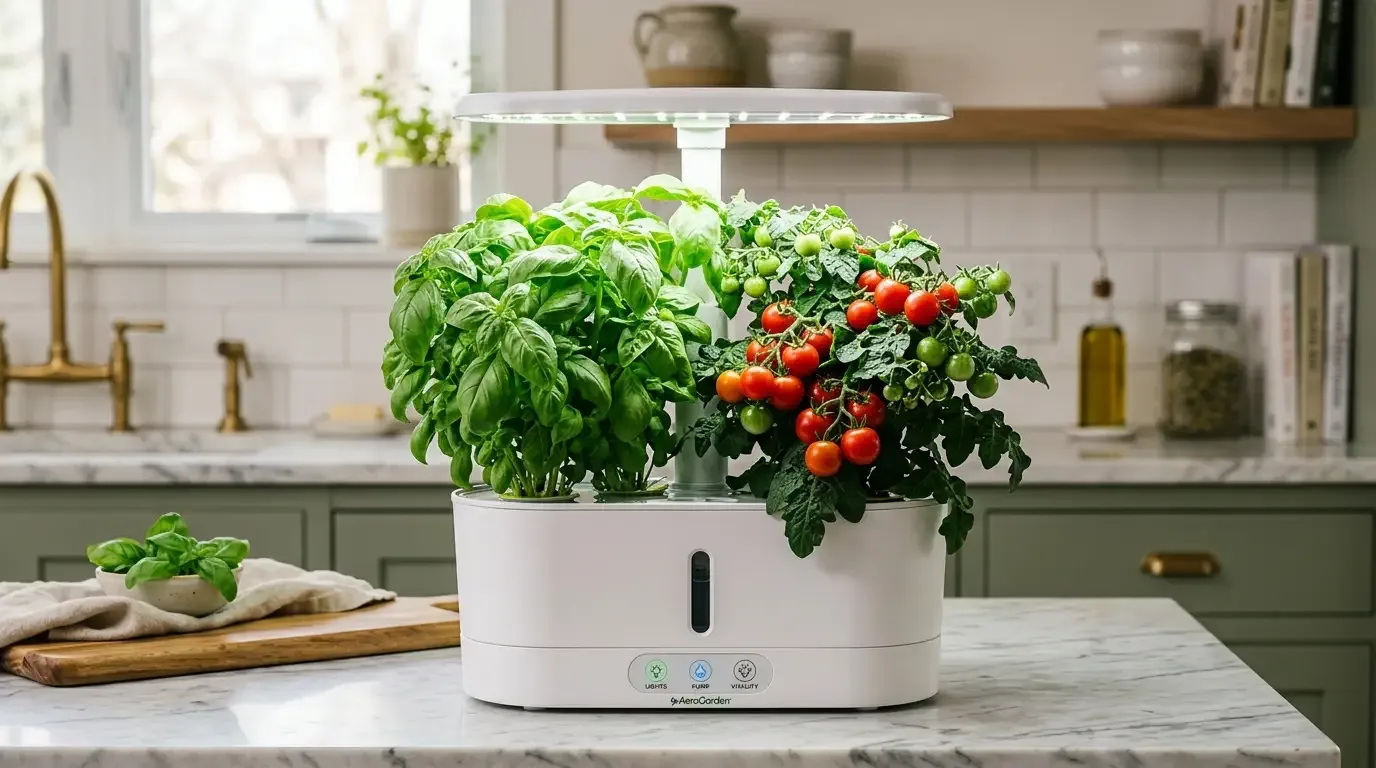
AeroGarden units house a small submersible pump in the bottom reservoir. Roots suspend directly into liquid nutrient solution, and the pump bathes them in oxygenated water on an intermittent timer.
- Performance: Fast growth rates. Unrestricted access to dissolved oxygen and mineral salts enables plants to mature rapidly.
- Maintenance: Requires measuring liquid plant food into the water port every 14 days and performing a reservoir rinse every month.
Click & Grow: Passive Capillary Sub-Irrigation
Click & Grow units use no mechanical pumps. Plants grow in compressed “Smart Soil” sponges containing slow-release fertilizer beads. A woven wick draws water upward from the tank into the sponge via capillary action.
- Performance: Hands-off operation. Fill the reservoir when the indicator float drops. You never mix liquid fertilizers because nutrients are embedded in the pod.
- Maintenance: Without active root oxygenation, vegetative growth proceeds at half the speed of active water culture.
2. Acoustic Impact in Studio Living
In an open-concept studio apartment, ambient appliance sound matters:
The Click & Grow is completely silent. It has no moving impellers, solenoids, or running water. The only sound is the click of the timer switch when lights toggle on and off. If your bed sits near the counter, it creates zero disruption.
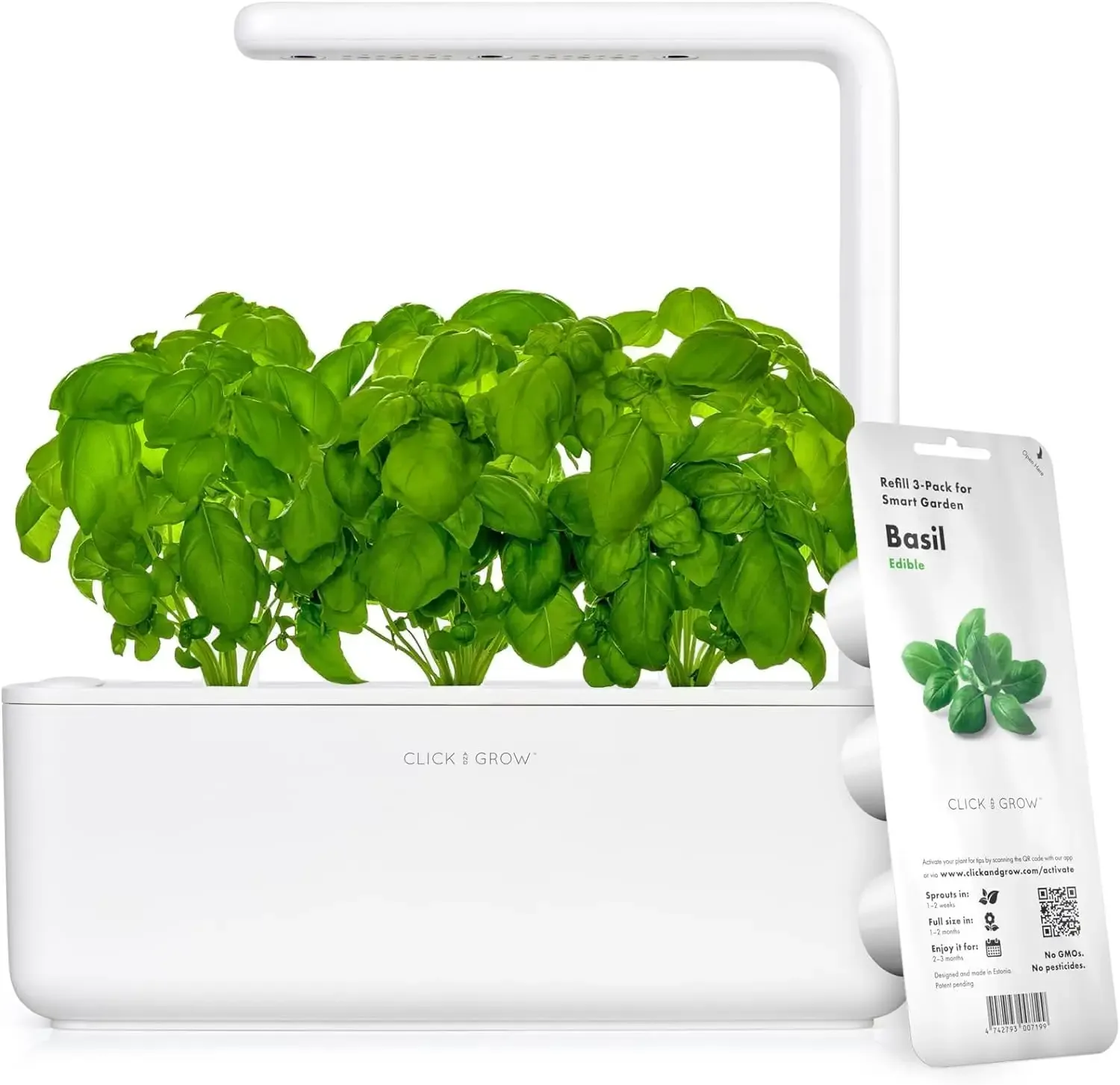
Click & Grow Smart Garden 3
The perfect silent system for small studios. Takes up barely any counter space and requires zero nutrient mixing.
The AeroGarden creates audible background sound. The internal pump cycles regularly (typically 5 minutes running, 25 minutes resting). When the water level drops by an inch, falling water creates a distinct trickle against the reservoir lid. If nighttime pump noise becomes an issue, refer to our guide on how to silence a noisy hydroponic setup.
3. Seed Flexibility and Operating Costs
Countertop systems vary widely in ongoing consumables pricing:
AeroGarden allows broad flexibility. In addition to pre-seeded offerings, you can purchase blank sponges and drop in your own seed varieties, including specialized countertop dwarf vegetables and micro-herbs.
Click & Grow operates on a closed ecosystem model. Their pods use proprietary shaped cartridges. Replacing the medium with loose potting soil is messy, alters wick hydration rates, and often produces algae along the top collar.
4. Yield Potential and Crop Capacity
If your objective is harvesting practical quantities of fresh food, AeroGarden provides significantly higher production volume.
Active aeration supports large root systems capable of powering heavy-feeding crops like Sweet ‘N’ Neat cherry tomatoes, dwarf jalapeños, and Genovese basil.
The Click & Grow excels at compact culinary herbs (thyme, parsley, oregano) and miniature ornamental flowers. However, because the fertilizer volume is locked within the small sponge, heavy-feeding plants exhaust their nutrient reserves quickly after initial flowering.
Decision Guide: Which System Fits Your Kitchen?
Select the Click & Grow if:
- You live in a studio where equipment must remain 100% silent.
- You want minimal upkeep without handling liquid fertilizers or cleaning pump filters.
- You prioritize clean aesthetics and compact greens over high harvest volume.
Select the AeroGarden (or active alternative) if:
- You want faster crop growth and higher weekly harvest yields.
- You intend to grow dwarf fruiting vegetables alongside culinary herbs.
- You prefer using your own seeds rather than purchasing proprietary refill cartridges.
- The system will live in a separate kitchen or dining area where a faint trickle is unnoticed.
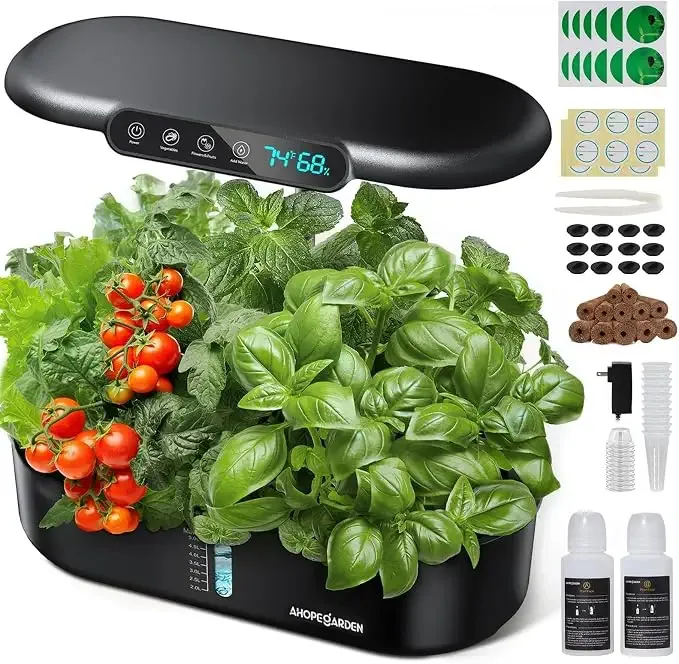
AHOPEGARDEN 12-Pod Indoor Garden
An excellent, affordable alternative to the AeroGarden. It uses the same active pump and liquid nutrient system for rapid growth, but often comes at a much lower price point for a 12-pod capacity.
Frequently Asked Questions
Which system grows plants faster, AeroGarden or Click & Grow?
AeroGarden grows plants significantly faster. Because it uses an active water pump to constantly wash roots in highly oxygenated liquid nutrients, basil and lettuce reach harvest size in about 3 to 4 weeks. The Click & Grow is a passive wicking system; growth is steady but noticeably slower.
Can I use my own seeds in both systems?
Yes, but it is much simpler in an AeroGarden. AeroGarden sells affordable blank sponge kits you can drop any seed into. Click & Grow relies on proprietary Smart Soil blocks. While you can repack a used Click & Grow pod with potting soil, doing so is messy and often triggers algae growth.
Are they noisy?
The Click & Grow operates silently because it has no moving parts or pumps. The AeroGarden runs a submersible water pump on an automated timer, producing a low mechanical hum and a faint water trickling sound during pump intervals.
Do these systems consume a lot of electricity?
No. Both units utilize low-wattage LED arrays. Running them for 14 to 16 hours daily typically adds between $1 and $3 to a monthly electric bill depending on regional utility rates.
Our Amazon Storefront
Browse all our recommended tools & supplies
Everything we personally use and trust, hand-picked for gardeners like you.

I've been running DWC and Kratky systems for several years and write about what actually works, not textbook theory. Follow along for honest product reviews, practical guides and real grow results.