As an Amazon Associate, I earn from qualifying purchases. Some links in this article are affiliate links, if you buy through them I may earn a small commission at no extra cost to you.
Quick Summary
- Light Control: Paint reservoirs black or cover them with foil to block light and starve algae.
- Water Temp: Keep reservoir temperatures below 70°F; warm water speeds up algae multiplication.
- Sanitization: Run a diluted hydrogen peroxide flush between crops to sterilize pipes and fittings.
- UV Sterilizers: Use submersible UV-C lights in the reservoir to kill floating algae spores.
- Airstone Health: Clean airstones regularly to maintain oxygen levels that support roots over algae.
Preventing algae growth in a hydroponic system involves eliminating light leaks, maintaining strict sanitization, and optimizing aeration to remove the conditions algae needs to survive. While microscopic spores exist naturally in ambient air, implementing reliable physical barriers stops them from multiplying, clogging equipment, and stealing nutrients from your crops.
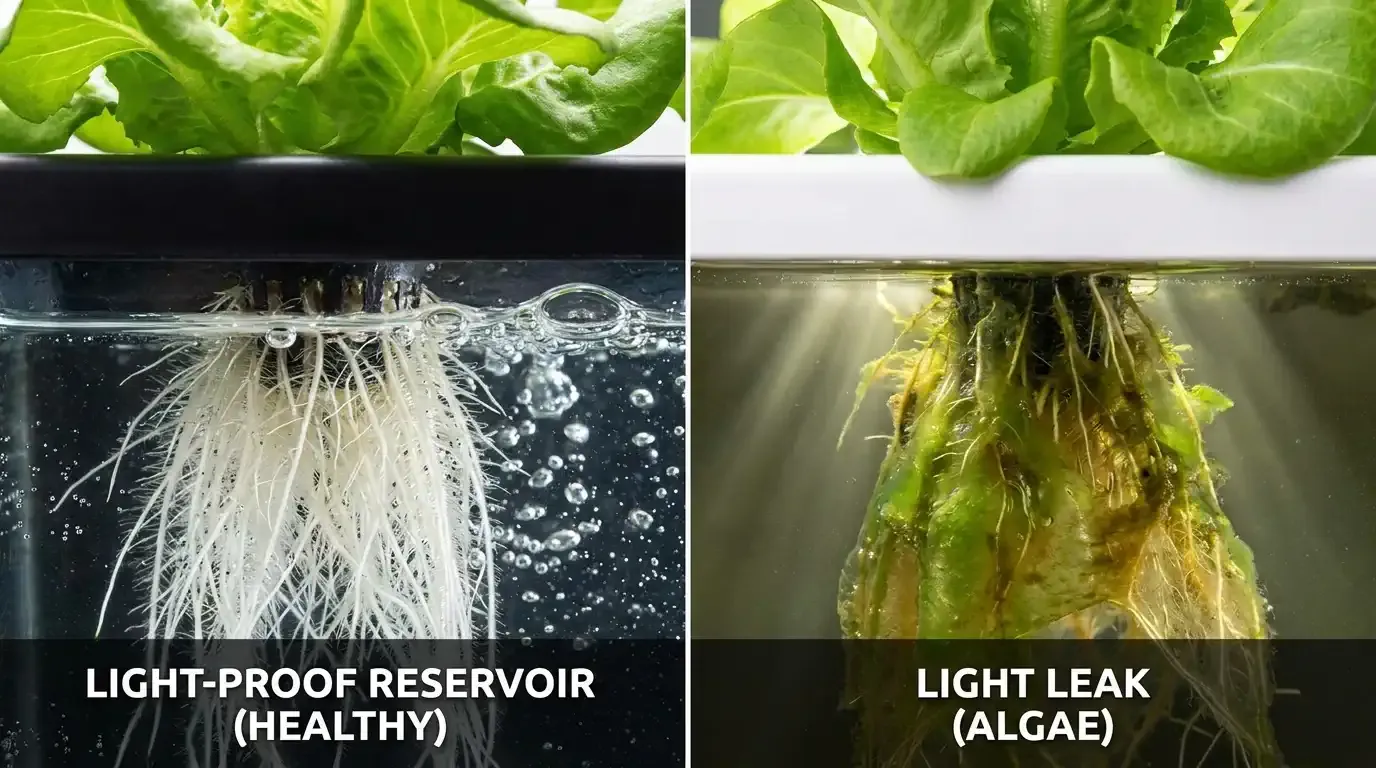
During my first Deep Water Culture (DWC) lettuce grow, I used a semi-transparent storage tote with a yellow lid. Within three weeks, bright green algae coated the root mass, stripped dissolved oxygen from the water, and brought on root rot that wiped out the crop. That single light leak ruined the run. Total light exclusion and routine maintenance remain the essential foundation of clean hydroponic growing.
Managing reservoir light exposure, temperature, and water movement prevents algae spores from colonizing your system.
What Causes Algae Growth in Hydroponics?
Algae requires three environmental conditions to establish colonies:
- Light Exposure: Algae are photosynthetic organisms. Any stray light entering the nutrient reservoir triggers rapid reproduction.
- Dissolved Minerals: Hydroponic solutions deliver dense nitrogen, phosphorus, and potassium, providing ideal nutrition for algae.
- Warm, Stagnant Water: Stagnant water and temperatures exceeding 21°C (70°F) accelerate cellular division.
Related Guide: Unbalanced fertilizer levels feed algae bloom cycles. Learn how to select and mix target nutrient profiles in our guide to choosing the best hydroponic nutrients for your garden.
How to Prevent Algae in Your Hydroponic System
Preventing algae requires breaking the triangle of light, warmth, and stagnation:
1. Eliminate Light Exposure (Light-Proofing)
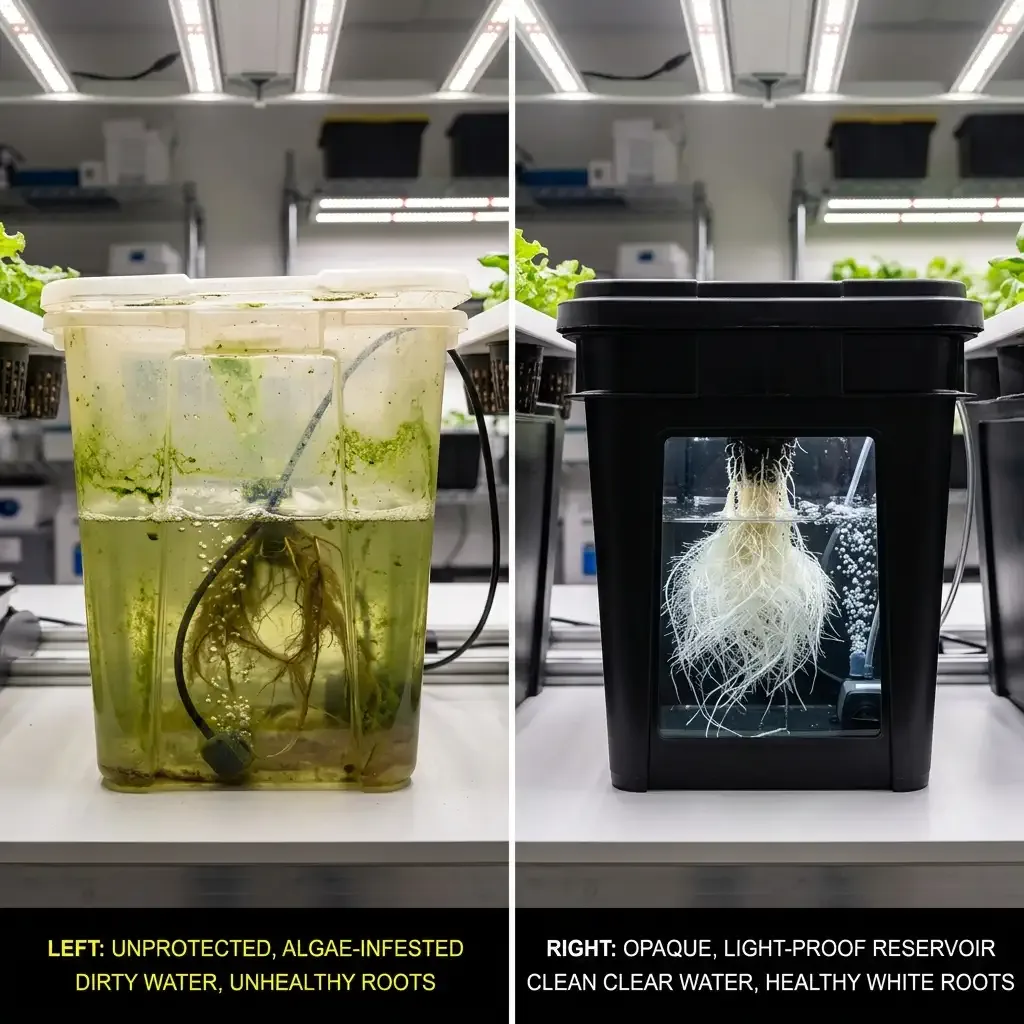
Light-proofing is your primary defense. If no light reaches the nutrient solution, algae cannot photosynthesize:
- Seal Reservoirs Completely: Never rely on translucent plastic totes. If using colored plastic bins, apply a base coat of black spray paint to block light, followed by white paint to reflect grow light heat. Alternatively, wrap containers in opaque vinyl sheeting or heavy foil tape.
- Use Opaque Tubing: Avoid clear vinyl tubing for irrigation and air delivery. Algae colonizes inside transparent lines within days, creating blockages. Install black vinyl or black silicone lines instead.
- Cover Empty Net Cup Slots: Unused holes in grow lids let grow lights penetrate directly into the water. Cover empty sites with opaque plastic discs, inverted saucers, or foil tape.
2. Maintain a Strict Sanitization Routine
Organic root debris and dust create biofilms that harbor algae and fungal spores:
- Wash Components Every 10–14 Days: During reservoir changeouts, wipe down walls, pump housings, and net cup rims. Use a 10% household bleach solution or 3% food-grade hydrogen peroxide, rinsing clean before refilling.
- Disinfect Garden Tools: Sanitize shears, EC probes, and dip cups with isopropyl alcohol before placing them in the reservoir.
- Drain and Refresh Tanks: Fully replace nutrient solutions every two to three weeks to purge unconsumed salts and reset the biological baseline.
3. Optimize Water Circulation and Aeration
Moving water prevents algae spores from settling on container walls and root surfaces, while high dissolved oxygen levels keep plant root systems resilient:
- DWC Bucket Aeration: For a standard 5-gallon DWC bucket, install an air pump rated for at least 50 to 100 gallons per hour (GPH) to produce vigorous bubbling.
- Large Reservoir Circulation: In 20-gallon or larger tanks, air stones alone leave dead zones. Add a small submersible utility pump (200–300 GPH) to circulate water continuously across the floor of the tank.
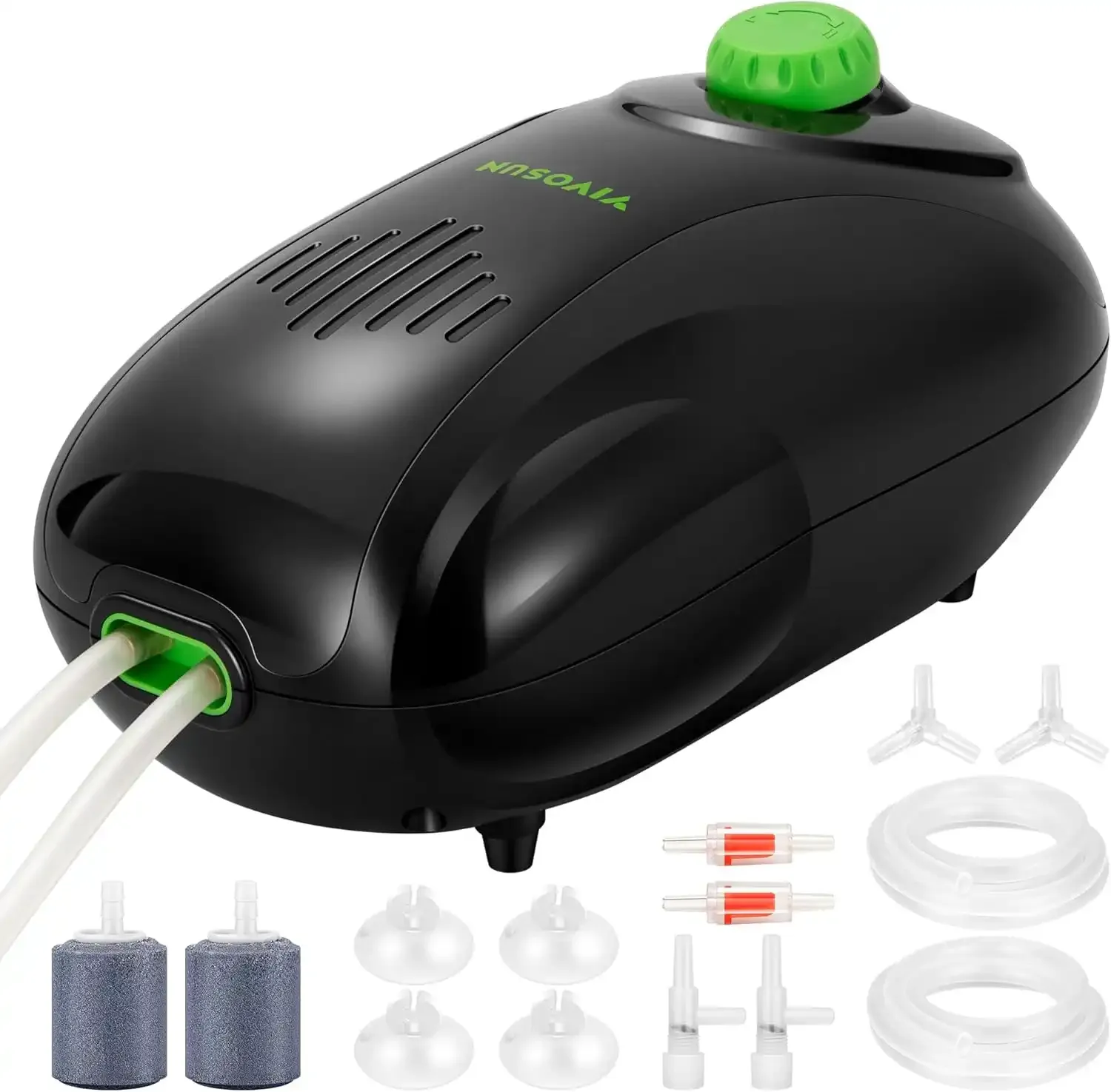
VIVOSUN Dual Output Air Pump Kit
A reliable, whisper-quiet air pump that has been a staple in my DWC builds. The adjustable dial makes it easy to control the bubbling intensity across multiple 5-gallon reservoirs and it runs at under 35 dB, delivering 160 GPH of oxygen to the roots without adding noise to my grow room.
4. Install a Submersible UV Sterilizer
In recirculating systems like NFT or vertical towers, a small in-line or submersible UV sterilizer neutralizes free-floating spores:
- Continuous Spore Inactivation: Shielded UV-C bulbs damage the DNA of passing algae cells and bacterial spores in the water column.
- Root Protection: Because the light source is housed internally inside an opaque pump chamber, water is treated without exposing roots or beneficial root-zone bacteria to ultraviolet rays.
5. Monitor Nutrient Concentration and pH
Excess nutrient salts fuel opportunistic algae blooms when stray light is present:
- Avoid Overfeeding: Match fertilizer concentration to crop stage rather than maximum label dosage.
- Track Daily EC Levels: A digital meter measures total dissolved solids. If EC rises while water levels drop, plants are transpiring water faster than salts, concentrating minerals that algae exploit.
Related Guide: Algae blooms drive wild swings in water chemistry. Learn how to diagnose and stabilize acidity in our complete guide to understanding and managing hydroponic pH levels.
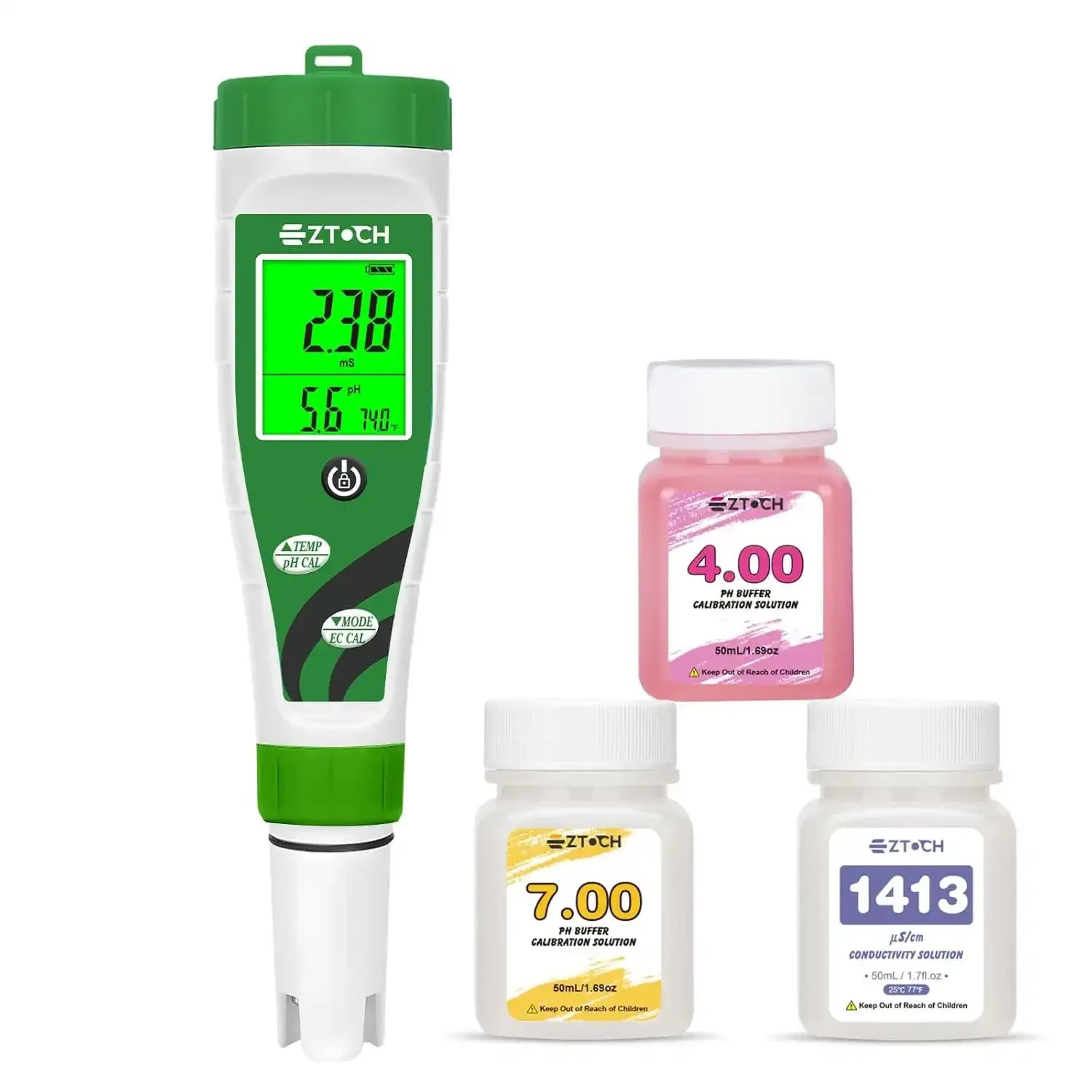
Digital pH and EC Meter Pen Combo
Keep your reservoir chemistry balanced! This digital test pen combo provides fast, precise readings of both pH and EC/TDS. Daily testing is the only way to catch nutrient spikes and drifts before they stress your plants and encourage algae growth.
Green Algae vs. Brown Slime (Diatoms)
Differentiating standard green algae from brown slime or water mold is critical for applying the right remedy:
| Characteristic | Green Algae | Brown Slime (Diatoms / Pythium) |
|---|---|---|
| Color & Texture | Bright green, slippery sheets or filaments. | Brown, bronze, or tan; jelly-like and clings to roots. |
| Primary Cause | Light leaks reaching nutrient solution. | Warm water (>72°F/22°C), low dissolved oxygen, and pathogens. |
| Impact on Roots | Competes for nutrients and oxygen; gradual decline. | Destroys root tissue directly, causing fast rot. |
| Remedy | Light-proofing, physical scrub, H2O2 wipe. | Sterilization, H2O2 shock, lowering temperature, beneficial microbes. |
Remediation: How to Clear an Existing Outbreak
When algae establishes in a reservoir, execute a full system reset:
Step 1: Isolate Plants and Scrub
Move plants into temporary buckets with plain, pH-adjusted water. Drain the main reservoir completely. Scrub container walls, fittings, and pumps using a 10% bleach solution (1 part bleach to 9 parts water) or 3% hydrogen peroxide. Rinse thoroughly with clean water to remove all chemical traces.
Step 2: Recirculating System Flush
Reassemble plumbing, fill with tap water, and add 3% hydrogen peroxide at 10 mL per gallon (or 35% food-grade H2O2 at 1 mL per gallon). Run pumps for 12 to 24 hours to clear internal lines, then drain the flush water completely.
Step 3: Refill and Colonize with Beneficials
Refill with fresh water and mix a mild nutrient solution. Because sanitizing eliminates both harmful and beneficial microbes, add an inoculant containing Bacillus amyloliquefaciens (such as Hydroguard). These beneficial bacteria establish along root surfaces, blocking opportunistic algae and fungal spores from recolonizing.
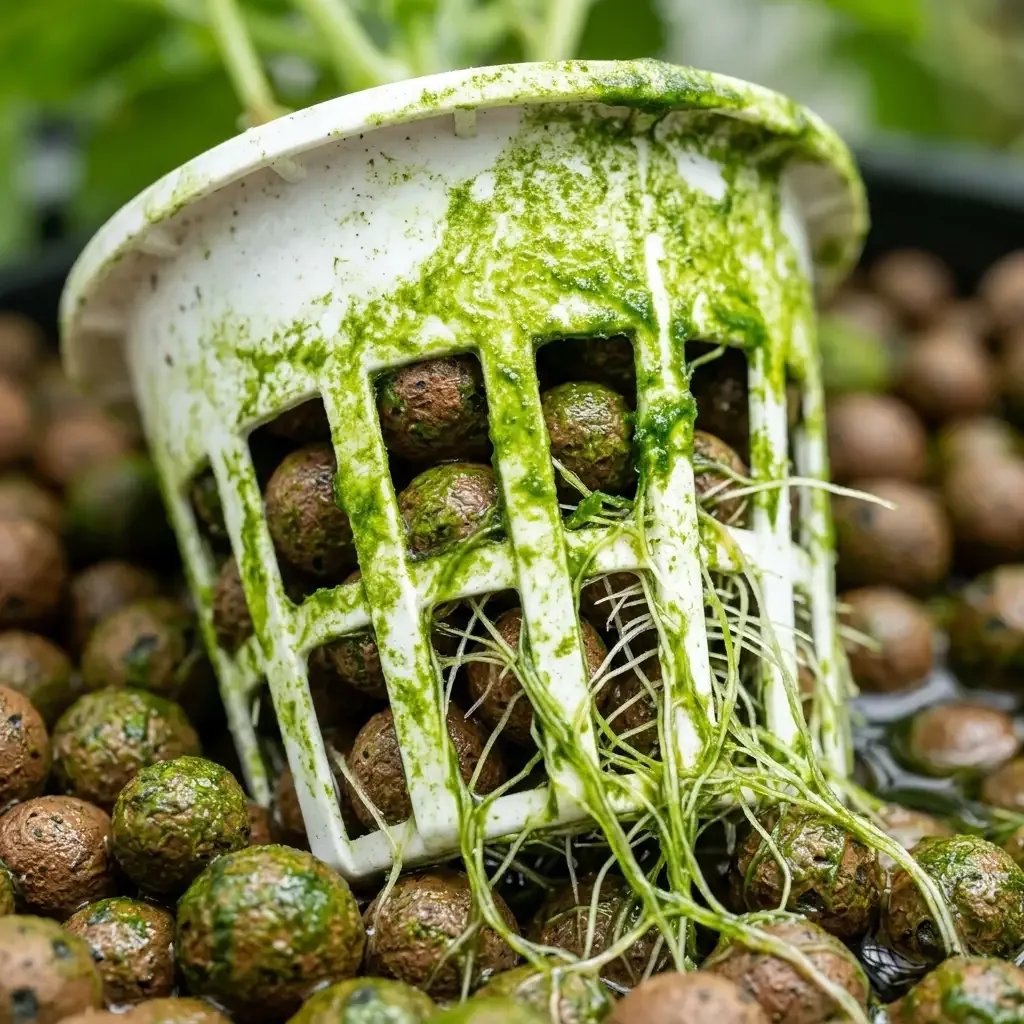
Warning Signs to Watch For
Catching blooms early minimizes root disruption:
- Slippery Reservoir Walls: A slick, slimy film on container plastic indicates early colonization before water turns green.
- Tinted Solution: Cloudy, greenish, or murky water signals active blooms suspended in the liquid.
- Musty, Swampy Odor: Healthy reservoirs smell neutral and clean. A decaying, swampy smell indicates organic decomposition and dying algae.
Why Controlling Algae Protects Crop Yield
Unchecked algae damages hydroponic systems in three distinct ways:
- Nighttime Oxygen Depletion: Algae releases oxygen in light, but switches to respiration in darkness, consuming dissolved oxygen and leaving plant roots in an anaerobic state.
- Root Rot Vulnerability: Oxygen-starved root tissue dies, creating necrotic sites that invite Pythium infections. Roots turn brown, soft, and lose their capacity to take up water.
- Plumbing Clogs: Algal mats bind around pump impellers, choke drip emitters, and coat filter meshes. For pump maintenance advice, consult our guide on how to troubleshoot common hydroponic problems.
Summary: Maintaining an Algae-Free System
Total light exclusion is your primary line of defense. If you see green slime starting to form, inspect reservoir lids, net cup slots, and tubing for light leaks before dosing chemical additives. Keeping water temperatures below 20°C (68°F), providing strong aeration, and sanitizing tanks between cycles keeps roots white and nutrient water clear.
Editor’s Note: Parts of this guide were structured and optimized with the assistance of AI, then thoroughly reviewed, edited and expanded with first-hand growing experience by our author Raymond to ensure practical, real-world accuracy.
Frequently Asked Questions
Is algae harmful to plants in a hydroponic system?
Yes, algae competes with your plants' roots for dissolved oxygen and nutrients and severe outbreaks can clog pumps and rot roots.
How does hydrogen peroxide help control algae?
Adding food-grade hydrogen peroxide (H2O2) to your water releases oxygen molecules that kill algae cells on contact without harming established plant roots.
Can I scrape algae off my plant roots?
No, scraping or pulling algae off roots will damage the delicate root hairs and increase the risk of root rot. Instead, use a diluted hydrogen peroxide flush to kill the algae safely.
Does aluminum foil work to block light in hydroponics?
Yes, aluminum foil is highly effective at blocking light and reflecting heat away from reservoirs, but it can tear easily. Heavy-duty foil tape or black-and-white poly plastic are more durable alternatives.
Our Amazon Storefront
Browse all our recommended tools & supplies
Everything we personally use and trust, hand-picked for gardeners like you.

I've been running DWC and Kratky systems for several years and write about what actually works, not textbook theory. Follow along for honest product reviews, practical guides and real grow results.