As an Amazon Associate, I earn from qualifying purchases. Some links in this article are affiliate links, if you buy through them I may earn a small commission at no extra cost to you.
Quick Summary
- Cool season crops go in first: Peas, spinach, kale and broccoli tolerate cold soil and light frost, some taste better for it.
- Warm season crops wait: Tomatoes, peppers and cucumbers need soil above 60°F and die at the first frost.
- Build a sequence, not a single day: Spread planting across 8-10 weeks instead of one weekend.
- Soil temperature beats the calendar: A thermometer reading is a better signal than any date chart for warm season crops.
- Indoors, the distinction mostly fades: Hydroponic systems hold steady temperatures, so cool/warm mainly matters for plants headed outside eventually.
What is the difference between cool season and warm season crops? The main difference lies in their temperature tolerance: cool season crops thrive in chilly weather and tolerate frost, while warm season crops require hot weather and are killed outright by frost.
The most common spring planting mistake isn’t planting too early or too late, it’s planting everything on the same day. A garden bed isn’t a single event, it’s a sequence. Mixing cool and warm crops into one planting day means half your seeds are miserable no matter which day you pick.
The fix is knowing which category each plant falls into and layering your planting across the season instead of front-loading it all at once.
Cool vs. Warm Season Crops at a Glance
| Crop Type | Common Examples | Ideal Soil Temp | Frost Tolerance |
|---|---|---|---|
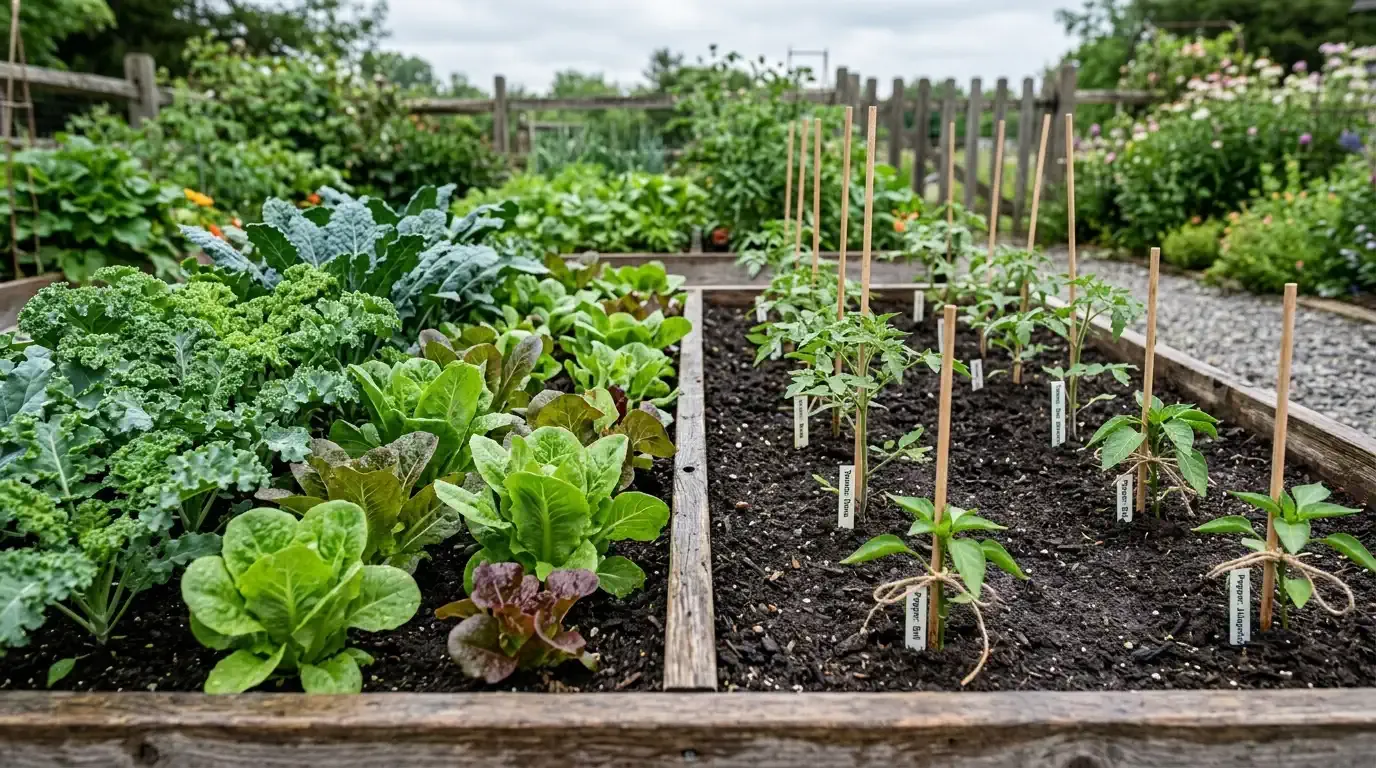
| Cool Season | Peas, spinach, broccoli, kale | 40°F – 70°F | Survives (and often prefers) light frost |
| Warm Season | Tomatoes, peppers, cucumbers | 60°F+ consistently | Killed immediately by frost |
Cool season crops
These grow best in soil temperatures between roughly 40-70°F. Most tolerate a light frost, several actually taste better after one (frost converts starches to sugars in things like kale and carrots). They bolt, send up a flower stalk and turn bitter, once real heat arrives, so they’re a spring and fall crop, not a summer one.
- Direct sow 2-4 weeks before your last frost date: peas, spinach, radishes, turnips
- Start indoors 6-8 weeks before, transplant as soon as soil is workable: broccoli, cabbage, kale, Brussels sprouts, cauliflower (see the full seed starting timing chart for exact dates by plant)
- Either method, cold-tolerant: lettuce, arugula, Swiss chard, beets, carrots, onions
If your soil is still workable, not frozen, not waterlogged, cool season crops can usually go in the ground well before your last frost date arrives. Waiting for warm soil is the wrong instinct here; these plants are built for exactly the conditions you’d otherwise be waiting out.
Warm season crops
These need soil consistently above 60°F to germinate at all and air temperatures that stay reliably above 50°F at night. Any frost kills them outright, no gray area. Plant these too early and you’re not getting a head start, you’re either watching seeds rot in cold ground or watching transplants sit in shock, doing nothing, until the weather actually catches up.
- Start indoors, transplant well after last frost once nights are reliably warm: tomatoes, peppers, eggplant, basil
- Direct sow once soil has warmed: cucumbers, squash, melons, beans, corn
The general rule of thumb: warm season crops go in 2-3 weeks after your last frost date, not on it. Soil temperature matters more than the calendar here, a soil thermometer reading consistently above 60°F is a better signal than any date on a chart.
Building a planting order instead of a planting day
Once you separate crops into these two groups, spring planting turns into a sequence rather than a single scramble:
- 6-8 weeks before last frost: start warm season transplants indoors (tomatoes, peppers, eggplant, basil)
- 2-4 weeks before last frost: direct sow the hardiest cool season crops outside (peas, spinach, radishes)
- Around last frost date: transplant cool season starts outside (broccoli, cabbage, kale); direct sow more cool season crops (lettuce, carrots, beets)
- 2-3 weeks after last frost: transplant warm season starts outside once nights are reliably warm; direct sow warm season crops (beans, cucumbers, squash)
This spreads your planting across 8-10 weeks instead of cramming it into one weekend and it means every plant goes into the ground under conditions it actually tolerates.
How this changes for hydroponic growers
Indoors, in a climate-controlled system, the cool/warm distinction matters less for germination, your system holds a consistent temperature regardless of the season outside. What still carries over:
- Bolting risk still applies to anything eventually moving outside: A cool season crop started hydroponically and later transplanted into an outdoor bed will still bolt in summer heat, the growing method doesn’t change the plant’s biology.
- Warm season crops still germinate faster with extra warmth: Tomatoes and peppers germinate noticeably faster with a heat mat under the tray or a slightly elevated system temperature, even indoors, worth the small energy cost during the slow start-up weeks.
- For systems staying indoors permanently: the whole cool/warm framework is mostly irrelevant, you can grow lettuce and tomatoes side by side year-round since neither is exposed to real seasonal temperature swings. The distinction only matters for what eventually transplants outdoors, or for anyone running an unheated greenhouse setup that does track outdoor temperature more closely.
The one mistake worth avoiding
Don’t let a good week of warm spring weather talk you into moving warm season transplants outside early. A stretch of 70°F days in March is not the same as summer arriving, it takes one cold night to undo weeks of careful seed starting. Soil temperature and night temperature are the two numbers that matter, not how nice this particular afternoon feels.
For the complete spring planting order this fits into, see the spring gardening guide.
Frequently Asked Questions
What's the difference between cool and warm season crops?
Cool season crops (peas, spinach, broccoli) grow best in 40-70°F soil and tolerate light frost. Warm season crops (tomatoes, peppers, cucumbers) need consistently warm soil and are killed outright by any frost.
Can I plant cool and warm season crops on the same day?
Not effectively. Cool season crops usually go in weeks before your last frost date, while warm season crops need to wait until 2-3 weeks after it. Planting both on the same day means one group is in the wrong conditions.
Does the cool/warm distinction matter for hydroponic growing?
Less so indoors, since a climate-controlled system holds a steady temperature. It still matters for bolting risk on anything eventually transplanted outdoors and warm season crops still germinate faster with extra warmth even indoors.
What happens if I plant warm season crops too early?
Planting warm season crops too early in cold soil will cause the seeds to rot before they can germinate, or cause established transplants to enter a state of severe shock. They will not grow until temperatures rise, meaning you gain no head start by planting early.
Our Amazon Storefront
Browse all our recommended tools & supplies
Everything we personally use and trust, hand-picked for gardeners like you.
I've been running DWC and Kratky systems for several years and write about what actually works, not textbook theory. Follow along for honest product reviews, practical guides and real grow results.