As an Amazon Associate, I earn from qualifying purchases. Some links in this article are affiliate links, if you buy through them I may earn a small commission at no extra cost to you.
Quick Summary
- Work backward from frost: Every start date is calculated in weeks prior to your local average last frost date.
- Slow starters need lead time: Onions and celery need 10–12 weeks indoors; quick vining crops like cucumbers need only 3–4.
- Hydroponic germination runs faster: Shift fast-growing salad greens and herbs a few days later than the soil schedule; fruiting crops remain unchanged.
- Direct-sow sensitive taproots: Beans, peas, corn, and carrots resent root disturbance and belong directly in outdoor soil.
- Set calendar alerts early: Plotting start dates on your calendar as soon as you find your frost date prevents seed-starting bottlenecks.
Most seed-starting failures stem from timing rather than technique. Start tomatoes too early, and you end up nursing tall, root-bound seedlings under lights for weeks. Start them too late, and you lose weeks of prime midsummer harvest.
Calculating accurate sowing dates requires two variables: your average last spring frost date and the required indoor development period for each vegetable. Understanding cool season versus warm season crops helps clarify which varieties need early protection.
Find Your Last Frost Date First
Every indoor sowing date counts backward from your average last spring frost. If you have not identified yours, refer to our guide on how to use your last frost date to look up your regional timeline.
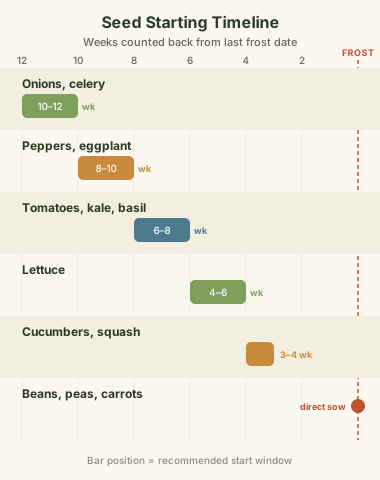
Indoor Seed Starting Timing Chart
All timeframes denote weeks prior to your average last frost date:
| Plant | Start Indoors | Key Growing Requirements |
|---|---|---|
| Onions, leeks | 10–12 weeks before | Slow initial emergence; benefit from early root establishment |
| Celery, celeriac | 10–12 weeks before | Requires steady moisture and light to sprout |
| Peppers (sweet & hot) | 8–10 weeks before | Requires 75°F–85°F root temperatures; benefit from heat mats |
| Eggplant | 8–10 weeks before | Heat-demanding; sensitive to cool drafts |
| Tomatoes | 6–8 weeks before | Vigorous root growth; outgrow small starter cells rapidly |
| Broccoli, cabbage, kale | 6–8 weeks before | Cold-tolerant; can transplant outdoors before the final frost |
| Lettuce | 4–6 weeks before | Germinates in cool conditions; direct-sows equally well |
| Basil | 6–8 weeks before | Stalls in soil under 50°F; transplant only when night temperatures warm |
| Cucumbers, squash, melons | 3–4 weeks before | Rapid emergence; resent root disturbance during transplanting |
| Beans, peas, carrots, radishes | Direct sow outdoors | Sensitive root systems do not tolerate cell-tray transplanting |
Adjusting for Hydroponic Growers
Starting seeds for water culture systems follows similar calendar mechanics for outdoor transplants, with a few distinctions for permanent indoor setups:
- Substrate Moisture Stability: In rockwool, oasis cubes, or when using methods to germinate seeds without rockwool, consistent water contact accelerates emergence by 1 to 3 days compared to potting soil. Review our core tutorial on how to germinate seeds for hydroponics.
- Fruiting Crop Maturity Curves: Tomatoes and peppers still require 6 to 8 weeks to develop adequate vascular stems before they can support heavy flower clusters, regardless of germination media.
- Permanent Indoor Systems: If your plants spend their entire lifecycle in a climate-controlled room under LED fixtures, frost dates do not apply. Plant on a staggered rolling schedule every 2 to 3 weeks for unbroken kitchen harvests.
Working Backward: Practical Example
Assuming an average last frost date of April 15:
- Onions & Leeks: Sow indoors January 21 – February 4 (10–12 weeks before)
- Peppers & Eggplant: Sow indoors February 4 – February 18 (8–10 weeks before)
- Tomatoes & Brassicas: Sow indoors February 18 – March 4 (6–8 weeks before)
- Cucumbers & Melons: Sow indoors March 18 – March 25 (3–4 weeks before)
- Beans & Root Crops: Direct sow after April 15 once outdoor soil reaches at least 60°F
Common Timing Mistakes
- Sowing All Seeds at Once: Sowing short-cycle melons on the same day as slow-growing peppers results in overgrown, tangled vines indoors long before outside soil is safe.
- Skipping the Hardening-Off Window: Budget 7 to 10 days to transition indoor starts to outdoor wind and direct UV radiation. Skipping this phase leads to sunscald and stem collapse.
- Neglecting Staggered Plantings: Sowing entire seed packets in one afternoon creates harvest gluts. Stagger fast greens like lettuce and cilantro in smaller bi-weekly batches.
To incorporate these start dates into a full seasonal calendar, read our comprehensive spring gardening guide.
Frequently Asked Questions
How do I know my last frost date?
Look it up by zip code using NOAA's Climate Prediction Center or the National Gardening Association database. See our full last frost date guide for how to interpret local probability tables.
What happens if I start seeds too early?
Seedlings become root-bound and leggy while waiting for outdoor soil to warm. Overgrown transplants suffer severe transplant shock when finally moved outside.
Do hydroponic seeds germinate faster than soil?
Greens and herbs typically sprout 1–3 days faster in rockwool or oasis cubes due to consistent hydration. Slow fruiting crops like tomatoes and peppers follow similar developmental timelines regardless of media.
Our Amazon Storefront
Browse all our recommended tools & supplies
Everything we personally use and trust, hand-picked for gardeners like you.
I've been running DWC and Kratky systems for several years and write about what actually works, not textbook theory. Follow along for honest product reviews, practical guides and real grow results.