As an Amazon Associate, I earn from qualifying purchases. Some links in this article are affiliate links, if you buy through them I may earn a small commission at no extra cost to you.
Quick Summary
- Hydroponics Overview: Grow plants without soil using water, nutrients, oxygen and root support.
- System Checklist: Build systems using DWC, Kratky, NFT, Ebb & Flow, Drip or Wick designs.
- Water Quality: Use filtered water or declorinate tap water to protect sensitive plant roots.
- Chemistry Control: Maintain pH between 5.5 and 6.5 and check EC concentration daily.
- Lighting Strategy: Set up grow lights for 14-16 hours per day to ensure strong photosynthesis.
If you want the shortest path from zero to your first harvest, start with a Kratky lettuce setup. A tote container, some net pots, a packet of nutrients and seeds, that’s genuinely all you need. I’ve been running Kratky systems for eight years and still reach for that same basic setup whenever I want results without fuss.
This guide covers every major hydroponic system type, what supplies you actually need, how to manage nutrients and pH, which plants to start with and what goes wrong in the first few months, including the mistakes I’ve made so you don’t have to repeat them.
Take a listen to our podcast: The Complete Guide to Hydroponics for Beginners
Before diving in, it’s worth knowing what trips beginners up. You can review the common hydroponic mistakes beginners make to avoid early pitfalls right from the start.
1. What is Hydroponics?
Hydroponics is a method of growing plants without soil. Instead of roots foraging through dirt for minerals, you deliver a precisely balanced nutrient solution directly to the root zone in water. The plant spends less energy searching for food and more energy growing, which is why hydroponic plants can produce crops 20–30% faster than their soil-grown counterparts.
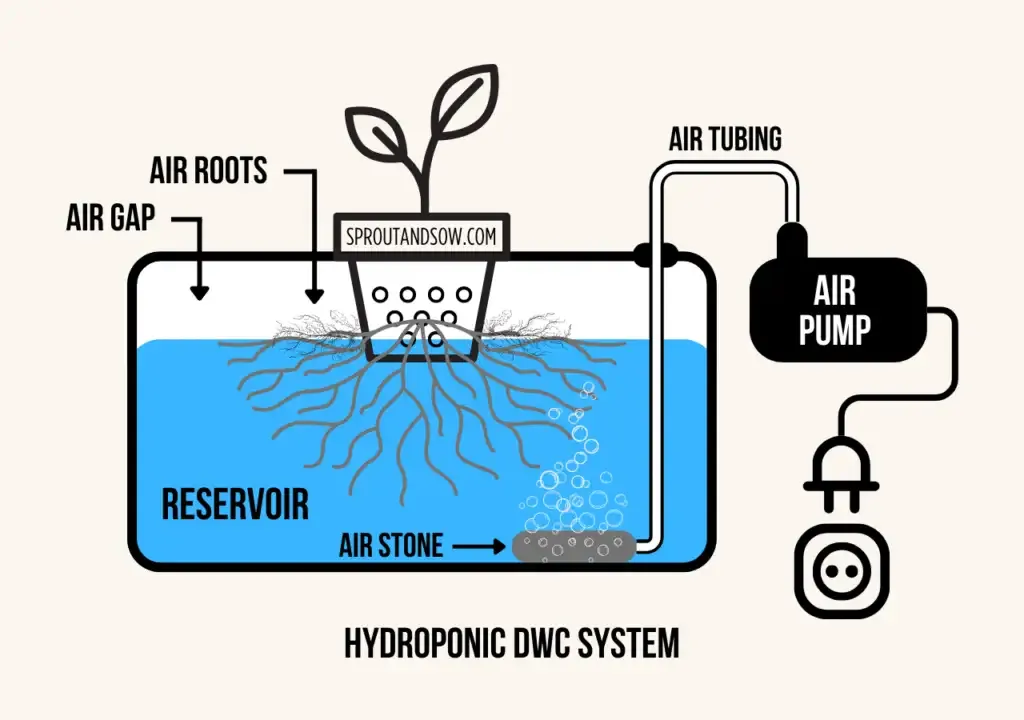
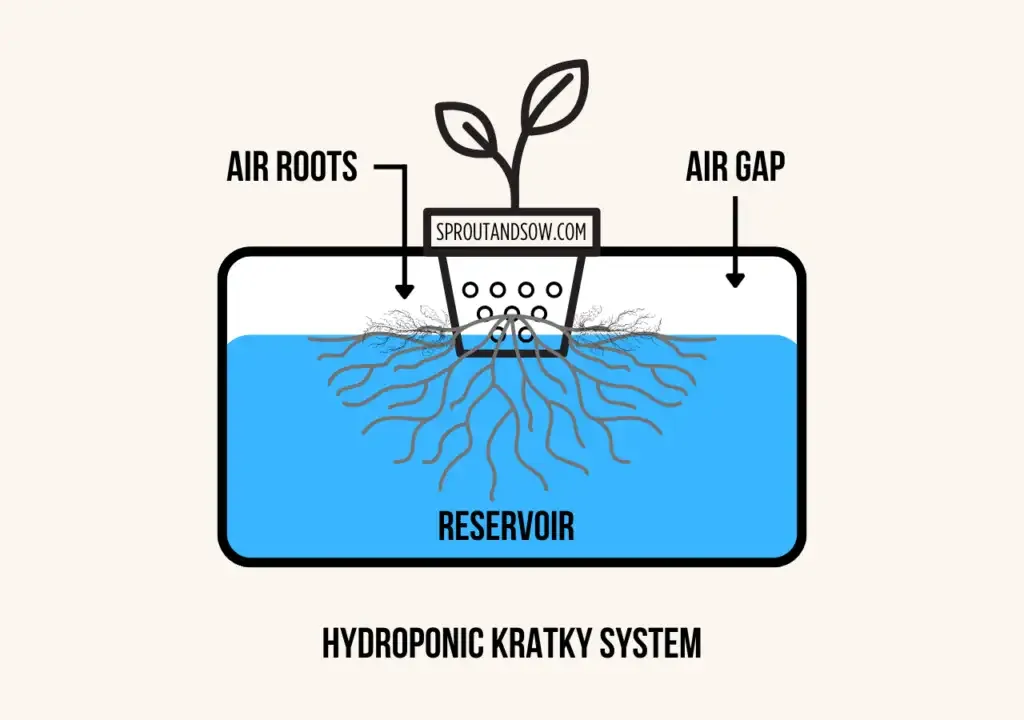
Water is the lifeline of any hydroponic system. Oxygen is equally critical: roots need to breathe and without adequate aeration they suffocate and rot. Most active systems solve this with air pumps and air stones. Passive systems like Kratky solve it differently, by leaving an air gap between the waterline and the net pot so roots develop two distinct zones: submerged feeder roots and exposed air roots. That gap is not a bug, it’s the entire design.
Hydroponics works at every scale, from a single mason jar on a windowsill to a commercial greenhouse growing tonnes of leafy greens per year. The principles are the same regardless of size.
2. Benefits of Hydroponic Gardening
The benefits are real, but it helps to be specific about them:
- Water efficiency: Hydroponic systems recirculate water, using up to 90% less than traditional soil gardening. There’s no runoff, no evaporation from open ground and no water wasted on soil that doesn’t need it.
- Speed: Plants in optimised hydroponic conditions grow 20–30% faster than in soil because nutrients are delivered directly to the root zone with no conversion step.
- Year-round growing: With grow lights and a controlled environment, season is irrelevant. I harvest lettuce every 5–6 weeks regardless of what’s happening outside.
- Space efficiency: Systems can be vertical or compact. A small shelf can produce more food than a garden bed of the same footprint.
- No soil-borne pests: You eliminate a whole category of problems, fungal diseases, nematodes and soil-dwelling insects have no substrate to live in.
3. Types of Hydroponic Systems
Six main systems are in common use. Each has a different approach to delivering nutrients and oxygen to roots. The diagrams below show how each one works.
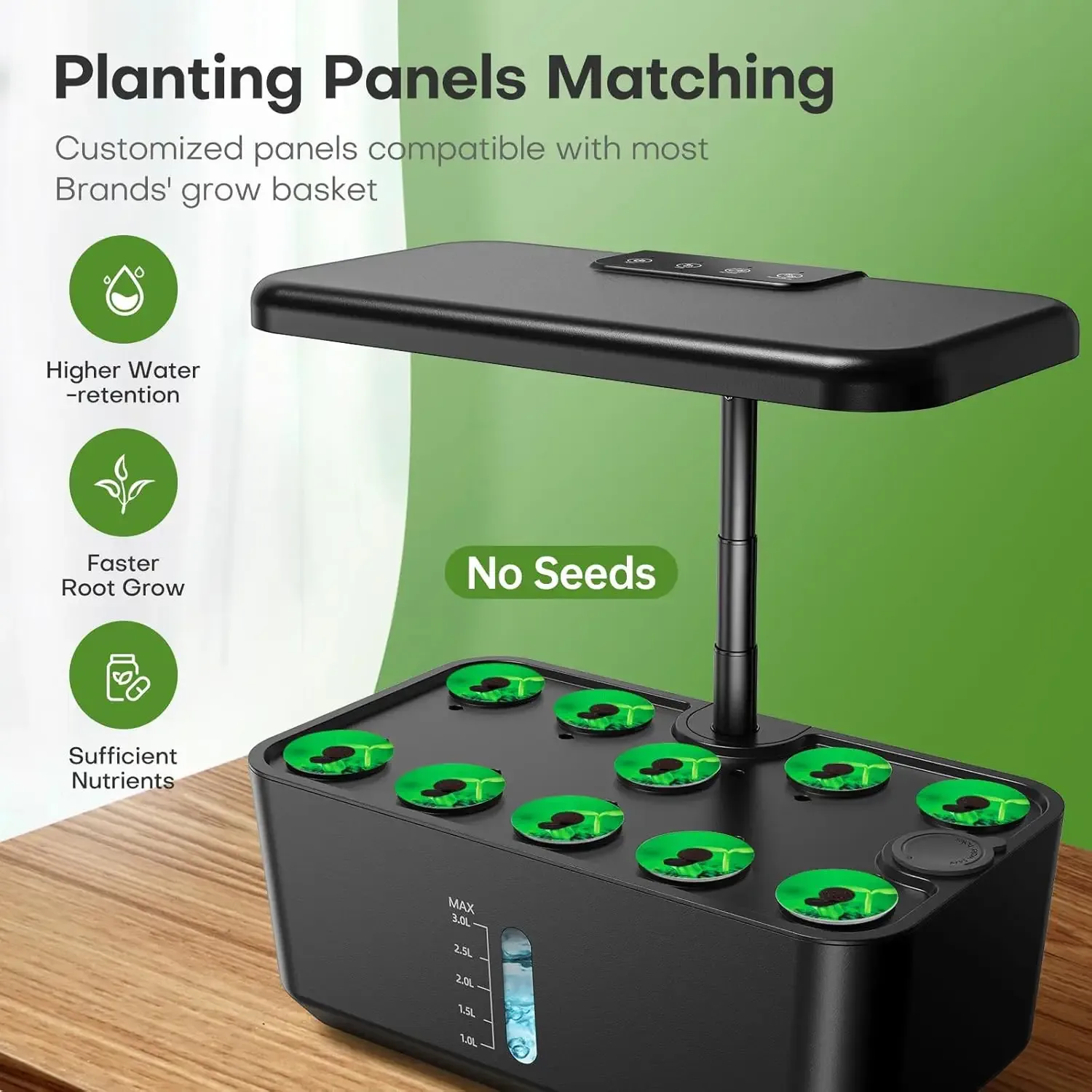
Indoor Garden Hydroponics Growing System
If you'd rather skip the DIY and get growing immediately, this kit includes everything you need: pods, nutrient solution, a grow light and a pump. I'd recommend it for anyone who wants to test hydroponics before committing to a larger build. The pod count is generous for the price and setup takes under 30 minutes. Just add seeds.
- Deep Water Culture (DWC): Plant roots are suspended through net pots into a reservoir of nutrient-rich water. An air pump and air stones continuously oxygenate the solution, keeping roots healthy and preventing rot. DWC is one of the fastest-growing systems available and a solid choice for beginners who don’t mind running an air pump. The main risk is power outages, roots sitting in un-aerated water will start to suffer within hours.
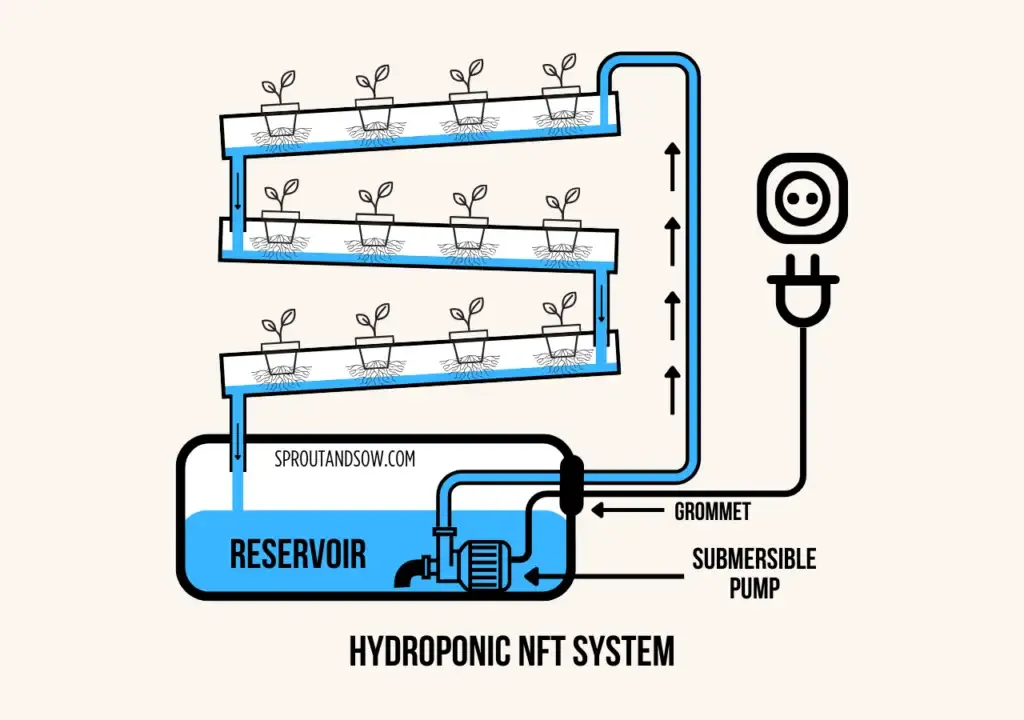
- Nutrient Film Technique (NFT): A thin, continuous film of nutrient solution runs along the bottom of sloped channels. Roots hang into the channel and absorb nutrients as the film passes beneath them. The excess drains back to the reservoir and recirculates. NFT works well for lettuce and herbs but requires close monitoring, if the pump fails or the film runs too thick, roots suffer quickly.
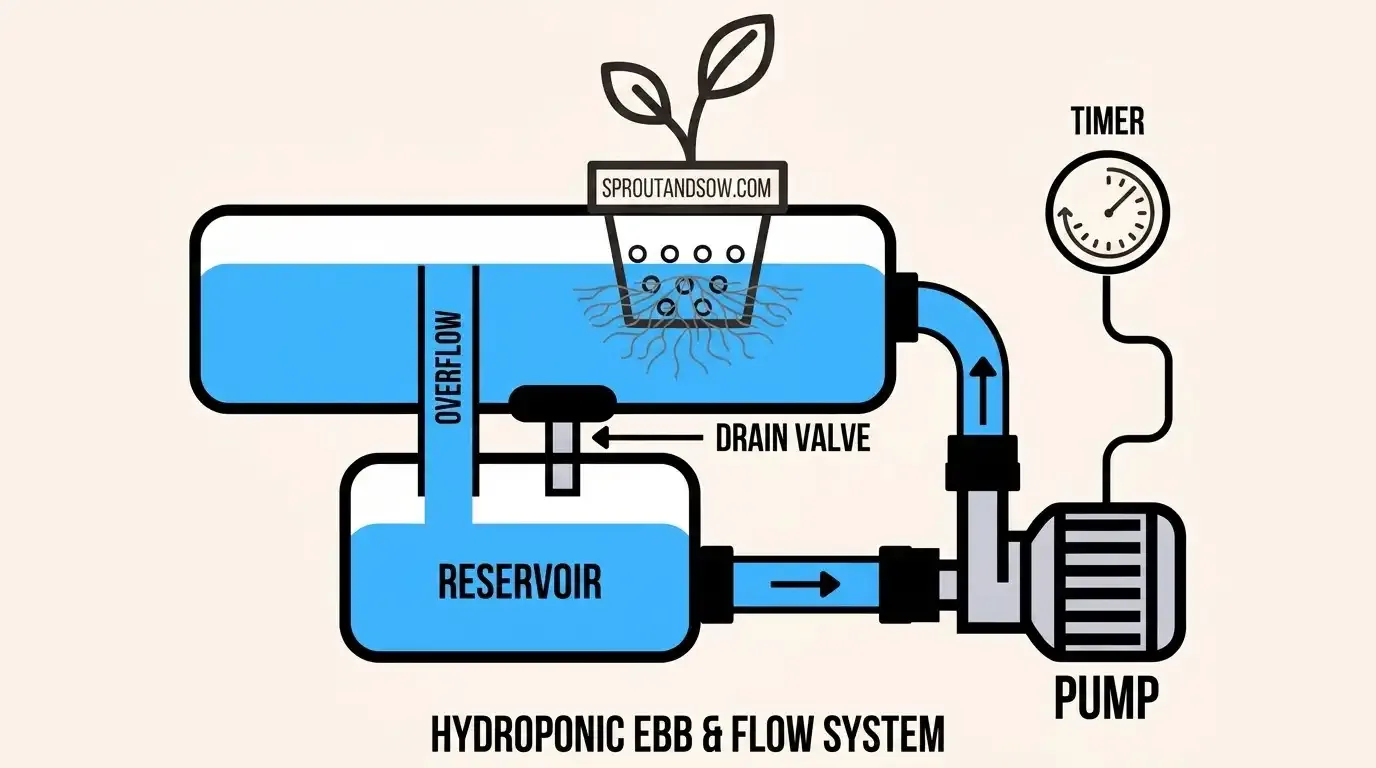
- Ebb and Flow (Flood and Drain): The grow bed periodically floods with nutrient solution on a timer, then drains back to the reservoir. Plants get nutrients during the flood and oxygen during the drain phase. It suits a wide variety of plant types and is forgiving of minor timing errors, unlike NFT, there’s always some residual moisture in the medium. See our Ebb and Flow beginner’s guide for a full breakdown.
- Kratky Method: No pump, no electricity, no timer. Plants sit in net pots over a sealed reservoir filled with nutrient solution. As the plant drinks, the water level drops and an air gap forms, this gap is where the air roots develop, providing the oxygen the plant needs. I’ve been running Kratky systems for eight years and it remains my go-to for lettuce and herbs; in fact, it is the easiest and cheapest hydroponic system you can start today. A harvest every 5–6 weeks from a $15 tote container is hard to argue with. The system isn’t suited to fast-draining plants like tomatoes at scale, but for leafy greens it’s near-perfect.
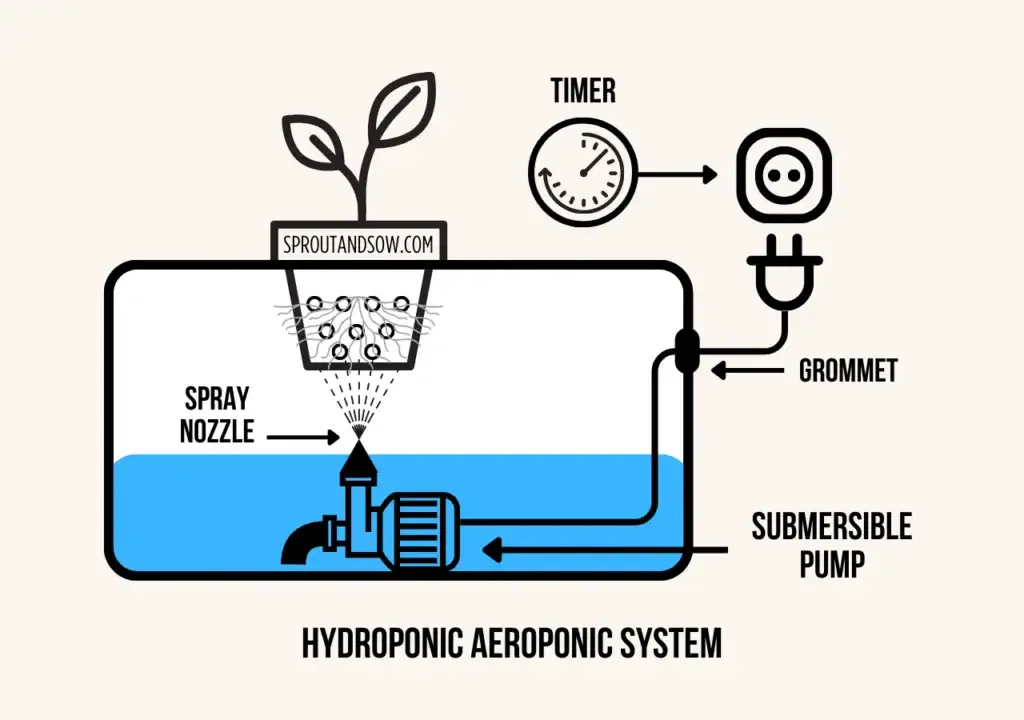
- Aeroponics: Roots are suspended in open air and misted with nutrient solution at regular intervals. Maximum oxygen exposure produces some of the fastest growth rates of any system. If you want to see this setup in action, you can read about how aeroponic towers work to understand the misting and setup requirements. The trade-off is complexity, misting nozzles clog, timers need to be precise and if the system fails the roots dry out within minutes. Best suited to growers who are comfortable troubleshooting equipment.
- Wick System: The simplest passive system. An absorbent wick draws nutrient solution from a reservoir up to the growing medium by capillary action, no pump needed. Low maintenance and cheap to set up, but the passive delivery rate limits it to small, slow-growing plants. Not suitable for anything that drinks heavily during fruiting.
My recommendation for beginners: Start with Kratky. It has no moving parts to fail, costs almost nothing to set up and teaches you nutrient management and pH without the complexity of pumps or timers. Once you’ve harvested a few rounds of lettuce, you’ll know whether you want to step up to DWC or NFT.
4. Setting Up Your First Kratky System: Step by Step
The fastest way to get growing is a Kratky lettuce setup. Here’s exactly how to do it.
What you need:
- A dark tote container (10–20 litre for 4–6 plants, larger for more)
- Net pots (5 cm diameter works well for lettuce)
- Clay pellets (hydroton) or rock wool cubes as growing medium
- A 3-part hydroponic nutrient solution (e.g. General Hydroponics Flora Series or MaxiGro)
- A pH meter or test kit
- pH Up and pH Down solution
- Seeds, lettuce, spinach or basil to start
Step 1, Drill net pot holes in the lid: Space them evenly. The lid supports the net pots above the reservoir. A 68 mm hole saw matches standard 5 cm net pots.
Step 2, Mix your nutrient solution: Fill the tote with water, then add nutrients per the manufacturer’s instructions. For lettuce, a EC (electrical conductivity) of 1.2–2.0 mS/cm is the target range, most starter nutrient kits include a basic mixing guide. Don’t estimate; measure.
Step 3, Adjust pH to 5.5–6.5: Test immediately after mixing nutrients. Add pH Down (usually phosphoric acid) or pH Up (potassium hydroxide) in small increments, mix and retest. A swing of 0.1–0.2 pH units at a time is enough, overshooting is easy.
Step 4, Fill to the right level: The nutrient solution should just touch the bottom of the net pots when you first set up. As the plant grows and drinks, the water level drops and the critical air gap forms. Never top up so high that you submerge the air roots.
Step 5, Germinate seeds separately or direct-sow: Soak a rock wool cube, place a seed in the centre, keep it moist in a dark spot for 24–48 hours until the tap root emerges, then transfer to the net pot. Surround with clay pellets to hold the cube in place and keep light out.
Step 6, Protect the reservoir from light: Cover any exposed reservoir surface. Light breeds algae. Always use dark containers or containers where light cannot penetrate, whether you are storing mixed nutrient solution or setting up your Kratky system. If the solution is exposed to light, algae will quickly grow, consume the nutrients and foul the water. A dark tote helps, but be sure to close any gaps around net pots too, that is usually handled by the leca clay pebbles that you add to your net pots.
Step 7, Place in your growing area: Outdoors under 50% shade cloth in summer or under grow lights indoors (see §6 for light specifics). Note that seedlings are very sensitive to heat and extreme sun when they have been growing indoors and you bring them outdoors for the first time; they need to be placed in a cool, shaded area for a few days to acclimatise. Check pH weekly and top up nutrient solution as needed, but never above the level that would drown the air roots.
From seed to first harvest of lettuce: approximately 30–45 days depending on temperature and light.
5. Hydroponic Supplies Checklist for Beginners
Here’s what you actually need at minimum and what’s optional. To round out your setup with helpful accessories, check out our guide on the 10 must-have tools for a successful hydroponic garden.
Essential:
- Growing containers / tote: Dark plastic, 10–20 litres minimum for a small Kratky setup
- Net pots: 5 cm for herbs and lettuce; 8–10 cm for larger plants
- Growing medium: Clay pellets (hydroton) or rock wool cubes to anchor plants
- Hydroponic nutrients: A 3-part formula covers all stages. General Hydroponics Flora Series, MaxiGro/MaxiBloom or similar
- pH test kit or pH meter: A digital pH meter ($15–30) is more accurate and worth it over test strips
- pH Up and pH Down solutions: Small bottles; you use very little per adjustment
- Measuring cups and syringes: For precise nutrient mixing
For active systems (DWC, NFT, Ebb and Flow): 8. Water pump: Sized to your reservoir volume, check the pump’s flow rate (L/hr) against the manufacturer’s system recommendation 9. Air pump and air stones: For DWC, keep roots oxygenated 24/7 10. Timer: Automates flood/drain cycles or light schedules
For indoor setups: 11. Grow lights: See §6 for specifics on wattage and distance
Optional but useful: 12. EC/TDS meter: Measures nutrient concentration, helpful once you’re dialling in multiple plants 13. Thermometer: Nutrient solution temperature should stay between 18–24°C; above that, dissolved oxygen drops and root problems increase
6. Hydroponics Lighting: What You Actually Need
Lighting is where beginners often over-spend or under-deliver. Here’s what the numbers look like in practice:
LED (recommended for most growers): Modern full-spectrum LED panels are the best all-round choice. For a list of specific hardware recommendations, check out our guide on the best LED grow lights for beginners. For a 60×60 cm (2×2 ft) grow area, a 200–250W LED panel provides sufficient light intensity for leafy greens and herbs. For a 120×120 cm (4×4 ft) area, step up to 400–600W. Hang the panel 30–60 cm above the canopy, start at 60 cm and lower gradually if you see stretching (etiolation). LEDs run cool enough that heat management is rarely an issue in home setups.
Fluorescent / T5: Adequate for seedlings and low-light herbs. A 4-tube T5 fixture covers a small propagation tray well. Not powerful enough for fruiting plants or anything that needs high light intensity to produce well.
HID (Metal Halide / High Pressure Sodium): High output, high heat, high electricity cost. Once the standard for serious indoor growing; now mostly superseded by LEDs of equivalent output at lower running cost. If you’re inheriting a setup that uses HID, it will work, just factor in the heat management.
Light cycles by plant type:
- Leafy greens and herbs: 14–16 hours on, 8–10 hours off
- Fruiting plants (tomatoes, peppers): 16–18 hours on during vegetative growth, 12 hours on to trigger and maintain flowering
- Seedlings: 18 hours on is fine for the first two weeks
A basic mechanical timer costs under $10 and removes any temptation to guess.
7. Choosing the Right Plants: What Actually Works for Beginners
Not all plants are equally forgiving in hydroponic systems. To help you select your crops, check out our guide on the best hydroponic plants for beginners alongside this honest breakdown:
Good beginner choices:
- Lettuce: Harvest every 5–6 weeks in a Kratky setup. Low nutrient requirements, tolerates minor pH swings, regrows after cut-and-come-again harvesting. Learn more in our complete hydroponic lettuce growing guide.
- Herbs, basil, mint, parsley, cilantro: Fast growing, small footprint, high value per gram. Basil particularly loves DWC and Kratky. Give it plenty of light.
- Spinach: Quick to germinate and harvest, performs similarly to lettuce in most systems.
- Kale: Slower than lettuce but very forgiving of inconsistent nutrient levels, a good second plant once you’ve got your first lettuce harvest done.
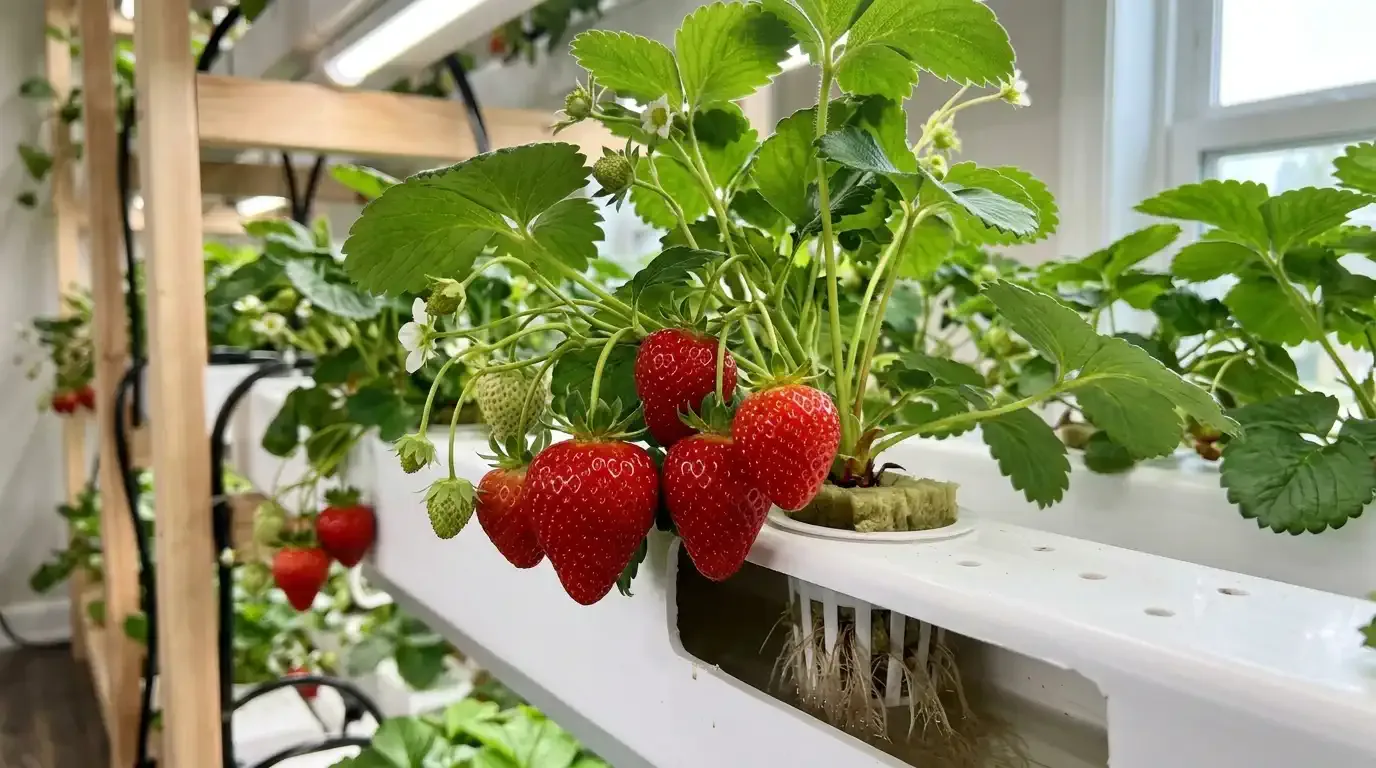
- Strawberries: Require more attention and a larger root zone, but very achievable with NFT or Kratky in larger containers. Worth trying after your first season.
Plants to hold off on until you have experience:
- Tall plants (tomatoes, cucumbers, trellising peppers): The most common beginner mistake I see is starting with tomatoes. Once the plant matures and starts fruiting, it gets heavy and wants to fall over and unlike in soil, there’s nothing to stick a stake into. A mature tomato in a Kratky tote without a proper support frame is a problem waiting to happen. Start short, get your system dialled in, then tackle fruiting plants with a proper support structure in place.
- Root vegetables (carrots, radishes, potatoes): Need deep substrate space and don’t suit most standard hydroponic systems.
- Large fruiting trees or vines: Out of scope for beginner setups.
8. Managing Nutrients and pH Levels
Nutrients and pH are the two variables that need the most consistent attention. Here’s what to watch and when.
Nutrients: Hydroponic nutrients come as liquid or dry concentrates. A 3-part formula (Grow, Bloom, Micro) covers vegetative and fruiting stages. Mix per the label instructions, most beginner mistakes here involve using too high a concentration, not too low. Symptoms of nutrient burn (crispy brown leaf edges) are more common than nutrient deficiency in beginners who over-dose. A general rule: start at half the recommended strength for seedlings and young plants, then increase as plants mature.
Additionally, always store your mixed nutrient solution and set up your Kratky systems in dark containers or vessels where light cannot penetrate. If the nutrient solution is exposed to light, algae will quickly grow, consume the nutrients, compete with your plants and foul the water.
pH: The single most important variable to monitor consistently. Target pH 5.5–6.5 for most plants; 6.0–6.5 is a safe middle range for leafy greens. Outside this range, nutrient elements become chemically unavailable even if they’re present in the solution, you’ll see deficiency symptoms even with a full-strength mix. To learn more about handling pH swings and lockout, check out our guide on understanding hydroponic pH levels and how to manage them.
How often to check: Check pH at least once a week. In summer, check twice. Heat accelerates pH drift and a hot nutrient solution is hostile to roots, ideally keep solution temperature between 18–24°C. I use a basic digital pH meter and do a quick check every Monday morning. It takes two minutes.
Managing heat in summer: This is something most beginner guides skip. If you’re growing outdoors in the warmer months, your tote container needs protection from direct sun. Direct sun heats the nutrient solution rapidly, which reduces dissolved oxygen and damages roots, the same air roots that are doing the actual work. The most effective solution I’ve found is 50% shade cloth over the growing area. It cuts temperature significantly without blocking enough light to hurt growth. As a bonus, it slows pH drift during hot days.
Topping up nutrient solution: In the Kratky system, you top up as the water level drops. The key mistake is over-filling, if you fill the reservoir so high that the water line reaches or covers the air roots, you’ll drown the plant. The air root zone must be protected. Watch the level through a clear section or mark the outside of the tote with the maximum fill line.
9. Troubleshooting Common Hydroponic Problems
Here are the most common issues and what to actually do about them; you can also reference our detailed guide on how to troubleshoot common hydroponic problems for more in-depth solutions.
-
Yellowing leaves (nutrient deficiency): Yellowing starting from older, lower leaves usually indicates nitrogen deficiency, increase your nitrogen-heavy Grow formula or add a small dose of calcium-nitrate. Yellowing between leaf veins on new growth with green veins intact (interveinal chlorosis) indicates iron or magnesium deficiency, check your pH first, as iron and magnesium lock out above pH 6.5. Adjust pH before changing your nutrients.
-
Pests: Common culprits in hydroponic setups are aphids, spider mites and fungus gnats. For aphids: introduce ladybugs (they’re available at most garden centres) or spray with insecticidal soap (1 tablespoon per litre of water, applied directly to affected leaves). For spider mites: predatory mites (Phytoseiulus persimilis) are effective in enclosed spaces; neem oil spray works as a knockdown. For fungus gnats: they breed in moist growing media, let the top layer of medium dry slightly between watering and use yellow sticky traps to monitor population.
-
Root rot: Brown, slimy roots with a foul smell. Caused by insufficient oxygen at the root zone combined with warm water temperature. First response: increase aeration (add an air stone if you don’t have one or increase pump output). Drop solution temperature if it’s above 24°C. Remove as much affected root material as you can. Hydrogen peroxide (3%) added to the reservoir at 3 ml per litre kills pathogens and adds oxygen, useful as a short-term intervention.
-
Algae growth: Green slime in the reservoir means light is getting in. Block all light from the reservoir, cover net pot openings with tape or foil, check lid seals. Once established, do a full reservoir flush with diluted hydrogen peroxide solution (5 ml of 3% H₂O₂ per litre), rinse thoroughly, then refill with fresh nutrient solution. For a comprehensive prevention list, see our dedicated guide on how to prevent algae growth in your hydroponic system.
-
Rain water intrusion (Kratky outdoors): If you’re running Kratky systems outdoors and it rains heavily, rainwater entering the reservoir dilutes your nutrients and, more critically, raises the water level, drowning the air roots. I’ve lost plants this way more than once by underestimating a rain event. The fix is simple but needs to be done from the start: grow under a roof, shade structure or greenhouse. Once the air roots are compromised, recovery is slow and not always successful.
10. Tips for Long-Term Hydroponic Success
These are the habits that matter once you’re past your first harvest:
- Keep a simple grow log: Date, pH reading, EC/nutrient concentration, any observations. You don’t need a spreadsheet, a notebook works fine. When something goes wrong (and it will), you’ll have a record to look back on.
- Bigger reservoir, fewer problems: A larger reservoir volume buffers against pH swings and nutrient concentration changes. If your setup allows it, go larger than you think you need. This becomes especially important once plants are mature and drinking heavily in warm weather.
- Plan for summer heat early: Don’t wait for your first heat wave to start thinking about shade cloth and reservoir cooling. Build your setup with summer conditions in mind from day one.
- Connect with other growers: The hydroponics communities on Reddit (r/hydro) and dedicated forums are genuinely helpful, real growers sharing real results and failures, not generic advice.
- Start simple, expand deliberately: Get one Kratky lettuce setup working well. Harvest three rounds. Then, if you want more, add a DWC bucket or a second tote. Don’t scale before you understand the basics.
FAQs
- Is hydroponics expensive to start?
No. A basic Kratky lettuce setup costs under $50, a tote container, net pots, clay pellets, nutrients and seeds. - Can I grow any plant in hydroponics?
Most can be grown hydroponically, but beginners should stick to short leafy greens and herbs. Avoid tall plants until you have a proper staking or trellis system in place. - How often should I change the water in my hydroponic system?
In active systems, a full reservoir change every 2–3 weeks keeps nutrient balance fresh. In Kratky, you top up rather than change, just don’t over-fill. - Can I leave my Kratky system out in the rain?
No. Rainwater dilutes nutrients and raises the water level, drowning the air roots. Always grow under cover. - Can I use tap water?
Yes, if you adjust pH to 5.5–6.5 first. If your tap water is heavily chlorinated, let it sit in an open container for 24 hours before using. - How much light do hydroponic plants need?
Leafy greens: 14–16 hours per day. Fruiting plants: 16–18 hours in veg, 12 hours to trigger flowering.
Conclusion
The best thing you can do today is fill a tote container with nutrient solution, drop in a few lettuce seedlings and watch what happens over the next six weeks. Kratky hydroponics is about as low-friction as gardening gets, no pumps, no timers, no electricity. Once you’ve done it once and seen how fast those plants grow, you’ll understand why people stick with it.
Start small. Keep a pH meter next to your system. Grow under cover. And keep the plants short until you have a staking solution sorted. The rest you’ll figure out as you go.
Frequently Asked Questions
Is hydroponics expensive to start?
No, beginners can start with budget-friendly systems like the Kratky or DWC system for under $50. A basic Kratky lettuce setup needs little more than a tote container, net pots, clay pellets and a nutrient solution.
Can I grow any plant in hydroponics?
Some plants thrive far better than others. Leafy greens and herbs are ideal for beginners. Avoid tall plants like tomatoes until you have a staking solution, without soil to anchor stakes, top-heavy plants will fall over.
How often should I check pH levels in hydroponics?
Check pH at least once a week. In summer, heat can accelerate pH drift and warm your nutrient solution, which stresses roots. A quick weekly check catches problems before they compound.
Can I leave my Kratky system outside in the rain?
No. Rainwater will dilute your nutrient solution and, if the water level rises, it will drown the air roots, the gap between the root mass and the waterline is critical. Grow under a roof, shade structure or greenhouse from the start.
Do hydroponic plants need soil at any stage?
No, hydroponic plants grow entirely without soil, relying on nutrient-rich water solutions instead. A growing medium like clay pellets or rock wool anchors the plant in the net pot.
Can I use tap water in my hydroponic system?
It depends on your water quality. Tap water can work if it's properly pH adjusted to the 5.5–6.5 range. Let it sit for 24 hours first if your supply is heavily chlorinated.
How much light do hydroponic plants need?
Leafy greens and herbs do well on 14–16 hours of light per day. Fruiting plants like tomatoes need 16–18 hours during flowering. LED panels in the 200–400W range work for most home setups, hung 30–60 cm from the canopy.
Our Amazon Storefront
Browse all our recommended tools & supplies
Everything we personally use and trust, hand-picked for gardeners like you.

I've been running DWC and Kratky systems for several years and write about what actually works, not textbook theory. Follow along for honest product reviews, practical guides and real grow results.