As an Amazon Associate, I earn from qualifying purchases. Some links in this article are affiliate links, if you buy through them I may earn a small commission at no extra cost to you.
Quick Summary
- Superfood Greens: Microgreens contain 4–40 times higher nutrient concentrations than mature leaves, depending on the variety.
- Fast Turnaround: Most varieties grow from seed to harvest in just 7 to 14 days.
- Top Varieties: Grow broccoli, kale, radish, sunflower and pea shoots for maximum antioxidant load.
- Soil-Free Option: Easily grow microgreens on hemp mats or coco coir without messy soil.
- Dietary Boost: Add fresh microgreens to salads, smoothies and sandwiches for easy nutrition.
Why Grow Microgreens?
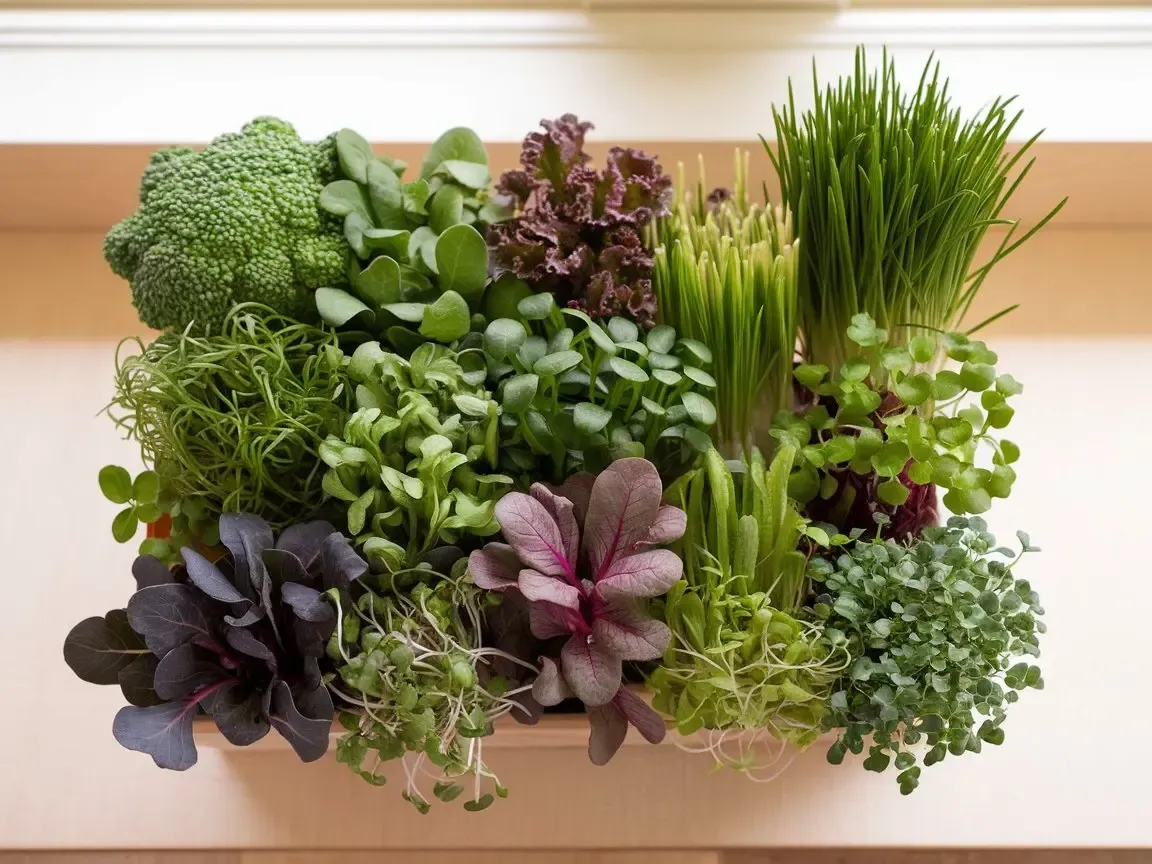
Microgreens contain 4 to 40 times the nutrient density of mature plants. They progress from seed to harvest in 7 to 21 days and require minimal footprint, fitting easily on kitchen countertops or commercial rack systems. They provide fresh flavor and micronutrients in salads, smoothies, sandwiches, and bowls.
Grow microgreens in potting soil, on hemp hydroponic matsView on Amazon, or in loose coco coirView on Amazon. Hemp mats wick moisture evenly and tear cleanly at harvest, which suits quick 7-to-14-day production. For multi-batch reuse, coco coir provides an economical alternative. Both media require 12 to 16 hours of daily light and balanced water chemistry. To grow without potting soil, read our guide on growing microgreens without soil, which compares mat wicking and substrate aeration across common seeds.
Quick Reference: Top 5 Microgreens for Beginners
| Variety | Flavor Profile | Days to Harvest | Key Health Benefit |
|---|---|---|---|
| Radish | Peppery and crisp | 7–10 days | High in antioxidants & Vitamin E |
| Broccoli | Mild, slightly bitter | 7–14 days | Rich in sulforaphane |
| Pea Shoots | Sweet, fresh pea | 10–14 days | High in plant protein and iron |
| Sunflower | Nutty and crunchy | 10–14 days | Rich in healthy fats and Vitamin E |
| Lettuce | Mild and hydrating | 10–14 days | High in Vitamins A and K |
Microgreen Varieties by Plant Family
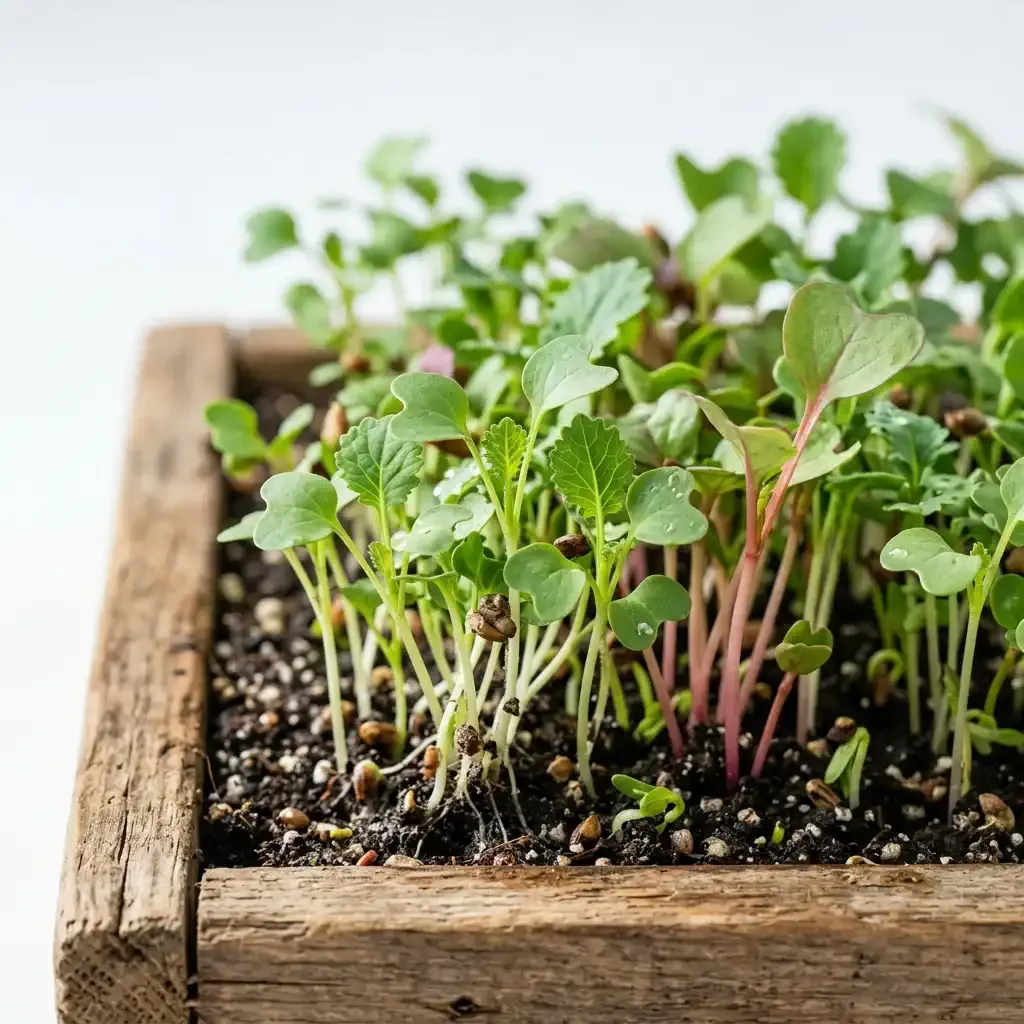
Cruciferous Vegetables (Brassicas)
- Broccoli
- Flavor and use: Mild brassica flavor with a crisp texture. Blends into smoothies or garnishes warm soups.
- Health benefits: High concentrations of sulforaphane, an antioxidant compound supporting cellular detoxification.
- Kale
- Flavor and use: Mild, sweet, and nutty with tender leaves. Complements garden salads and wraps.
- Health benefits: Supplies bioavailable vitamins A, C, and K to support bone density and immune defense.
- Arugula
- Flavor and use: Pungent and peppery, more concentrated than mature field arugula. Add raw just before serving.
- Health benefits: Rich in glucosinolates and antioxidants that support cardiovascular function.
- Cabbage (Red and Green)
- Flavor and use: Mildly sweet with dense crunch. Red cabbage adds vivid purple pigmentation to slaws and grain bowls.
- Health benefits: High in anthocyanins and vitamin C to reduce systemic inflammation.
- Radish
- Flavor and use: Sharp peppery bite and crisp stems. Adds heat to tacos, sandwiches, and grain dishes.
- Health benefits: Dense in vitamins C and E, supporting metabolic function.
- Mustard
- Flavor and use: Spicy, wasabi-like heat. Yellow varieties remain mild; brown mustard delivers intense heat. Use sparingly as a garnish.
- Health benefits: Rich in glucosinolates and sulfur compounds that aid digestion.
- Cauliflower
- Flavor and use: Milder and sweeter than mature cauliflower. Excellent for blending into green drinks or savory purees.
- Health benefits: Supplies choline, folate, and dietary antioxidants.
- Turnip
- Flavor and use: Earthy with a mild peppery undertone. Pairs well with mixed salad greens.
- Health benefits: High in vitamin A, calcium, and iron.
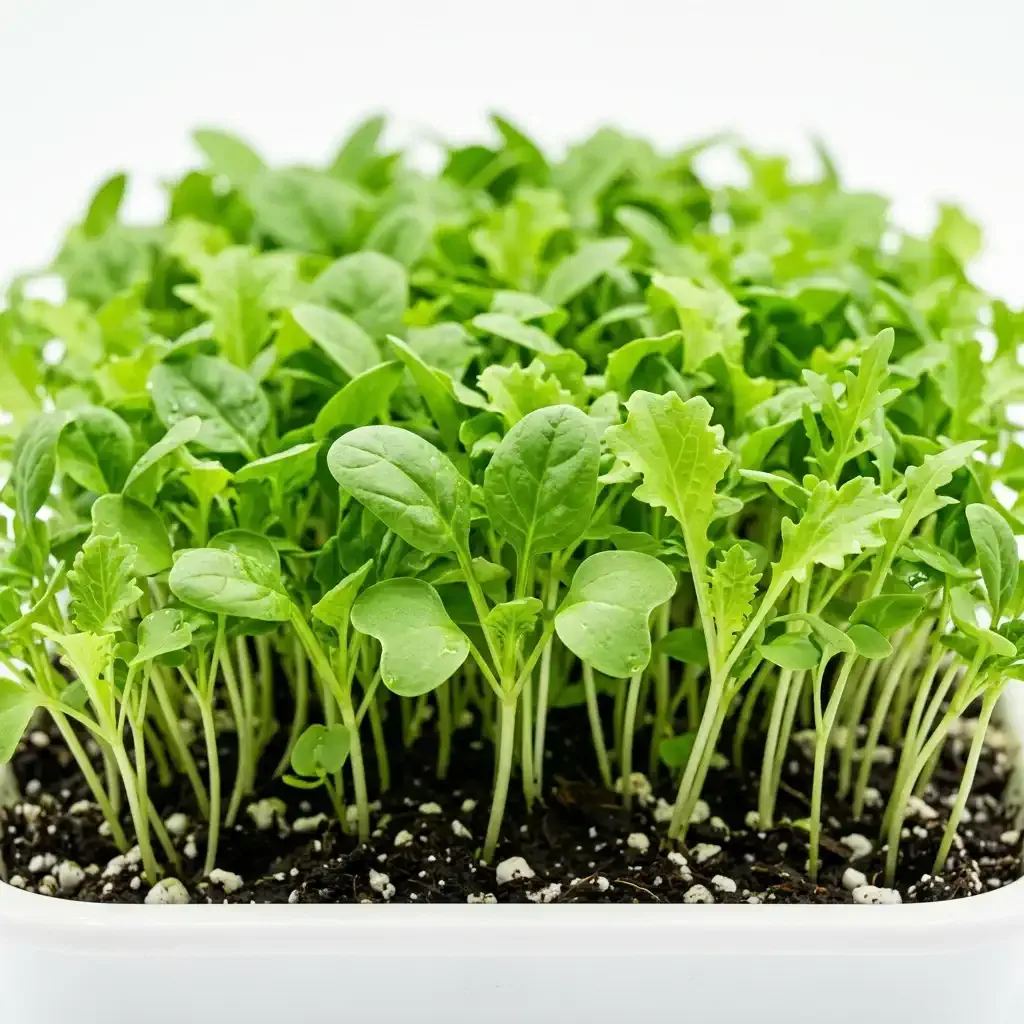
Leafy Greens
- Spinach
- Flavor and use: Mild and tender. Mixes seamlessly into green smoothies without overpowering other ingredients.
- Health benefits: Concentrated iron, folate, and carotenoids.
- Lettuce
- Flavor and use: Crisp, delicate, and hydrating. Acts as a gentle foundation for bolder varieties like radish or mustard.
- Health benefits: Delivers vitamins A and K with low caloric density.
- Swiss Chard
- Flavor and use: Mild earthy flavor with colorful ruby and gold stems that elevate plated presentations.
- Health benefits: Rich in magnesium, potassium, and flavonoids.
Culinary Herbs
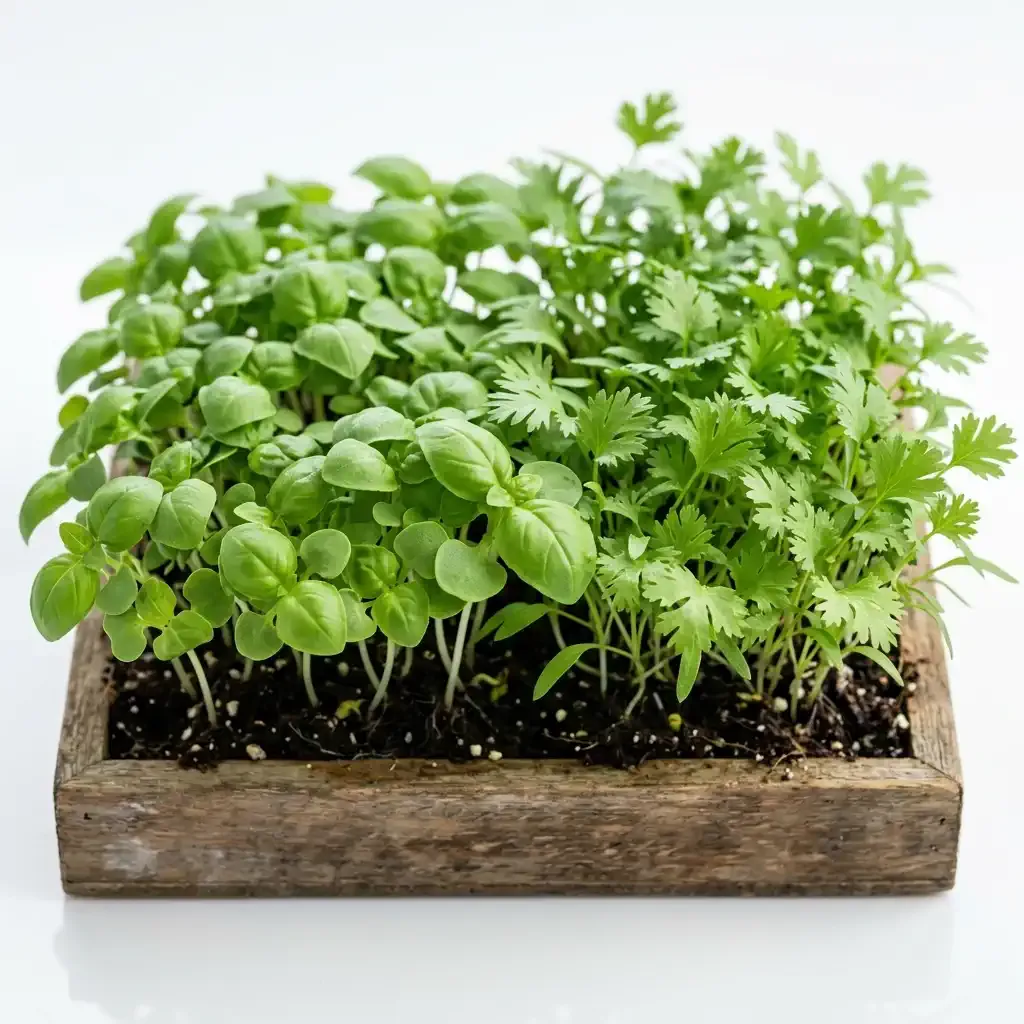
- Basil
- Flavor and use: Concentrated sweet basil aroma. Requires 14–18 days to mature; handle gently to avoid leaf bruising.
- Health benefits: Supplies polyphenols, eugenol, and anti-inflammatory compounds.
- Cilantro
- Flavor and use: Sharp citrus-herb profile. Germinates slowly; split seed husks and soak overnight to accelerate emergence.
- Health benefits: High in vitamin C and trace minerals.
- Dill
- Flavor and use: Delicate, feathery fronds with clean anise notes. Harvest around day 10 to garnish seafood and egg dishes.
- Health benefits: Supplies flavonoids and monoterpenes that aid digestive comfort.
- Parsley
- Flavor and use: Slow-starting seed that takes up to 14 days to emerge, yielding intense, clean parsley flavor.
- Health benefits: Rich in chlorophyll, lutein, and vitamin C.
Legumes
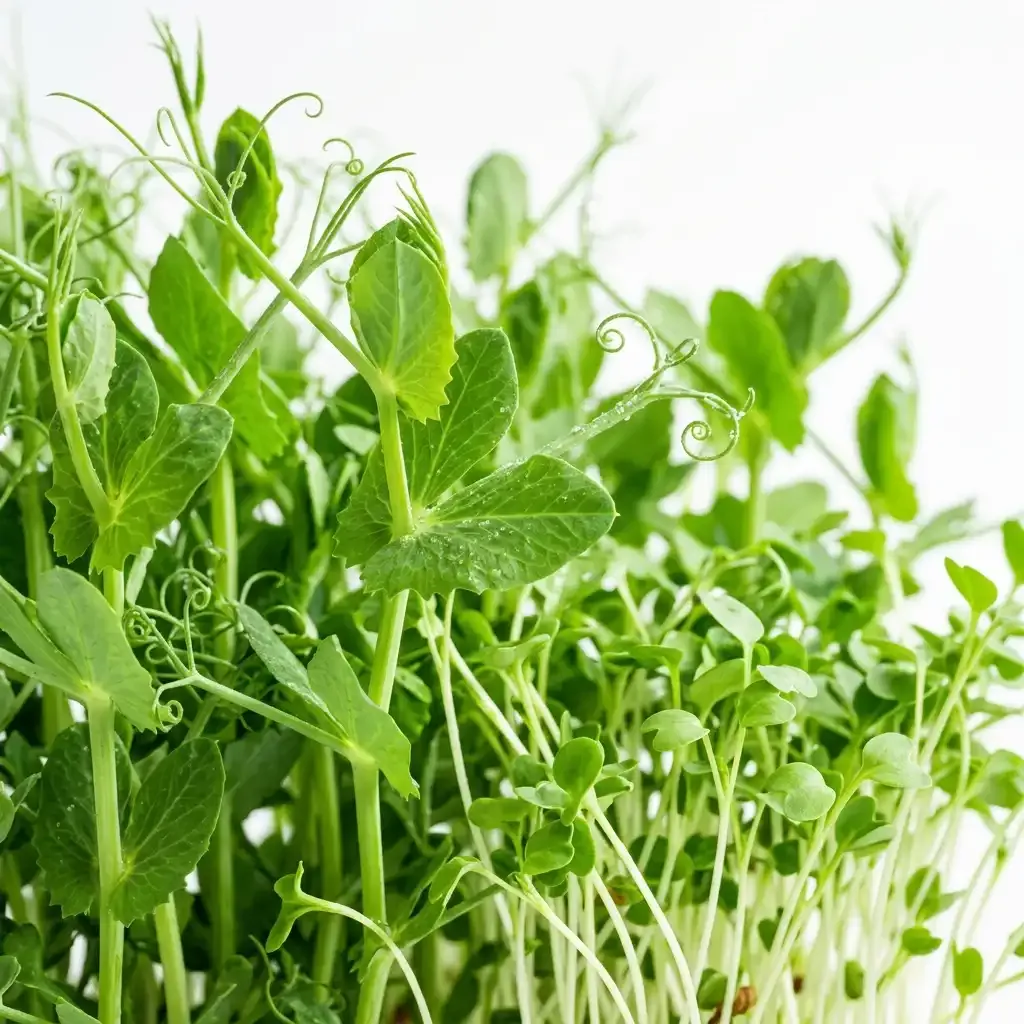
- Pea Shoots
- Flavor and use: Sweet, crisp flavor identical to snap peas. Sturdy stems hold up well in quick stir-fries and fresh salads.
- Health benefits: High in plant-based protein, vitamin C, and iron.
- Lentil
- Flavor and use: Dense crunch with a nutty finish. Adds body and texture to cold salads and warm grain dishes.
- Health benefits: Rich in plant protein, folate, and dietary fiber.
- Chickpea
- Flavor and use: Large seed that requires an 8-to-12-hour pre-soak. Produces thick, nutty shoots for Mediterranean cooking.
- Health benefits: Supplies complex carbohydrates, fiber, and trace minerals.
Grains and Pseudograins
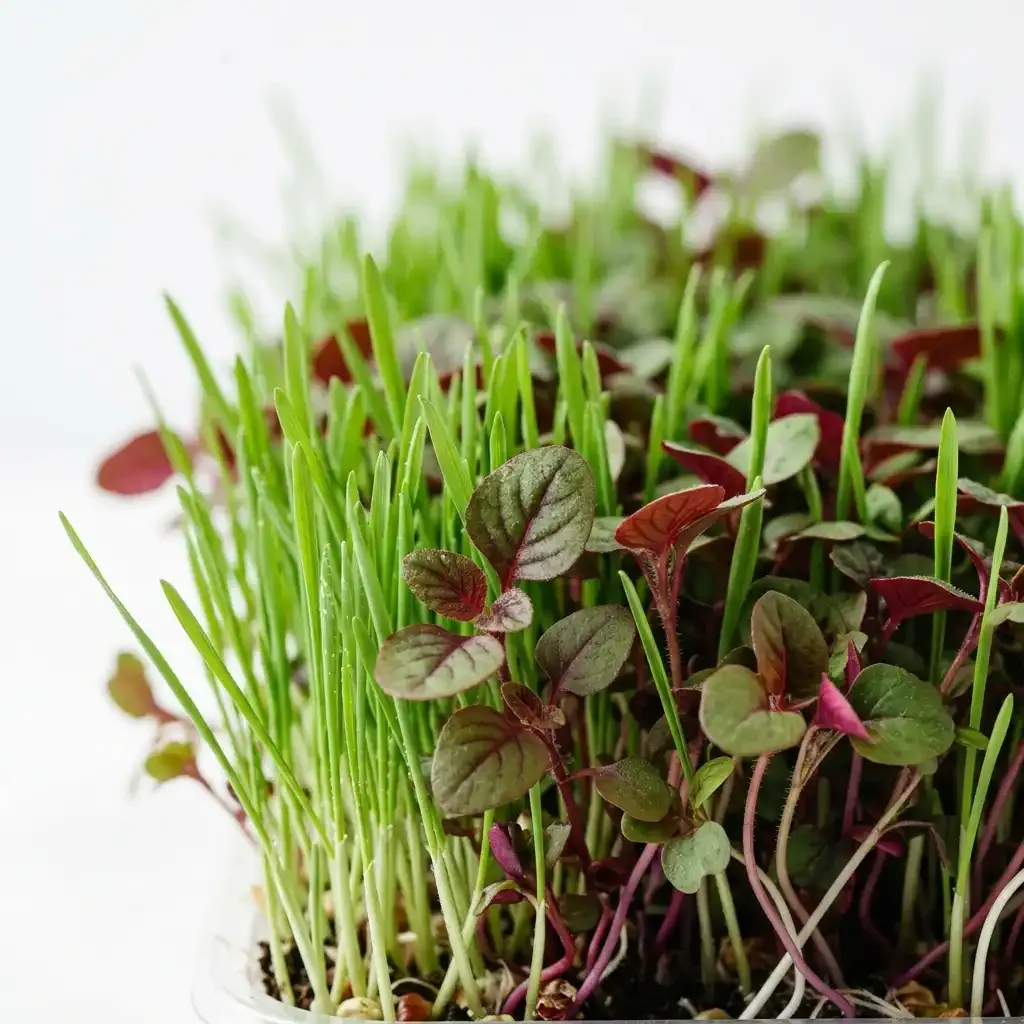
- Wheatgrass
- Flavor and use: Sweet, grassy profile. Juice through a masticating extractor rather than eating raw fibrous stems.
- Health benefits: Dense in chlorophyll, bioavailable amino acids, and active enzymes.
- Quinoa
- Flavor and use: Tiny seeds produce delicate, earthy sprouts within 7 days.
- Health benefits: Provides complete plant protein containing all nine essential amino acids.
- Amaranth
- Flavor and use: Intense magenta and red stems. Harvest at 7–8 days for maximum color retention. Mild earthy flavor.
- Health benefits: High in plant-based squalene, iron, and calcium.
Seeds and Alliums
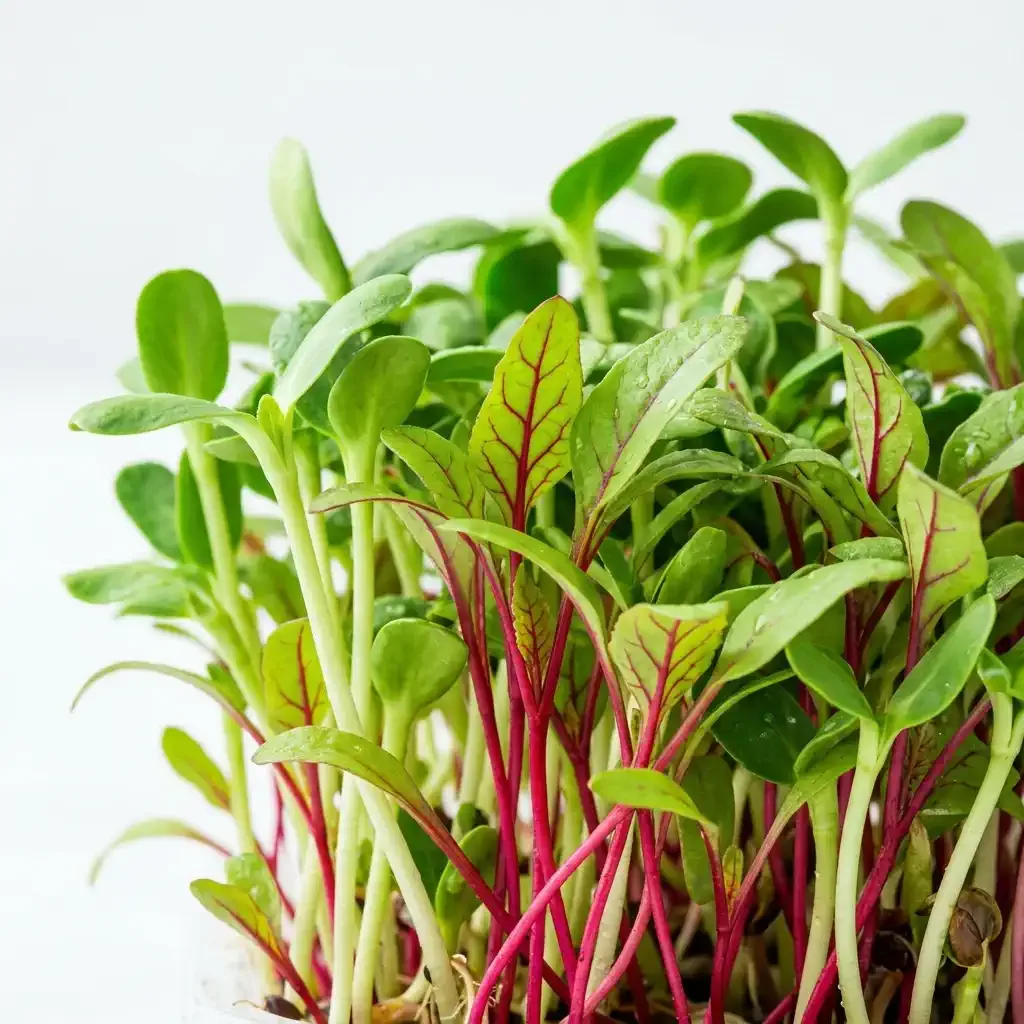
- Sunflower
- Flavor and use: Rich, nutty flavor with substantial crunch. Excellent standalone salad green or sandwich base.
- Health benefits: Rich in vitamin E, selenium, and essential fatty acids.
- Beet
- Flavor and use: Earthy, sweet flavor matching root beets. Striking red stems provide vibrant plate color.
- Health benefits: Contains betalains and natural nitrates supporting blood flow.
- Fenugreek
- Flavor and use: Aromatic maple-celery profile. Harvest early before bitterness intensifies.
- Health benefits: Supports glycemic regulation and digestive health.
- Onion
- Flavor and use: Slender, grass-like shoots delivering concentrated allium flavor. Use as a finishing garnish.
- Health benefits: Rich in allicin and organosulfur compounds.
Recommended Starting Varieties
Avoid planting dozens of varieties in your first run. Start with broccoli, radish, or pea shoots. These varieties germinate reliably, forgive minor moisture variances, and produce dense trays within two weeks. Select untreated seed stock, prepare an absorbent grow mat or shallow tray, and follow our step-by-step seed germination guide for consistent sprouts.
Editor’s Note: Parts of this guide were structured and optimized with the assistance of AI, then thoroughly reviewed, edited and expanded with first-hand growing experience by our author Raymond to ensure practical, real-world accuracy.
Frequently Asked Questions
Are microgreens healthier than mature vegetables?
Studies show microgreens contain 4–40 times higher levels of vitamins, minerals, and antioxidants than mature plants, depending on variety and growing conditions.
How long does it take to grow microgreens?
Most microgreens harvest in 7 to 14 days, once the first true leaves appear.
What are the easiest microgreens to grow?
Broccoli, radish, and pea shoots grow rapidly with minimal requirements, making them ideal for beginners.
Can microgreens replace regular vegetables?
Microgreens supplement a balanced diet of whole vegetables; they do not replace them.
How much microgreens should I eat daily?
A small handful (20–30 grams) provides a substantial nutrient boost.
Are microgreens safe for everyone?
Yes, but you must grow them in hygienic conditions to prevent contamination.
What are the best growing conditions for microgreens?
Healthy microgreens need indirect sunlight, moderate humidity, and well-drained soil.
Can I grow microgreens without soil?
Yes. Hydroponic methods using a growing mat or water work reliably without soil.
Our Amazon Storefront
Browse all our recommended tools & supplies
Everything we personally use and trust, hand-picked for gardeners like you.

I've been running DWC and Kratky systems for several years and write about what actually works, not textbook theory. Follow along for honest product reviews, practical guides and real grow results.