As an Amazon Associate, I earn from qualifying purchases. Some links in this article are affiliate links, if you buy through them I may earn a small commission at no extra cost to you.
Quick Summary
- Hydro Companion Planting: Pair compatible crops that share identical reservoir pH and EC requirements.
- Basil & Tomatoes: Grow basil next to tomatoes to maximize space and leverage matching feeding needs.
- Lettuce & Chives: Combine leafy greens and chives in the same reservoir for compact, easy care.
- Strawberries & Spinach: Maximize system layout by growing low-profile strawberries alongside spinach.
- Space Optimization: Place tall, sun-loving crops strategically to avoid shading shorter herb varieties.
Companion planting in soil traditionally relies on soil biology, root depth differences, and natural pest repellent traits. In hydroponics, companion planting requires a more technical approach: because plants in a shared system drink from the same reservoir, matching pH tolerance and Electrical Conductivity (EC) ranges is just as critical as managing canopy spacing.
Pairing compatible crops allows you to make efficient use of indoor grow lights, suppress insect pressure naturally, and produce higher yields in limited floor space.
Benefits of Companion Planting in Hydroponics
- Integrated Pest Deterrence: Plants that produce pungent aromatic terpenes deter sap-sucking insects like spider mites, thrips, and aphids. Review our guide on common hydroponic pests and how to manage them for visual identification.
- Canopy Optimization: Arranging trailing crops beneath upright fruiting plants maximizes light capture from overhead LED fixtures.
- Balanced Nutrient Consumption: Pairing plants with complementary micronutrient draws stabilizes solution chemistry between reservoir changes.
Top Companion Plant Pairings for Hydroponics
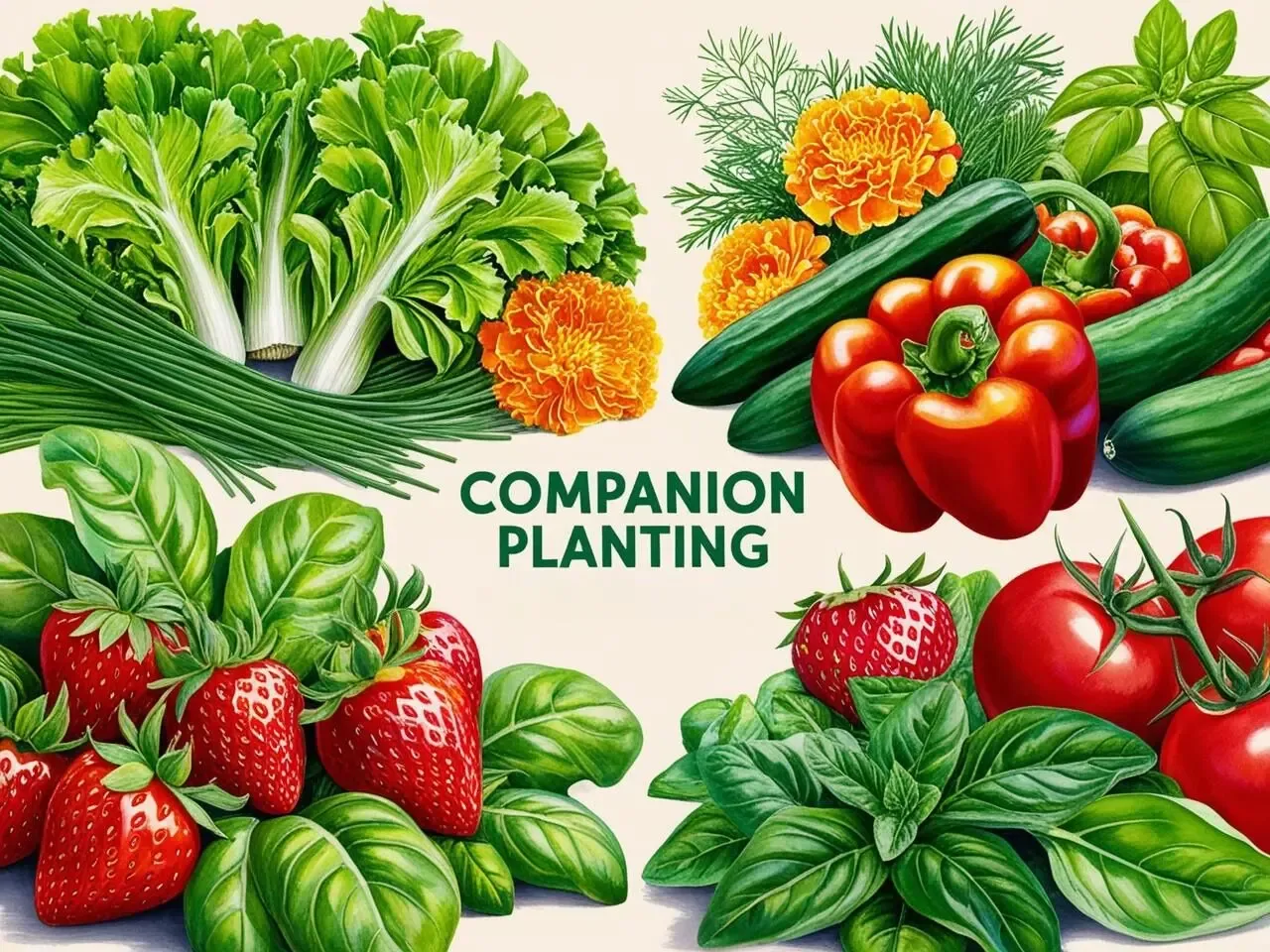
1. Basil and Tomatoes
- Why they work: Basil releases volatile aromatic compounds, including linalool and methyl chavicol, which disrupt sensory receptors in thrips, whiteflies, and hornworms.
- Reservoir Compatibility:
- Tomatoes: pH 6.0–6.5, EC 2.0–3.5 mS/cm
- Basil: pH 5.5–6.5, EC 1.0–1.6 mS/cm
- System Target: When sharing a single reservoir, hold EC at 1.6–1.8 mS/cm. This supports vegetative tomato growth without burning basil leaf margins.
- Ideal Setup: Nutrient Film Technique (NFT) channels or Dutch bucket benches.
2. Lettuce and Chives
- Why they work: Chives release sulfur-rich volatiles that confuse aphids and spider mites, keeping tender lettuce heads clean.
- Reservoir Compatibility:
- Lettuce: pH 5.5–6.0, EC 0.8–1.2 mS/cm
- Chives: pH 6.0–6.5, EC 1.8–2.4 mS/cm
- System Target: Set reservoir pH to 6.0 and EC to 1.2 mS/cm. This provides sufficient nutrition for chives while preventing margin tip burn on lettuce.
- Ideal Setup: Compact vertical towers or shallow Kratky trays.
3. Strawberries and Spinach
- Why they work: Neither crop creates excessive shade, and both prefer cool root-zone temperatures and moderate fertility levels.
- Reservoir Compatibility:
- Strawberries: pH 5.5–6.2, EC 1.2–1.8 mS/cm
- Spinach: pH 5.5–6.6, EC 1.8–2.3 mS/cm
- System Target: Target pH 5.8 and EC 1.5 mS/cm. This balance supports steady strawberry flower set while avoiding chlorosis in spinach.
- Ideal Setup: Recirculating hydroponic drip systems or ebb and flow benches.
4. Peppers and Marigolds
- Why they work: French marigolds secrete alpha-terthienyl from their roots, which protects root systems from parasitic nematodes and deters whiteflies from pepper foliage.
- Reservoir Compatibility:
- Peppers: pH 5.5–6.5, EC 1.8–2.2 mS/cm
- Marigolds: pH 5.8–6.2, EC 1.2–1.6 mS/cm
- System Target: Maintain pH at 6.0 and EC at 1.6–1.8 mS/cm to encourage continuous floral development on marigolds and robust fruit set on peppers.
- Ideal Setup: 5-gallon Dutch buckets or Deep Water Culture (DWC) reservoirs.
5. Cucumbers and Dill
- Why they work: Aromatic dill foliage masks cucumber vines from pests. In greenhouse setups, flowering dill attracts predatory beneficials.
- Reservoir Compatibility:
- Cucumbers: pH 5.5–6.0, EC 1.6–2.5 mS/cm
- Dill: pH 5.5–6.5, EC 1.0–1.6 mS/cm
- System Target: Maintain pH at 5.8 and EC near 1.6–1.8 mS/cm to sustain cucumber vine vigor without burning delicate dill roots.
- Ideal Setup: Large DWC buckets or media-filled beds with dedicated trellis framing.
Rules for Pairing Hydroponic Companions
- Strict Reservoir Matching: Never guess on pH and EC targets. If two plants require conflicting nutrient concentrations (such as Rosemary and Cabbage), they cannot share a plumbed reservoir. Consult our optimal pH and EC values chart before mixing crops.
- Canopy Height Management: Fast-growing vining crops like cucumbers or pole beans quickly shade low-growing herbs. Train vines vertically away from smaller companions using overhead trellising.
- Photoperiod and Light Intensity Alignment: Pair species with matching Daily Light Integral (DLI) needs. Avoid placing low-light herbs under direct high-intensity discharge or high-wattage LED fixtures meant for heavy-fruiting crops.
Common Companion Planting Mistakes
- Root Zone Crowding: Hydroponic roots expand rapidly. Space net pots far enough apart that root masses do not choke drain fittings or starve neighboring root systems of dissolved oxygen.
- Skipping Full Reservoir Changes: Because companion crops consume minerals at different rates, elemental ratios drift over time. Dump and remix a fresh hydroponic nutrient solution every two to three weeks.
- Importing Soil Pests: Never transplant soil-grown companion seedlings into a sterile water culture system. Start all companion plants from seed in sterile plugs (rockwool or oasis cubes) to preserve bio-security.
Conclusion
Companion planting in hydroponics is an effective way to maximize vertical footprint, naturally deter insect pests, and maintain clean crop canopies. Match your crops by nutrient strength, monitor root development regularly, and keep reservoir chemistry balanced. For multi-bench plumbing setups, consult our guide on choosing the right submersible water pump.
Frequently Asked Questions
Can all companion plants share the same hydroponic reservoir?
No. They must share compatible pH and EC (Electrical Conductivity) ranges. For instance, pairing heavy-feeding tomatoes (high EC) in the same tank with light-feeding basil (low EC) causes nutrient burn on the basil. You must find an acceptable middle-ground EC (around 1.5–1.8 mS/cm) or grow them in separate plumbed lines.
How do companion plants naturally repel pests in hydroponics?
Companion plants produce volatile aromatic compounds (like linalool in basil or d-limonene in chives) that mask host plant odors or deter pests like aphids and thrips. Others, like French marigolds, exude alpha-terthienyl from root zones, which inhibits root pests.
Which hydroponic system is best for companion planting?
It depends on crop stature and root spread. Nutrient Film Technique (NFT) and vertical towers excel for compact herbs and leafy greens. Deep Water Culture (DWC) or Dutch buckets accommodate large fruiting crops like tomatoes, peppers, and companion marigolds.
Our Amazon Storefront
Browse all our recommended tools & supplies
Everything we personally use and trust, hand-picked for gardeners like you.

I've been running DWC and Kratky systems for several years and write about what actually works, not textbook theory. Follow along for honest product reviews, practical guides and real grow results.