As an Amazon Associate, I earn from qualifying purchases. Some links in this article are affiliate links, if you buy through them I may earn a small commission at no extra cost to you.
Quick Summary
- Drip System Basics: Deliver nutrient solution directly to individual plant bases via small tubing.
- System Choice: Choose between recovery (recirculating) and non-recovery (run-to-waste) configurations.
- Water Pump: Size your pump based on the number of drip emitters and tubing friction loss.
- Growing Medium: Use clay pebbles (LECA) or rockwool to ensure fast drainage around roots.
- Timer Cycles: Program multiple short watering runs (1-5 minutes) throughout the day to avoid over-saturation.
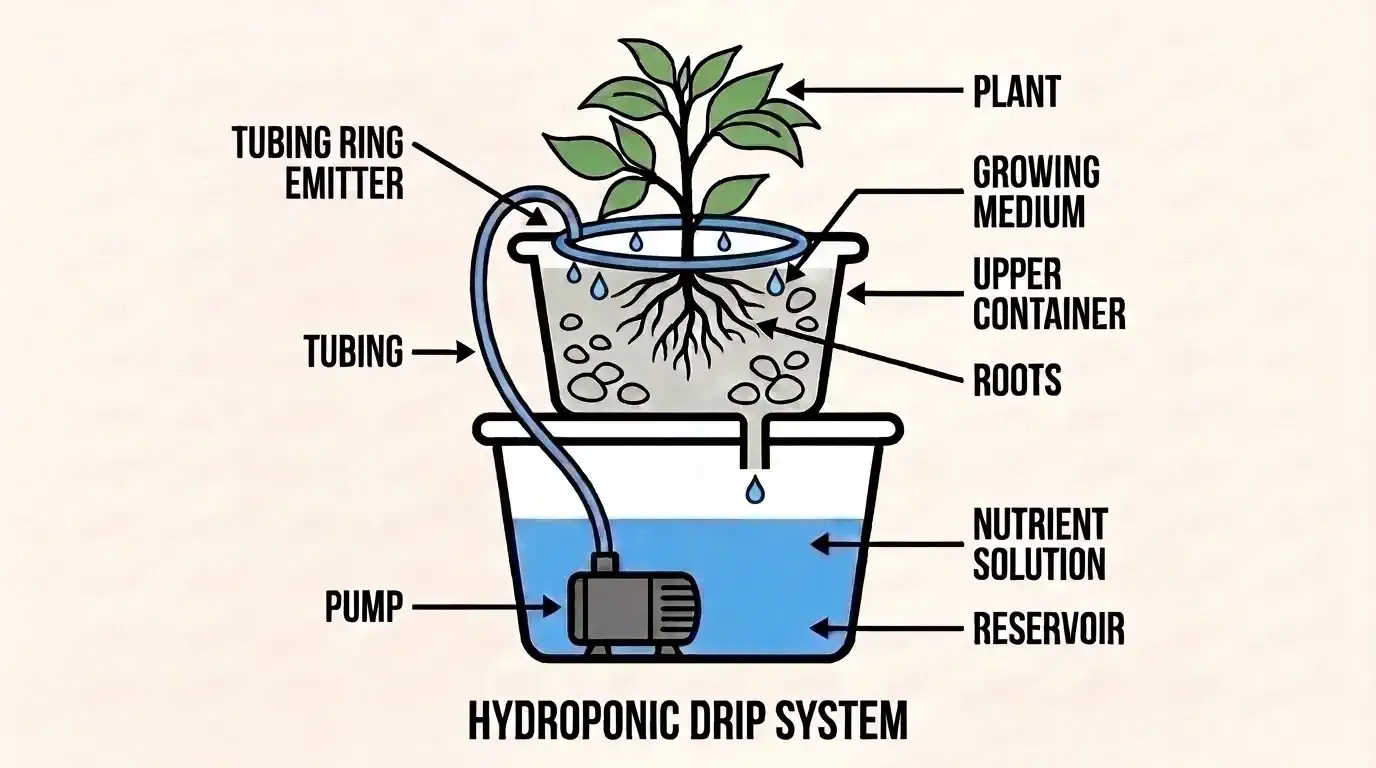
A hydroponic drip system uses a submerged pump, distribution tubing, and metered emitters to deliver controlled doses of nutrient solution directly to root zones. Before assembling fittings, growers must select between recirculating runoff or draining it away.
Recovery vs. Non-Recovery: Choose Before You Build
In all drip setups, a pump pushes liquid through supply lines and emitters trickle solution over the root substrate. The architectural distinction lies in how the system handles drain runoff:
- Recovery (Recirculating) Systems: Excess nutrient solution drains back into the primary reservoir. This closed loop conserves water and fertilizer. However, as plants transpire water, residual mineral salts concentrate in the tank, requiring periodic dilution and reservoir flushes.
- Non-Recovery (Run-to-Waste) Systems: Runoff drains to an external waste line or garden bed. This keeps reservoir chemistry stable and works well with coco coir, but consumes more water and fertilizer over time.
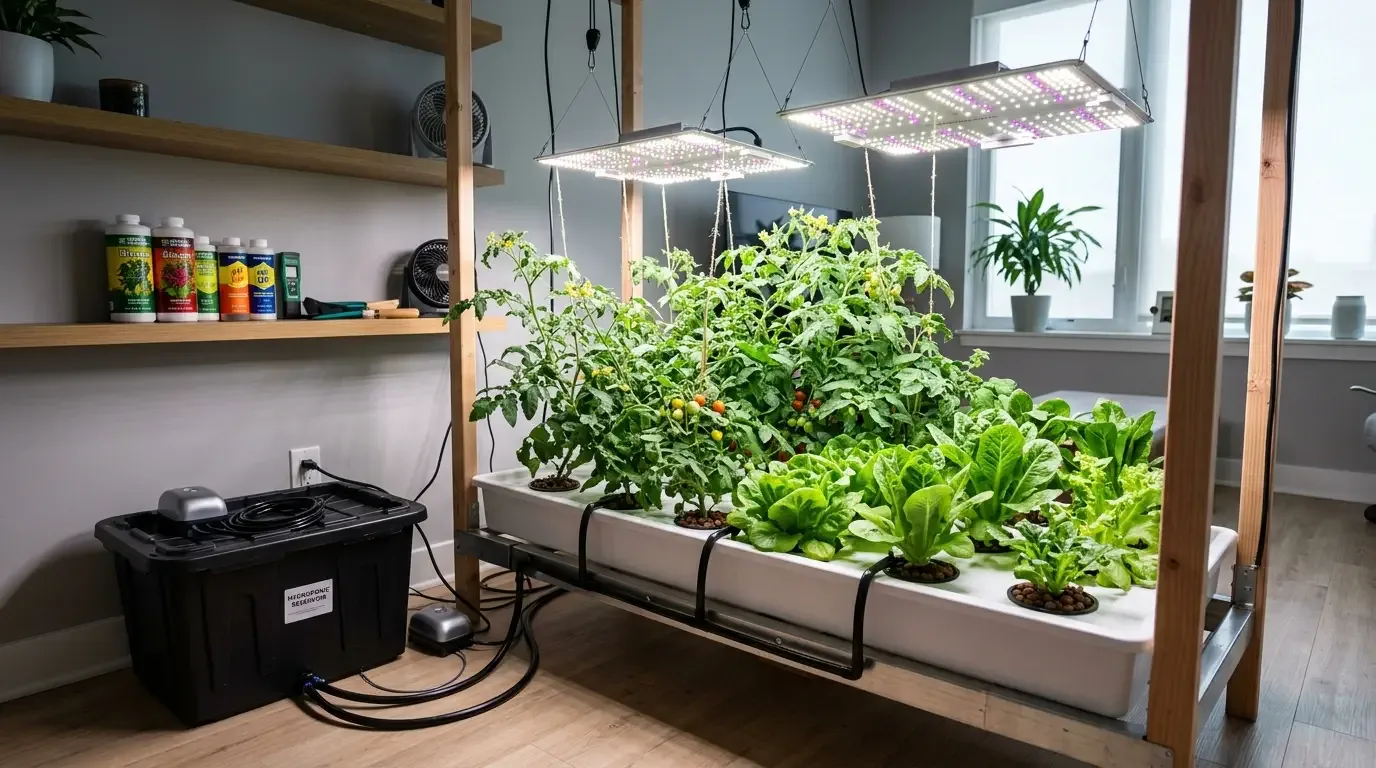
For small residential installations (6–8 plant sites) using clay pebbles, a recovery system minimizes water waste and simplifies plumbing.
Step 1: Gather Your Supplies
- Reservoir: Choose a dark, light-tight container to block algae formation. An 18-gallon storage binView on Amazon provides sufficient thermal mass and volume for 6–8 mature plants.
- Submersible water pump: Size the pump to overcome vertical lift height and emitter resistance. Our pump selection guide details flow calculations for drip manifolds.
- Drip lines and emitters: Use adjustable emittersView on Amazon calibrated from 0.5 to 2.0 gallons per hour (GPH). Install one emitter per plant site along 1/4-inch drip linesView on Amazon.
- Digital timer: A programmable outlet timer with multiple daily run cycles enables short feeding intervals. A digital timerView on Amazon allows scheduling down to single-minute increments.
- Net pots and growing medium: LECA clay pebblesView on Amazon offer free drainage and structural support without clogging drains.
- Nutrient solution: Choose a complete hydroponic fertilizer seriesView on Amazon designed for recirculating reservoirs.
- pH and EC meters: Digital testers measure salt concentration and acidity to prevent root damage.
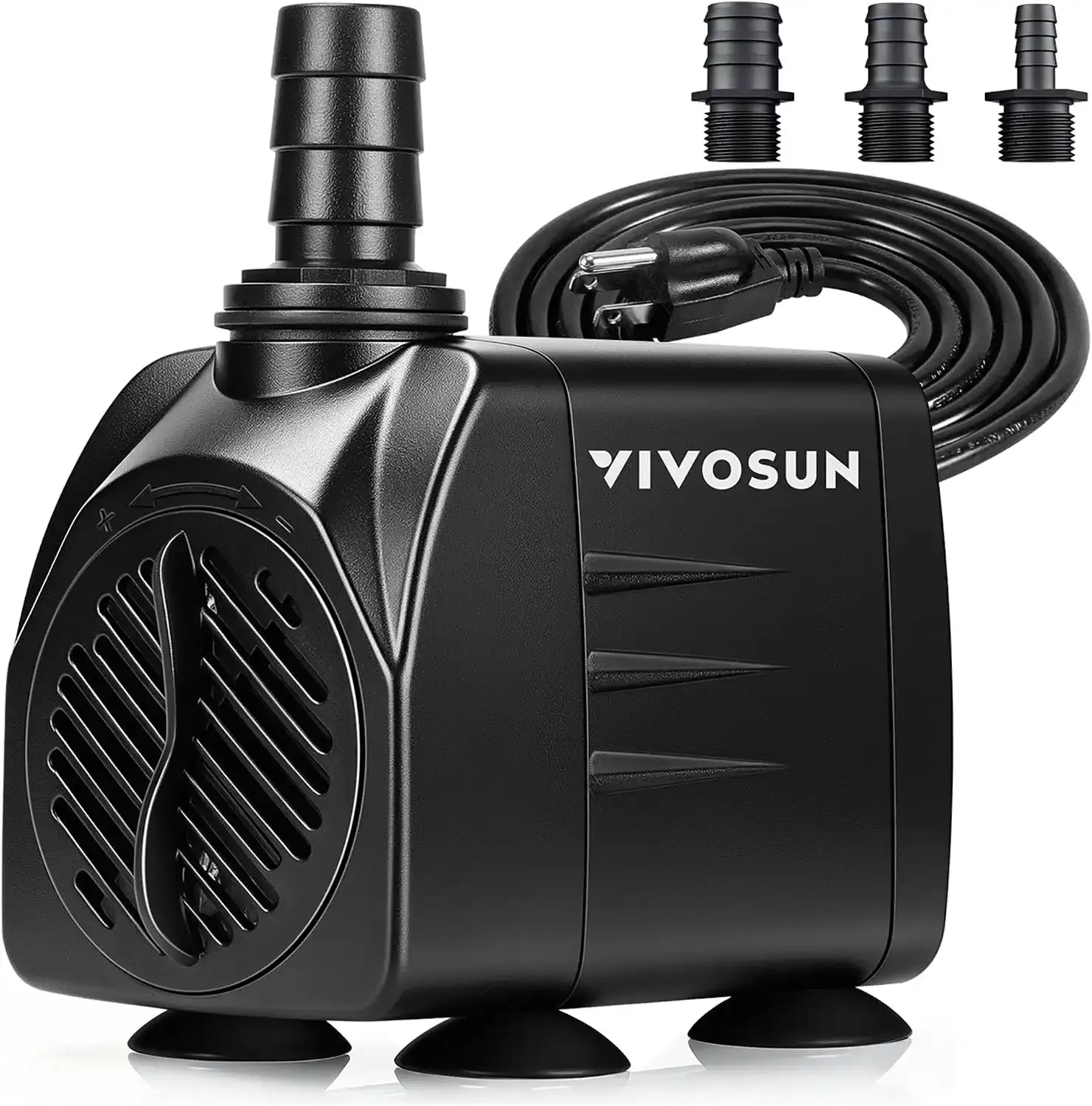
VIVOSUN 480GPH Submersible Pump
A reliable, quiet pump with adjustable flow rate. Perfect for pushing nutrient solution up to a 6-site or 8-site drip manifold without losing pressure.
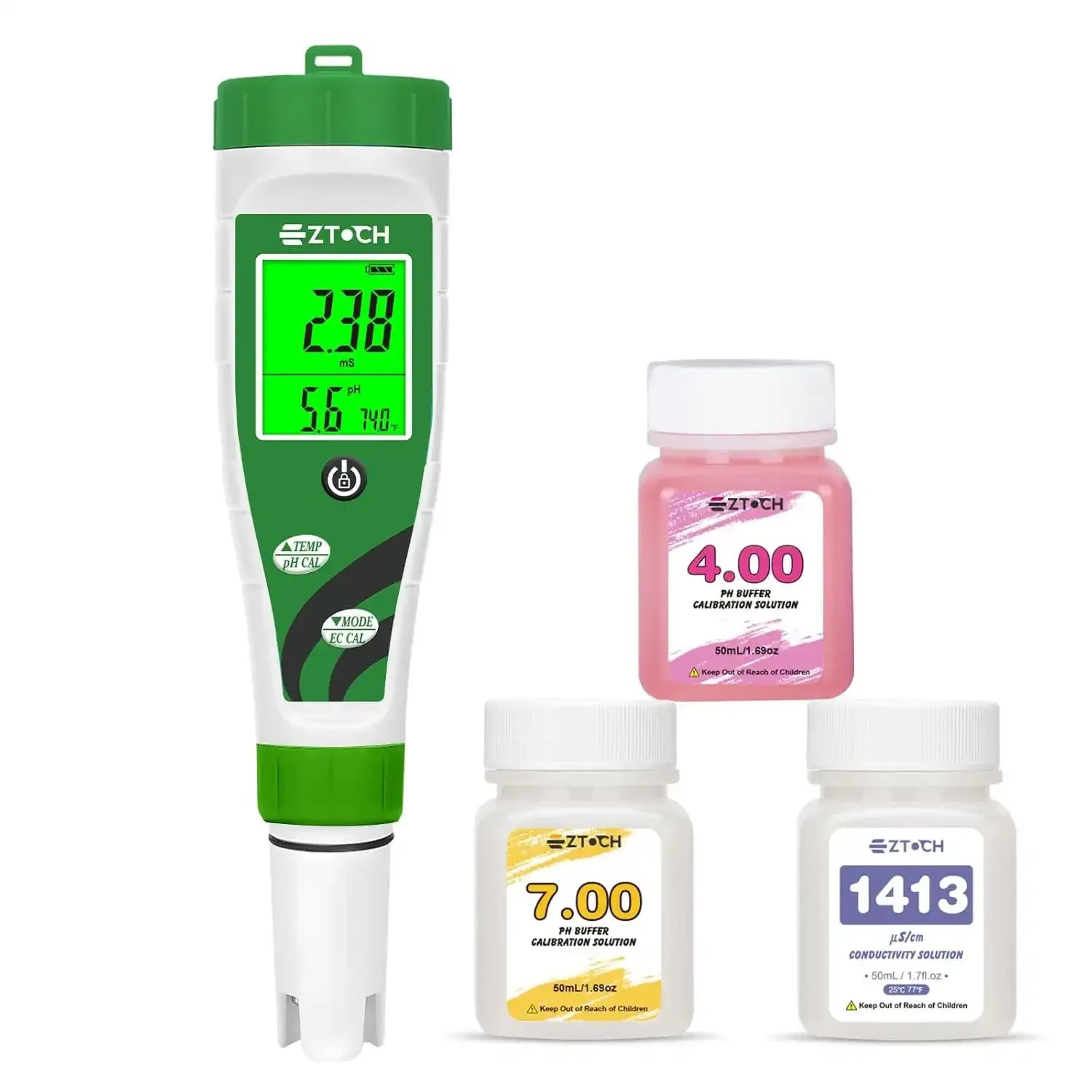
Digital pH and EC Meter Pen Combo
Keep your reservoir chemistry balanced! This digital test pen combo provides fast, precise readings of both pH and EC/TDS. Essential for monitoring your recovery drip system.
For a review of auxiliary hardware, see our guide on 10 must-have tools for a successful hydroponic garden.
Step 2: Prepare the Reservoir
- Fill with clean water: Allow municipal tap water to sit uncovered for 24 hours to off-gas dissolved chlorine before adding fertilizer.
- Dissolve nutrients: Add mineral concentrates according to crop growth phase.
- Calibrate pH and EC: Adjust pH between 5.5 and 6.5 using dilute phosphoric acid (pH Down) or potassium hydroxide (pH Up). Maintain electrical conductivity (EC) between 0.8–1.2 mS/cm for salad greens, and 2.0–3.0 mS/cm for fruiting tomatoes.
For detailed chemical buffer management, read understanding hydroponic pH levels and how to manage them.
Step 3: Install the Water Pump
- Position the pump: Place the submersible pump on the reservoir floor, elevating it slightly with suction feet or a clean ceramic tile to prevent debris intake.
- Attach delivery tubing: Connect 1/2-inch mainline tubing to the discharge barb and route it out of the reservoir lid.
Step 4: Set Up Drip Lines and Emitters
Run the 1/2-inch supply line along the grow deck. Punch barbed 1/4-inch branch connectors into the mainline, running dedicated feeder lines to each plant site.
Fit an adjustable emitter to the end of each feed line, pinning the stake into the substrate near the root crown. Calibrate emitters to 0.5–1.0 GPH for young transplants, increasing flow as root balls expand.
Run the pump for three minutes before loading crops to confirm each emitter flows at equal rates.
Step 5: Position Net Pots and Growing Medium
Arrange net pots within the grow tray ports:
- LECA (Clay Pebbles): Fast-draining and inert, clay pebbles make the ideal substrate for recirculating drip cycles.
- Coco Coir: Holds substantial water; pair with shorter, spaced runtimes to avoid root asphyxiation.
- Perlite / Vermiculite Blends: Use coarse-grade perlite; avoid fine vermiculite, which breaks down into sludge that obstructs pump pre-filters.
Step 6: Set Up the Timer and Start the System
Drip timers govern substrate moisture:
- LECA Substrate: Schedule 15 minutes on every 3 to 4 hours throughout the light cycle.
- Coco Coir Substrate: Schedule 3 to 5 minutes on every 2 to 3 hours.
Activate the pump to observe a complete cycle. Ensure emitters drip smoothly, tray drains clear liquid rapidly, and return lines guide water back into the reservoir without leaks.
Step 7: Monitor and Adjust
- Emitter Flow: Inspect stakes weekly to ensure salts have not crystallized inside small drip orifices.
- Reservoir Top-Offs: When liquid levels drop, add plain dechlorinated water. Topping off with concentrated fertilizer causes salt toxicity.
- pH Drift: Check pH every two days; drift above 6.5 locks out iron and manganese.
- EC Levels: If EC climbs steadily while water drops, dilute the reservoir with fresh water. Replace the full solution every 14 days.
Troubleshooting Tips
- Uneven Emitter Output: Clear clogged stakes by soaking them in white vinegar or dilute hydrogen peroxide.
- Algae Growth: Seal reservoir light leaks completely. Use black vinyl tubing instead of clear vinyl lines.
- Root Discoloration: Tan, slippery roots accompanied by sour odors indicate root rot caused by standing liquid or solution temperatures exceeding 75°F (24°C).
A properly calibrated drip system balances water and oxygen delivery while scaling efficiently from a six-plant kitchen garden to an indoor grow room.
Editor’s Note: Parts of this guide were structured and optimized with the assistance of AI, then thoroughly reviewed, edited and expanded with first-hand growing experience by our author Raymond to ensure practical, real-world accuracy.
Frequently Asked Questions
What plants grow best in a drip system?
Tomatoes, bell peppers, cucumbers, and heavy-feeding herbs perform exceptionally well in drip setups. Fruiting crops benefit most from drip lines because growers can fine-tune watering frequency as plants transition from vegetative growth to heavy fruit load.
How long do you run a hydroponic drip system?
In a recirculating system using expanded clay pebbles (LECA), run the pump for 15 minutes every 3 to 4 hours during illuminated hours. For moisture-retentive coco coir, use shorter 5-minute cycles every 1 to 2 hours. Substrates should stay damp rather than waterlogged.
What are the disadvantages of drip irrigation in hydroponics?
Drip systems require more plumbing parts than passive methods. Narrow emitter orifices can clog with mineral precipitates when reservoir pH drifts. Recirculating drip reservoirs also require frequent EC monitoring because plants drink water and leave concentrated salts behind.
What is the difference between drip irrigation and hydroponics?
Agricultural drip irrigation waters soil-grown crops. Hydroponic drip systems deliver complete mineral nutrient solutions directly to roots anchored in inert, soilless media such as clay pebbles, perlite, or coconut coir.
What is the easiest hydroponic system to use?
The [Kratky method](/blog/easiest-and-cheapest-hydroponic-system-you-can-start-today/) is the simplest passive option because it uses no pumps or timers. Drip systems require more initial setup, but provide precise moisture control for large, long-season crops like vining tomatoes.
Our Amazon Storefront
Browse all our recommended tools & supplies
Everything we personally use and trust, hand-picked for gardeners like you.

I've been running DWC and Kratky systems for several years and write about what actually works, not textbook theory. Follow along for honest product reviews, practical guides and real grow results.