As an Amazon Associate, I earn from qualifying purchases. Some links in this article are affiliate links, if you buy through them I may earn a small commission at no extra cost to you.
Quick Summary
- Row Covers: Protect crops from light frosts, heavy winds and destructive insect pests.
- Fabric Weights: Use lightweight spun-bond covers for insect blocks and heavy weights for winter warmth.
- Secure Edges: Anchor cover borders tightly with rocks, soil or metal staples to block wind.
- Ventilation: Remove covers on warm, sunny days to prevent heat stress and allow pollination.
- Sweetening Crops: Protect cool-season root vegetables to trigger starch-to-sugar development from light frosts.
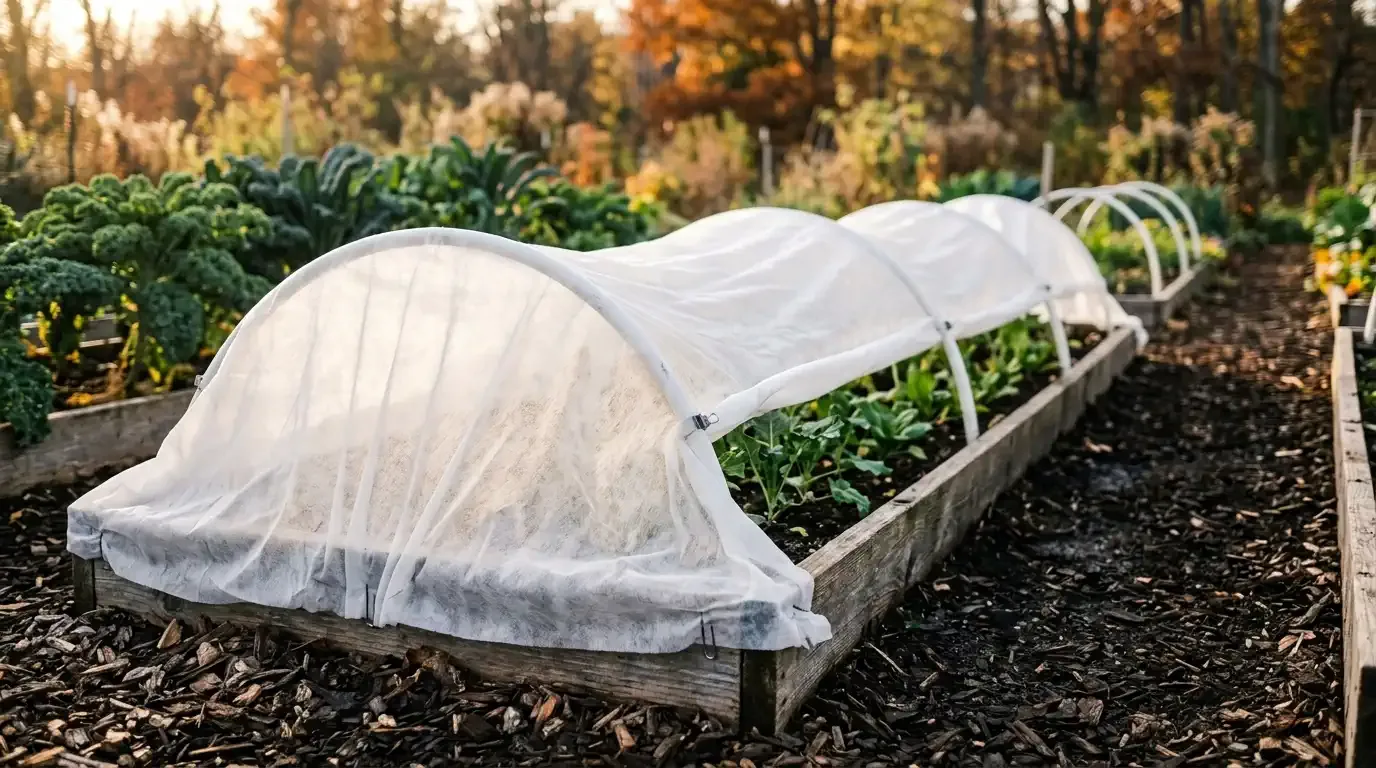
Using row covers and frost cloths involves suspending spun-bonded fabric over hoops to trap radiating ground heat. A few degrees of thermal buffering can mean the difference between fresh, crisp cold-season harvests and frost-burned crops.
These permeable textiles act as an insulating blanket, shielding foliage from icy winds and hard frosts while transmitting light and water. Here is how to select fabric weights, install support hoops, and manage seasonal timing.
1. What Are Row Covers and Frost Cloths?
Row covers (also called floating row covers or garden fleece) are manufactured from spun-bonded polypropylene or polyester filaments. Because the fibers are bonded rather than woven, the textile allows water and air to diffuse freely while capturing heat radiated upward from the soil.
Unlike clear plastic sheets, which scorch leaves upon sun exposure and trap suffocating condensation, spun-bond fabrics can remain in place for days. If you are designing your autumn growing beds, explore our fall season gardening resources and review our list of essential crops to plant before frost.
2. Core Functional Benefits
- Thermal Protection: Retains 2°F to 8°F of ground warmth, shielding crops during sub-freezing nights.
- Physical Pest Exclusion: Lightweight insect barriers block aphids, flea beetles, and cabbage loopers without chemical pesticides.
- Wind and Rain Buffering: Reduces physical wind desiccation and softens heavy downpours that would otherwise compact topsoil.
3. Selecting the Correct Fabric Weight
| Weight Class | Fabric Density | Light Transmission | Thermal Protection | Recommended Use |
|---|---|---|---|---|
| Lightweight | ~0.5 oz/yd² | 85%–90% | Down to 28°F (–2°C) | Summer insect barrier; early spring frost protection |
| Medium Weight | 0.9–1.2 oz/yd² | 70% | Down to 24°F–28°F (–4°C) | Autumn season extension; light winter freezes |
| Heavy Blankets | 1.5–2.0+ oz/yd² | 30%–50% | Down to 20°F (–7°C) or below | Temporary emergency insulation during hard freezes |
For most autumn vegetable gardens, a 1.2 oz/yd² medium-weight fabric balances thermal insulation with adequate light penetration for ongoing photosynthesis.
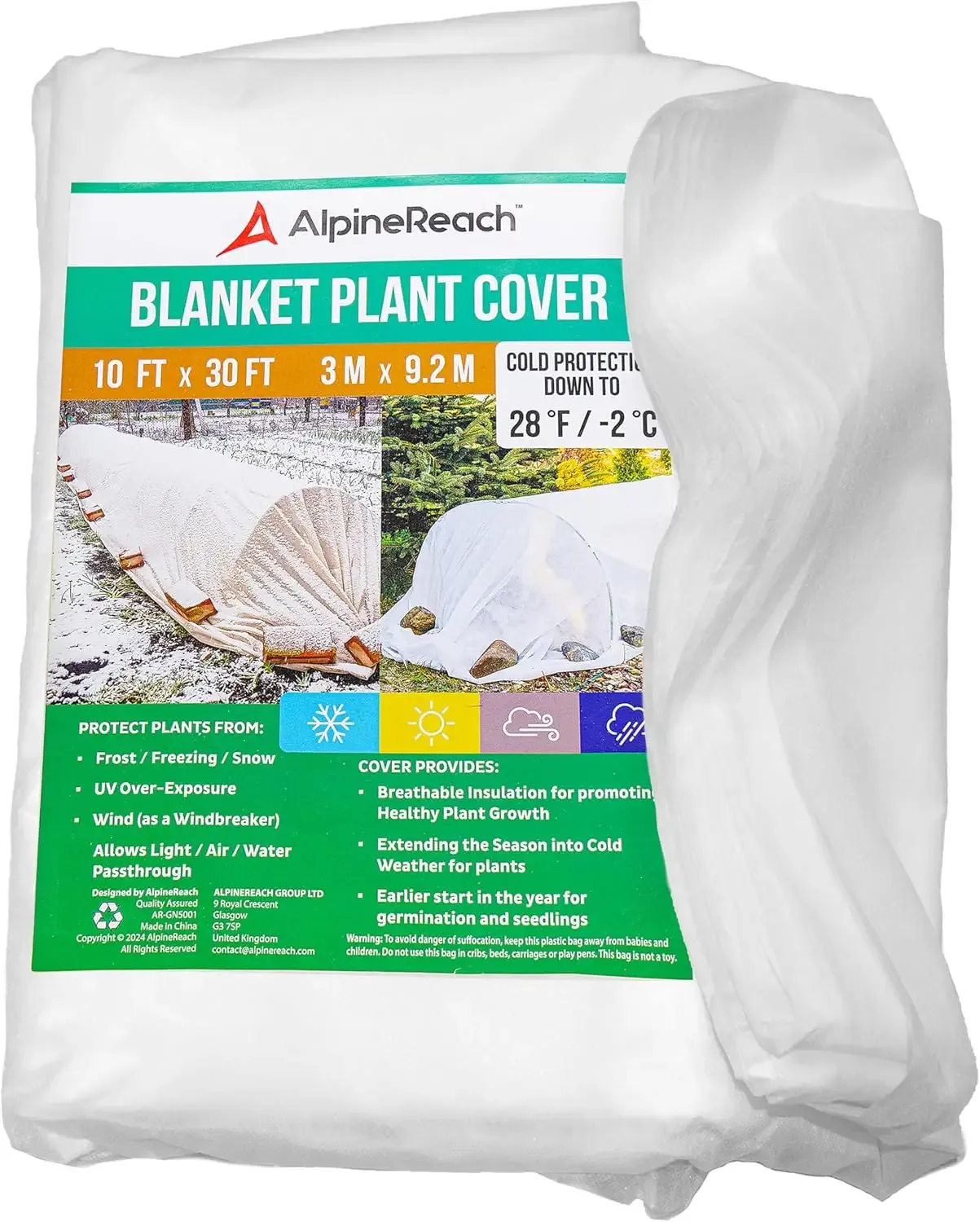
AlpineReach Plant Covers Frost & Sun Protection
This 1.2 oz/yd² freeze blanket is the exact cover I used to shield my tender fall crops when overnight temperatures dipped to a freezing 28°F. Over four seasons of fall and winter gardening, it has proven itself as a durable, highly breathable barrier that admits 70% light transmission and water while keeping crops insulated. Trade-offs: Because it's a large 10 x 30 ft sheet, it catches the wind like a sail and requires securing edges tightly with bricks or stakes and its thickness means you must support it on hoops to avoid crushing delicate foliage.
4. How to Install Row Covers and Hoops
Suspending fabric above the foliage is critical. If wet fabric rests directly on vegetable leaves during a hard frost, moisture freezes and transmits sub-zero temperatures directly into plant cell walls, turning margins black.
- Erect Support Hoops: Arch 1/2-inch flexible PVC pipe, 9-gauge galvanized wire hoops, or electrical conduit across the width of the bed, anchoring ends firmly in the soil.
- Drape the Cover: Pull the fabric smoothly over the hoops, allowing 6 to 12 inches of slack along the perimeter for anchoring.
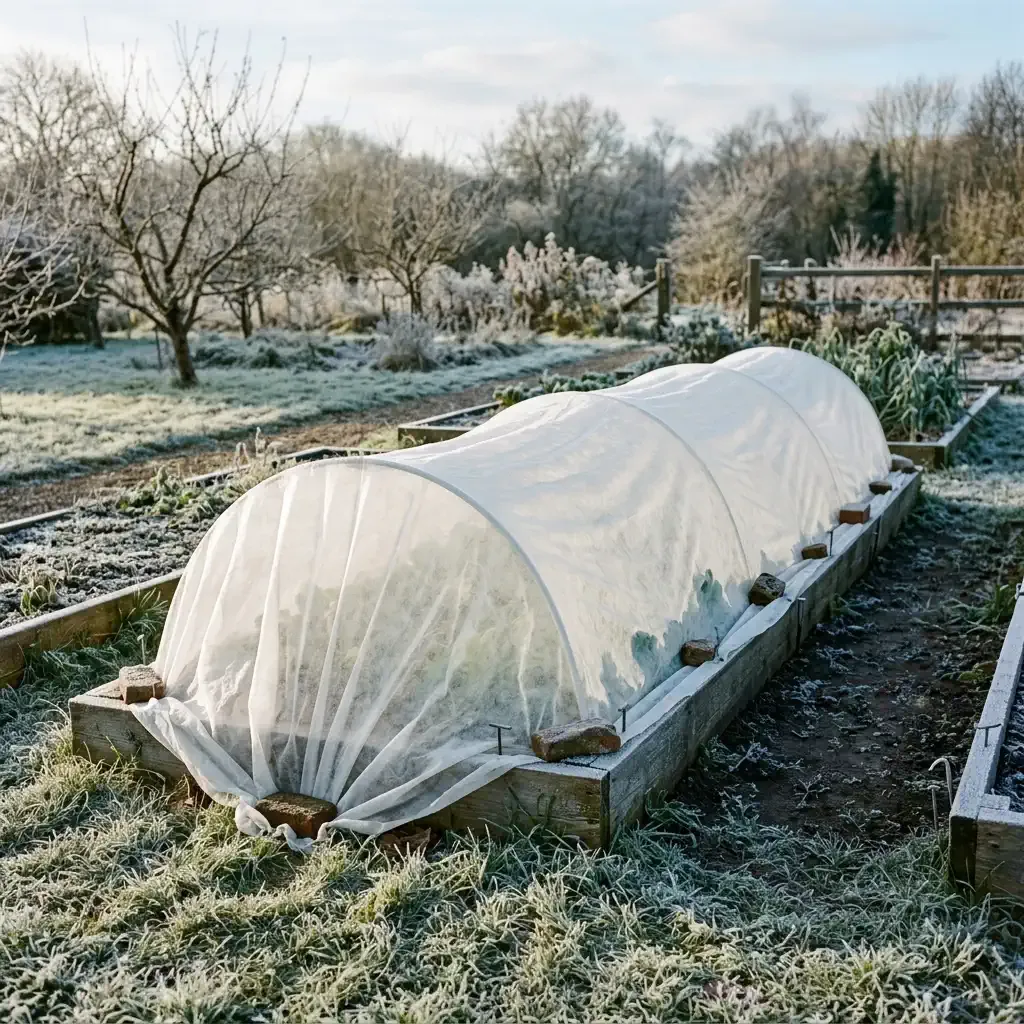
- Seal the Perimeter: Anchor edges completely using landscape staples, heavy stones, bricks, or mounds of dirt. Air gaps allow wind to enter, lifting the fabric and letting trapped warmth escape.
- Water Directly: Because the material is porous, overhead irrigation and rainwater soak straight through the fabric without removing the cover.
5. Timing and Daytime Ventilation
- In Spring: Install lightweight covers after transplanting to protect tender seedlings from late frosts and wind chill. Remove covers when daytime temperatures reach 70°F or when crops begin flowering and need bee pollination.
- In Autumn: Install medium-weight covers as soon as nighttime lows drop below 32°F. For strategies that carry gardens through deep winter freezes, read our complete winter gardening guide and explore our winter season gardening hub.
6. Common Application Errors
- Direct Leaf Contact: Always maintain an air buffer between fabric and plant tissue. Wet fabric resting on leaves conducts frost directly into cells.
- Overheating on Sunny Days: Heavy-weight blankets left on during sunny days exceeding 55°F can push canopy temperatures past 85°F, causing cool-season greens to wilt and bolt. Fold back fabric during warm afternoons to ventilate beds.
- Loose Border Anchors: High autumn wind catches floating covers like a sail. Space border weights no further than 3 feet apart.
7. Best Vegetables for Frost Cloth Protection
- Broccoli & Cauliflower: Tolerates light freezes to 28°F; covers protect developing heads from frost scorch.
- Brussels Sprouts & Cabbage: Resilient down to 20°F under medium-weight covers.
- Curly Kale & Collards: Cold exposure converts starches to natural protective sugars, enhancing flavor.
- Carrots, Beets, & Parsnips: Covering root crowns keeps the top 2 inches of soil from freezing solid, allowing harvesting through December.
- Spinach & Swiss Chard: Withstands repeated freezes when insulated under hoops.
8. Cold-Sweetening Physiology
Subjecting hardy vegetables to mild, non-lethal cold triggers an enzymatic process: the plant converts stored starches into soluble sucrose and glucose. These dissolved sugars lower the freezing point of intracellular water, functioning like natural antifreeze.
Using row covers allows you to exploit this mechanism safely: the fabric prevents tissue necrosis from sub-20°F winds while letting plants experience the mild chill required to maximize sugar concentration.
To choose the most cold-resilient cultivars for your beds, explore our ultimate guide to frost-tolerant plants.
Frequently Asked Questions
Can I leave frost cloth on my plants during the day?
You can leave light frost cloth on, but heavy winter blankets should be removed on sunny days when temperatures exceed 50°F to prevent overheating.
Do row covers block sunlight?
Lightweight covers block only 10-15% of sunlight, allowing plants to grow normally. Heavy frost blankets can block up to 50% and are meant for temporary cold protection.
Can I water my plants through a frost cloth?
Yes, lightweight and medium-weight spun-bond fabrics are permeable, allowing water to pass through directly to the soil. You do not need to remove the cover to water.
What is the difference between a row cover and a frost blanket?
Row covers are typically lightweight fabrics used for insect protection and light frost, while frost blankets are heavy-weight materials designed specifically to insulate crops during deep, freezing temperatures.
Our Amazon Storefront
Browse all our recommended tools & supplies
Everything we personally use and trust, hand-picked for gardeners like you.

I've been running DWC and Kratky systems for several years and write about what actually works, not textbook theory. Follow along for honest product reviews, practical guides and real grow results.