
As an Amazon Associate, I earn from qualifying purchases. Some links in this article are affiliate links, if you buy through them I may earn a small commission at no extra cost to you.
Quick Summary
- Profitability Metrics: Evaluate commercial viability based on crop choice, energy rates and market access.
- High-Value Crops: Focus on leafy greens, herbs, microgreens and gourmet strawberries for the best margins.
- Energy Costs: Account for lighting and HVAC electricity, which represent the largest operational expenses.
- Capex vs Opex: Plan for high initial equipment costs and establish automated workflows to reduce labor.
- Market Strategy: Target local restaurants, farmers’ markets and niche grocers to secure premium pricing.
Commercial hydroponic profitability depends on three variables: capital expenditure scale, local electrical utility rates, and buyer access. While indoor growing delivers higher yields per square foot than outdoor agriculture, power costs and capital depreciation can erase margins if crop selection is mismatched to sales channels.
Here is a financial breakdown of commercial hydroponic economics, including startup capital, operating expenses, and return-on-investment benchmarks.
Initial Capital Expenditures (CapEx)
Initial infrastructure expenses vary substantially by facility type:
- Hobby / Direct-to-Consumer Starter ($800–$5,500): Multi-tier indoor shelving racks, commercial LED bars, small automated dosing pumps, and modular DWC or NFT channels.
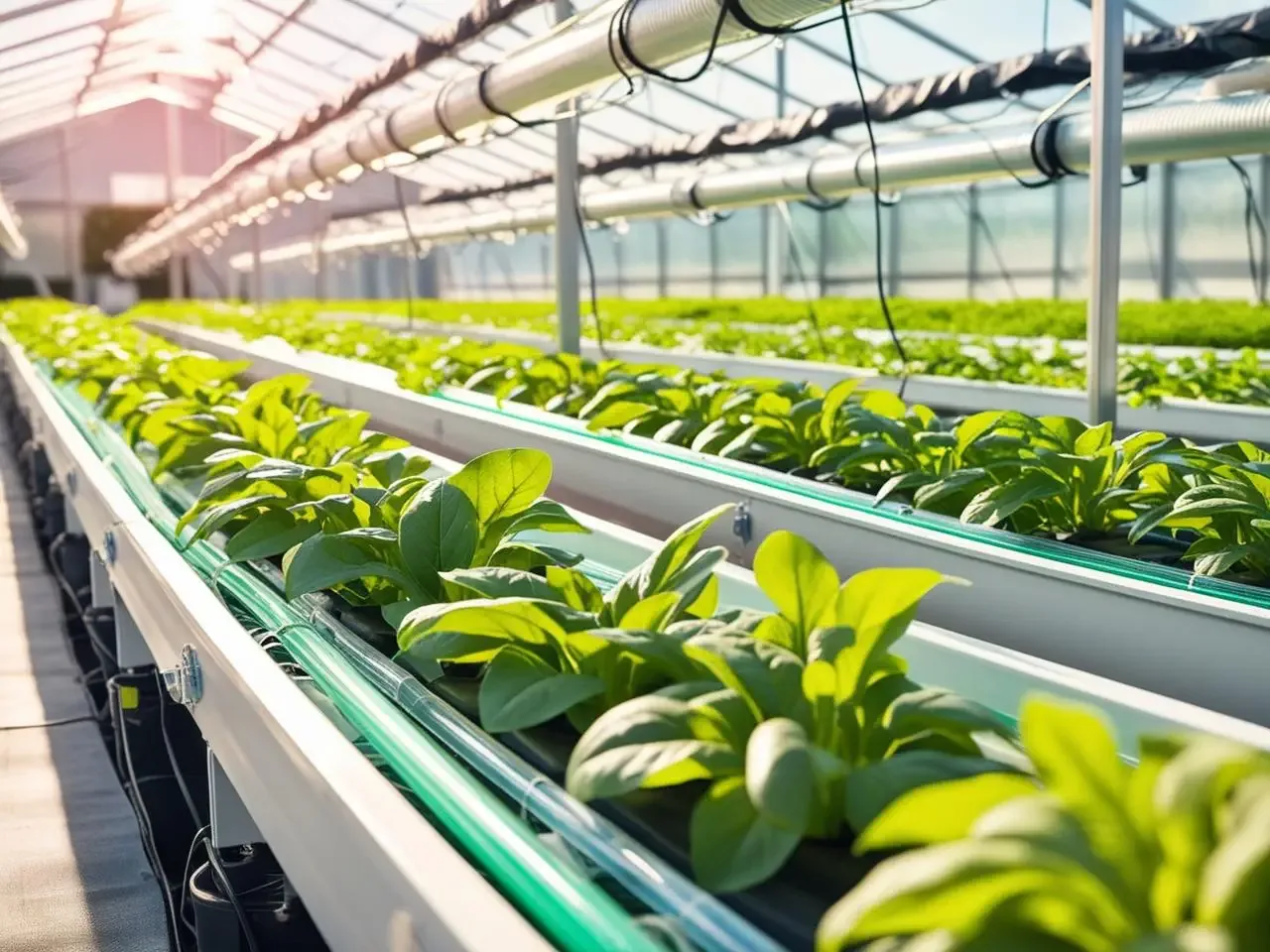
- Commercial Greenhouse ($50,000–$200,000+): Polycarbonate or glass greenhouse structures, supplemental LED fixtures, automated climate ventilation, central fertigation skids, and commercial plumbing.
- Industrial Vertical Warehouse ($500,000–$1,000,000+): Multi-layer vertical racking, complete HVAC environmental controls, industrial dehumidifiers, and automated seeding lines.
Capital Allocation Breakdown
For a mid-sized commercial operation, capital is allocated across four primary infrastructure buckets:
Estimated Setup Example (Medium Commercial)
Detailed Cost Analysis
Market Scaling
To test concepts with minimal capital risk, review our guide to the easiest and cheapest hydroponic system you can start today.
Operating Expenses (OpEx)
Monthly operational costs dictate ongoing cash flow once the facility is built.
Energy Costs
Electricity is the largest single variable cost for indoor growers. Fully indoor vertical farms can spend $3,000 to $15,000 monthly on lighting and environmental conditioning. Modern LED fixtures deliver 2.7 to 3.0 µmol/J efficiency, consuming roughly 40% to 50% less power than older high-pressure sodium lamps.
If local utility rates exceed $0.12 per kWh, greenhouse operations with natural sunlight and supplemental LED fixtures are generally more profitable than fully indoor warehouses. For fixture efficiency guidelines, read our analysis of maximizing yields with advanced hydroponic lighting solutions.
Water and Mineral Fertilizer
Recirculating closed-loop systems consume up to 90% less water than open field crops, according to the USDA Economic Research Service. Bulk mineral salts (calcium nitrate, potassium sulfate, magnesium sulfate, and chelated trace minerals) represent approximately 8% to 12% of recurring monthly inputs. Learn formulation strategies in how to choose the best hydroponic nutrients.
Facility Leases and Real Estate
Commercial urban leases average $15 to $35 per square foot annually. Vertical racking mitigates high square footage costs by stacking production three to five tiers high within the same foundation footprint.
Yield Projections and Revenue Streams
Hydroponic environments yield two to four times more harvestable produce per square foot than outdoor acreage due to uninterrupted 365-day cultivation cycles.
Lettuce
10,000 heads/year @ $2 per head
Tomatoes
5,000 pounds/year @ $3 per pound
Channel selection dictates price realization:
- Direct-to-Consumer / Specialty Restaurants: $2.00–$3.50 per head of lettuce; $15–$25 per pound for fresh culinary basil and specialty microgreens.
- Broadline Wholesale Distributors: $0.80–$1.20 per head of lettuce; margins depend on high volume and automated handling.
For beginners selecting crop species, consult our guide to the best hydroponic plants for beginners.
Profitability and Payback Timelines
Payback periods depend on upfront automation and crop cycle speed:
Small/Hobbyist
Medium/Commercial
Large/Industrial
Primary Drivers of Financial Performance
Three operational factors differentiate profitable facilities from struggling ventures:
Automation and Labor Efficiency
Automated pH dosing skids, motorized seeding trays, and climate controllers reduce manual labor hours. In facilities over 5,000 square feet, automating fertigation pays for itself within 12 months.
Crop Selection and Turnover Rate
Fast-cycling crops generate higher annualized revenue per square foot. Basil (28-day cycle) and microgreens (10-to-14-day cycle) generate far more inventory turns per year than vining beefsteak tomatoes (80-to-100-day cycle). Maintain strict reservoir targets using our optimal pH and EC reference guide.
Proximity to Market
Farms located within two hours of distribution hubs cut cold-chain shipping costs and command premium pricing for local produce delivered within 24 hours of harvest.
Commercial Case Studies
- Gotham Greens: Operates urban rooftop greenhouse networks across major metropolitan areas. By selling directly into supermarket chains within municipal boundaries, they command premium retail pricing while eliminating long-distance refrigeration transit costs.
- Little Leaf Farms: Utilizes highly automated greenhouse acreage in non-urban regional corridors. Their investment in automated gutter systems and hydroponic seeding lines reduces labor per head, allowing them to compete with California field greens at scale.
Both operations secured retail purchase commitments prior to constructing large-scale infrastructure.
Operational Risk Mitigation
- Working Capital Reserves: Maintain a minimum 6-to-8-month operating cash cushion to absorb power and staffing costs during facility commissioning.
- Redundant Environmental Safeguards: Install backup generators and secondary pump loops to protect crops from electrical outages.
- Operator Training: Avoid costly nutrient drift and root diseases by reviewing common hydroponic mistakes beginners make.
- Continuing Education: For technical literature on nutrient chemistry and greenhouse design, consult our list of top recommended hydroponics books.
Government Grant and Financing Programs
- USDA Specialty Crop Block Grant Program (SCBGP): Enhances competitiveness of specialty crops, including hydroponic greens and culinary herbs.
- USDA Value-Added Producer Grants (VAPG): Supports packaging, branding, and local direct distribution.
- State Renewable Energy Credits (SRECs): Many states offer solar integration rebates and energy efficiency incentives for greenhouse heat curtains and LED retrofits.
Summary
Hydroponic farming offers viable unit economics when growers secure purchase agreements before building, prioritize fast-turnover crops, and control energy consumption through high-efficiency LEDs or natural greenhouse light.
Editor’s Note: Parts of this guide were structured and optimized with the assistance of AI, then thoroughly reviewed, edited and expanded with first-hand growing experience by our author Raymond to ensure practical, real-world accuracy.
Frequently Asked Questions
What is the average profit margin for hydroponic farms in 2026?
Commercial hydroponic farms typically operate at 20% to 40% net profit margins. Operations with wholesale grocery contracts, solar-offset power, and automated dosing land at the upper end of that range.
How soon can a hydroponic farm become profitable?
Mid-sized commercial greenhouses break even within two to three years, while large automated industrial facilities take three to five years. Small direct-to-consumer growers selling herbs at farmers markets can recoup equipment costs in under 12 months.
What are the most profitable hydroponic crops?
Culinary herbs (sweet basil, cilantro), microgreens, and gourmet butterhead lettuces generate the highest return per square foot due to rapid 3-to-5-week turnaround times and premium restaurant pricing.
How much does it cost to start a hydroponic farm?
A hobbyist grow tent setup costs $800 to $5,500. Commercial greenhouse installations range from $50,000 to $200,000 in capital expenditures, and multi-acre vertical warehouse facilities exceed $1,000,000.
Is hydroponic farming environmentally sustainable?
Yes. According to data from the USDA Economic Research Service, recirculating hydroponic systems use up to 90% less water than traditional soil farming and eliminate agricultural fertilizer runoff into local watersheds.
Are there government grants for hydroponic farming?
Yes. The USDA Specialty Crop Block Grant Program and Value-Added Producer Grants provide federal funding for controlled environment agriculture, supplemented by state-level agricultural clean energy credits.
Our Amazon Storefront
Browse all our recommended tools & supplies
Everything we personally use and trust, hand-picked for gardeners like you.

I've been running DWC and Kratky systems for several years and write about what actually works, not textbook theory. Follow along for honest product reviews, practical guides and real grow results.