As an Amazon Associate, I earn from qualifying purchases. Some links in this article are affiliate links, if you buy through them I may earn a small commission at no extra cost to you.
Quick Summary
- Raised Beds Pros: Improve soil drainage, warm up earlier in spring and reduce weeding time.
- Material Options: Construct beds using untreated cedar, redwood, corrugated metal or composite boards.
- Soil Formula: Fill beds with a premium 50/50 mix of topsoil and organic compost.
- Spacing Efficiency: Use the Square Foot Gardening method to maximize yields in small beds.
- Watering Setup: Install drip irrigation lines or soaker hoses to deliver water directly to the soil.
Whether you are battling dense clay soil or looking to reduce bending and weeding, building a raised bed gives you direct control over your garden’s root zone from day one. This practical guide walks you through choosing rot-resistant materials, calculating soil depth, layering a productive soil mix, and installing efficient drainage and irrigation systems.
Why Choose Raised Beds?
Overcoming Poor Soil Conditions
Raised beds are particularly useful in areas with heavy clay, rocky dirt, or contaminated urban ground. Constructing raised frames lets you control the exact soil profile right from the start, providing an aerated environment where tender roots expand without hitting hardpan.
Improved Drainage
Raised beds drain significantly faster than in-ground garden rows, preventing waterlogging and root rot during heavy spring rains. You can adjust drainage further by incorporating perlite or coarse sand into your custom soil mix.
Targeted Soil Management
With contained beds, balancing pH and organic matter for specific crops is straightforward. For example, you can maintain acidic soil in one bed for blueberries by incorporating elemental sulfur, while keeping an adjacent bed neutral for brassicas or creating a deep, loose sandy loam for carrots and sweet potatoes.
Reduced Weed Competition
Elevated frames create a physical barrier against encroaching turf and creeping lawn weeds. Placing cardboard at the base blocks persistent perennial weeds from pushing upward through your growing mix.
Natural Pest Barriers
Elevated bed walls deter low-crawling pests. A frame built two feet high keeps tender greens out of easy reach for rabbits, while attaching hardware cloth to the base stops burrowing voles and gophers.
Ergonomic Comfort
Taller beds reduce deep bending and kneeling, making planting, weeding, and harvesting comfortable for gardeners managing joint strain or limited mobility.
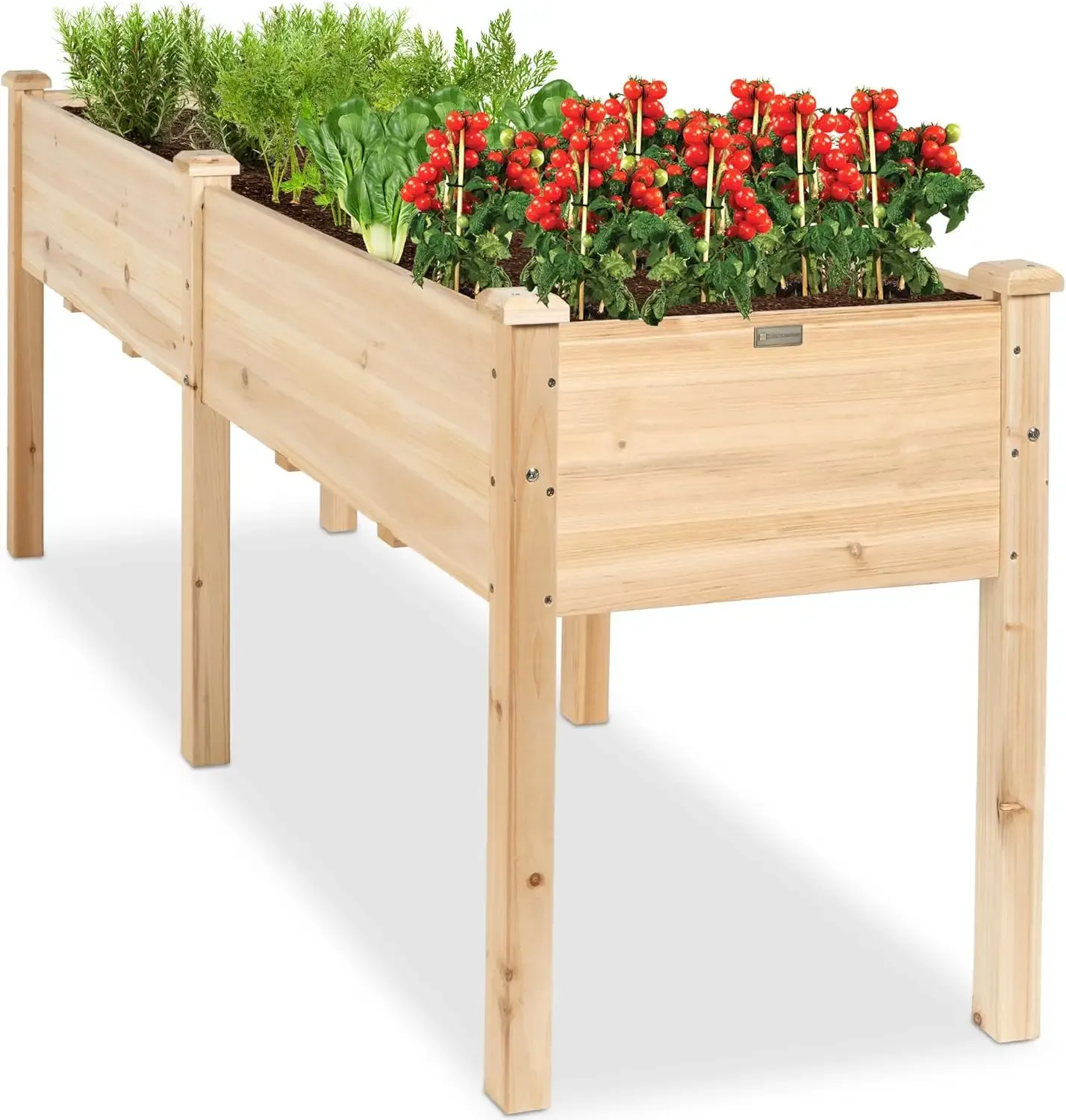
Raised Garden Bed, Elevated Wood Planter Box
- Generous Elevated Capacity: With 8.4 cubic feet of planting volume across a 6-foot length (72” x 23” x 30”), this elevated bed easily accommodates shallow-rooted crops like salad greens, herbs and bush beans without taking up ground space.
- Waist-High Ergonomics: Standing at 30 inches tall, it eliminates kneeling and heavy bending entirely, making it ideal for patio gardeners or anyone dealing with lower back strain.
- Natural Chinese Fir Construction: Built from naturally decay-resistant Chinese fir wood, it delivers classic rustic charm that won’t leach chemicals into your edible crops.
- Practical Trade-offs & Care: While the six pre-drilled drainage holes effectively prevent waterlogging, Chinese fir will weather to gray over time and benefit from an annual coat of raw linseed oil or non-toxic sealant to extend its lifespan beyond 4–5 seasons.
Planning Your Raised Bed Layout
Location and Sunlight
Select a site that receives at least 6 to 8 hours of direct daily sunlight. Sunlight intensity varies with regional climate; review our guide to planting zones to understand local frost dates and heat windows. Placing beds near a reliable hose bib or spigot makes regular irrigation simple.
Bed Dimensions and Ergonomics
Standard bed footprints include 4’ x 8’ or 3’ x 6’ dimensions. Keep bed widths at 4 feet or narrower so you can comfortably reach the center from either side without stepping onto and compacting the soil. To plan paths and surrounding space, consult our guide to planning a small vegetable garden from scratch.
Choosing Construction Materials
- Wood (Cedar, Redwood, and Fir): Untreated cedar and redwood naturally resist rot and wood-boring insects, lasting 7 to 10 years. Budget-friendly untreated pine typically degrades within 3 to 5 seasons. Avoid older pressure-treated lumber that contains chemical preservatives.
- Metal (Galvanized Steel and Aluzinc): Coated metal beds offer exceptional durability, often lasting 20+ years without warping or rotting. They warm up early in spring, supporting earlier sowing dates. Select aluzinc-coated steel for maximum corrosion resistance.
- Composite Boards: Blends of recycled wood fiber and food-grade polymers resist rot, never splinter, and retain structural strength for decades with zero staining or sealing required.
- Stone and Masonry: Natural fieldstone, brick, or dry-stacked pavers create permanent, heat-retentive beds. While material and labor costs are higher, masonry structures withstand harsh winter freezes indefinitely.
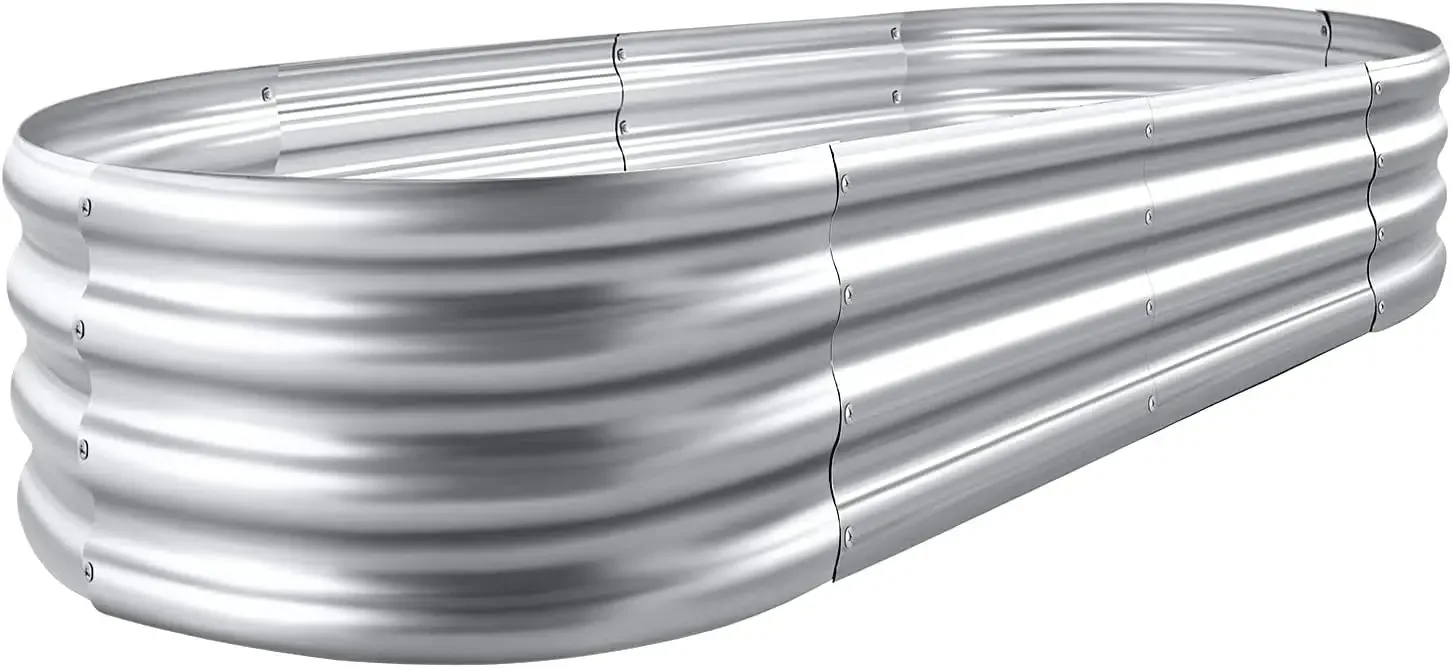
Galvanized Raised Garden Bed Kit and Planter
- Compact 4’ x 2’ Footprint: Offering 7.14 cubic feet of soil capacity with a 12-inch depth, this compact oval bed is ideal for side yards, patios or pairing in rows for a structured modular garden.
- Heavy-Duty Q195 Galvanized Steel: Constructed with double-layered anti-corrosion galvanized sheets (up to 1.56mm thick at reinforced stress points), it withstands harsh winter freezes and summer heat without bowing or rusting.
- Open-Base Soil Health: The bottomless design ensures unrestricted root penetration into subsoil and prevents water stagnation, allowing beneficial earthworms and microorganisms to migrate freely into your garden mix.
- Practical Trade-offs & Performance: Unlike wooden planters, this metal kit won’t warp, rot or harbor wood-boring pests, easily lasting 15 to 20 years. However, metal sides conduct heat rapidly in mid-summer, so edge-adjacent roots may dry out faster during heat waves, requiring consistent mulching along the perimeter.
Filling Raised Beds Efficiently
Filling large beds entirely with bagged potting mix is costly. Layering organic biomass builds long-term soil structure at a fraction of the cost:
Cross-Section Cutaway: 30" Hugelkultur Raised Bed
Proper Soil Horizon & Depth Guide
Ideal: Clean wheat straw, shredded leaves or arborist chips.
Benefit: Reduces moisture evaporation by up to 50% and blocks weed germination.
Ideal: 50% screened topsoil, 30% organic compost and 20% aeration blend.
Benefit: Friable, nutrient-dense structure where primary feeding roots thrive.
Ideal: Finished compost, aged cattle manure or worm castings.
Benefit: Prevents nitrogen tie-up from underlying wood and warms the root zone.
Ideal: Hardwood logs, thick branches, yard waste and autumn leaves.
Benefit: Saves up to 50% on bagged soil costs while acting as a long-term water sponge.
Ideal: Corrugated cardboard, thick newspaper or landscape fabric.
Benefit: Blocks underlying perennial weeds while allowing earthworms to enter.
Ideal: Crushed pea gravel, river rock or leveled bare native dirt.
Benefit: Prevents water pooling beneath the frame and ensures proper oxygen flow.
Soil Layering Sequence (Hugelkultur Method)
- Level the Base: Clear turf and level the underlying soil. If burrowing rodents are active, staple 1/2-inch galvanized hardware cloth to the underside of the frame.
- Weed Suppression: Lay down overlapping layers of corrugated cardboard or thick newspaper over the bottom. This smothers existing vegetation while decomposing into organic carbon.
- Bulk Organic Core (Bottom 40%–50%): For beds deeper than 15 inches, fill the lower section with untreated tree limbs, logs, rotting firewood, and dry leaves. This biomass acts like a sponge, absorbing water and releasing nutrients over years of slow decomposition.
- Buffer Layer: Spread 2 to 3 inches of finished compost or leaf mold over the logs to filter down between gaps and accelerate microbial breakdown.
- Growing Medium (Top 8–12 inches): Fill the root zone with a friable, nutrient-rich soil mix.
The Ideal Soil Formula
Avoid straight native backyard dirt for your top layer; garden soil compacts quickly in containers and restricts root development. Use this balanced blend:
- 50% Screened Topsoil: Provides essential mineral base and physical weight.
- 30% Finished Compost or Aged Manure: Supplies organic matter, beneficial soil biology, and gradual plant nutrition.
- 20% Aeration Material: Incorporate coarse perlite, vermiculite, or coconut coir to ensure loose texture and reliable moisture retention.
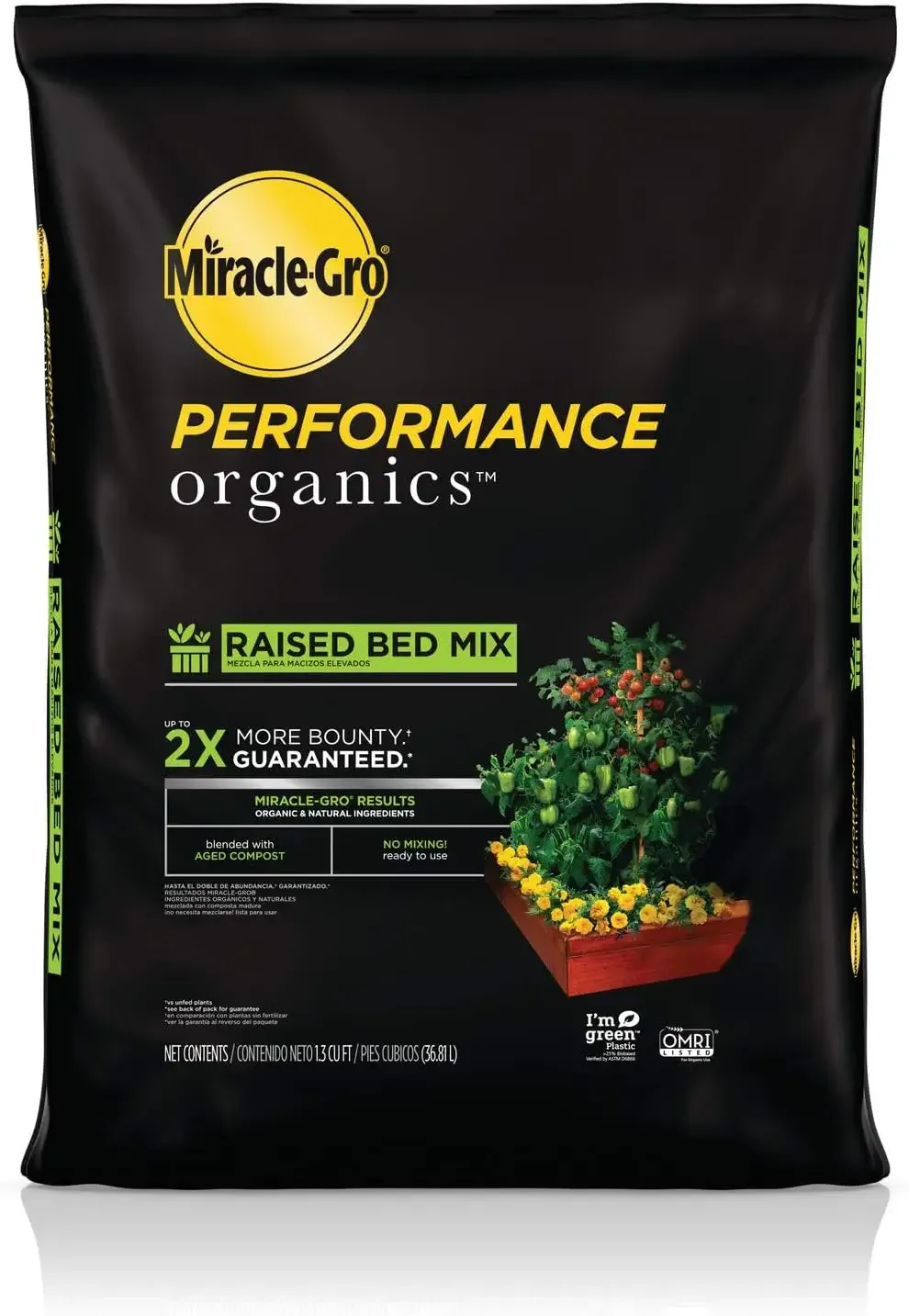
Miracle-Gro Performance Organics Raised Bed Mix
- Ready-to-Use Organic Blend: Formulated specifically for raised beds and container gardens, this pre-mixed medium combines screened compost, sphagnum peat moss and natural plant food without requiring tedious wheelbarrow mixing.
- Immediate Nutrient Availability: Enriched with organic nutrients that feed heavy-feeding crops like tomatoes and peppers right out of the bag for up to three months after planting.
- Consistent Volume & Texture: Retains lightweight loft and resists compaction throughout the season, allowing delicate root vegetables like carrots and radishes to grow straight and uniform.
- Practical Trade-offs & Application: While convenient for topping off existing beds or filling compact 2’ x 2’ frames (which require about two 1.5 cu. ft. bags), buying bagged mix to fill large multi-bed installations purely from scratch can become expensive compared to buying bulk cubic yards of compost and topsoil locally.
Planting and Ongoing Management
Intensive Spacing
Maximize bed productivity using square-foot or hexagonal grid spacing rather than wide open rows. Dense planting creates a living leaf canopy that shades the soil surface, suppressing weeds and lowering moisture evaporation.
Drip Irrigation
Because elevated beds drain readily, consistent moisture is vital during midsummer heat. Lay 1/2-inch drip tubing or soaker hoses across the soil surface before planting, and connect them to an automatic faucet timer to irrigate early in the morning.
Mulching
Spread a 2-inch layer of clean straw, wood chips, or shredded leaves over the bed surface. Mulch insulates roots from summer heat spikes, prevents crusting from rain, and keeps splashing soil off vegetable leaves.
Seasonal Crop Protection
Install PVC conduit or wire hoops across the bed to support season-extension covers. For detailed instructions on selecting floating row covers and frost blankets, read our guide on how to use row covers and frost cloths effectively.
Fall Care and Soil Rejuvenation
Soil in raised beds naturally settles by 1 to 3 inches each year as organic matter breaks down. Do not replace the soil mix; simply replenish it annually:
- Clear spent summer crops and diseased plant debris.
- Top-dress the bed with a fresh 2-inch layer of rich compost or well-rotted manure.
- Protect the bare bed through winter with a thick mulch layer or cover crop to prevent heavy rains from leaching soluble nutrients. Follow our complete autumn checklist in how to prepare your garden for fall.
Raised beds give you total control over soil quality, drainage, and ergonomics. By selecting rot-resistant materials, filling beds with organic layers, and establishing steady drip irrigation, you set up an efficient growing system that produces abundant harvests year after year.
Frequently Asked Questions
What materials should I use to build a raised bed?
Untreated cedar and redwood are the best wood choices due to natural rot resistance. Corrugated galvanized steel and composite wood are also durable, safe options.
What is the best soil mix for filling raised beds?
A popular and effective mix is 50% high-quality topsoil and 50% organic compost, which provides excellent aeration, water retention and nutrients.
How deep does a raised garden bed need to be for root vegetables?
Most root crops like carrots, parsnips and potatoes require at least 12 to 18 inches of soil depth for unrestricted root development. Leafy greens and herbs can thrive in 6 to 8 inches.
Does a raised garden bed need a bottom?
No, raised beds should generally have an open bottom so roots can reach deeper soil and excess water can drain freely. Use hardware cloth or wire mesh at the bottom only if you need to block burrowing rodents.
How often should raised bed soil be topped off or replaced?
Soil volume naturally settles and decomposes by 1 to 3 inches each season. Top off your beds every spring or fall with a fresh 2-inch layer of high-quality compost rather than replacing the entire soil mix.
Can I build a raised garden bed on concrete or a patio?
Yes, but you must ensure adequate drainage and depth. Line the bottom with heavy-duty geotextile fabric to prevent soil from staining the surface and build beds at least 12 to 18 inches tall.
Our Amazon Storefront
Browse all our recommended tools & supplies
Everything we personally use and trust, hand-picked for gardeners like you.

I've been running DWC and Kratky systems for several years and write about what actually works, not textbook theory. Follow along for honest product reviews, practical guides and real grow results.