As an Amazon Associate, I earn from qualifying purchases. Some links in this article are affiliate links, if you buy through them I may earn a small commission at no extra cost to you.
Quick Summary
- Wasabi Challenge: Grow the notoriously difficult wasabi plant hydroponically over 18 to 24 months.
- Cool Temperatures: Keep nutrient water cold (50°F to 55°F) to prevent root rot and plant stress.
- Shade-Loving: Keep light levels low; wasabi leaves sunburn easily and prefer indirect light.
- System Option: Use a modified gravel Ebb and Flow system to mimic natural mountain streams.
- Sulfur Feeding: Maintain proper sulfur levels in the nutrient solution to develop the signature hot flavor.
A single wasabi rhizome costs $15–$30 before purchasing any equipment. You will then manage the system for up to two years before harvesting. If your reservoir temperature stays above 70°F or pH drifts outside a narrow band, the plant quickly collapses.
Here is the step-by-step process for building and maintaining a hydroponic wasabi system, from cultivar selection to chiller sizing and harvest.
Step 1: Choose Your Cultivar
Selecting the proper cultivar is critical when establishing Wasabia japonica in controlled environments:
Daruma is the most widely available cultivar outside Japan. It tolerates brief temperature rises into the low 70s°F better than other varieties. Daruma produces a pungent rhizome and is the standard variety sold through specialty nurseries in North America and Europe.
Mazuma grows more slowly and demands stricter environmental controls, but yields a sweeter, more complex flavor profile. It is favored by high-end culinary kitchens. If you have already managed a successful wasabi cycle, Mazuma offers superior culinary quality.
Greenthumb is a hybrid bred for cultivation outside Japan. It shows greater tolerance for minor environmental shifts, making it the most forgiving starting option, though rhizome yield is somewhat smaller.
For an initial grow, start with Daruma or Greenthumb. Source starter stock from suppliers who explicitly specify cultivar names (such as Pacific Coast Wasabi or Marx Foods) rather than generic unlabelled cuttings.
Step 2: Choose Your System
Two hydroponic formats suit wasabi depending on your equipment budget and maintenance routine:
Nutrient Film Technique (NFT) closely mimics wasabi’s natural mountain stream habitat, where cold, oxygenated water constantly flows across root tips. In an NFT channel, a thin stream of solution circulates over the roots without submerging the crown. This setup provides exceptional aeration, but any pump outage risks rapid root desiccation.
Ebb and Flow (Flood and Drain) provides a safer buffer for newer setups. The porous medium retains moisture between flood cycles, keeping root zones protected if a pump pauses. Use expanded clay pebbles (LECA) or smooth pea gravel rather than rockwool, which holds too much moisture for wasabi crowns.
Review our comparison of NFT and aeroponic systems for channel dynamics, or our beginner guide to ebb and flow systems for plumbing design.
Step 3: Dial In the Environment
Wasabi requires narrower environmental tolerances than common hydroponic crops:
Water Temperature: 50°F–65°F (10°C–18°C), targeting 55°F–60°F. Wasabi is an alpine river plant. Sustained water temperatures above 70°F (21°C) trigger rapid leaf yellowing, stop growth, and cause Pythium root rot. In any temperate or warm climate, an active water chiller is mandatory. A 1/10 HP aquarium chiller is adequate for reservoirs up to 40 gallons.
pH: 6.0–6.5. Check the reservoir daily during initial setup, then every two days once baseline conditions stabilize. Because wasabi grows slowly, pH imbalances may not display leaf symptoms until root tissue has already suffered damage.

Bluelab pH Pen
Reliable digital pH meter with fast, accurate readings for hydroponics, aquariums, pools and water testing. Features easy calibration, waterproof design and automatic temperature compensation for consistent results.
EC (Electrical Conductivity): 1.2–1.6 mS/cm. Wasabi prefers dilute nutrient concentrations. Start at 1.0–1.2 mS/cm and only adjust toward 1.6 mS/cm if foliage shows general underfeeding. Overfeeding causes tip burn and salt stress that can set root growth back by months.
Humidity: 70%–80%. Run an ultrasonic or cool-mist humidifier paired with a humidistat to prevent foliage from drying out under circulating fans.
Light: Low-intensity, 10–12 hours daily. Wild wasabi grows under dense riparian forest canopies. Maintain a PPFD between 150 and 200 µmol/m²/s. High-intensity grow lights will scorch the broad leaves. Review our guide to LED grow lights to select dimmable fixtures.
Source Water: Use reverse osmosis (RO) or distilled water. High mineral tap water skews background EC and introduces variable carbonates that complicate pH maintenance.
Step 4: Nutrients
Mix a balanced base nutrient solution formulated for leafy greens or vegetative herbs:
- Nitrogen (N): Drives leaf and petiole expansion during the first 12 months.
- Phosphorus (P) and Potassium (K): Maintain steady levels throughout, increasing K slightly during the second year to support rhizome density.
- Sulfur: Necessary for the synthesis of allyl isothiocyanate, the compound responsible for wasabi’s sharp heat.
- Calcium and Magnesium: Supplement with a Cal-Mag additive at half strength. Wasabi grown in RO water is prone to calcium deficiency, which displays as scorched margins on young leaves.
Perform a complete reservoir flush and refill every 10 to 14 days. For detailed nutrient formulation, consult our guide to choosing hydroponic nutrients and our pH and EC reference chart.
Step 5: Planting
Use rooted rhizome cuttings or offsets rather than seeds. Wasabi seeds require extended cold stratification and exhibit erratic germination. A healthy cutting shows firm green or pale flesh with plump lateral growth nodes.
Place rhizome cuttings in net pots filled with LECA pebbles, keeping the crown and top growth bud just above the gravel line. Space plants at least 12 inches apart to allow good ventilation around the petioles.
Keep the reservoir EC low (1.0–1.2 mS/cm) during the first two weeks until new foliage emerges, then increase to standard operating strength.
Step 6: Troubleshooting Common Problems
Root Rot: Often starts at the crown or petiole junctions before migrating into the rhizome core. Early indicators include softened petiole bases, stems that break away under slight pressure, and a swampy reservoir odor. If caught early, prune decaying tissue with a sterile blade, rinse the roots in diluted 3% hydrogen peroxide, sanitize the system, and engage the chiller to lower water temperatures.
Heat Stress: Older leaves rapidly yellow and wilt, even with ample moisture in the channels. Check reservoir temperature immediately. If water exceeds 68°F, lower chiller settings immediately.
Calcium Deficiency: Shows as curled, necrotic margins on young emerging leaves. Verify that root zone pH is above 6.0 and supplement with calcium-magnesium.
Crown Mold: Dense foliage in humid conditions without airflow invites Botrytis mold. Keep a circulation fan running continuously across the plant canopy.
For broad diagnostic steps, read our troubleshooting guide for common hydroponic problems.
Step 7: Harvest
Wasabi leaves and petioles can be selectively harvested starting at 8 to 10 months. They carry crisp wasabi flavor and work well in fresh salads or quick pickles. Removing a few outer leaves will not retard rhizome development.
The rhizome is ready between 18 and 24 months, when it measures roughly 1 inch in diameter and carries multiple side offsets. Lift the plant, wash off the media, and sever the rhizome from the root crown using a clean chef’s knife. Replant the root base and offsets in the system to produce subsequent crops.
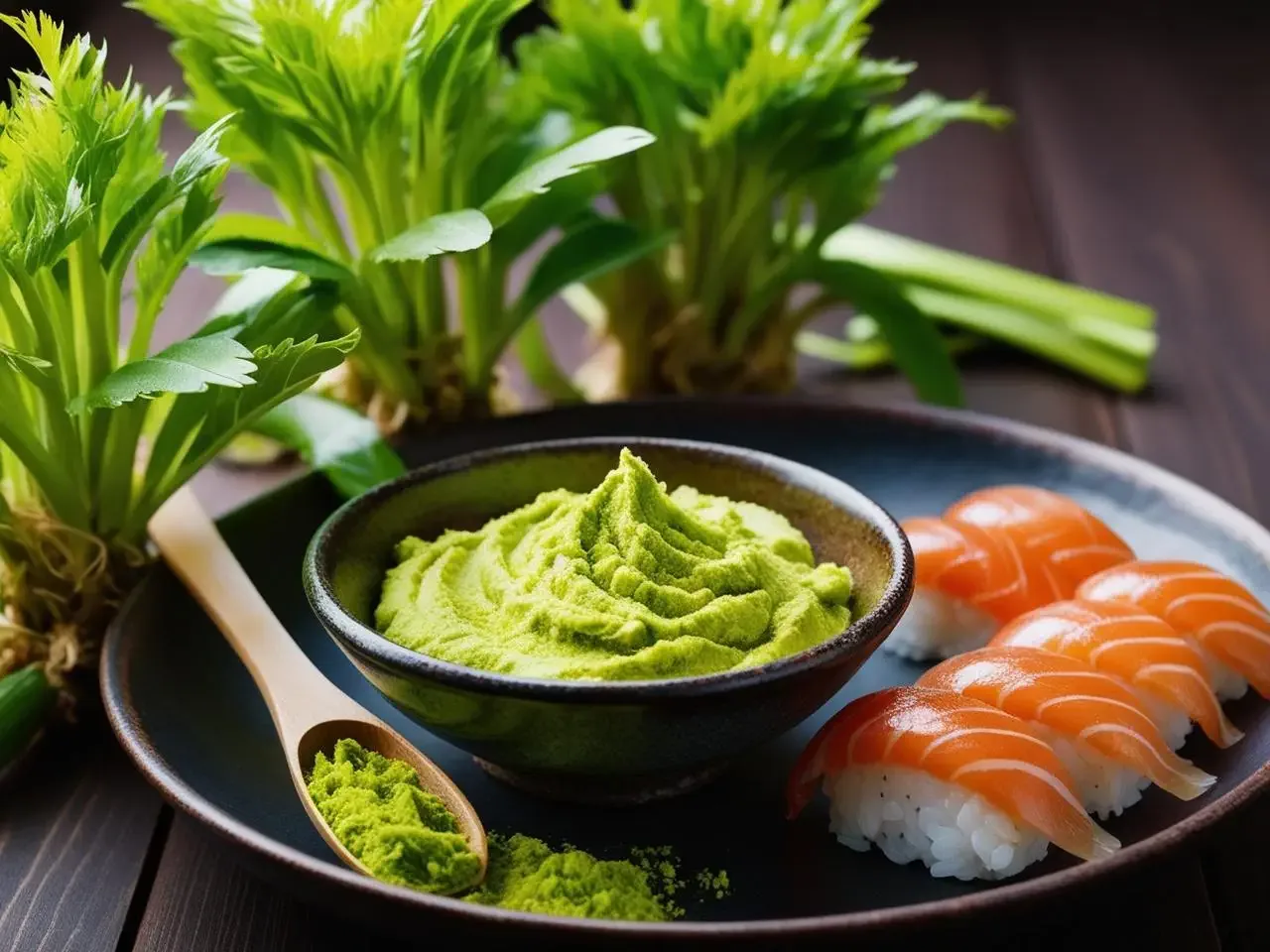
Grate fresh wasabi rhizome using a sharkskin or micro-perforated grater, and serve within 20 minutes before volatile pungent oils oxidize.
Equipment Summary
Essential equipment:
- Water chiller: 42gal 1/10 HP Water Chiller for Hydroponics SystemView on Amazon for reservoirs up to 40 gallons
- pH/EC meter: Bluelab Combo MeterView on Amazon for rapid simultaneous readings
- Humidity controller: Inkbird IHC-200 controllerView on Amazon paired with a cool-mist humidifier
- Grow light: Low-wattage dimmable LED fixture, such as the Spider Farmer SE3000 LED Grow LightView on Amazon or Mars Hydro TS 1000View on Amazon
- Nutrients: General Hydroponics Flora SeriesView on Amazon supplemented with CaliMagicView on Amazon
Order rhizomes early, as nursery availability is seasonal. Run your chiller and pump for several days prior to planting to ensure temperature stability at 55°F–60°F.
If you are new to water culture systems, build experience first with our complete guide to hydroponics for beginners and review common hydroponic mistakes to avoid.
Frequently Asked Questions
Why is wasabi so difficult to grow hydroponically?
It requires cold water temperatures (50°F to 55°F) needing active refrigeration, a narrower pH window than most crops, low light, and a long 18 to 24 month growth period. Sustaining these precise conditions for two years without causing root rot or heat stress requires strict climate control.
What system is best for growing wasabi?
A flood-and-drain (ebb and flow) system filled with gravel or LECA mimics the natural rocky stream beds where wild wasabi grows best.
How long does it take to grow wasabi?
Wasabi rhizomes take 18 to 24 months to reach harvestable size. Leaves and petioles can be taken from around month 8 or 9; they are edible, mildly spicy, and provide early harvests while waiting for the rhizome to mature.
Is wasabi a profitable crop?
Potentially, yes. Fresh wasabi rhizome sells for $70–$100 per pound at wholesale and significantly more direct-to-consumer. The economics work if you maintain consistent quality, but the long grow cycle and sensitivity make it a demanding crop. Our [hydroponic farming profitability analysis](/blog/is-hydroponic-farming-profitable-a-cost-analysis) covers the financial details.
Why is real wasabi so rare and hard to get?
Real wasabi (*Wasabia japonica*) requires cool running water, partial shade, and a stable climate naturally found in limited mountain valleys in Japan. Commercial replication is equipment-intensive, and the 18 to 24 month growth cycle constrains supply. Fresh rhizome also has a short shelf life. Consequently, roughly 95% of 'wasabi' served globally is dyed horseradish paste.
Is wasabi expensive to grow?
Yes. Starter rhizomes cost $15–$30 each. You will need a water chiller ($100–$300), a quality pH/EC meter ($50–$200), and a cool grow space. Long-term electricity and maintenance over 18–24 months add to overall input costs.
Does wasabi grow back?
Yes, if harvested carefully. Cut the rhizome cleanly from the base of the plant, leaving the root mass and side shoots intact. Replant in the same system and the plant typically produces new rhizome growth from remaining nodes, though the second crop is often smaller.
Can you grow wasabi in aquaponics?
Yes, with caveats. Fish waste often pushes EC higher than wasabi prefers, and standard fish tanks run warmer than wasabi's ideal range. It is possible with cold-water species like trout, but standalone hydroponics provides far better parameter control.
Do wasabi plants multiply?
Yes. Mature plants produce offsets (side shoots) from the base of the rhizome. These can be separated and replanted once they form leaves and roots. This is the most reliable propagation method, avoiding poor seed germination rates entirely.
Does real wasabi only grow in Japan?
No, it is grown commercially in New Zealand, Canada, the UK, and the Pacific Northwest. Hydroponically, it can be grown anywhere with adequate chiller and climate controls.
Can you eat wasabi leaves?
Yes. Wasabi leaves carry a mild, peppery heat. Use them fresh in salads, wilt them in stir-fries, or pickle them in rice vinegar. Healthy leaves are deep green and firm; yellowing or limp leaves indicate root issues.
Our Amazon Storefront
Browse all our recommended tools & supplies
Everything we personally use and trust, hand-picked for gardeners like you.

I've been running DWC and Kratky systems for several years and write about what actually works, not textbook theory. Follow along for honest product reviews, practical guides and real grow results.