As an Amazon Associate, I earn from qualifying purchases. Some links in this article are affiliate links, if you buy through them I may earn a small commission at no extra cost to you.
Quick Summary
- Lighting Power: Use PAR and PPFD values to measure the light intensity reaching your plants.
- LED Efficiency: Invest in custom-spectrum LEDs for maximum photosynthesis and minimal heat.
- Spectrum Tuning: Use blue light for vegetative leaf growth and red/far-red light to trigger heavy blooms.
- CO2 Integration: Supplement grow spaces with carbon dioxide to allow plants to process higher light levels.
- Reflective Materials: Line grow rooms with Mylar or white panda film to bounce light back onto lower foliage.
Optimizing lighting spectra, intensity, and daily photoperiod drives dramatic increases in indoor crop yield. In controlled environment agriculture, photon delivery determines carbohydrate synthesis rates. Selecting the right lighting architecture (LED, HID, or fluorescent) depends on canopy area, thermal dissipation constraints, and electrical operating costs.
Photobiological Fundamentals in Controlled Environments
Plants capture photon energy through photosynthetic pigments (chlorophyll a, chlorophyll b, and carotenoids). Evaluating fixtures requires looking beyond human-eye lumens and focusing on plant-usable metrics:
- PAR (Photosynthetically Active Radiation): The spectral waveband from 400nm to 700nm that drives photosynthesis.
- PPFD (Photosynthetic Photon Flux Density): The number of micromoles of photosynthetically active photons hitting a one-square-meter canopy area per second (µmol/m²/s).
Leafy greens reach photosynthetic saturation at 250–400 µmol/m²/s. Heavy-feeding fruiting crops like indeterminate tomatoes, bell peppers, and cucumbers require 600–900 µmol/m²/s to reach maximum harvest weight.
Advanced Lighting Technologies
1. Light Emitting Diodes (LED)
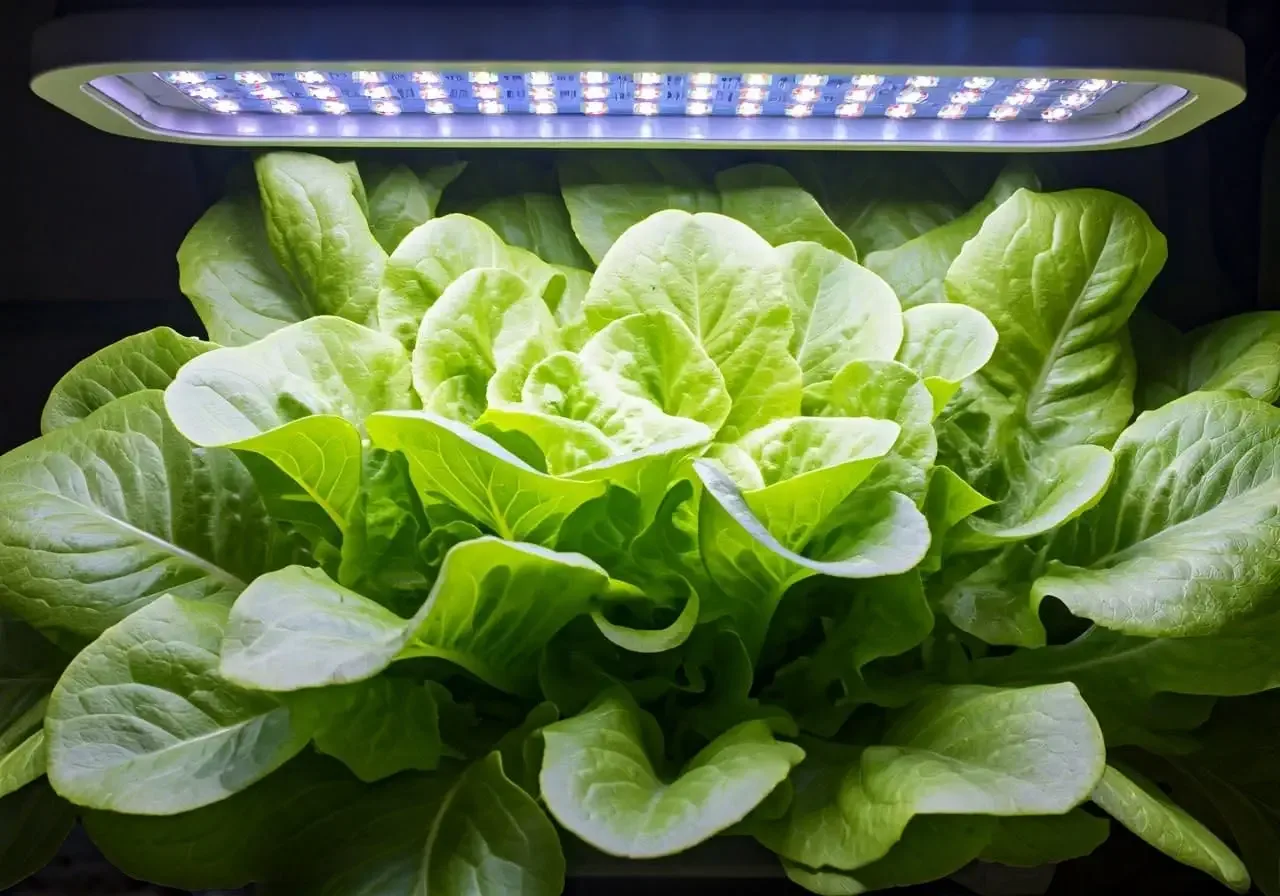
Solid-state LED technology dominates indoor agriculture due to superior electrical efficiency and low thermal output. Quality horticultural LED bars achieve 2.3–2.8 µmol/J (micromoles of photons per joule of energy), consuming roughly 40% to 60% less electricity than equivalent High-Pressure Sodium (HPS) fixtures.
- Targeted Emission: Full-spectrum arrays combine 4,000K white base diodes with supplemental 660nm deep-red and 730nm far-red chips.
- Thermal Dissipation: Heat radiates upward off aluminum backplates rather than beaming infrared heat onto leaf surfaces. This allows growers to position fixtures 12 to 18 inches above canopies without scorching leaf margins.
- Operational Footprint: Suitable for multi-tier vertical shelving, grow tents, and commercial indoor facilities where air-conditioning loads represent a major cost.
The VIVOSUN LumaLight 100WView on Amazon provides full-spectrum output and app-based dimming for a 2×2 foot canopy. For tight equipment budgets, the FECiDA 6000 Lumen panelView on Amazon offers dimmable performance with daisy-chain power links.
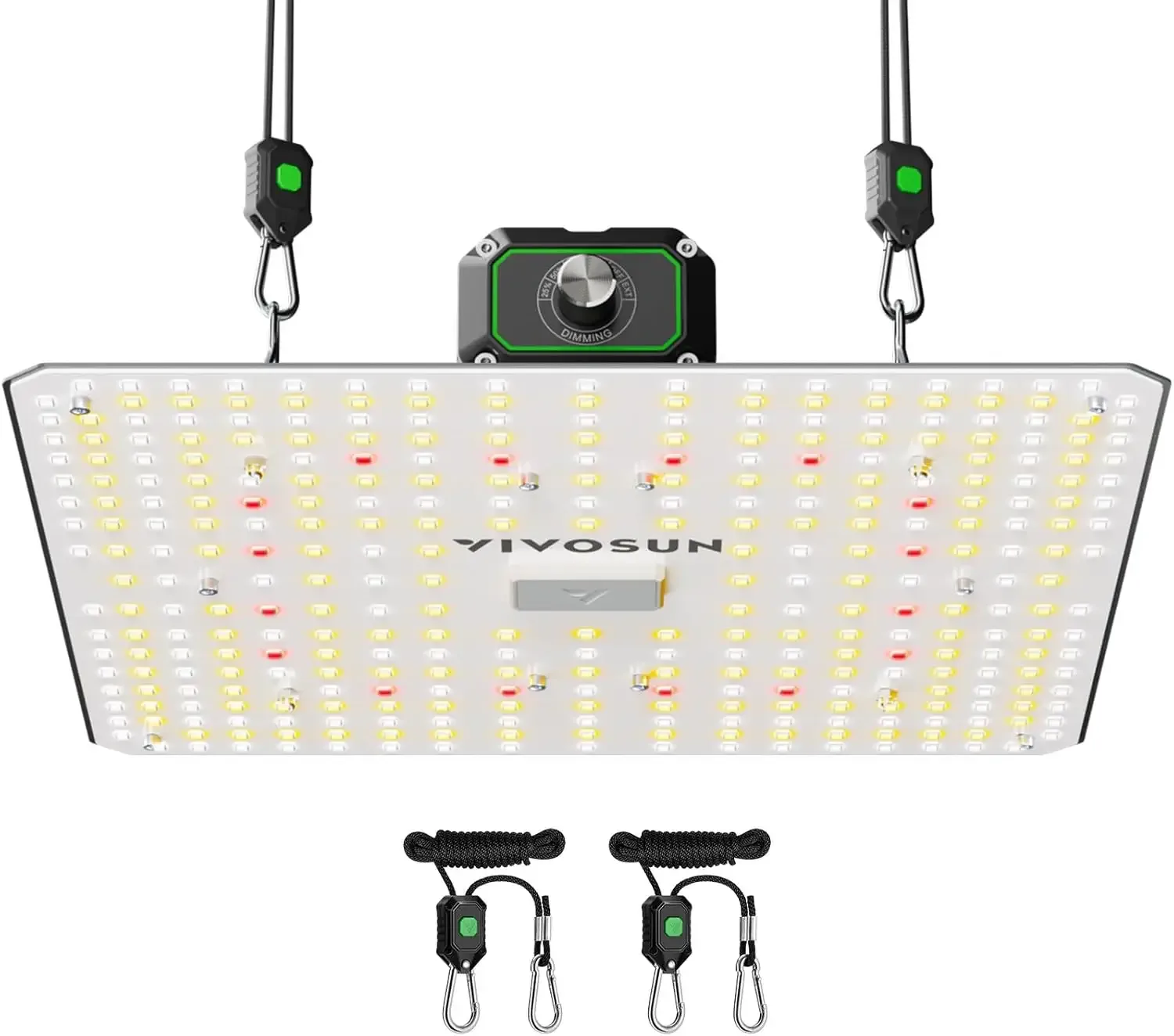
VIVOSUN LumaLight 100W LED Grow Light
100W full-spectrum LED with app-based scheduling, 2×2 ft coverage and far-red LEDs for full-cycle growing from seedling through flower.
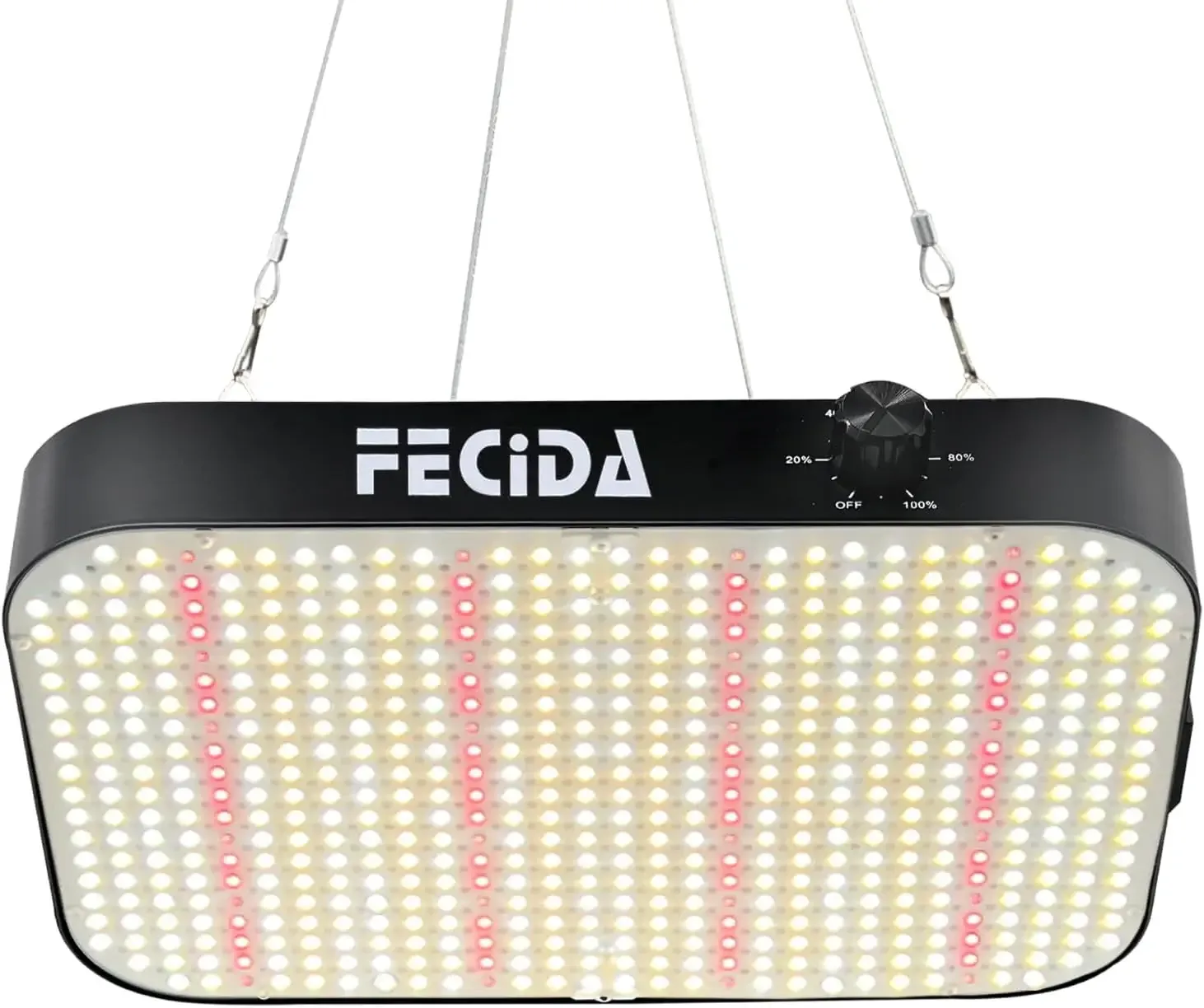
FECiDA 6000 Lumen Dimmable Grow Light
Full spectrum panel with red and blue LEDs, adjustable brightness and daisy chain function. Solid PPFD coverage for small hydroponic gardens at a budget price.
2. High-Intensity Discharge (HID)
High-Intensity Discharge systems, including Metal Halide (MH) for vegetative growth and High-Pressure Sodium (HPS) for flowering, remain established in commercial greenhouse supplemental lighting due to intense canopy penetration.
- Photon Output: A single 1,000W double-ended HPS fixture delivers high photon flux across large 5×5 foot canopies.
- Thermal Burden: A 1,000W fixture produces roughly 3,400 BTU/hr of ambient heat. Enclosed rooms require high-cfm exhaust fans or dedicated split-system air conditioning to prevent canopy heat stress.
- Efficacy: Efficiency averages 1.0–1.4 µmol/J, requiring higher electrical draw per mole of photons delivered.
3. Fluorescent Fixtures (T5 and CFL)
Fluorescent tubes offer low-intensity, diffuse illumination suited for young plant tissue:
- Propagation and Clones: Four-tube High-Output (HO) T5 fixtures generate 180–220 µmol/m²/s at 4 inches. Low heat prevents unrooted cuttings from drying out.
- Output Limits: Photons scatter quickly; light drops below 120 µmol/m²/s at 12 inches, making fluorescents unsuitable for mature fruiting canopies.
Spectral Tuning Across Growth Phases
Photosynthetic response varies by wavelength:
- Blue Photons (400–500nm): Regulate stomatal opening, trigger cryptochrome receptors, and suppress stem elongation, keeping vegetative foliage dense and robust.
- Red Photons (600–700nm): Align with peak chlorophyll absorption peaks, maximizing sugar synthesis during vegetative and flowering stages.
- Far-Red Photons (700–750nm): Activate phytochrome photo-equilibrium (the Emerson Effect). Combining far-red with red photons increases overall photosynthetic rate and can accelerate flowering onset.
When coordinating lighting with advanced hydraulic systems like aeroponics or NFT, spectral optimization accelerates growth cycles.
Advanced Lighting Strategies
1. Photoperiod Management
Maintain strict dark intervals. Many fruiting crops initiate flower production in response to 12 hours of uninterrupted darkness. Light leaks as faint as 1 lux during the dark cycle can disrupt flowering hormones and cause hermaphroditism.
2. Progressive Intensity Damping
Adjust fixture output as plant canopies expand:
- Seedlings: 200–300 µmol/m²/s (25–40% power)
- Vegetative: 400–600 µmol/m²/s (60–80% power)
- Reproductive / Bloom: 600–900 µmol/m²/s (100% power)
Ramping intensity gradually protects young chloroplasts from photo-oxidative bleaching.
3. CO₂ Enrichment
At ambient atmospheric carbon dioxide levels (~400 ppm), leaves reach light saturation around 600–700 µmol/m²/s. Elevating CO₂ to 1,000–1,200 ppm in enclosed grow areas enables crops to process 900–1,100 µmol/m²/s PPFD productively, boosting biomass yields by 20% to 30%. Ensure high dissolved oxygen in the reservoir as outlined in the importance of air pumping in hydroponics to support elevated metabolic demand.
4. Diffuse Reflective Surfaces
Line grow room walls with 95% reflective Mylar or opaque white panda film. Reflecting scattered photons back into side branches increases lower canopy PPFD by 15% to 20% without consuming additional electricity. If you encounter growth anomalies under high-intensity fixtures, read our troubleshooting guide for advanced hydroponic systems.
System Selection Summary
For residential growers and grow tent operators, full-spectrum LED panels with passive heatsinks provide the highest photon efficacy, lowest heat generation, and lowest monthly electrical overhead.
Editor’s Note: Parts of this guide were structured and optimized with the assistance of AI, then thoroughly reviewed, edited and expanded with first-hand growing experience by our author Raymond to ensure practical, real-world accuracy.
Frequently Asked Questions
What do PAR and PPFD mean in grow lighting?
Photosynthetically Active Radiation (PAR) designates the 400–700nm waveband plants utilize for photosynthesis. Photosynthetic Photon Flux Density (PPFD) measures the density of micromoles of photons landing per square meter per second (µmol/m²/s).
Should I change light spectrums for different plant stages?
Yes. Plants utilize cool blue wavelengths (400–500nm) during vegetative stages to produce compact, thick foliage, and warm red wavelengths (600–700nm) to stimulate heavy flowering and fruit set.
How far should grow lights be from plants?
Position high-efficiency LED panels 12 to 24 inches above the canopy. High-Intensity Discharge (HID) lamps require 18 to 36 inches of clearance to prevent thermal leaf scorch.
How many hours of light do hydroponic plants need per day?
Vegetative crops thrive under 16 to 18 hours of daily light. Photoperiod-sensitive fruiting crops transition to flower when switched to a 12-hour light and 12-hour uninterrupted dark schedule.
Our Amazon Storefront
Browse all our recommended tools & supplies
Everything we personally use and trust, hand-picked for gardeners like you.

I've been running DWC and Kratky systems for several years and write about what actually works, not textbook theory. Follow along for honest product reviews, practical guides and real grow results.