As an Amazon Associate, I earn from qualifying purchases. Some links in this article are affiliate links, if you buy through them I may earn a small commission at no extra cost to you.
Quick Summary
- Vertical Wall Garden: Mount a panel or tower system on an empty wall to grow herbs and greens without sacrificing floor space.
- Kitchen Counter Herb Garden: A compact countertop kit puts basil, cilantro, and chives within arm’s reach while you cook.
- Aquaponics Fusion Garden: Pair a fish tank with a grow tray; fish waste feeds the plants, while plant roots filter the water.
- Hanging Hydroponic Planters: Suspend wicking planters from the ceiling near a sunny window for cascading greens or cherry tomatoes.
- Bookshelf Hydroponics: Convert unused shelving into a tiered grow space with LED strips on each shelf.
- Window Hydroponic Farm: Use natural sunlight by placing suction-cup containers directly on a large window pane.
- Hydroponic Coffee Table Garden: Grow low herbs under a glass tabletop for a living conversation piece.
- Hydroponic Tower for Fruit: A circulating vertical tower handles strawberries and blueberries in a compact footprint.
- Herb Garden in Glass Containers: Repurpose clear glass jars with nutrient solution for a minimalist counter setup.
- Smart Hydroponic Garden: App-connected systems with automated lights, water reminders, and circulation fans suit a hands-off routine.
What is an indoor hydroponic garden? An indoor hydroponic garden is a soil-free growing system that uses nutrient-rich water and LED lights to cultivate plants inside a home.
Hydroponic gardening lets you grow fresh food indoors without garden beds or outdoor space. A well-planned setup can serve as home decor while supplying weekly harvests of herbs and greens. Here are ten practical setups to fit different rooms and budgets.
At a Glance: 10 Creative Hydroponic Garden Ideas
| Idea | Setup Type | Best Plants to Grow |
|---|---|---|
| 1. Vertical Wall Garden | Wall-mounted | Herbs, lettuce, strawberries |
| 2. Kitchen Counter Herb Garden | Countertop | Basil, cilantro, thyme, chives |
| 3. Aquaponics Fusion Garden | Hybrid | Lettuce, leafy greens, herbs |
| 4. Hanging Hydroponic Planters | Suspended | Cherry tomatoes, spinach, strawberries |
| 5. Bookshelf Hydroponics | Tiered Shelving | Microgreens, herbs, small leafy greens |
| 6. Window Hydroponic Farm | Suction-cup | Kale, arugula, lettuce |
| 7. Hydroponic Coffee Table Garden | Furniture Integrated | Low-growing herbs, lettuce |
| 8. Hydroponic Tower for Fruit | Vertical Circulating | Strawberries, blueberries |
| 9. Herb Garden in Glass Containers | Repurposed | Basil, mint, cilantro, parsley |
| 10. Smart Hydroponic Garden | Automated System | Mix of tomatoes, herbs, leafy greens |
1. Vertical Wall Garden
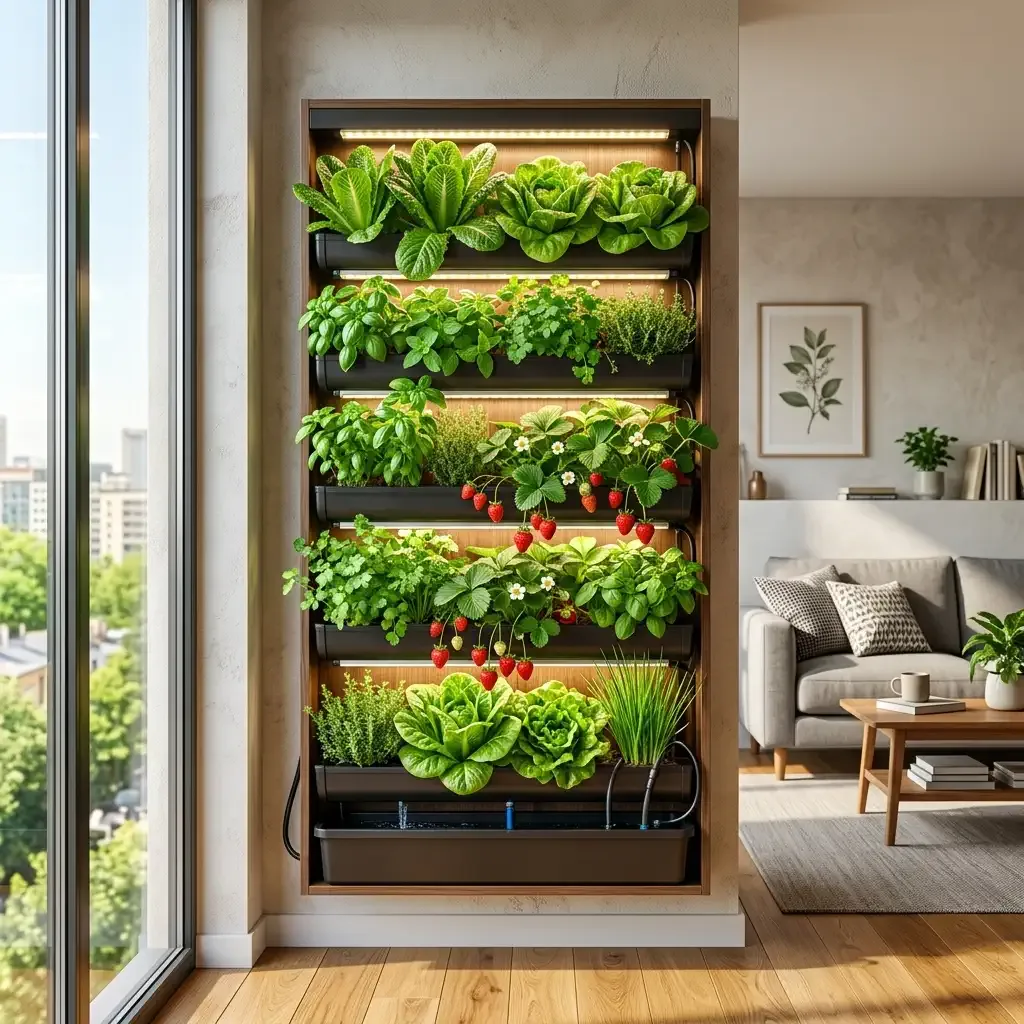
Mounting channels vertically turns an empty wall into productive growing space. These systems use wall-mounted panels or towers where nutrient solution flows through channels to feed bare roots without soil or loose potting mix.
Best for
Herbs, lettuce, and strawberries.
Pro Tip
Pair a drip irrigation system with LED grow strips for setups mounted away from windows. A four-panel tower fits most standard walls and typically costs $80–$150 for a basic kit.
2. Kitchen Counter Herb Garden
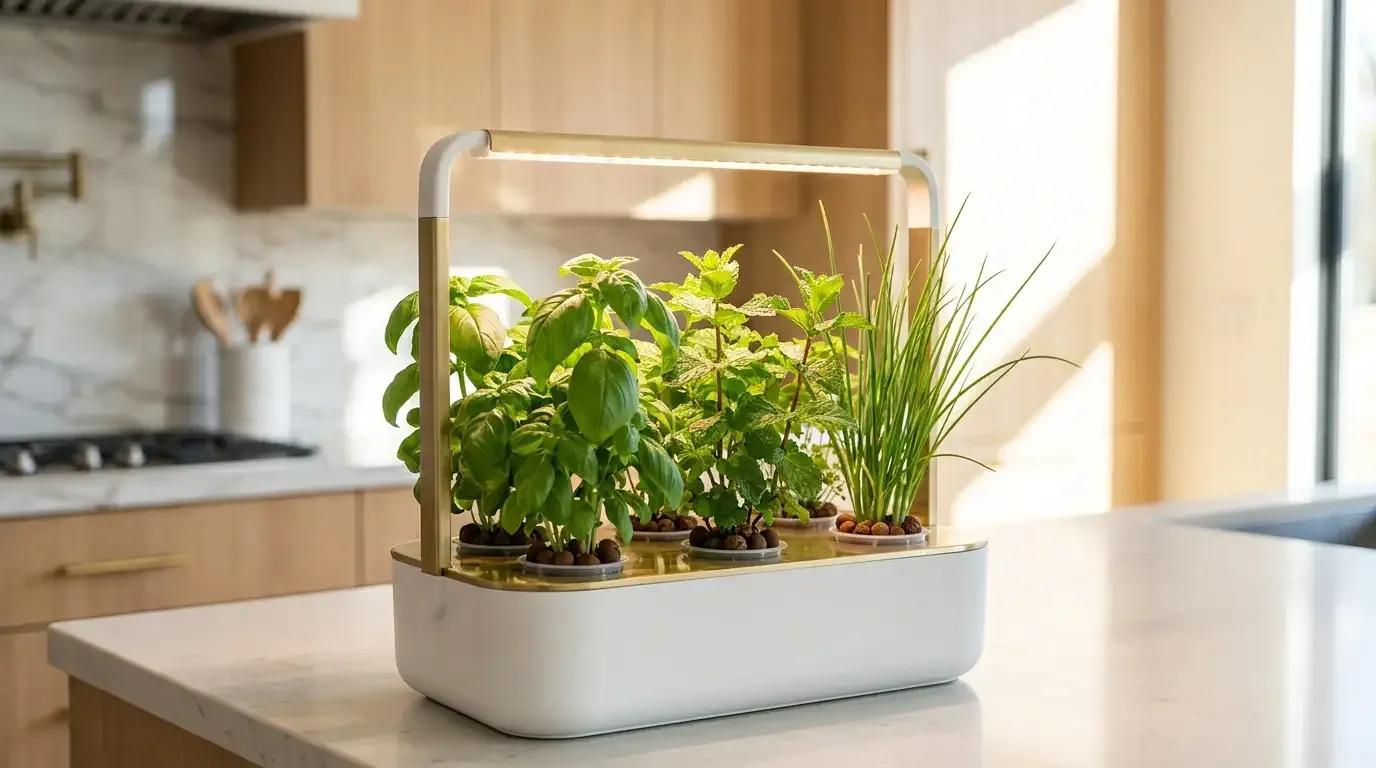
A countertop hydroponic system puts fresh herbs right next to your cooking prep station. Most retail kits plug in and run out of the box with automated lighting cycles.
Best for
Basil, cilantro, thyme, and chives.
Pro Tip
Choose a pre-made kit or build a DIY setup using mason jars and a small air pump. Not sure which herbs handle early attempts best? Our guide to the best hydroponic plants for beginners breaks down which varieties tolerate inconsistent nutrient levels.
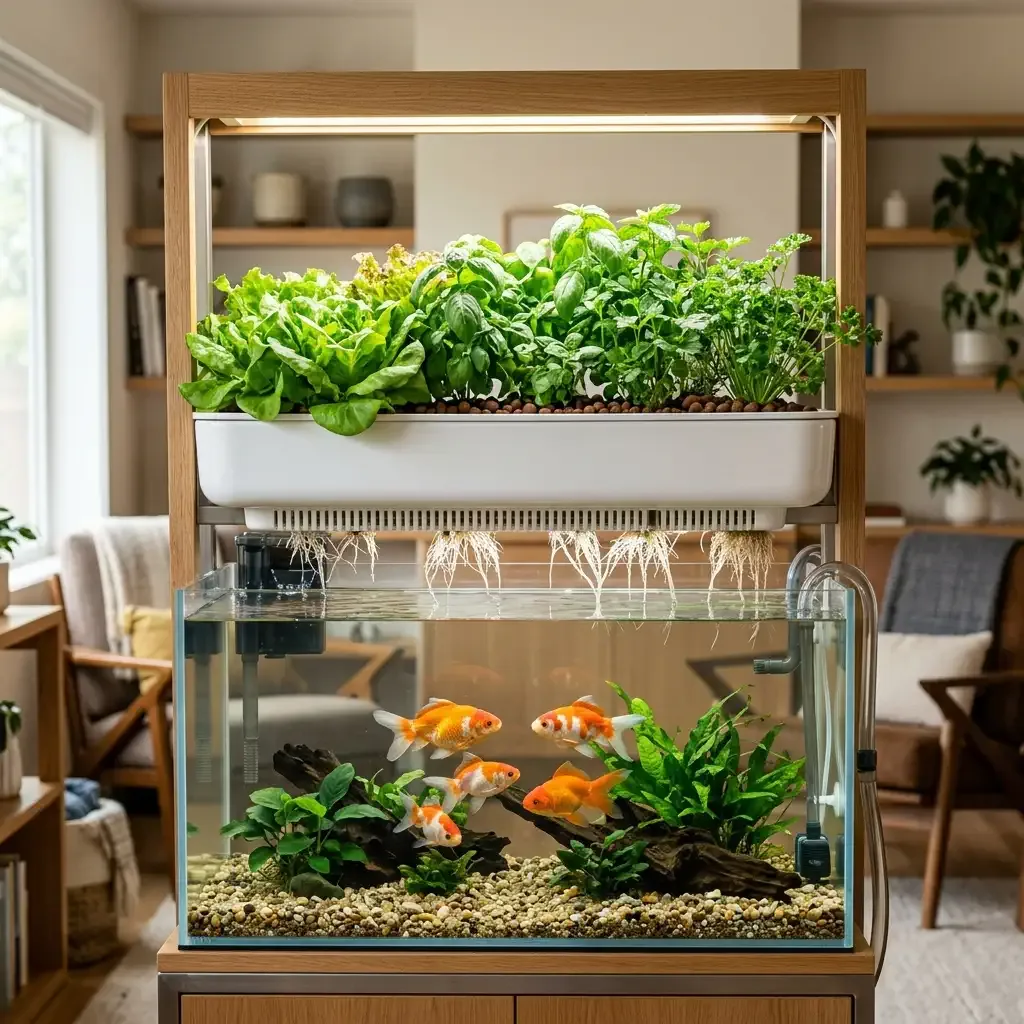
3. Aquaponics Fusion Garden
Aquaponics pairs hydroponics with freshwater fish tanks. A fish tank sits below a grow bed; fish waste provides organic nutrients for the plants above, and the root bed filters the water before it cycles back to the tank. This closed cycle cuts down manual nutrient dosing.
Best for
Lettuce, leafy greens, and herbs.
Pro Tip
Start with hardy species like goldfish or tilapia. A 20-gallon tank provides a stable starting volume that supports a single grow bed without requiring complex water chemistry management.
4. Hanging Hydroponic Planters
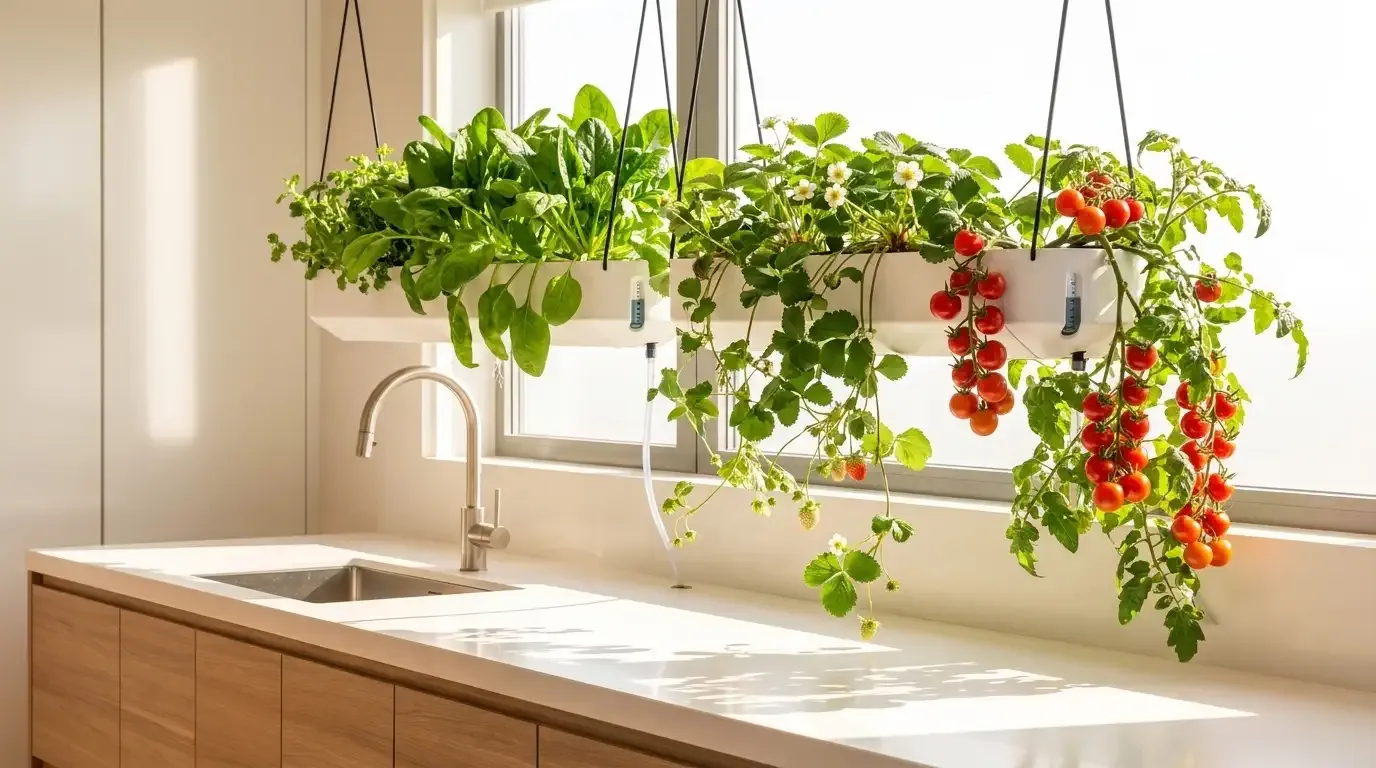
Hanging wicking planters suspend crops from ceiling hooks near windows, freeing up floor and counter space. Cascading greens and determinate cherry tomatoes perform particularly well here.
Best for
Cherry tomatoes, spinach, and strawberries.
Pro Tip
Position hanging planters near a south-facing window whenever possible. If natural light runs low, clip-on LED grow lights pointed downward provide supplemental illumination.
5. Bookshelf Hydroponics
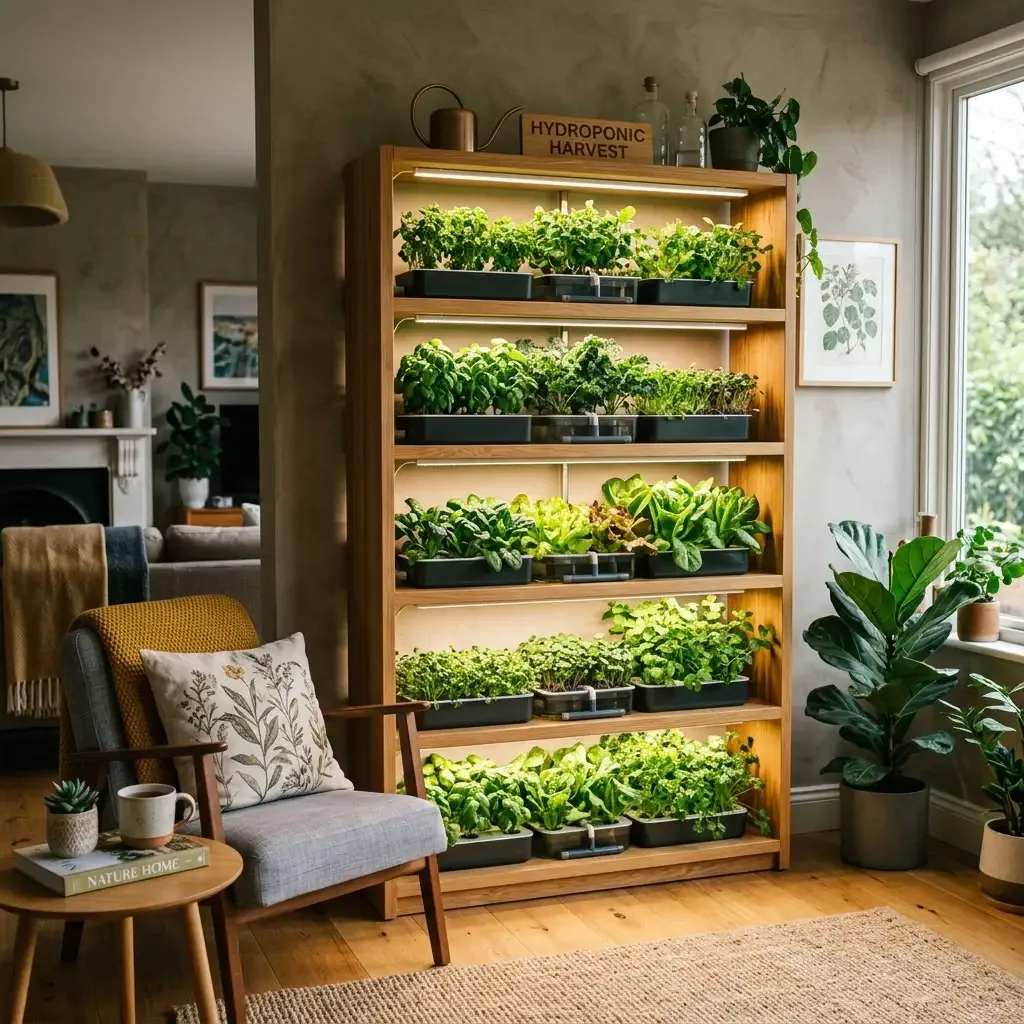
Convert an unused bookshelf into a multi-tier garden by attaching LED strip lights beneath each shelf and placing net-pot reservoirs below them. The standard vertical clearance of 12–18 inches accommodates microgreens and compact herbs.
Best for
Microgreens, herbs, and small leafy greens.
Pro Tip
White or light-colored shelving surfaces bounce stray light back toward leaves, improving overall efficiency. Plug the light strips into an inexpensive outlet timer to maintain steady 14-to-16-hour light cycles.
6. Window Hydroponic Farm
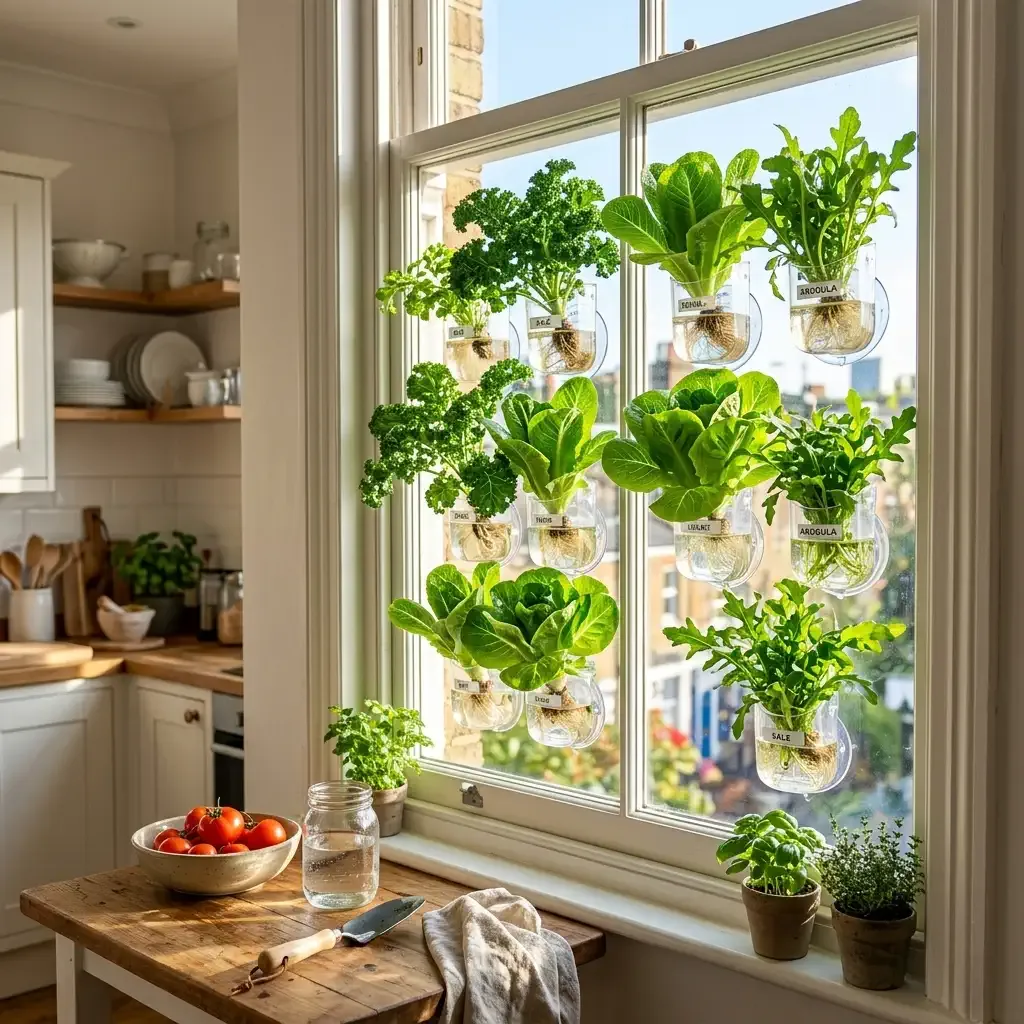
Placing suction-cup planters on large window panes lets crops use natural sunlight without mounting hardware or wall brackets.
Best for
Kale, arugula, and lettuce.
Pro Tip
South-facing or east-facing windows supply the most dependable day-long light. If you plan your varieties around the seasons, our cool season vs. warm season crop guide helps match current indoor temperatures to optimal varieties.
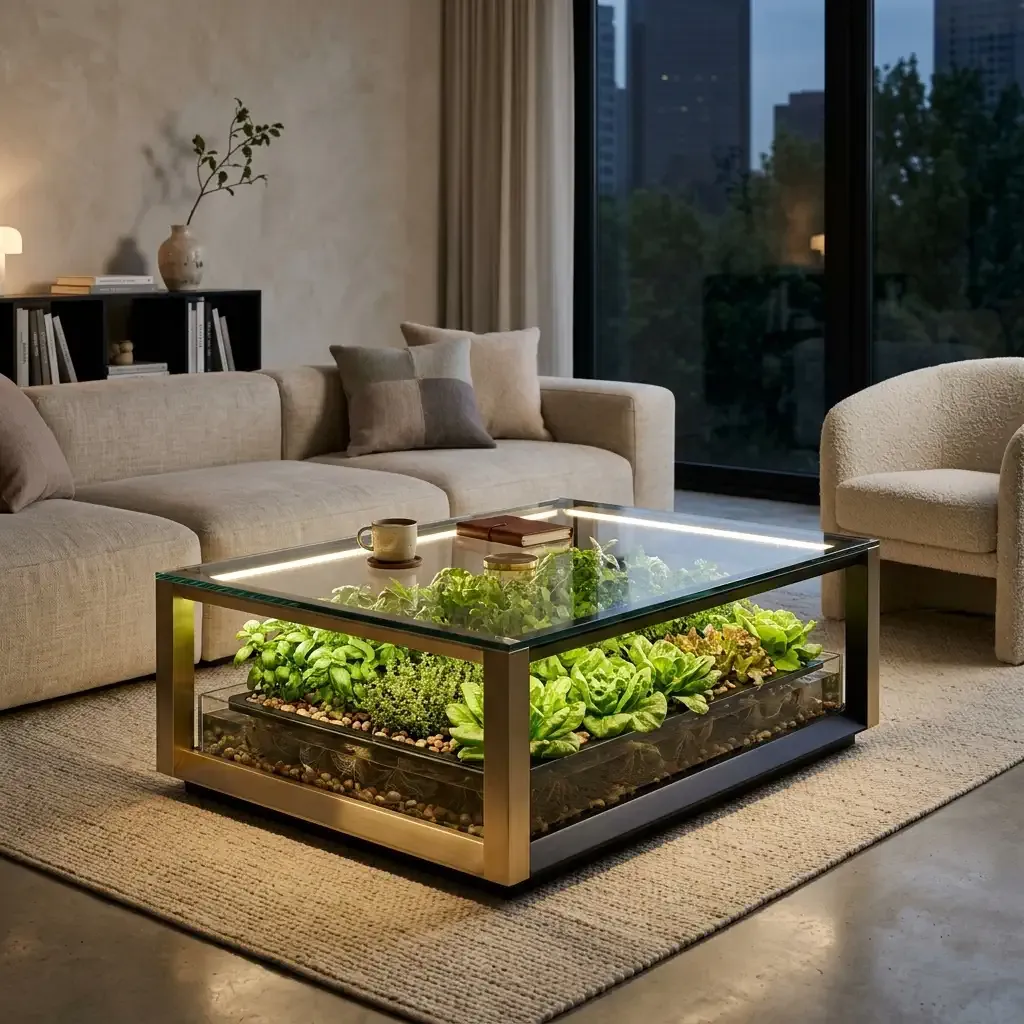
7. Hydroponic Coffee Table Garden
A glass-topped coffee table with a shallow reservoir built into the base turns indoor agriculture into functional furniture. Crops grow in the basin below the glass top, lit by discrete LED fixtures mounted along the inner rim.
Best for
Low-growing herbs and compact butterhead lettuce.
Pro Tip
Use water-resistant LED light strips rated for humid environments. Repurposing a deep shadow-box table typically requires $40–$80 in supplemental parts.
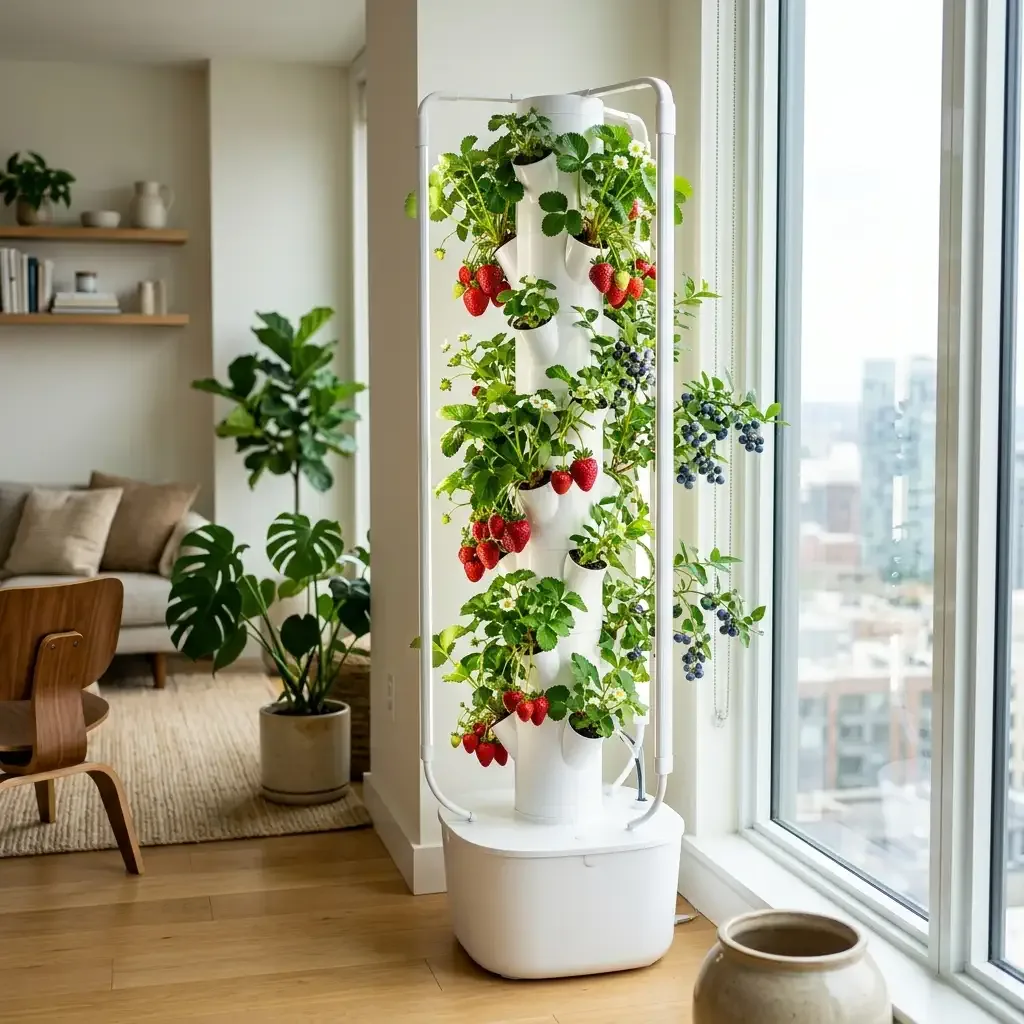
8. Hydroponic Tower for Fruit
Vertical circulating towers let you grow strawberries and dwarf berries inside tight footprints. A submersible pump lifts nutrient solution from the bottom reservoir to the top manifold, where it cascades through root cups back down.
Best for
Strawberries and blueberries.
Pro Tip
Dwarf citrus requires deep root systems and heavy structural support that vertical columns cannot accommodate; keep fruit trees in dedicated deep containers instead. For strawberries, rotate the tower weekly or add vertical LED bars so all sides receive balanced light.
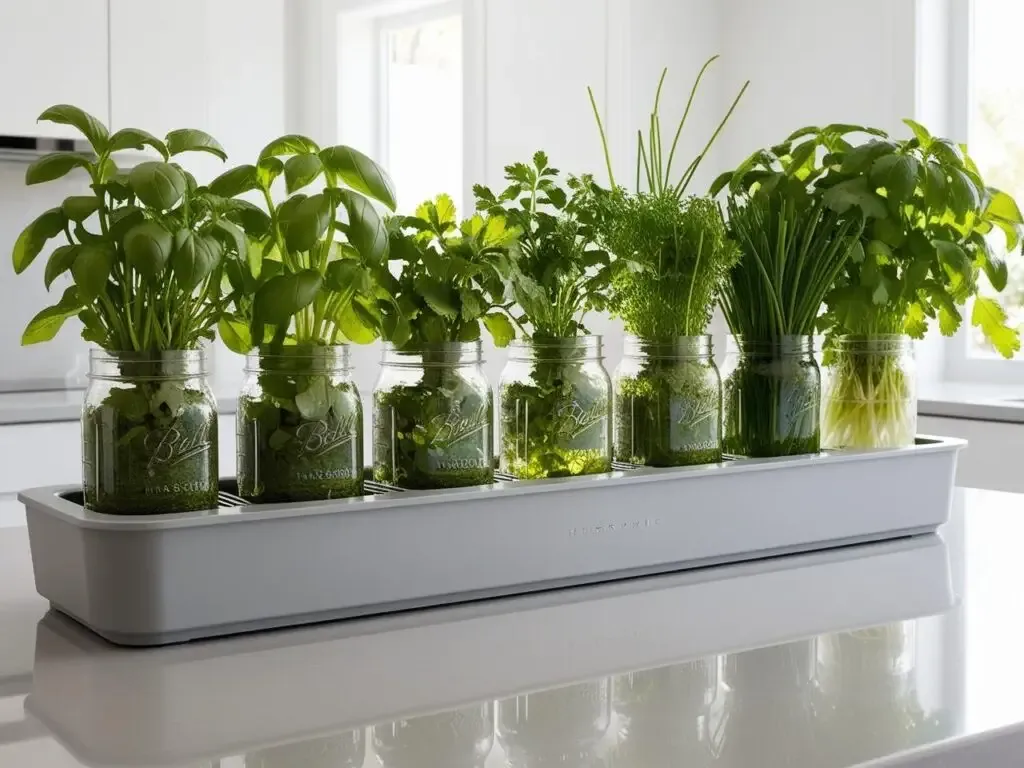
9. Hydroponic Herb Garden in Glass Containers
Wide-mouth mason jars can serve as passive Kratky reservoirs for kitchen herbs. Each jar holds a 2-inch or 3-inch net cup at the rim, suspending plant roots into nutrient solution without pumps or bubblers.
Best for
Basil, mint, cilantro, and parsley.
Pro Tip
Wrap jars in dark tape or opaque sleeves to block ambient light and prevent green algae blooms in the water. For more options that thrive in compact containers, consult our list of 10 herbs that grow easily hydroponically indoors.
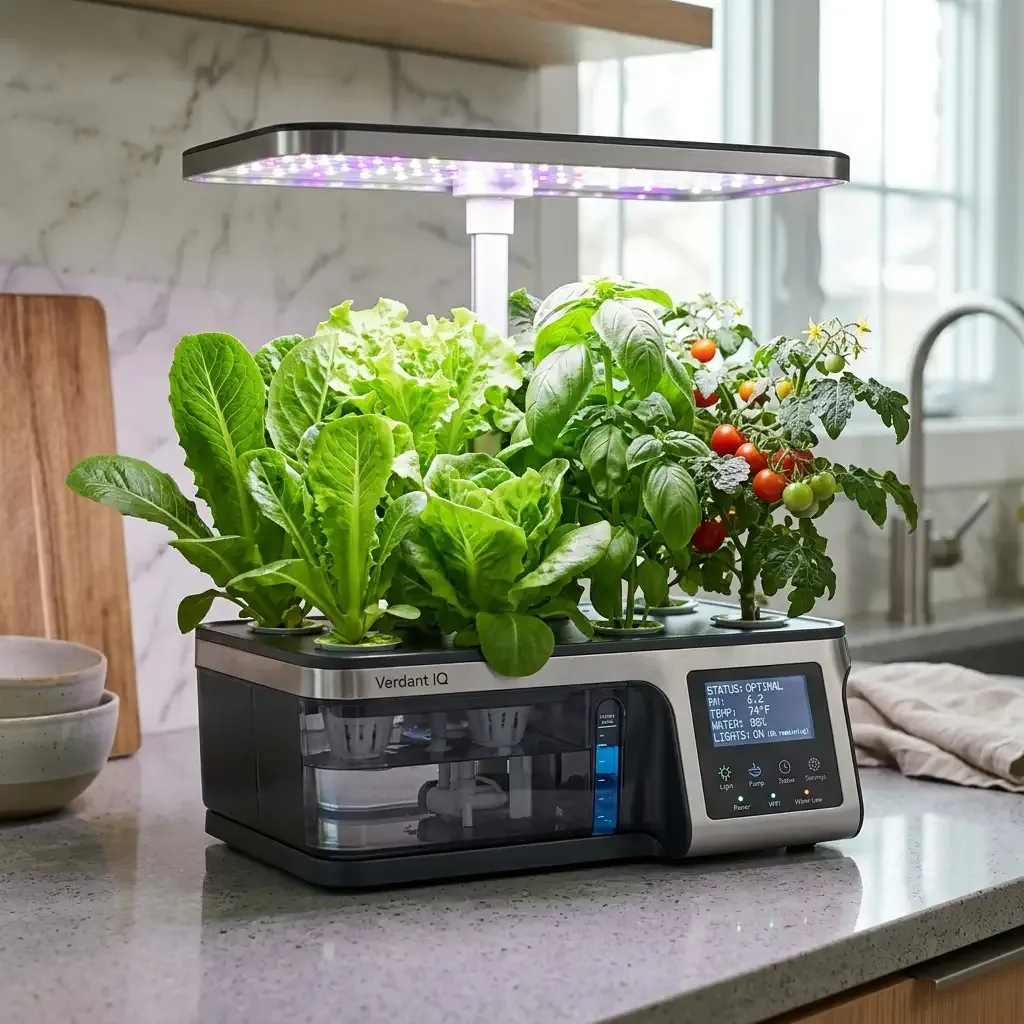
10. Smart Hydroponic Garden
For automated monitoring, a smart hydroponic garden systemView on Amazon integrates LED arrays, automated timers, and water sensors into a single chassis. Companion apps notify your phone when water levels drop or nutrient salts need replenishment, making them practical for frequent travelers.
Best for
Cherry tomatoes, culinary herbs, and leafy greens.
Pro Tip
If you are comparing multiple brands, our review of the best hydroponic systems for apartments details pump noise, footprint, and maintenance requirements.
Which Setup Fits Your Space?
Choose a setup that matches your living space and available maintenance time:
- Renting an apartment or tight on counter space: Choose a small countertop kit or DIY mason jars. Both cost under $30 to build, stay portable, and require no drilling.
- Open wall space available: A vertical wall panel maximizes yield per square foot of floor space and creates an attractive focal point.
- Hands-off routine preferred: An automated smart garden handles light scheduling and warns you when reservoir levels dip.
- Seeking a self-contained biological system: Aquaponics requires higher upfront tuning but establishes a sustainable fish-plant cycle once biological filters mature.
Start with one small unit, observe water consumption for two weeks, and scale outward as your experience grows.
Editor’s Note: Parts of this guide were structured and optimized with the assistance of AI, then thoroughly reviewed, edited and expanded with first-hand growing experience by our author Raymond to ensure practical, real-world accuracy.
Frequently Asked Questions
Can I build an indoor hydroponic garden on a budget?
Yes. Passive setups like the Kratky method run inside reused glass jars, food-grade plastic bins, or five-gallon buckets for under $20.
What plants are best for a bookshelf hydroponic system?
Compact leafy greens like butterhead lettuce and spinach, along with dwarf herbs like basil and parsley, fit standard bookshelf vertical clearances.
Do indoor hydroponic gardens attract bugs?
Indoor systems bypass soil pests entirely. Fungus gnats can occasionally breed if your grow medium stays waterlogged at the surface, but keeping top layers dry prevents them.
How much electricity does a smart hydroponic garden use?
Most countertop smart units draw under 40 watts for LED lights and small circulation pumps, adding roughly $2 to $3 per month to an electric bill.
Our Amazon Storefront
Browse all our recommended tools & supplies
Everything we personally use and trust, hand-picked for gardeners like you.

I've been running DWC and Kratky systems for several years and write about what actually works, not textbook theory. Follow along for honest product reviews, practical guides and real grow results.