As an Amazon Associate, I earn from qualifying purchases. Some links in this article are affiliate links, if you buy through them I may earn a small commission at no extra cost to you.
Quick Summary
- Row Covers: Protect crops from light frosts, heavy winds and destructive insect pests.
- Fabric Weights: Use lightweight spun-bond covers for insect blocks and heavy weights for winter warmth.
- Secure Edges: Anchor cover borders tightly with rocks, soil or metal staples to block wind.
- Ventilation: Remove covers on warm, sunny days to prevent heat stress and allow pollination.
- Sweetening Crops: Protect cool-season root vegetables to trigger starch-to-sugar development from light frosts.
As someone who has stood in a freezing garden at dusk, desperately pinning down spun-bond fabric as the wind whipped around my ears, I can tell you firsthand that frost protection is a game of margins. A few degrees of insulation are often all that stand between a bounty of crisp winter greens and a black, mushy bed of dead leaves. Row covers and frost cloths are not just optional accessories; they are essential season-extending tools that keep your garden productive when the air turns biting.
These breathable fabrics act as a thermal buffer, trapping radiating ground heat to create a protected microclimate around your crops. In this guide, we’ll cover the mechanics of fabric weights, detail the step-by-step installation process and list the best crops to shield so you can extend your harvest long after the first frost.
1. What Are Row Covers and Frost Cloths?
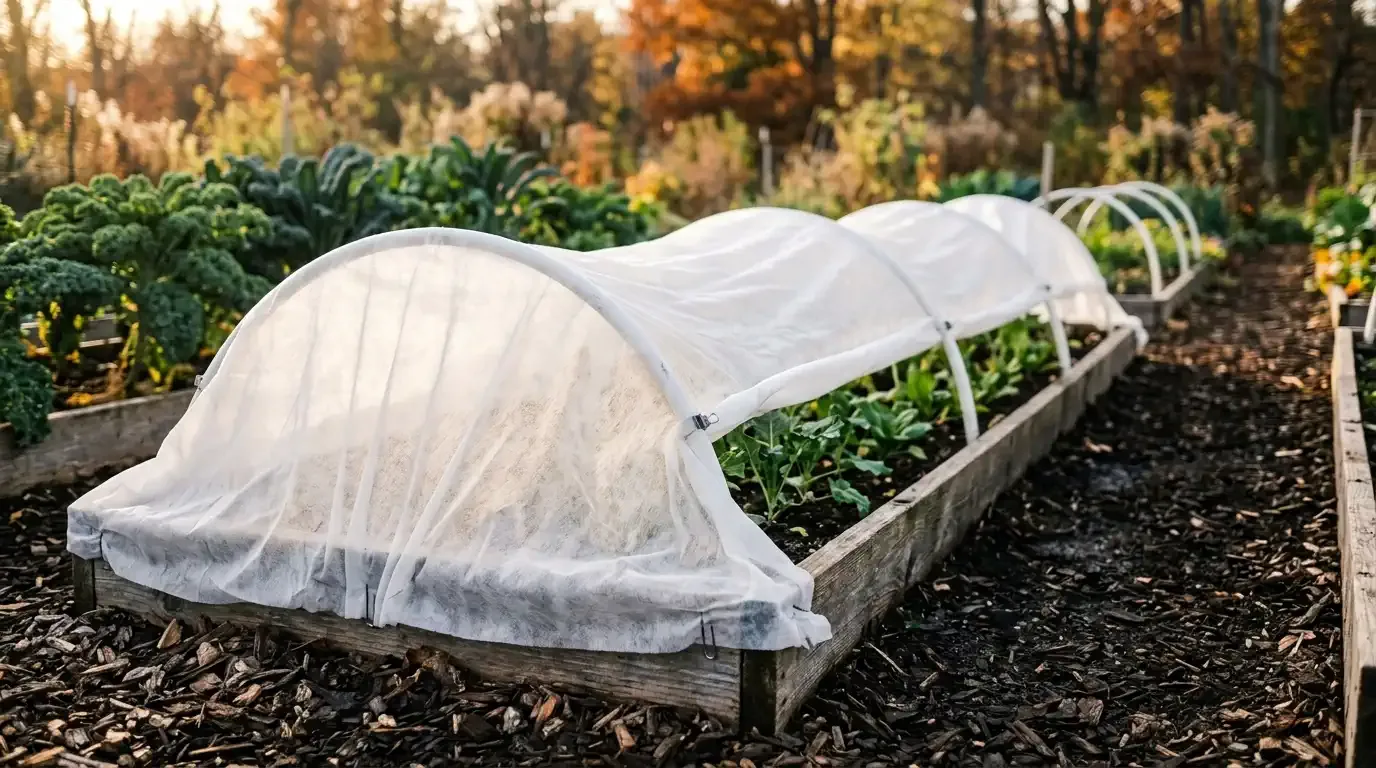
Row covers, also known as frost cloths or garden fleeces, are lightweight materials made primarily from spun-bonded polypropylene or polyester. They serve as protective barriers for your plants against cold temperatures, pests and harsh weather conditions. One of the best features of these covers is their permeability; they allow light and water to pass through while providing insulation against the elements. This means you can leave them over your plants day and night without worrying about blocking out sunlight or suffocating your crops. If you’re mapping out your cold-weather garden, our Fall Season Gardening hub and our list of essential crops to plant before frost cover the other preparation steps that pair with row covers.
I remember my first experience with row covers back in the spring of 2018 when I was desperate to save a dozen heirloom San Marzano tomato seedlings from an unexpected late-April freeze. The weather report forecast a sudden plunge to 29°F. I draped a 0.55 oz spun-bond row cover over the seedlings, anchoring the edges with bricks and holding my breath overnight. To my relief, they emerged completely unscathed the next morning, vibrant and green while my neighbor’s uncovered tomato seedlings were black and withered. That’s when I realized just how effective these simple tools could be.
2. Benefits of Using Row Covers
Using row covers comes with a plethora of benefits that every gardener should consider:
- Frost Protection: The primary reason most gardeners use these covers is for frost protection. They can help keep temperatures around your plants several degrees warmer than outside air temperatures, which can be critical during those chilly nights.
- Pest Deterrence: Not only do they shield against cold, but they also act as a barrier against pests like aphids and cabbage worms. I’ve had fewer pest problems since I started using them!
- Microclimate Creation: Row covers create a mini greenhouse effect that increases humidity and warmth around your plants, perfect for promoting growth in cooler months.
I once had a patch of tender Butterhead lettuce that was struggling and stunted in late October when nighttime temperatures dropped to a consistent 35°F. Within two weeks of covering the bed with a medium-weight row fabric, the lettuce rebounded, producing sweet, crisp leaves and doubling in size while uncovered control rows remained stunted and tough.
3. Types of Frost Cloths
When it comes to choosing frost cloths, there are generally three types based on weight:
- Lightweight: Weighing around 0.5 oz/yd², lightweight covers allow about 85–90% of light through. They are perfect for insect barriers in summer and protecting tender spring seedlings from light frosts down to 28°F without blocking sunlight.
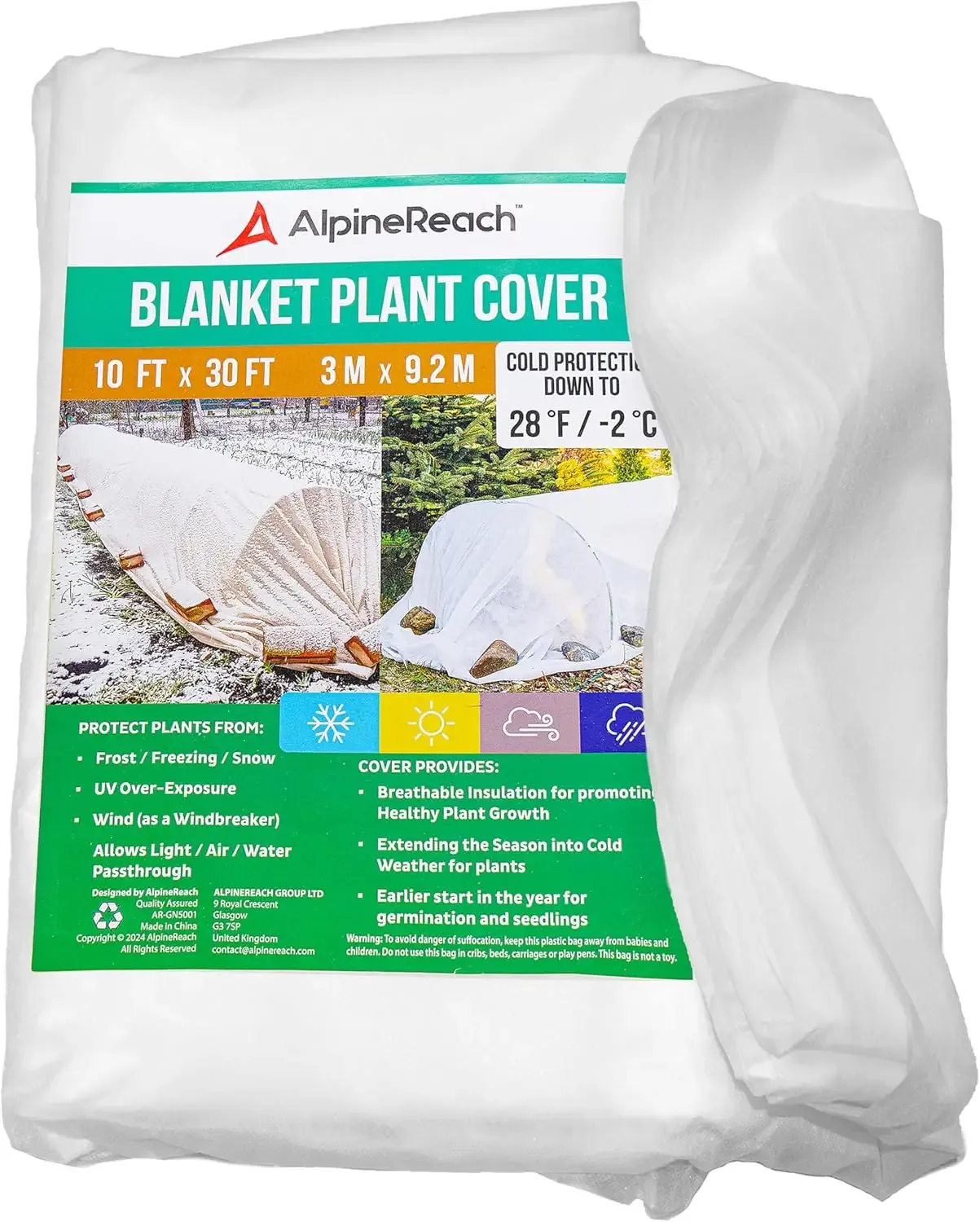
- Medium Weight: Weighing around 0.9 to 1.2 oz/yd², this option provides moderate protection (about 70% light transmission) and protects down to 24–28°F. It is the most versatile option for general fall gardening and short-term coverage during frost threats, such as the AlpineReach 1.2 oz/yd² Plant CoverView on Amazon rated for protection down to 28°F.
- Heavy Weight: Weighing 1.5 to 2.0+ oz/yd² and offering the most thermal protection (around 50% light transmission), heavy-weight blankets shield cold-hardy crops down to 20°F or lower. They are best used during severe winter conditions.
Choosing the right weight depends on what you’re trying to protect; if it’s something delicate like young tomatoes, go lightweight.
AlpineReach Plant Covers Frost & Sun Protection
This 1.2 oz/yd² freeze blanket is the exact cover I used to shield my tender fall crops when overnight temperatures dipped to a freezing 28°F. Over four seasons of fall and winter gardening, it has proven itself as a durable, highly breathable barrier that admits 70% light transmission and water while keeping crops insulated. Trade-offs: Because it's a large 10 x 30 ft sheet, it catches the wind like a sail and requires securing edges tightly with bricks or stakes and its thickness means you must support it on hoops to avoid crushing delicate foliage.
4. How to Install Row Covers and Frost Cloths
Installing row covers might seem daunting at first, but it’s quite simple if you follow these steps:
- Choose Your Supports: You’ll need hoops made from PVC pipes or metal conduit or simple stakes driven into the ground, to hold the fabric above your plants.
- Lay It Out: Drape the cover over your supports. Avoid letting the fabric touch any part of your plants; if frost settles on wet fabric touching leaves, cold transfers directly and freezes the foliage!
- Secure It: Use landscape pins, heavy stones, bricks or mounds of soil along the edges to keep everything in place. Nothing is worse than waking up to find your cover blown away by overnight winds.
- Watering: Lightweight and medium-weight fabrics are permeable, meaning you can water right through them. No need to remove the cover unless you’re ready to harvest.
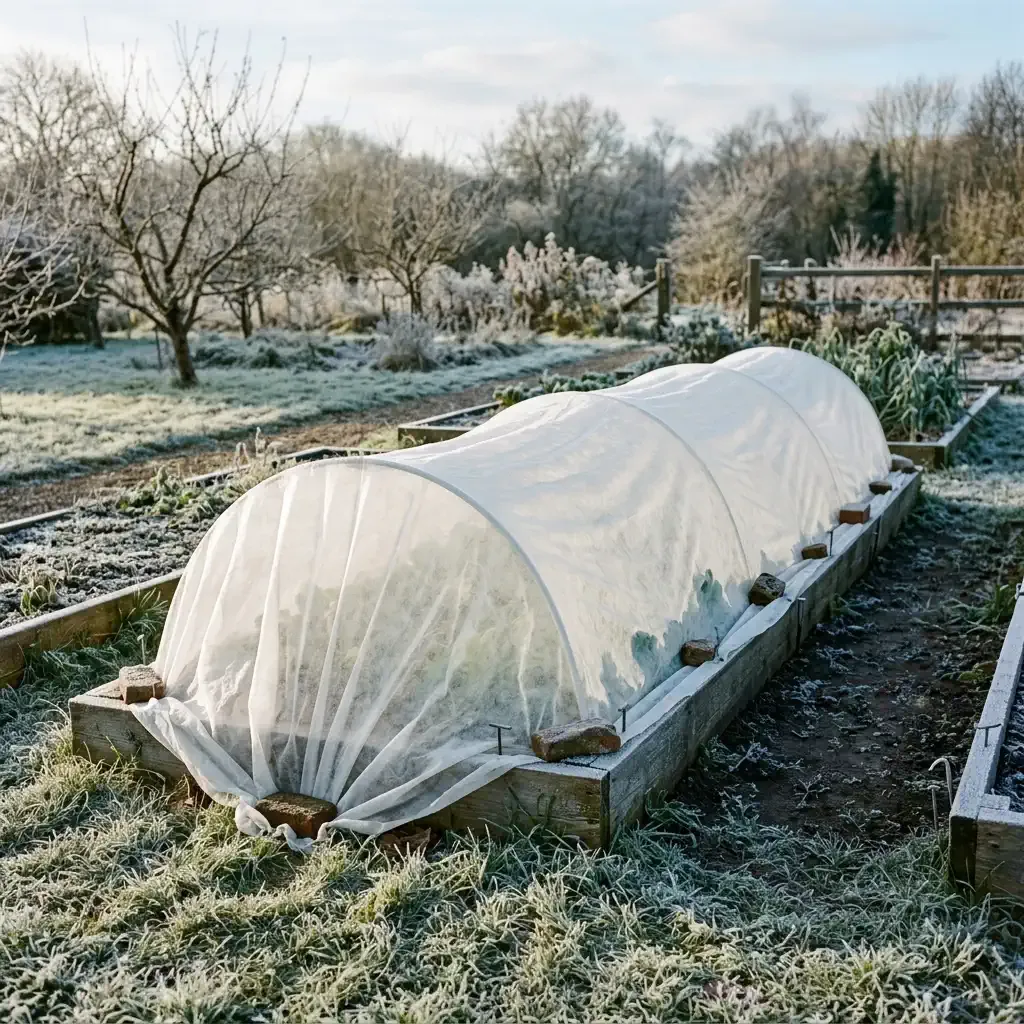
I learned the benefit of fabric permeability firsthand after forgetting to check on my covered crops during a torrential November downpour. I expected the heavy rain to crush the soil and drown my young spinach seedlings, but the spun-bond fabric diffused the impact of the heavy drops, letting the water gently seep through while keeping the soil structure intact and the seedlings safe.
5. When to Use Row Covers
Timing is everything when it comes to using row covers effectively:
- In spring, monitor local forecasts closely; if there’s a chance of frost after planting your seedlings, cover them up!
- In fall, start using them as soon as night-time temperatures begin dipping below freezing, this will help extend your harvest season significantly. If you’re pushing coverage deep into winter, our Winter Season Gardening hub and our complete winter gardening guide have more on keeping cold-hardy crops going through the coldest stretch.
I always keep an eye on my weather app during this time; it’s saved me more than once!
6. Common Mistakes to Avoid
Even seasoned gardeners make mistakes! Here are some common pitfalls:
- Letting Covers Touch Plants: This can lead to frozen foliage, yikes! Always ensure there’s space between the cover and your crops.
- Incorrect Timing: Leaving them on too long in warm weather can heat stress plants; conversely, taking them off too soon can expose them unnecessarily.
- Choosing Wrong Weights: Using heavy-weight cloth too early in spring can block too much light, be mindful of what you’re covering!
I’ve been guilty of all these at one point or another. I once left a heavy-weight winter blanket over a row of spinach during a sunny, 65°F spring afternoon. The trapped heat soared past 85°F under the cover, causing the plants to wilt, stress and prematurely bolt (go to seed) within a single day. Learning from those mistakes has made me a better gardener!
7. Best Vegetables to Cover with Frost Cloth
When it comes to protecting your garden during the fall, using frost cloths can be a game-changer for many vegetables. Here are some of the best vegetables to cover with frost cloth to ensure they thrive even as temperatures drop:
- Broccoli
Broccoli is a hardy vegetable that can withstand temperatures as low as 28°F. Covering it with frost cloth helps protect it from extreme cold and pests, allowing for a longer harvest season. - Brussels Sprouts
These plants are known for their resilience against frost and covering them can enhance their flavor by encouraging sugar accumulation. They can be harvested until hard freezes occur, making them ideal candidates for frost protection. - Cabbage
Cabbage can tolerate frost down to 20°F and even lower with protection. Frost cloths help maintain moisture and prevent damage from freezing temperatures. - Kale
Kale is one of the most frost-resistant vegetables, thriving in cold conditions. Covering it with frost cloth not only protects it but also improves its flavor, as cold temperatures trigger starch conversion to sugars, taking away any bitterness. - Carrots
Carrots can survive temperatures as low as 15°F. Covering them with frost cloth helps prevent soil freezing, allowing you to harvest these extra-sweet, cold-sweetened roots throughout the winter. - Spinach
Spinach grows slowly during winter but is very cold-tolerant. Using frost cloth can extend its growing season and protect it from harsh weather. - Radishes
Radishes thrive in cooler weather and can handle light frosts. Covering them ensures they remain healthy and can be harvested even in late fall. - Turnips
Turnips benefit from cooler temperatures, which enhance their sweetness. Frost cloth protects them from severe cold while allowing them to mature properly with a milder, sweeter flavor. - Beets
Beets are another root vegetable that grows well in cool conditions and can survive light frosts. Covering them helps maintain their quality, increases root sweetness and prolongs the harvest. - Swiss Chard
Swiss chard is quite hardy and can survive dips to around 15°F when covered with frost cloth, making it a great option for fall gardening.
8. The Science of Cold-Sweetening
While we cover crops primarily to prevent freeze damage, the mild frost exposure allowed under row covers triggers a highly desirable biological response in cool-season vegetables. According to horticultural studies from the Oregon State University Extension Service, plants subjected to near-freezing temperatures begin actively converting stored starches into soluble sugars. This starch-to-sugar conversion acts as a natural antifreeze, lowering the freezing point of the water inside the plant’s cells to prevent them from rupturing.
In my own garden, I ran a side-by-side taste test comparing Touchstone Gold beets harvested in early October before any frost, against those left under medium-weight covers through three late-autumn frost cycles. The difference was night and day: the pre-frost beets were earthy and somewhat muddy in flavor, whereas the cold-exposed beets were exceptionally sweet and crisp. By using frost cloth to shield your crops from extreme, tissue-killing freezes while letting them experience mild cold, you leverage this biological sweetening mechanism to harvest some of the best-tasting vegetables of the entire year.
Summary: Your Next Steps
Using row covers and frost cloths effectively is a major milestone in transitioning from a warm-weather hobbyist to a successful year-round gardener. To put these tips into action this week, take these three simple steps:
- Check Your Forecast: Monitor your local night-time lows. If temperatures are expected to dip below 32°F, prepare your lightweight or medium-weight covers.
- Measure Your Beds: Calculate the width of your beds and add 2–3 feet of margin to determine the fabric size you need to drape over hoops.
- Plan Your Crop Layout: If you want to select the best cold-hardy varieties to plant next season, read our Ultimate Guide to Frost-Tolerant Plants for Your Garden to build a resilient planting plan.
Frequently Asked Questions
Can I leave frost cloth on my plants during the day?
You can leave light frost cloth on, but heavy winter blankets should be removed on sunny days when temperatures exceed 50°F to prevent overheating.
Do row covers block sunlight?
Lightweight covers block only 10-15% of sunlight, allowing plants to grow normally. Heavy frost blankets can block up to 50% and are meant for temporary cold protection.
Our Amazon Storefront
Browse all our recommended tools & supplies
Everything we personally use and trust, hand-picked for gardeners like you.

I've been running DWC and Kratky systems for several years and write about what actually works, not textbook theory. Follow along for honest product reviews, practical guides and real grow results.