As an Amazon Associate, I earn from qualifying purchases. Some links in this article are affiliate links, if you buy through them I may earn a small commission at no extra cost to you.
Quick Summary
- Orchid Aeration: Use specially slotted pots to provide maximum airflow to epiphytic orchid roots.
- Passive Hydro: Grow orchids in passive water culture or using LECA clay pebbles.
- Root Rot Prevention: Allow orchid roots to dry out slightly between waterings, mimicking natural environments.
- Nutrient Feeding: Feed orchids a highly diluted, specialized fertilizer solution to avoid burning roots.
- Transplanting Tips: Clean old potting bark off roots thoroughly before converting orchids to hydroponics.
Hydroponic orchid pots are designed to grow orchids without soil, providing the root environment they evolved for. In the wild, popular orchid species like Phalaenopsis, Cattleya, and Dendrobium are epiphytes. They cling to tree bark and rocks, with roots exposed to open air and periodically drenched by rain. A standard soil pot is about as far from that habitat as possible.
Note
What is a Phalaenopsis Orchid?
Commonly known as the “Moth Orchid,” Phalaenopsis is the most popular houseplant orchid genus due to its hardiness and long-lasting blooms. Since they naturally grow as epiphytes on tree trunks in tropical climates, their thick roots are adapted to absorbing moisture and oxygen from the air rather than sitting in dense soil. This biological trait makes them uniquely suited to semi-hydroponic pot setups using LECA.
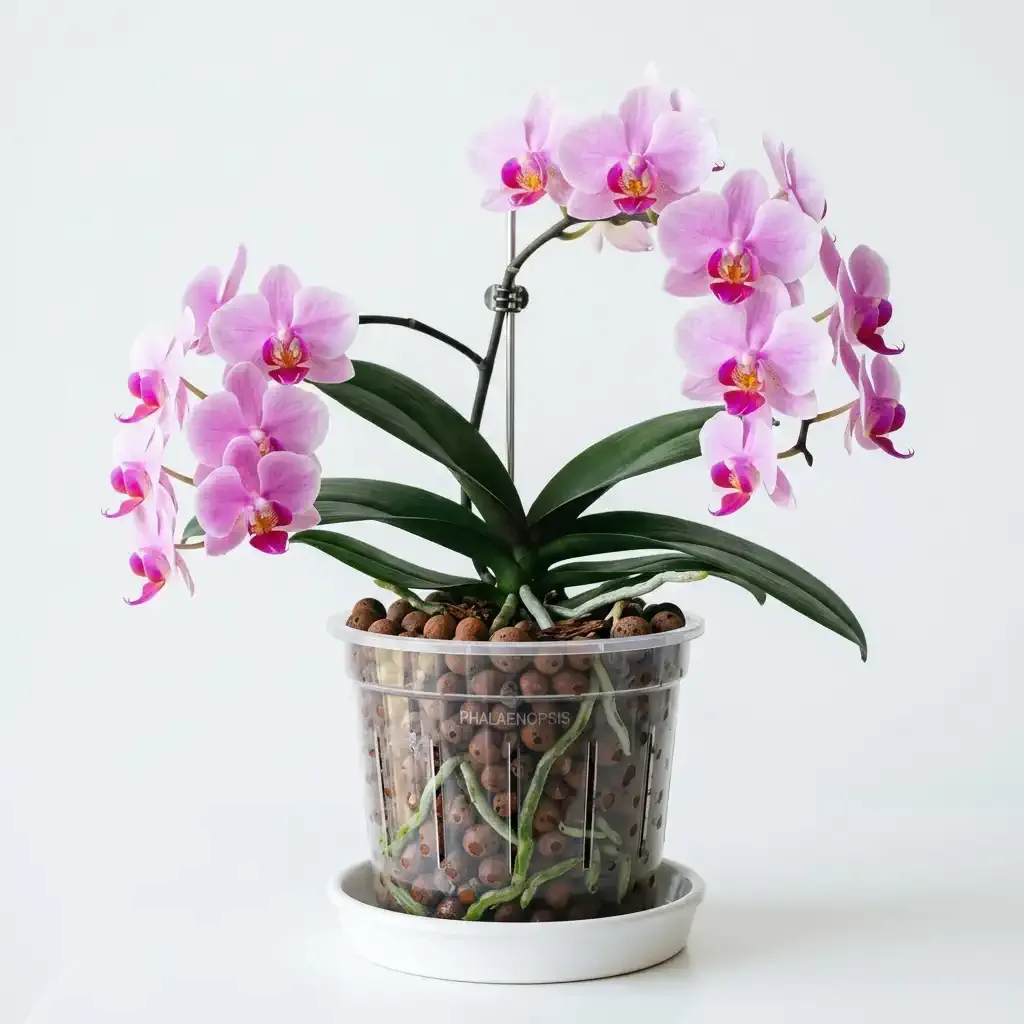
Orchids in ordinary potting mix constantly fight against their container: too much moisture, inadequate airflow, and zero visibility into the root zone until rot takes hold. A purpose-built hydroponic orchid pot solves all three problems at once.
Why Orchids and Hydroponics Are a Natural Fit
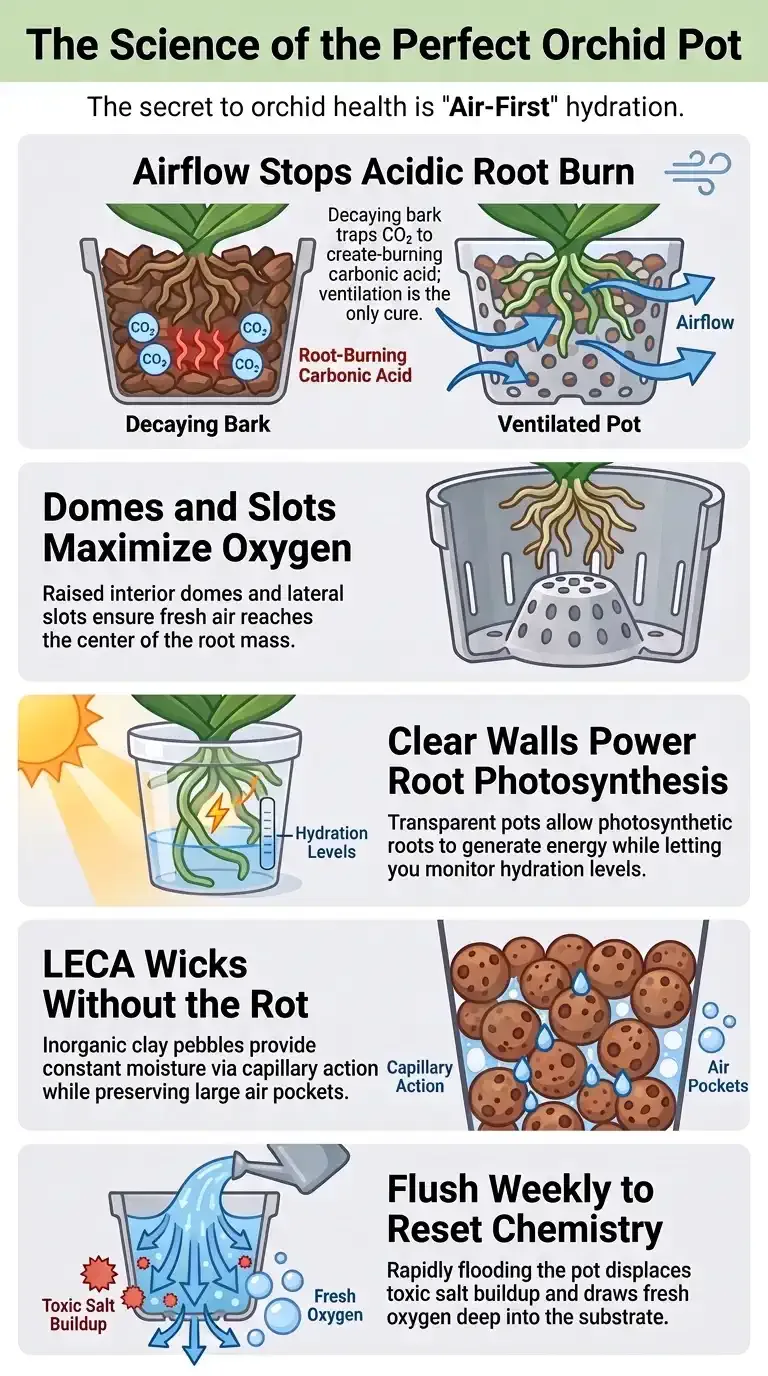
Epiphytic orchids have roots that photosynthesize. The green tinge on healthy aerial roots is chlorophyll. These roots do double duty: anchoring the plant and absorbing moisture and gases from the air. Dense soil suffocates them.
Hydroponic pots accommodate this biology. A typical design includes a slotted or mesh inner basket (or a pot with aeration holes along the sides), a shallow outer reservoir, and clear walls so you can check root health without disturbing the plant. Roots in the upper portion stay exposed to air, while lower roots pull moisture and minerals from the reservoir. That division, keeping upper roots airy while lower roots wick moisture, is the foundation of orchid hydroponics.
This approach is often called semi-hydroponics or passive hydroponics. There are no pumps or electrical timers. The reservoir refills when you water, and the plant drinks at its own pace.
Setting Up Your Hydroponic Orchid Pot: Step by Step
1. Choose the Right Pot
Look for two primary features: a slotted or perforated inner structure for constant air movement, and a reservoir in the outer tray or base holding roughly half an inch to one inch of water. Clear pots are well worth using, since root color serves as your primary diagnostic tool.
For most household Phalaenopsis, a 4-inch pot provides the right volume. Oversized containers hold excess substrate and unneeded moisture around the root core.
2. Select a Growing Medium
Orchids in passive hydroponics need a substrate to anchor the plant and wick moisture. Two materials work best:
LECA (Lightweight Expanded Clay Aggregate): The standard choice for semi-hydroponic orchids. LECA pellets are porous, wick water effectively, and leave plenty of air pockets between beads. Rinse the pellets thoroughly to clear clay dust, then soak them in pH-adjusted water overnight before potting.
Coarse bark or perlite: A workable temporary option when transitioning from traditional bark. It wicks less evenly than LECA, but feels familiar to handle.
Avoid fine potting soil or peat entirely. Fine substrates hold excessive water, plug ventilation slots, and trigger rapid root rot.
3. Prepare Your Nutrient Solution
Orchids require far lower nutrient concentrations than leafy greens or fruiting vegetables:
- EC (Electrical Conductivity): 0.5–1.0 mS/cm for most orchids. Phalaenopsis thrives at the lower end of this range; Cattleya and Dendrobium tolerate slightly higher levels. A nutrient formula mixed at standard vegetable strength will burn orchid roots quickly.
- pH: 5.5–6.5, with 5.8–6.2 as the sweet spot. Outside this range, orchids struggle to absorb iron and calcium regardless of solution strength.
Start by mixing an orchid-formulated hydroponic nutrient at half the package recommendation, checking the EC with a meter before filling the reservoir. You can always raise concentrations later, but flushing salt-burned roots takes weeks. For an overview of nutrient levels across indoor setups, our guide on optimal pH and EC values for hydroponic herbs and plants covers the baseline chemistry in depth.
Fill the outer reservoir to roughly half an inch deep, just touching the bottom layer of LECA. The roots will seek out the moisture layer as they grow; do not submerge the main root mass.
4. Place the Orchid
When transitioning an orchid from bark or moss, wash every trace of old medium off the roots using lukewarm water. Organic residue left behind will decompose in the reservoir and feed anaerobic bacteria. Use sterilized shears to snip away any brown, hollow, or mushy roots. Healthy roots are firm and plump, showing silvery-white or pale green when dry and bright green when wet.
Position the plant so the root mass settles evenly among the LECA pellets. Keep the crown (the point where leaves join the root system) resting at or slightly above the pot rim. Never bury the crown beneath moist clay.
Rushing this step causes problems. Decayed bark fragments trapped against the inner root core rot within weeks, fouling the reservoir water. Spending five minutes to rinse the roots clean prevents having to unpot and sterilize everything later.
5. Ongoing Maintenance
Every 7–10 days, flush the pot rather than simply topping off the water level. Pour water rapidly through the top until it runs out the drainage holes and fills the reservoir. This fast flush carries out accumulated mineral salts, pushes out stagnant water, and pulls fresh air down through the LECA as it drains. Adding small dribbles of water between cycles fails to clear salt buildup.
Leave the reservoir dry for 12–24 hours after flushing to let lower roots breathe before refilling with fresh nutrient mix. If you see a chalky white crust developing on the LECA near the waterline, run a flush with plain, pH-adjusted water to dissolve the mineral accumulation.
Alternatively, feed at low strength with every watering: dilute nutrients to 30–50 ppm nitrogen and apply at each flush. Frequent light feedings prevent salt spikes, though they require regular attention to maintain water levels.
Genus-by-Genus Container Adjustments
While Phalaenopsis is the standard starting point, pot and watering requirements vary by orchid genus:
Phalaenopsis
Use clear, slotted pots. Phalaenopsis roots photosynthesize, so opaque containers cut off an active energy source. This genus performs best under the standard step-by-step setup outlined above.
Cattleya
Cattleya orchids require significantly more air movement than Phalaenopsis. Slotted plastic or porous unglazed clay both work well. Let the reservoir run dry for one to two full days between waterings; Cattleya roots rot quickly in continuous moisture.
Dendrobium
Dendrobium canes grow tall and top-heavy, creating a tipping hazard. A heavy ceramic or clay pot with side perforations provides the necessary ballast while maintaining airflow. Lightweight plastic pots tip over easily once canes mature.
Paphiopedilum
Unlike epiphytes, Paphiopedilum orchids are semi-terrestrial and demand consistent moisture. Allowing the reservoir to dry out stresses the plant. Use a wicking setup that keeps the root zone steadily damp without drying cycles.
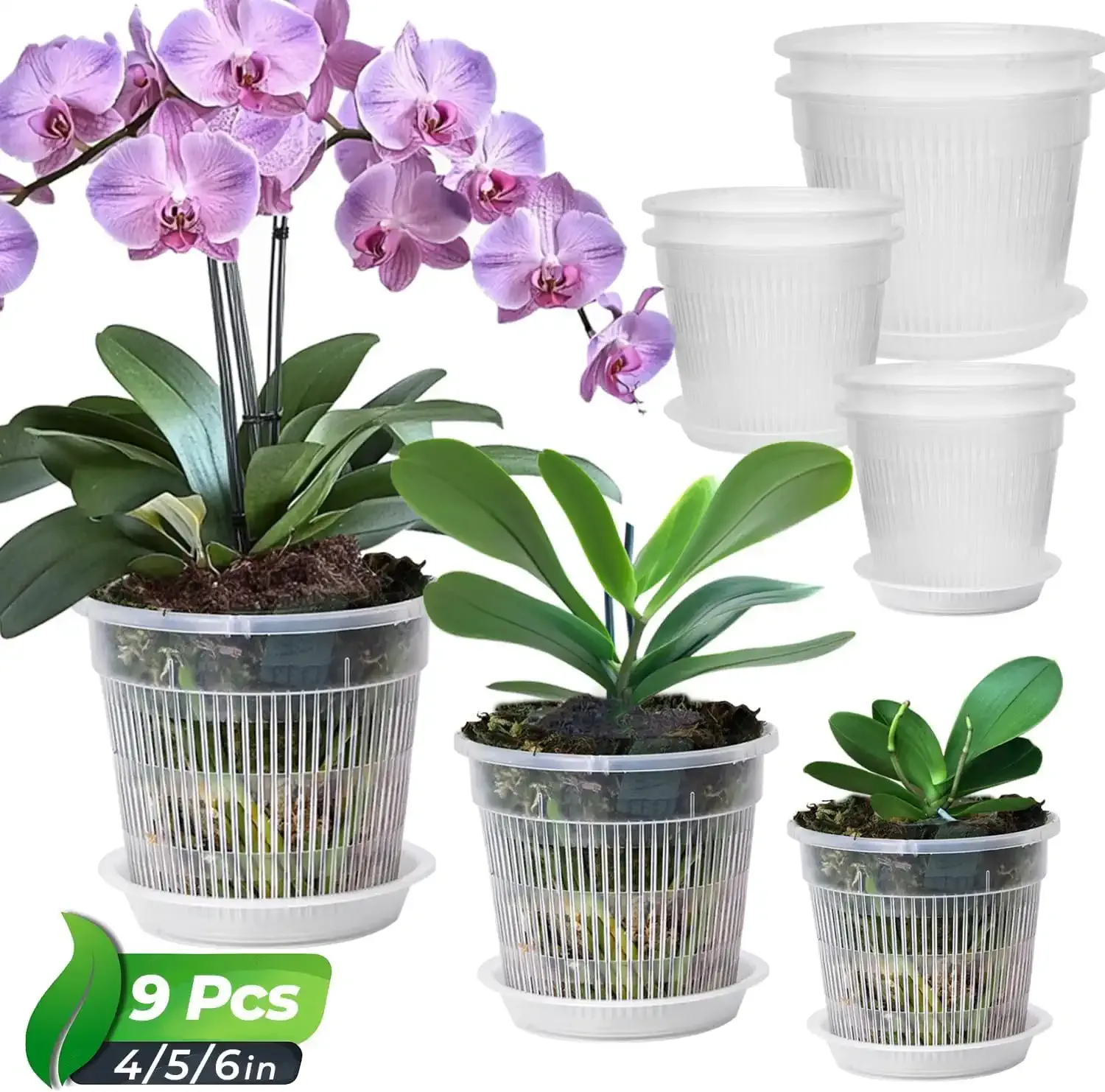
Clear Plastic Orchid Pot
I’ve used this specific 9-pack for my own collection; the clear plastic makes monitoring root moisture incredibly easy, though note that the drainage holes at the very bottom can be slightly too large for small LECA beads, so stick to medium or large clay aggregate to prevent pieces from slipping out. This set includes 3 each of 4.3, 5.5 and 6.3 inches. The 4.3-inch size suits most single-stem Phalaenopsis, while larger crowns can be sized up to 5.5 or 6.3 inches.
DIY Pot Setups for Budget Growers
Commercial orchid pots work well, but you can build practical alternatives using everyday containers:
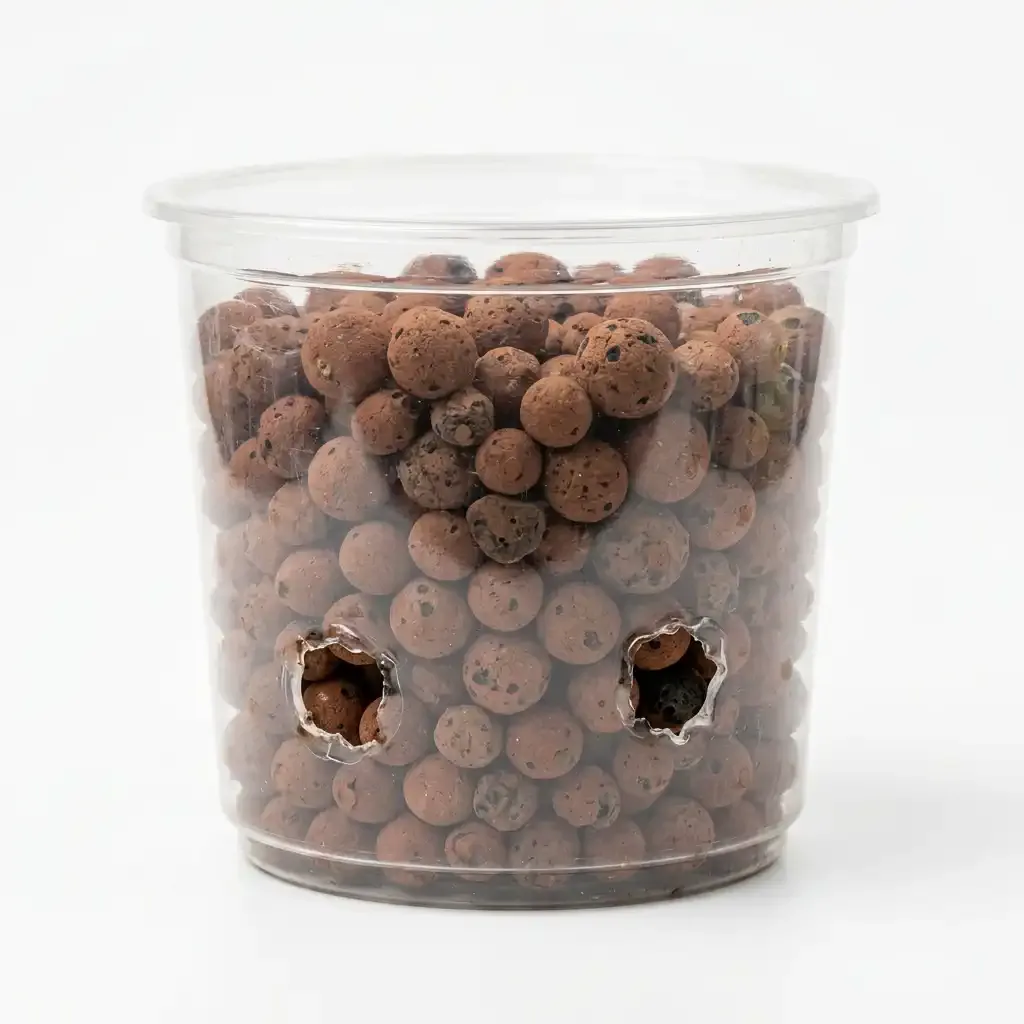
The Custom-Drilled Deli Pot
Using a heated nail or soldering iron, melt two ¼-inch holes into the side of a clear plastic deli container, exactly one inch above the base. The sealed inch below the holes acts as a built-in reservoir; excess water drains out automatically, preventing overfilling. Fill with LECA and position your orchid as usual.
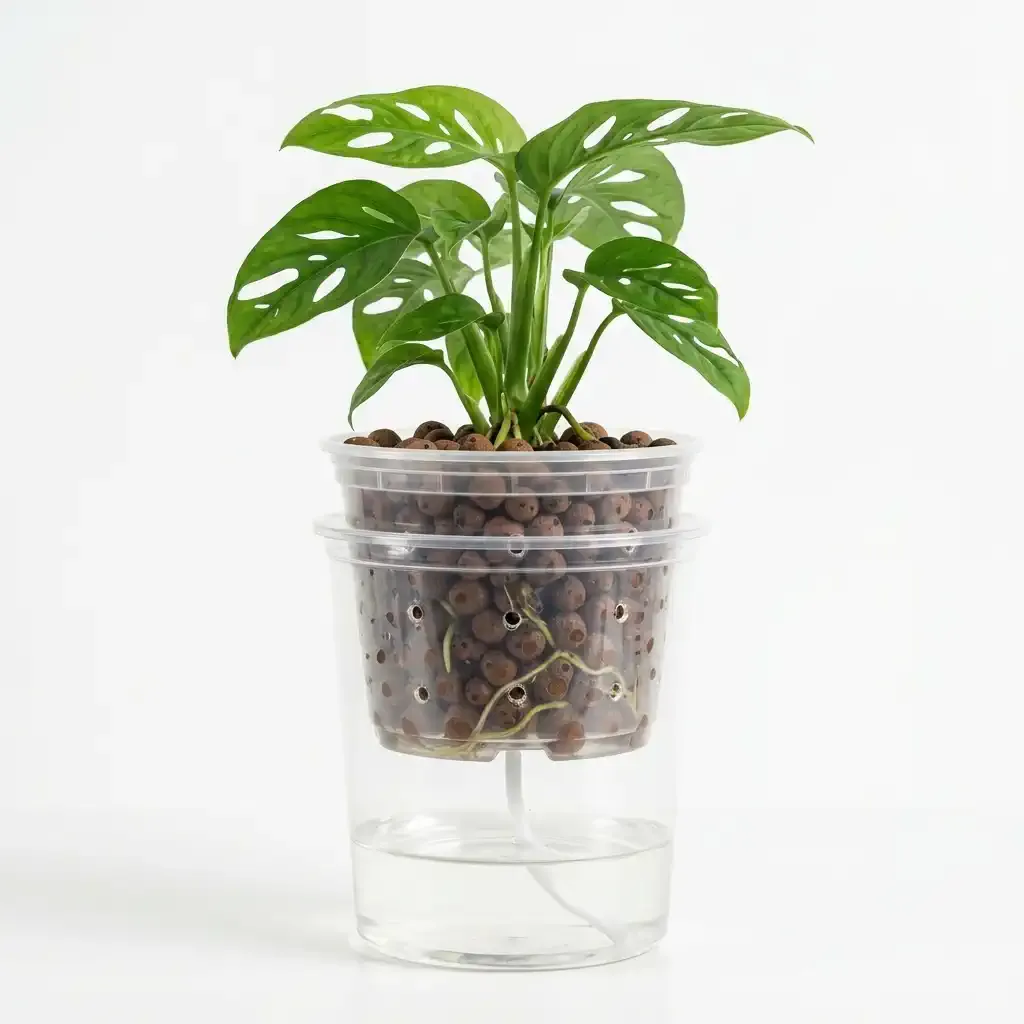
The Stacked Deli Setup
Nest a 24 oz deli container with drainage holes inside an unmodified 32 oz container. Thread a synthetic wick (such as microfiber or braided polyester) through the base of the inner pot down into the bottom reservoir. The wick pulls water upward into the LECA without leaving roots standing in water, and the larger outer pot extends the time between refills.
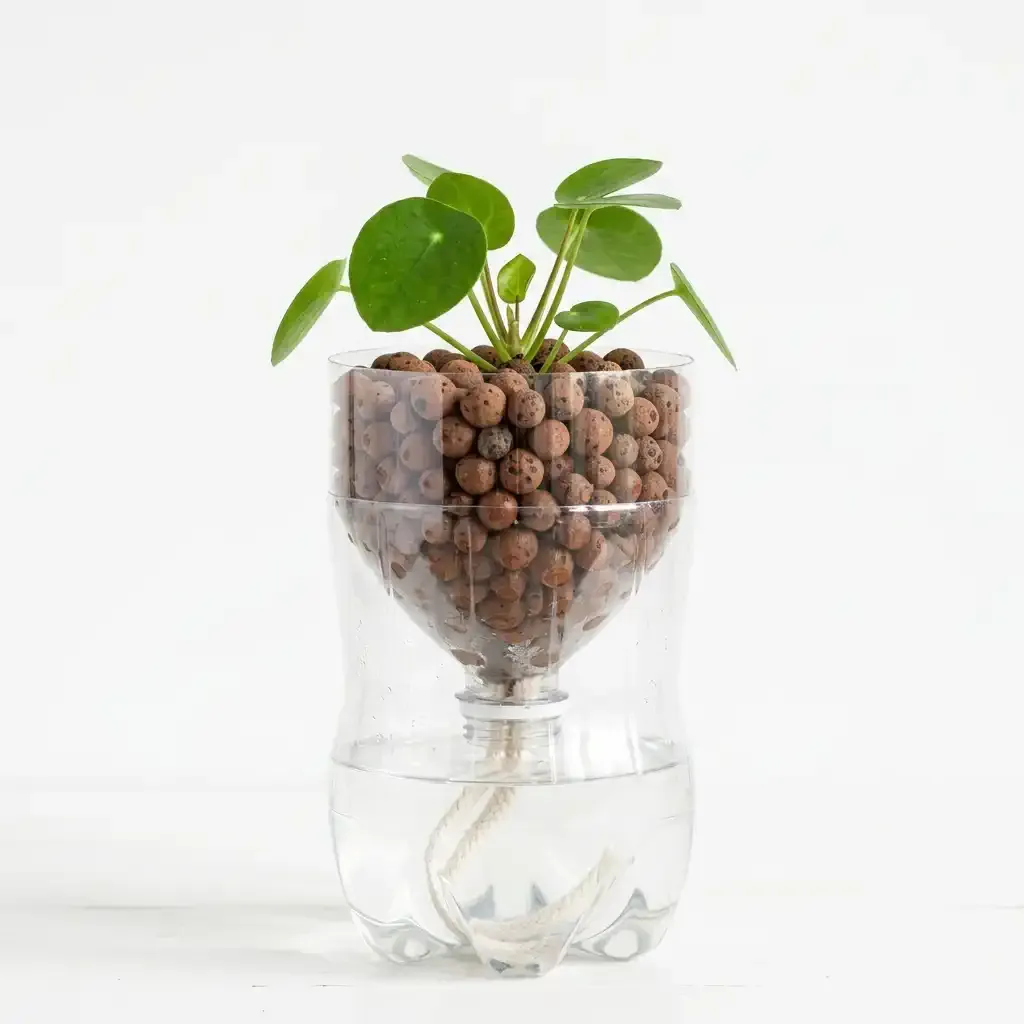
Soda Bottle Planters
Cut a large plastic bottle in half. Turn the top spout upside down and rest it inside the bottom cylinder. This inverted funnel shape gives deep-rooting orchids extra vertical space without forcing roots to coil tightly in a shallow cup. Add a few small drainage holes around the neck to control reservoir height.
Root Adaptation During the Bark-to-LECA Switch
Switching an orchid from bark to LECA requires growing a new set of roots. Roots developed in organic bark are adapted to fluctuating air and bark moisture; they rarely adjust to semi-hydroponic reservoir dynamics. The plant must produce water-adapted roots from the base of the stem.
Expect temporary transition stress. During the first few weeks, leaves may soften or wrinkle slightly while the old roots decline and new ones emerge. Watch the crown for short, firm, bright green root tips rather than inspecting the old roots. Once those new tips penetrate the LECA, foliage recovers quickly.
Placing a seedling heat mat beneath the pot keeps the root zone warm and accelerates new root initiation during the first month.
Growing Medium Comparison: LECA vs. Bark vs. Passive Water Culture
| Method | Airflow | Moisture Control | Difficulty |
|---|---|---|---|
| LECA (semi-hydro) | Excellent | Very good, wicks without waterlogging | Easy once rinsed and soaked |
| Bark chips | Good | Moderate, dries unevenly | Easy but needs frequent checking |
| Pure passive water culture | N/A | Manual, depends entirely on reservoir depth | Moderate, unforgiving if overfilled |
LECA remains the most dependable medium for semi-hydroponics. It does not break down, provides consistent air gaps, and rinses clean during seasonal repotting.
Troubleshooting Common Issues
Even in a balanced semi-hydroponic container, environmental issues can show up:
Soft, discolored roots: Mushy, brown, or stringy roots indicate overfilling and lack of oxygen. Lower the reservoir level, remove dead tissue with clean shears, and let the pot air out for 24 hours before adding fresh, dilute solution. If you need a comprehensive diagnostic checklist, our walkthrough on how to troubleshoot common hydroponic problems walks through root diagnostics step by step.
Chalky crust on clay pellets: White residue near the waterline is harmless salt accumulation from fertilizers. Flush the container thoroughly with plain water every month to wash away excess minerals before they burn root tissue.
Burnt root tips: Dark brown or black tips on otherwise firm roots point to high fertilizer salts or improper pH. Test the reservoir with an EC meter and dilute the solution below 1.0 mS/cm. Our guide on how to choose the best hydroponic nutrients for your garden covers how salt concentrations impact sensitive root systems.
Wrinkled foliage despite water in the pot: Common during the initial adaptation period when old roots struggle to take up water. Mist leaves lightly and verify that the LECA is actively wicking moisture to the root zone. Once new root tips establish, the foliage will plump back up.
Green algae inside clear walls: Algae thrives when ambient light strikes nutrient-rich water. While algae does not harm the plant directly, heavy growth can clog slots and consume dissolved nutrients. Place the clear container inside an opaque decorative cachepot to block light while keeping the inner pot removable for easy inspection.
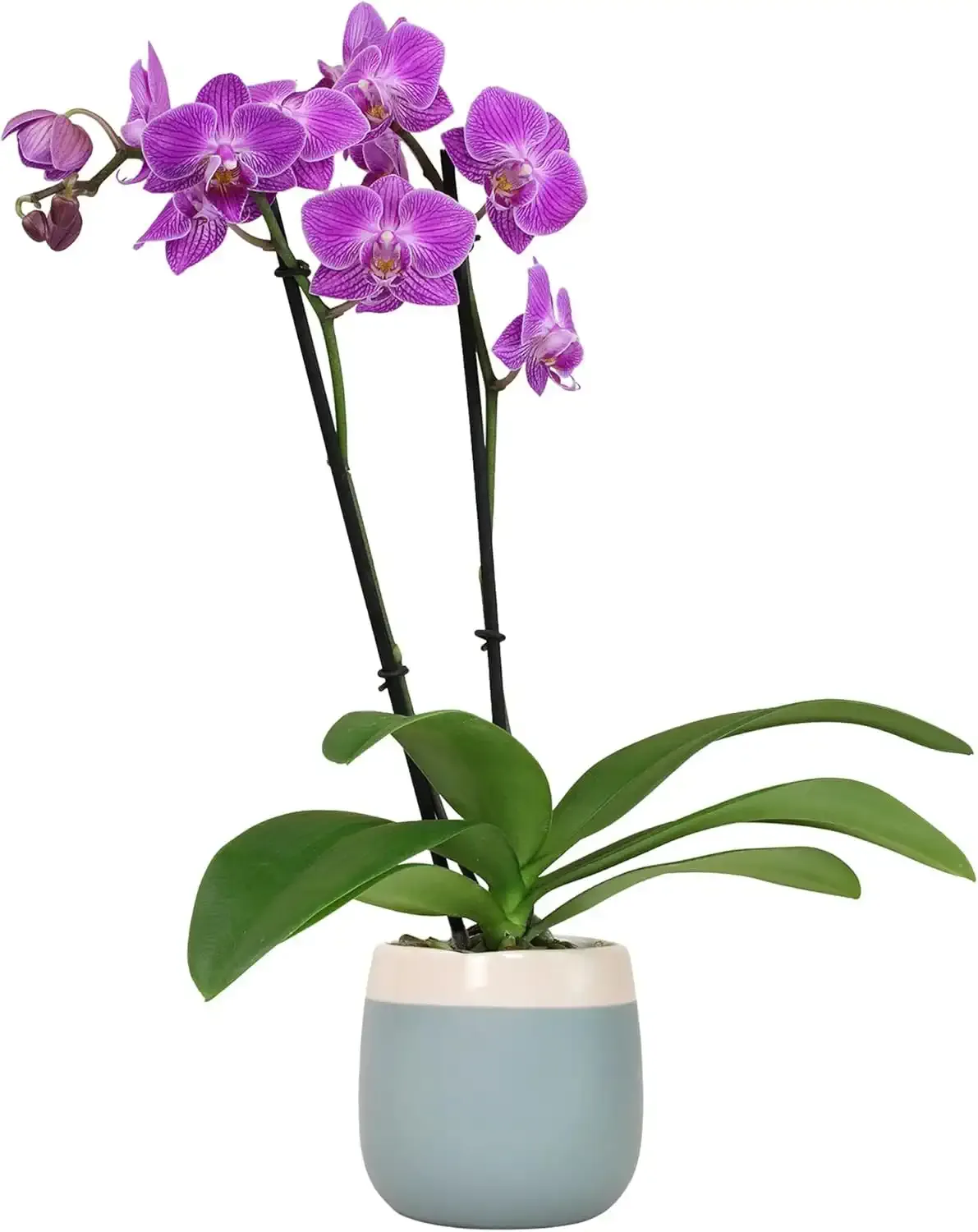
Premium Purple Live Orchid Plant
We ordered this exact live purple Phalaenopsis orchid from Plants for Pets to test its adaptability to semi-hydroponics. The orchid arrived in great health with thick, strong roots, though the decorative blue and white ceramic pot it comes with lacks side slots. For semi-hydro, you'll want to gently extract the plant, clean its roots and repot it in a slotted plastic container using LECA.
Long-Term Orchid Health
Moving orchids to a hydroponic pot matches their epiphytic biology far better than dense, breaking-down potting mixes. The transition requires a few weeks of patience while new root tips establish in the clay pebbles. By maintaining a shallow reservoir, ensuring continuous airflow through container slots, and inspecting root moisture through clear pot walls, you avoid the root rot cycle that ends most houseplant orchids.
Editor’s Note: Parts of this guide were structured and optimized with the assistance of AI, then thoroughly reviewed, edited and expanded with first-hand growing experience by our author Raymond to ensure practical, real-world accuracy.
Frequently Asked Questions
Do orchids need holes in the pot?
Yes. Epiphytic orchids require high airflow and rapid drainage to mimic their natural tree-clinging habitat. Slotted or perforated pots allow oxygen to reach the root zone directly, preventing trapped humidity and root rot.
What do I do with orchid roots growing out of the pot?
Leave aerial roots alone. They absorb moisture and oxygen from the surrounding air. Cutting them creates open wounds that can introduce infection. If they become long or inconvenient, guide them loosely back into the container during repotting, but never force them.
How full should the reservoir be in a hydroponic orchid pot?
Keep the nutrient solution level around half an inch to one inch deep at the base. Only the lowest portion of the growing medium or root system should contact the water. Overfilling is a common mistake that suffocates roots and causes rot.
How often should I change the nutrient solution?
Perform a full reservoir change every 7 to 14 days. Between changes, top off the reservoir with plain, pH-adjusted water rather than fresh nutrient solution to prevent mineral salts from concentrating and burning the roots.
Do orchid pots need to be clear?
While not strictly required, clear pots are highly recommended. They allow you to easily inspect root health (plump and bright green when wet, white or light green when dry) and detect early signs of decay without disturbing the plant.
How do I get my orchid to rebloom in a hydroponic pot?
The reblooming trigger is the same: expose the orchid to a nightly temperature drop of 10–15°F (5–8°C) for four to six weeks while maintaining proper light and diluted nutrients. Healthy, hydroponically grown Phalaenopsis will readily spike again.
Our Amazon Storefront
Browse all our recommended tools & supplies
Everything we personally use and trust, hand-picked for gardeners like you.

I've been running DWC and Kratky systems for several years and write about what actually works, not textbook theory. Follow along for honest product reviews, practical guides and real grow results.