As an Amazon Associate, I earn from qualifying purchases. Some links in this article are affiliate links, if you buy through them I may earn a small commission at no extra cost to you.
Quick Summary
- USDA Zones: Understand that planting zones only measure average winter extreme cold temperatures.
- Perennials Focus: Use zones to choose cold-hardy perennials that can survive winters in your area.
- Annuals Misconception: Do not use zones to determine when to plant tomatoes or annual summer crops.
- Frost Dates: Rely on local average first and last frost dates to schedule spring vegetable planting.
- Microclimates: Account for wind, elevation and urban heat islands that affect your garden’s temperature.
USDA planting zones are designed to predict perennial winter survival, not to dictate spring vegetable planting calendars. Confusing winter hardiness with frost-free growing windows frequently leads to frost-killed tomatoes in spring.
While the United States Department of Agriculture (USDA) Plant Hardiness Zone Map is the standard reference tool in North American horticulture, it is commonly applied to decisions it was never intended to guide. In controlled water culture, environmental variables are regulated mechanically (as discussed in our comparison of hydroponics vs. traditional gardening). Outdoors, you must separate winter lows from seasonal planting dates.
Here is what planting zones measure, why they fail to guide annual vegetable schedules, and how to use local frost dates and microclimate data effectively.
What USDA Planting Zones Actually Measure
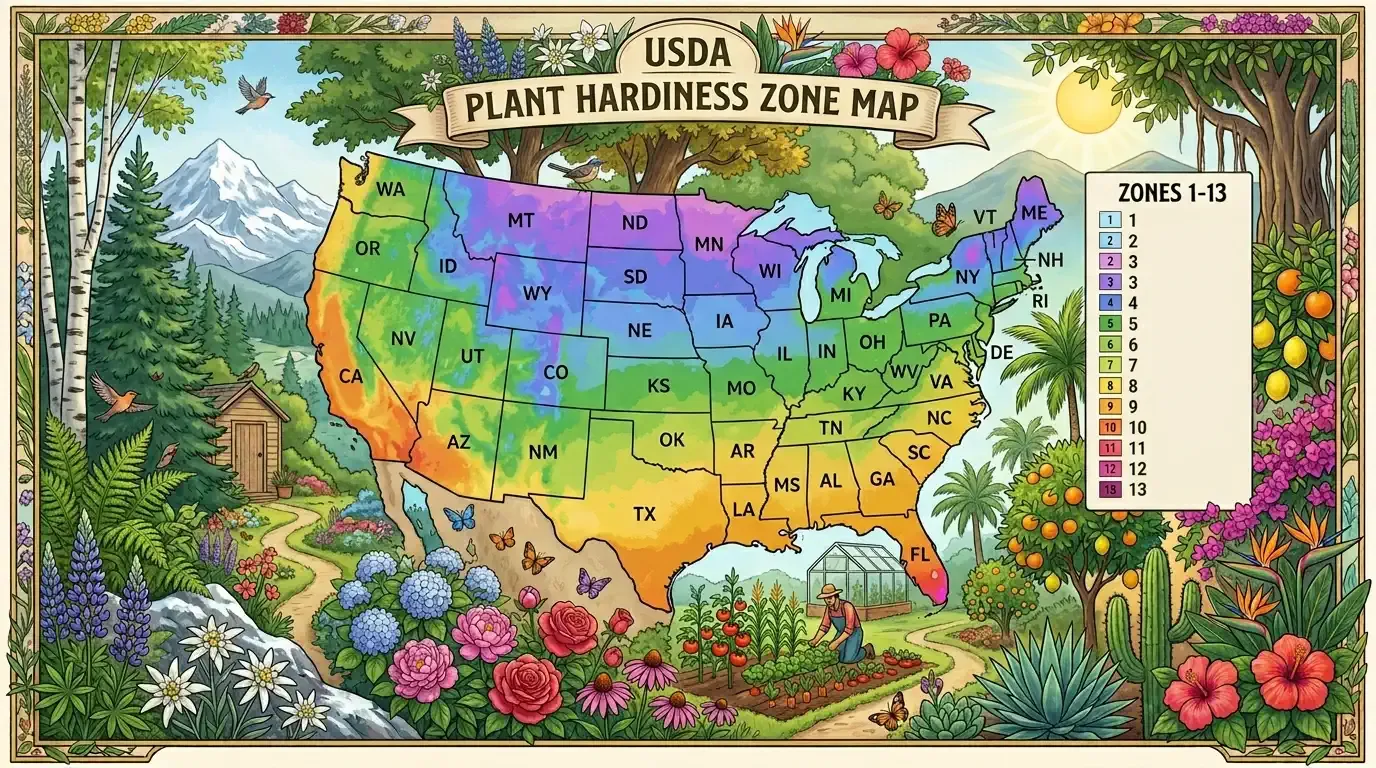
The USDA Plant Hardiness Zone Map divides North America into 13 zones based on a single data point: the average annual extreme minimum winter temperature.
Each numbered zone represents a 10°F difference in the lowest average winter temperature, divided into “a” and “b” subzones (representing 5°F increments):
- Zone 1 represents the extreme cold, dropping to -50°F (-45.6°C) or colder.
- Zone 13 represents tropical frost-free regions, where winter minimums rarely fall below 60°F (15.6°C).
When a plant label specifies “Hardy to Zone 6,” it means the root crown and woody tissue can withstand temperatures down to -10°F to 0°F (-23°C to -18°C). For outdoor selections that tolerate sub-freezing weather, review the ultimate guide to frost-tolerant plants.
The Core Distinction: Perennials vs. Annuals
Key Guidelines
- USDA Zones apply strictly to overwintering perennials (fruit trees, berry canes, shrubs, and perennial herbs).
- USDA Zones do not dictate schedules for summer annuals (tomatoes, peppers, squash, cucumbers, and beans).
A warmer hardiness zone does not mean you can transplant summer crops earlier. USDA zones track the coldest night of winter, not the date of your final spring frost.
For example, coastal areas of the Pacific Northwest and high-elevation deserts in Arizona can share identical USDA Zone 8 designations based on winter lows. Yet the desert region experiences rapid spring soil warming and early scorching heat, while maritime coastal valleys contend with cold, wet soils and late overcast springs.
What to Use for Annual Crops:
When planting vegetables or annual flowers, disregard your USDA zone. Base your calendar on two localized indicators:
- Average Last Frost Date: The date in spring when the statistical probability of a 32°F freeze drops below 50%. Review our comprehensive last frost date guide to find regional schedules.
- Soil Temperature Thresholds: Warm-season nightshades and cucurbits stunt or rot in soil colder than 60°F (15.6°C), even if daytime air is warm. Review our cool-season vs. warm-season crops breakdown and our guide to planning a small vegetable garden.
Climate Volatility and Map Averages
The USDA Plant Hardiness Zone Map reflects 30-year rolling climate averages. While these averages reflect broad warming trends, averages do not protect against outlier polar vortex anomalies:
- Averages Mask Polar Extremes: A zone rating of 8a means the average winter low is 10°F to 15°F. However, an arctic cold front can drive temperatures down to 0°F (Zone 7 territory) for consecutive nights, destroying tender perennial roots.
- Building a Zone Buffer: For high-investment perennials such as fruit trees or perennial berry plantings, choose varieties rated one full zone colder than your official designation. If you live in Zone 7, planting stock rated to Zone 6 ensures your orchard survives decadal freeze events.
Complementary Climate Classification Maps
Horticulturists cross-reference multiple mapping systems to obtain a complete environmental profile:
| Mapping System | Measured Variable | Horticultural Application |
|---|---|---|
| USDA Zones | Extreme minimum winter temperature | Selecting winter-hardy perennials, trees, and shrubs |
| Sunset Zones | Rainfall, humidity, elevation, and freeze windows | Microclimate-heavy Western landscapes |
| AHS Heat Zones | Average days per year above 86°F (30°C) | Selecting heat-tolerant crops; anticipating bolting |
| EPA Ecoregions | Geology, soil structure, native plant communities | Sourcing locally adapted native species |
1. Sunset Western Climate Zones
The Sunset system divides geographic regions into 45 microclimate zones. It factors in elevation, marine layer fog, rainfall patterns, and total length of the frost-free window. This distinguishes coastal maritime valleys from dry interior valleys that share identical USDA ratings.
2. AHS Heat Zones
The American Horticultural Society Heat Zone Map counts days exceeding 86°F (30°C). Above this threshold, plant transpiration outpaces root uptake, proteins denature, and cool-season greens bolt prematurely.
3. EPA Ecoregions
EPA Ecoregions categorize landscapes by soil chemistry, hydrology, and native plant ecosystems. Sourcing plants adapted to your regional ecoregion ensures compatibility with local rainfall patterns and soil biology without heavy inputs.
Managing Garden Microclimates
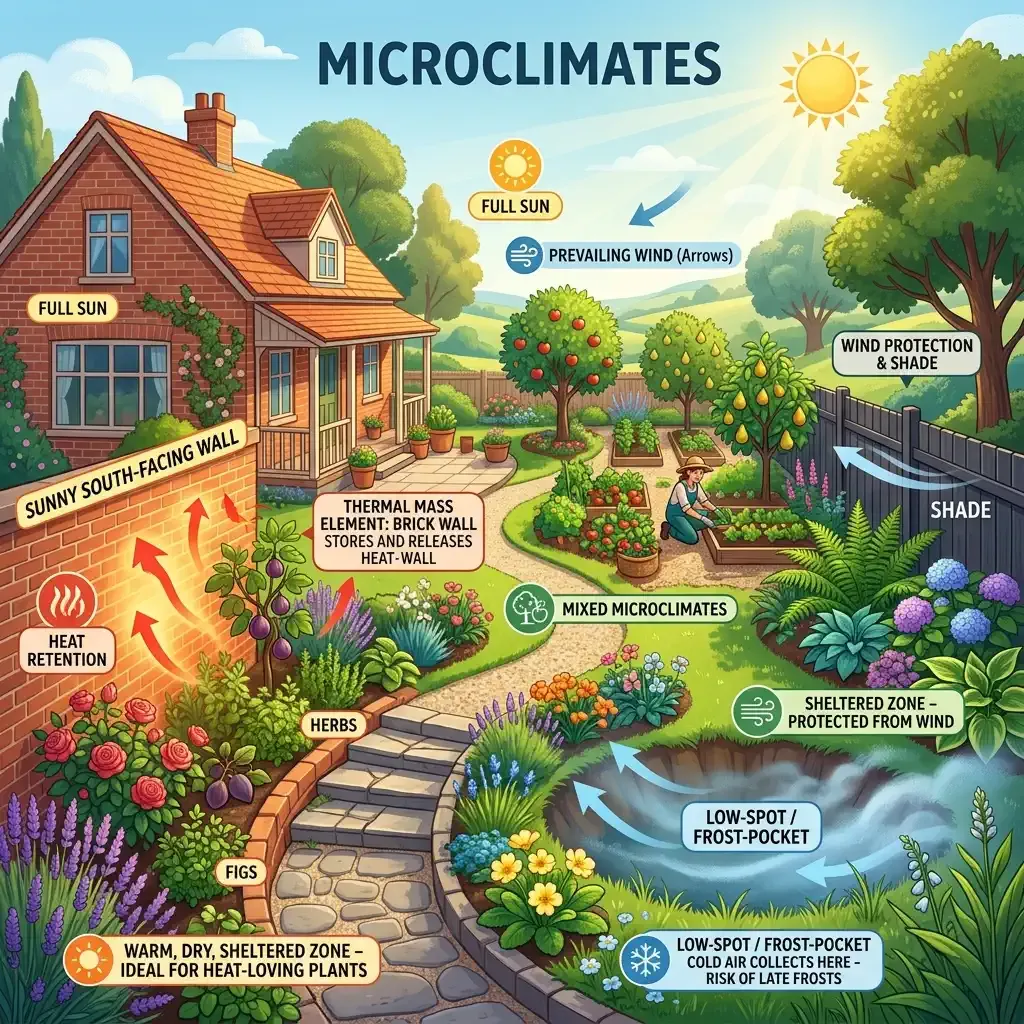
Topography and built structures alter temperatures across individual garden plots:
- Thermal Mass: Brick walls, concrete patios, and stone chimneys absorb solar radiation during the day and re-radiate heat overnight, elevating surrounding air by 3°F to 5°F.
- Wind Protection: Cold winter winds strip moisture from evergreen leaves and desiccate dormant buds. Locating plantings downwind of fences or conifer screens improves winter survival.
- Frost Pockets: Dense, cold air flows downhill and pools in low-lying depressions. Gardens in valley bottoms experience later spring freezes and earlier autumn frosts than mid-slope sites.
- Active Frost Protection: When unseasonal freezes threaten emerging crops, physical fabrics trap ground heat and prevent ice crystals from damaging cell walls. Review how to use row covers and frost cloths effectively.
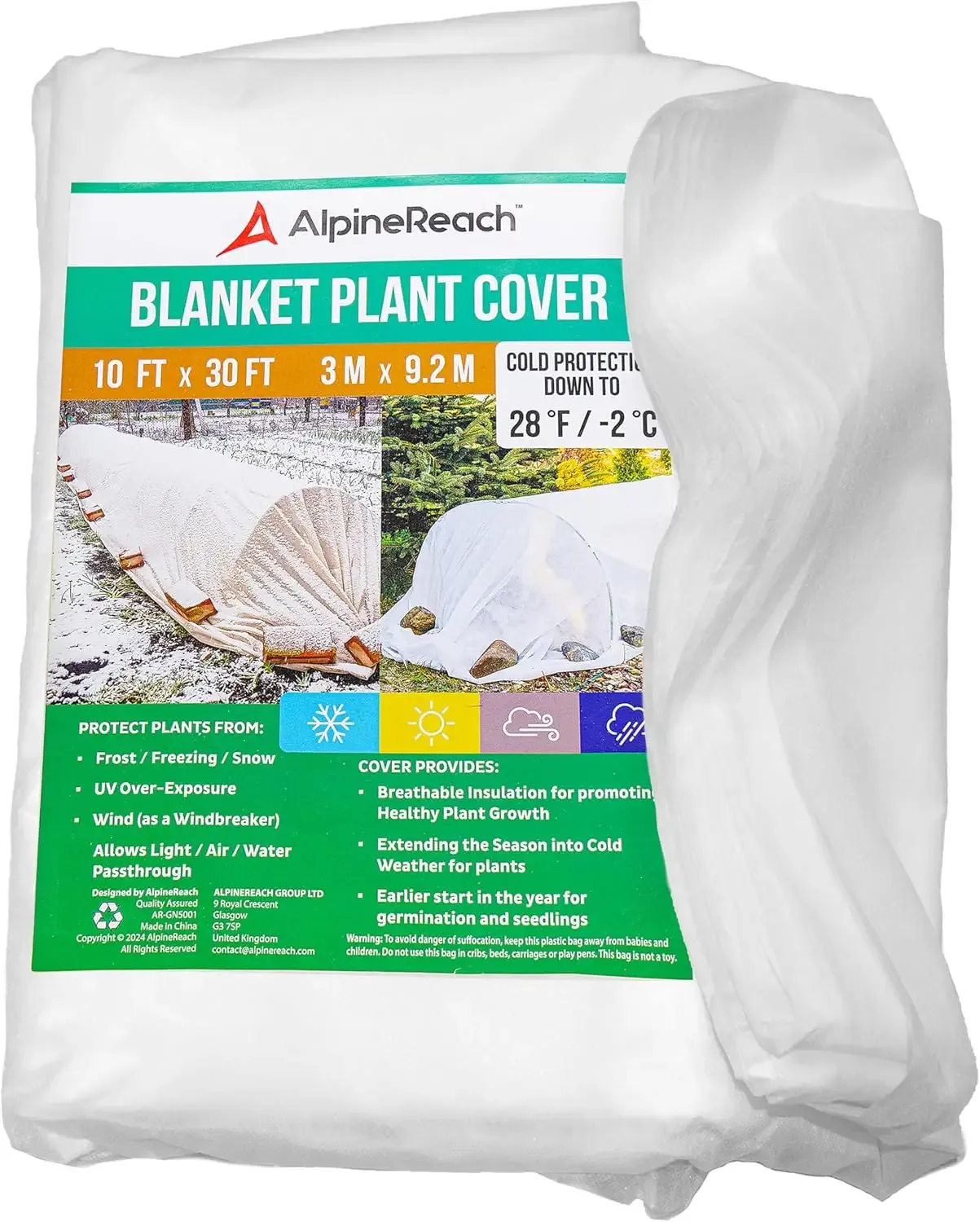
Plant Covers for Frost Protection
I've used these lightweight floating row covers to protect my early spring lettuce starts and tender potato shoots from sudden late frosts in my garden. Unlike heavy blankets, they're light enough that they won't crush delicate foliage and unlike plastic sheets, they let air and water circulate freely so plants don't overheat or rot during the day. They easily trap enough ground heat to keep frost from burning the tips of your crops.
Summary
Use USDA hardiness zones exclusively to determine whether woody perennials, trees, and berry bushes can endure winter cold in your area. For vegetable beds and seasonal plantings, rely on soil temperature readings and historical last frost dates to establish safe planting windows.
Frequently Asked Questions
What do USDA planting zones actually measure?
USDA zones measure only one specific metric: the average annual extreme minimum winter temperature. They do not measure frost dates, soil temperatures, maximum summer heat, or rainfall, making them critical for perennial survival but mostly irrelevant for summer annuals.
Can I use USDA zones to decide when to plant my vegetables?
No. USDA hardiness zones do not indicate frost-free windows or when the soil warms up. For summer annuals like tomatoes, peppers and cucumbers, you should ignore your USDA zone and instead rely on local average last frost dates and soil temperature guidelines.
What is the difference between USDA zones and Sunset climate zones?
While the USDA map is based solely on winter cold, Sunset climate zones factor in multiple critical variables: total rainfall, humidity, elevation, wind, growing season length and marine influence. This makes Sunset zones far more precise, especially in complex Western climates.
Why should I select plants rated one zone colder than my actual zone?
Because USDA zones are calculated using historical averages, they do not account for extreme weather anomalies like a polar vortex. Choosing plants rated one zone colder provides a safety buffer, protecting your long-term perennial investments from unusual winter freezes.
Our Amazon Storefront
Browse all our recommended tools & supplies
Everything we personally use and trust, hand-picked for gardeners like you.

I've been running DWC and Kratky systems for several years and write about what actually works, not textbook theory. Follow along for honest product reviews, practical guides and real grow results.