
As an Amazon Associate, I earn from qualifying purchases. Some links in this article are affiliate links, if you buy through them I may earn a small commission at no extra cost to you.
Quick Summary
- Nutrient Solution: A calibrated mixture of water and dissolved mineral salts providing complete plant nutrition.
- pH Value: The logarithmic scale measuring hydrogen ion concentration; controls mineral solubility and uptake.
- EC & PPM: Conductometric metrics measuring dissolved fertilizer salt density in solution.
- Grow Media: Porous, chemically inert substrates (clay pebbles, perlite, rockwool) supporting root crowns.
- Aeration: Supplying dissolved oxygen to nutrient reservoirs using electric diaphragm pumps and diffuser stones.
Hydroponic cultivation relies on specific chemical and mechanical parameters. Understanding these concepts allows growers to balance reservoirs, size aeration hardware, and diagnose nutrient issues accurately. This glossary defines 12 core technical terms.
Jump to a Key Term
Glossary of Key Terms
Nutrient Solution
A nutrient solution is a formulation of water and dissolved ionic minerals that provides the elements plants require for metabolic function. These include primary macronutrients (nitrogen, phosphorus, potassium), secondary macronutrients (calcium, magnesium, sulfur), and chelated micronutrients (iron, manganese, zinc, copper, boron, molybdenum). Dilute individual concentrates into water sequentially to avoid chemical antagonism and salt precipitation. Track overall strength using EC and PPM measurements.
pH Level
pH represents the negative logarithm of hydrogen ion activity in solution, scaled from 0 to 14. In hydroponics, pH governs the electrical charge of mineral ions and their solubility. The target range for most hydroponic crops is 5.5 to 6.5. Outside this band, ions precipitate into insoluble forms, causing nutrient lockout. Adjust drifting reservoirs with pH adjusters.
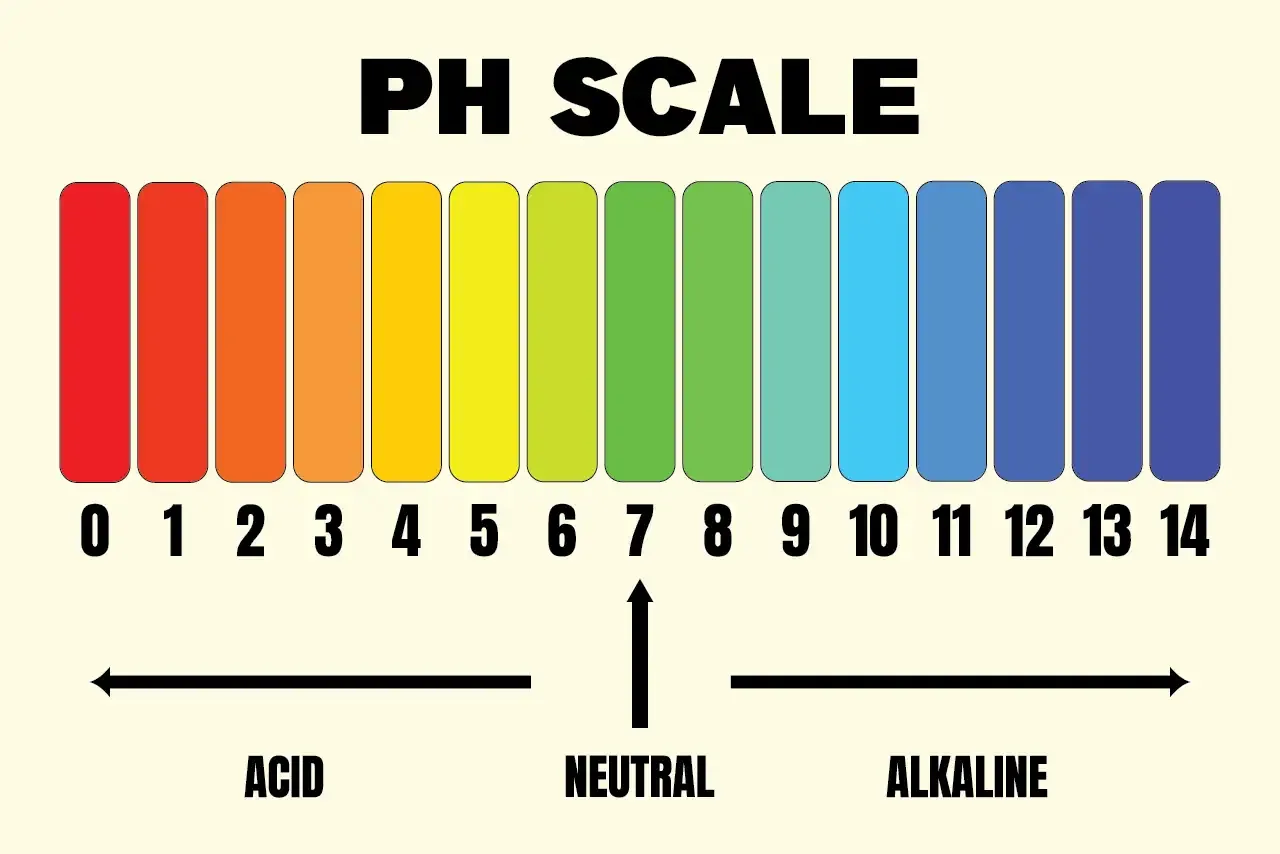
Learn more: Understanding Hydroponic pH Levels and How to Manage Them
pH Adjusters
Chemical agents used to alter hydrogen ion concentration. pH Down consists of dilute acids (commonly food-grade phosphoric acid, nitric acid, or citric acid). pH Up consists of basic hydroxide salts (potassium hydroxide or potassium carbonate). Always dilute concentrated adjusters in a separate cup of water before pouring them into the reservoir, allowing circulation pumps to distribute the solution evenly.
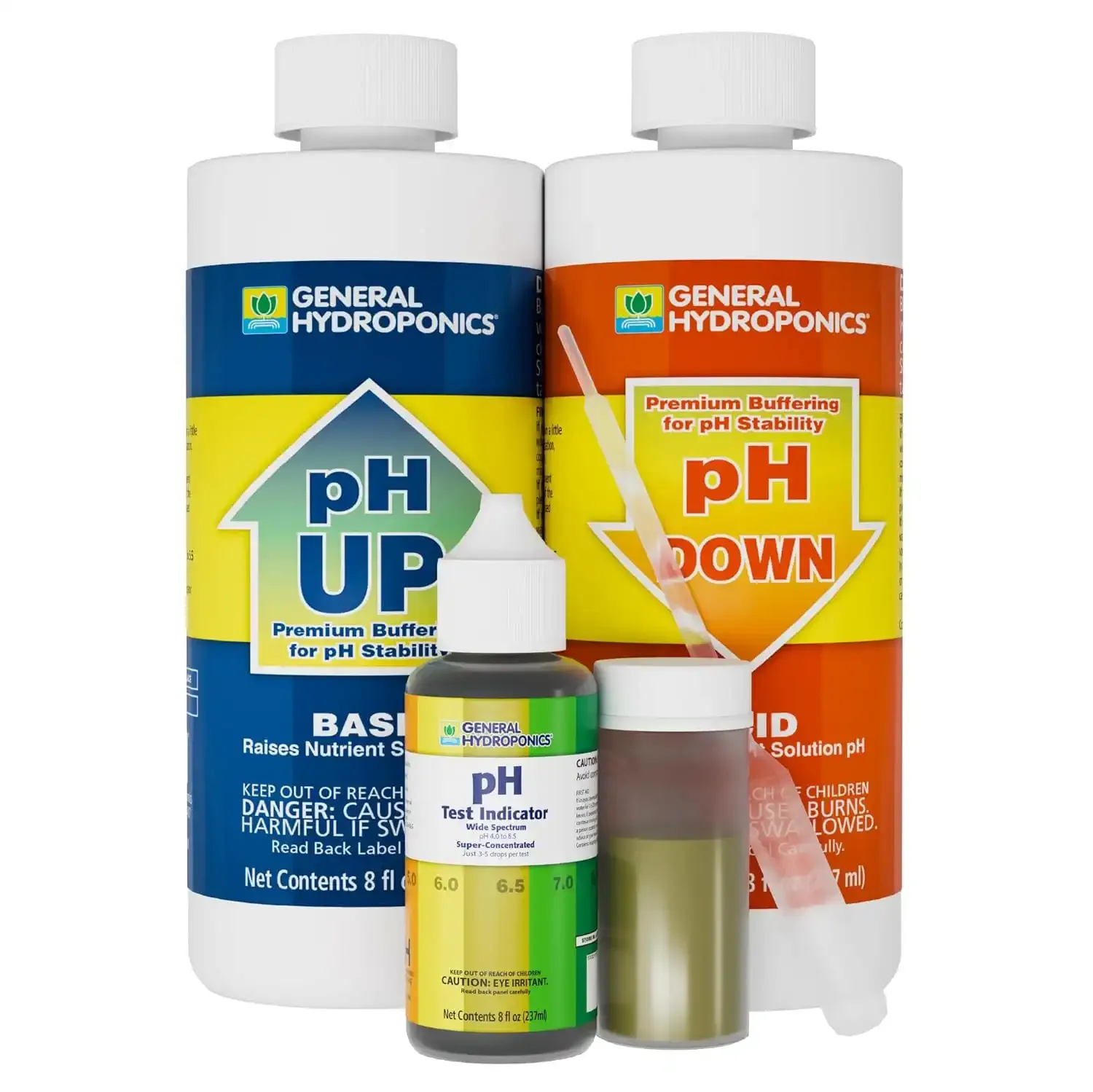
General Hydroponics pH Control Kit
Includes 8 oz bottles of pH Up and pH Down adjusters alongside a liquid dye indicator and test vial for manual calibration checks.
EC and PPM (Nutrient Concentration)
Metrics measuring ionic salt density:
- EC (Electrical Conductivity): Measures the electrical conductivity of the solution in milliSiemens per centimeter (mS/cm). As dissolved fertilizer salts increase, electrical conductivity rises proportionately.
- PPM (Parts Per Million): An estimation of Total Dissolved Solids (TDS) calculated by multiplying the EC reading by a conversion factor.
Conversion Standards:
- 500 Scale (TDS / Hanna): Multiplies EC by 500 (1.0 mS/cm = 500 PPM).
- 700 Scale (Truncheon): Multiplies EC by 700 (1.0 mS/cm = 700 PPM).
Leafy greens and herbs generally require 0.8 to 1.5 mS/cm (400–750 PPM on 500 scale), while fruiting crops require 1.5 to 2.5 mS/cm (750–1250 PPM).
Grow Medium
Inert, porous substrates that physically anchor root crowns inside net pots without contributing nutritional minerals:
- Expanded Clay Pebbles (LECA): Kiln-fired clay balls providing drainage, structural rigidity, and root aeration.
- Rockwool: Spun basalt fibers holding high moisture volumes with uniform porosity. Requires acid pre-soaking to neutralize natural alkaline residues.
- Perlite: Expanded volcanic glass that improves drainage in media blends.
- Coco Coir: Shredded coconut mesocarp fiber with high cation exchange capacity.
Rinse clay pebbles thoroughly prior to use to wash out abrasive silt that fouls pump impellers.
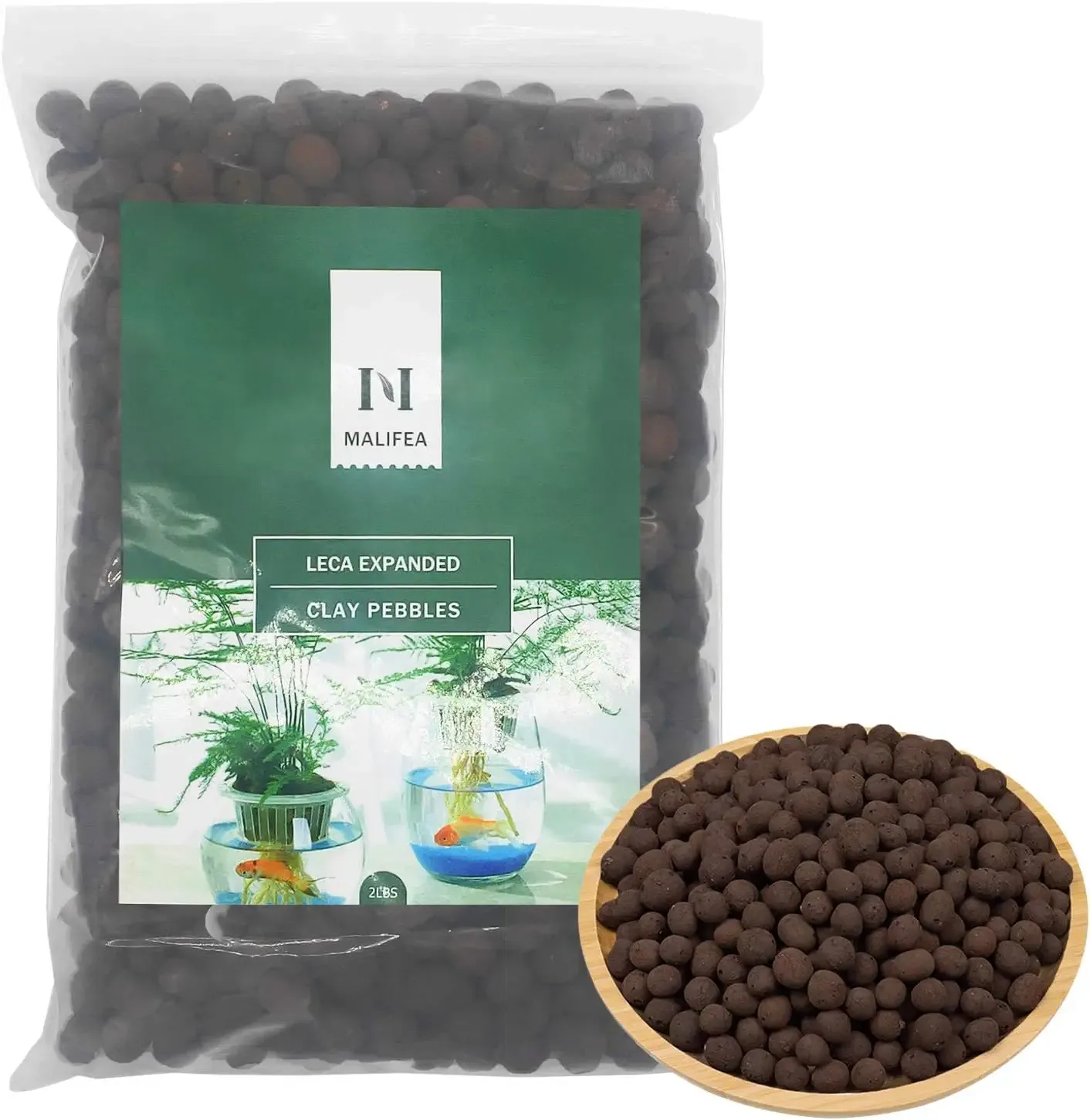
Leca Clay Pellets
Porous expanded clay pebbles providing sterile, reusable physical support and drainage for flood-and-drain and DWC net cups.
Hydroponic System Types
The primary architectural methods for delivering water, oxygen, and nutrients to root systems:
- NFT (Nutrient Film Technique): Recirculates a shallow stream of solution across roots inside sloped channels.
- DWC (Deep Water Culture): Roots suspend directly into an oxygenated fluid bath.
- Kratky Method: Passive non-circulating system utilizing a declining waterline to create an adventitious root air gap.
- Drip Systems: Timed emitters deposit calibrated nutrient doses onto media bases.
- Ebb & Flow: Automated pumps flood root basins on set intervals, draining via gravity.
- Wick Systems: Capillary lines transfer moisture passively from an underlying reservoir.
Review our beginner’s guide to hydroponic systems to evaluate system footprints. For automated flood cycles, see our guide to Ebb and Flow systems.
System Comparison Dashboard
Choose the right system based on your budget, space limits, and crop goals.
| System | Cost | Maint. | Oxygen Source | Best For | Primary Risk |
|---|---|---|---|---|---|
Kratky Method | $ | Very Low | Passive air gap (roots hang in air space above nutrient solution) | Herbs, lettuce, small indoor spaces, first-time growers | Silent dry-out. If the reservoir runs completely dry, roots desiccate and the plant dies quickly without warning. |
Nutrient Film Technique (NFT) | $$ | Medium | Flowing film (roots receive constant flow of shallow, aerated water) | Continuous leafy green production, growers with moderate space | Pump failure or channel clog. If the pump stops or channels get blocked by roots, crops can dry out and be lost in hours. |
Deep Water Culture (DWC) | $$ | Medium | Active aeration (roots sit in solution oxygenated by an air pump) | Fruiting plants (tomatoes, peppers), larger setups, active monitors | Root rot. Roots are submerged constantly; if oxygen drops or water temperatures exceed 75°F (24°C), fungal rot sets in fast. |
Passive air gap (roots hang in air space above nutrient solution)
Herbs, lettuce, small indoor spaces, first-time growers
Silent dry-out. If the reservoir runs completely dry, roots desiccate and the plant dies quickly without warning.
Flowing film (roots receive constant flow of shallow, aerated water)
Continuous leafy green production, growers with moderate space
Pump failure or channel clog. If the pump stops or channels get blocked by roots, crops can dry out and be lost in hours.
Active aeration (roots sit in solution oxygenated by an air pump)
Fruiting plants (tomatoes, peppers), larger setups, active monitors
Root rot. Roots are submerged constantly; if oxygen drops or water temperatures exceed 75°F (24°C), fungal rot sets in fast.
Lighting (PPFD, PAR)
- PAR (Photosynthetically Active Radiation): Spectral waveband from 400 to 700 nanometers that plant photoreceptors (chlorophyll a and b, carotenoids) absorb for photosynthesis.
- PPFD (Photosynthetic Photon Flux Density): Measures the quantity of PAR photons hitting a square meter per second (µmol/m²/s). Leafy greens require 150–250 µmol/m²/s; fruiting crops require 400–800 µmol/m²/s.
Root Zone
The physical environment containing plant roots, surrounding substrate, moisture, and dissolved gases. Maintaining dissolved oxygen levels above 6 mg/L and temperatures between 18°C and 21°C (64°F–70°F) in the root zone prevents colonization by anaerobic water molds (Pythium).
Reservoir
The dedicated, light-blocking container storing the bulk nutrient solution. Buffer capacity increases with volume; larger reservoirs (40 to 100 liters) fluctuate less in temperature, electrical conductivity, and pH than small 10-liter containers.
Aeration
The mechanical process of dissolving atmospheric air into liquid reservoirs. Diaphragm pumps push air through porous mineral stones, creating small bubbles that increase the air-water contact surface.
Size air pumps to supply at least 1 liter per minute of air flow per 4 liters of reservoir volume. For technical sizing tables, review our guide to air pumping in hydroponics.
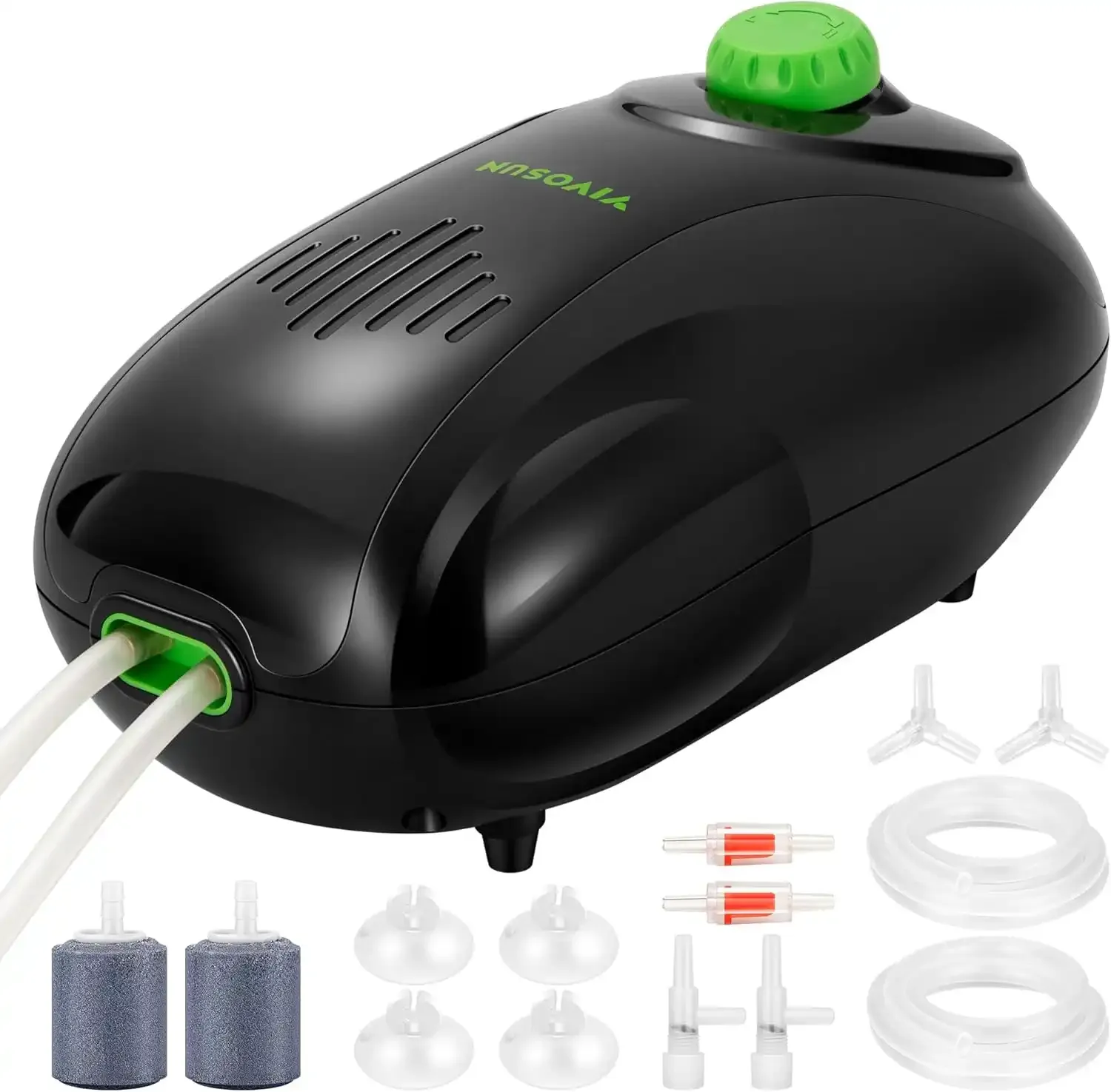
VIVOSUN Air Pump Kit
Commercial 4-outlet diaphragm air pump delivering continuous aeration through multi-port manifolds, air stones, and silicone tubing.
Venturi Pump
A fluid dynamic device using a constricting nozzle to generate a localized pressure drop (the Venturi effect). This vacuum pulls atmospheric air into the flowing water stream, producing micro-bubbles without requiring an external electrical air pump.
Pest Control
Methods for suppressing insect populations in indoor cultivation spaces without synthetic neurotoxins:
- Physical Exclusion: HEPA intake filters, insect screens, and sealed door thresholds.
- Biological Control: Introducing predatory mites (Phytoseiulus persimilis for spider mites) or parasitic wasps (Encarsia formosa for whiteflies).
- Organic Sprays: Potassium silicate foliar sprays or horticultural insecticidal soaps.
Summary
Accurate control of electrical conductivity, solution pH, photoperiod, and dissolved oxygen forms the technical foundation of hydroponics. Monitor these variables systematically using calibrated digital meters to ensure consistent crop yields.
Editor’s Note: Parts of this guide were structured and optimized with the assistance of AI, then thoroughly reviewed, edited and expanded with first-hand growing experience by our author Raymond to ensure practical, real-world accuracy.
Frequently Asked Questions
What is the difference between pH and EC?
pH measures the hydrogen ion concentration (acidity or alkalinity) affecting mineral solubility. EC (Electrical Conductivity) measures the concentration of dissolved mineral salts carrying an electric charge.
What does 'inert grow medium' mean?
An inert medium (such as expanded clay pebbles or perlite) provides physical anchorage for root crowns without releasing minerals or altering solution chemistry.
Our Amazon Storefront
Browse all our recommended tools & supplies
Everything we personally use and trust, hand-picked for gardeners like you.

I've been running DWC and Kratky systems for several years and write about what actually works, not textbook theory. Follow along for honest product reviews, practical guides and real grow results.