As an Amazon Associate, I earn from qualifying purchases. Some links in this article are affiliate links, if you buy through them I may earn a small commission at no extra cost to you.
Quick Summary
- The Problem: Growing pungent herbs like basil or cilantro in a studio apartment can quickly make your living space smell like a commercial kitchen.
- What Are Odorless Plants? Odorless plants are crops that do not emit strong volatile organic compounds (VOCs) or essential oils during their vegetative or flowering phases.
- Top Pick for Greens: Crisphead and Butterhead lettuces produce zero ambient scent and grow rapidly in hydroponic systems.
- Top Pick for Fruiting: Dwarf cucumbers have no foliage smell and produce crisp, scent-free fruit.
- What to Avoid: Skip all mint varieties, basil, oregano and indoor brassicas like broccoli, which can release sulfur compounds.
Indoor gardening guides routinely recommend culinary herbs for beginners. However, in an enclosed studio apartment, vigorous basil, mint, or cilantro plants can quickly fill small rooms with heavy culinary aromas.
If you are setting up an indoor apartment garden, our ultimate guide to apartment hydroponics details layout planning, while the best hydroponic plants for beginners covers crop care fundamentals.
For growers seeking neutral air quality, here are the top odorless and low-odor crops suited to small-space hydroponics.
Quick Comparison
| Crop Group | Ambient Scent Level | Spatial Requirement | Recommended Varieties |
|---|---|---|---|
| Salad Greens | Zero scent | Low | Butterhead, Romaine, Loose-leaf |
| Cooking Greens | Zero scent | Medium | Tuscan Kale, Fordhook Swiss Chard |
| Compact Bush Cucumbers | Zero scent | Medium | Spacemaster Bush |
| Micro-Dwarf Tomatoes | Low (upon leaf contact) | Medium | Tiny Tim, Orange Hat |
| Sweet Mini Peppers | Low (upon leaf contact) | Medium | Mini Belle, Sweet Lunchbox |
1. Salad Greens
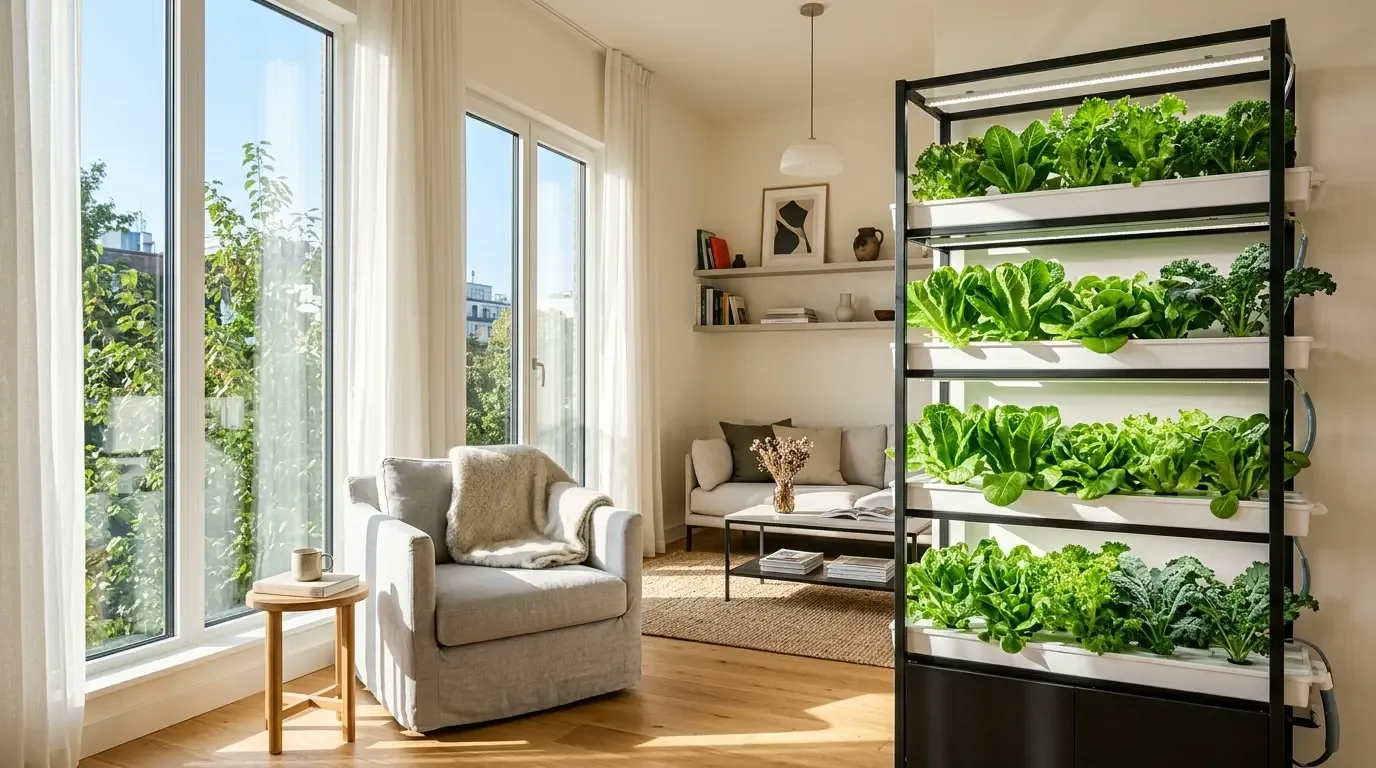
Head and leaf lettuces are completely scent-free indoor crops. They produce no volatile essential oils, require low light levels compared to fruiting crops, and develop harvestable heads in 25 to 30 days.
Because lettuce tissue consists primarily of water and cellulose, it emits no ambient scent into room air. A 15-pack salad greens seed collectionView on Amazon provides continuous harvests of butterhead, red leaf, and romaine varieties without introducing odors.
2. Kale and Swiss Chard
For growers seeking nutrient-dense vegetables, kale and Swiss chard provide robust yields with neutral scent profiles.
Unlike mature cabbage, young curly kale and chard emit no sulfur compounds during cultivation. Ensure ambient humidity remains below 65% to prevent fungal leaf condensation. A packet of Blue Scotch Curled kale seedsView on Amazon provides dependable cut-and-come-again harvesting.
3. Bush Cucumbers
Fruiting vegetables often present indoor challenges, but dwarf cucumbers remain odorless throughout their vegetative, flowering, and fruiting cycles. The yellow blossoms emit no perceptible fragrance to humans, and the foliage lacks glandular scent trichomes.
Select determinate dwarf genetics to prevent vines from sprawling across shelves. Look for Spacemaster bush cucumber seedsView on Amazon, which stay under 24 inches in spread while yielding full-sized crisp fruit. For additional compact cultivars, see our guide to countertop foodscaping: 7 dwarf vegetables and compact herbs.
4. Micro-Dwarf Tomatoes
Tomatoes produce scentless fruit, but their stems and leaves contain solanine and glandular oils that release an earthy aroma when disturbed.
If you keep plants in an undisturbed corner away from walkways, the ambient smell remains undetectable. Choosing true micro-dwarf genetics like Tiny Tim tomato seedsView on Amazon keeps canopies under 12 to 14 inches tall, limiting foliage surface area.
Scented Plants to Exclude
If you require completely scent-neutral indoor air, exclude these species:
- Mints (Peppermint, Spearmint): Emit intense menthol oils that permeate soft fabrics and upholstery.
- Sweet Basil and Oregano: Release high levels of linalool and eugenol into warm grow areas.
- Indoor Head Brassicas (Broccoli, Cabbage): Can produce sulfurous glucosinolate odors if temperatures exceed 75°F (24°C).
- Cilantro: Produces potent aldehyde scents that carry throughout residential rooms.
Maintaining active water circulation as described in the importance of air pumping in hydroponics ensures your reservoir water stays fresh and scent-free.
Editor’s Note: Parts of this guide were structured and optimized with the assistance of AI, then thoroughly reviewed, edited and expanded with first-hand growing experience by our author Raymond to ensure practical, real-world accuracy.
Frequently Asked Questions
Why do some indoor plants smell so strong?
Culinary herbs like basil, mint, and rosemary produce volatile organic compounds (VOCs) and aromatic terpenes in their glandular trichomes. In enclosed rooms with limited air exchange, these aromas concentrate rapidly.
Are tomato plants truly odorless?
The ripening fruit is scentless, but tomato foliage carries aromatic glandular hairs that release an earthy, pungent scent when brushed. Position tomato containers away from high-traffic doorways to prevent brushing against leaves.
How do I stop my hydroponic water from smelling?
Sulfur or stagnant swamp odors indicate anaerobic root rot (*Pythium*) rather than plant scent. Keep reservoir water aerated with an air pump, maintain water temperatures below 68°F (20°C), and introduce beneficial bacteria to keep water fresh.
Do grow lights make plants smell stronger?
High thermal output from unventilated fixtures increases leaf surface temperatures, accelerating the evaporation of volatile plant oils. Using cool-running horticultural LEDs minimizes thermal scent release.
Our Amazon Storefront
Browse all our recommended tools & supplies
Everything we personally use and trust, hand-picked for gardeners like you.

I've been running DWC and Kratky systems for several years and write about what actually works, not textbook theory. Follow along for honest product reviews, practical guides and real grow results.