As an Amazon Associate, I earn from qualifying purchases. Some links in this article are affiliate links, if you buy through them I may earn a small commission at no extra cost to you.
Quick Summary
- Fall Planting: Plant garlic cloves in mid-to-late autumn, about 2–4 weeks before the ground freezes.
- Climatic Selection: Grow hardneck garlic in cold climates and softneck varieties in mild winter areas.
- Soil Prep: Work compost and bone meal into well-drained, loose soil to support root development.
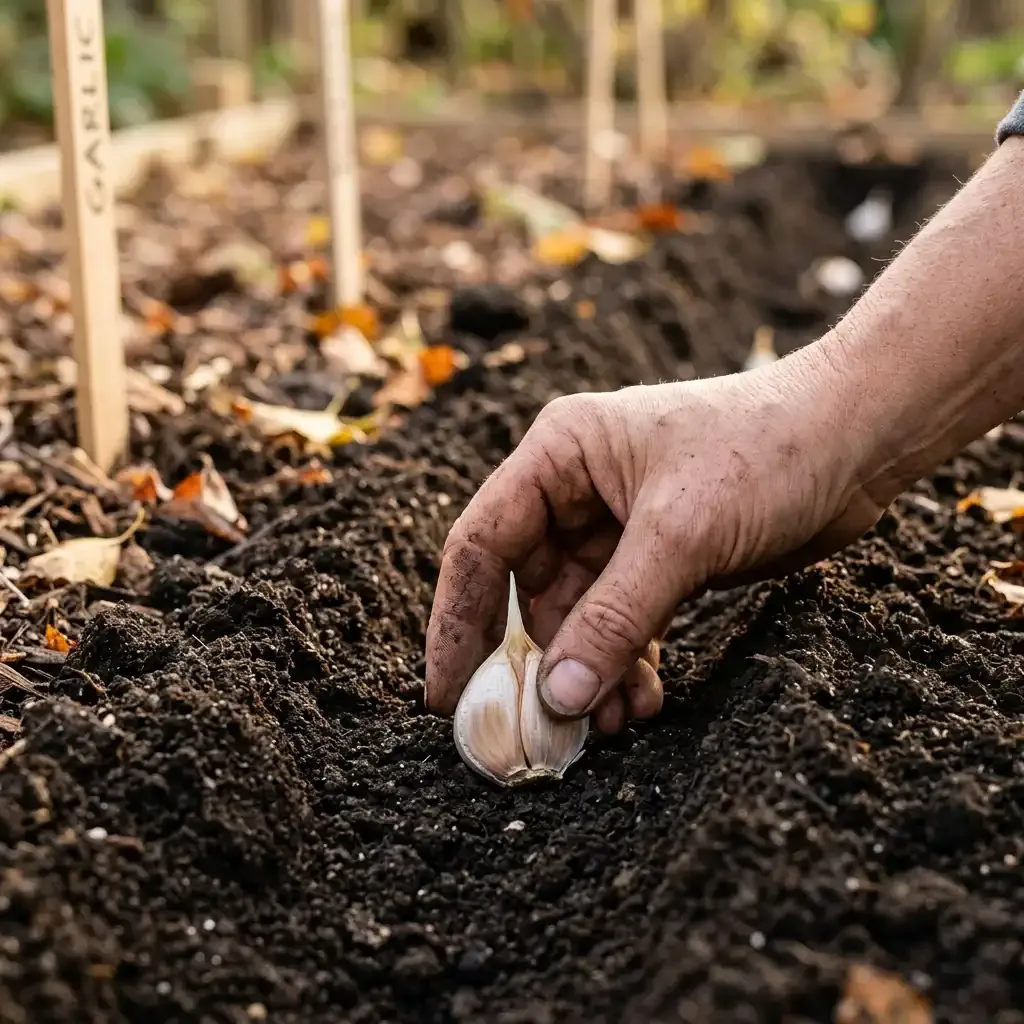
- Planting Depth: Plant individual cloves pointed-end up, 2 inches deep and spaced 6 inches apart.
- Winter Protection: Add 3–4 inches of straw mulch to insulate garlic beds from hard freeze cycles.
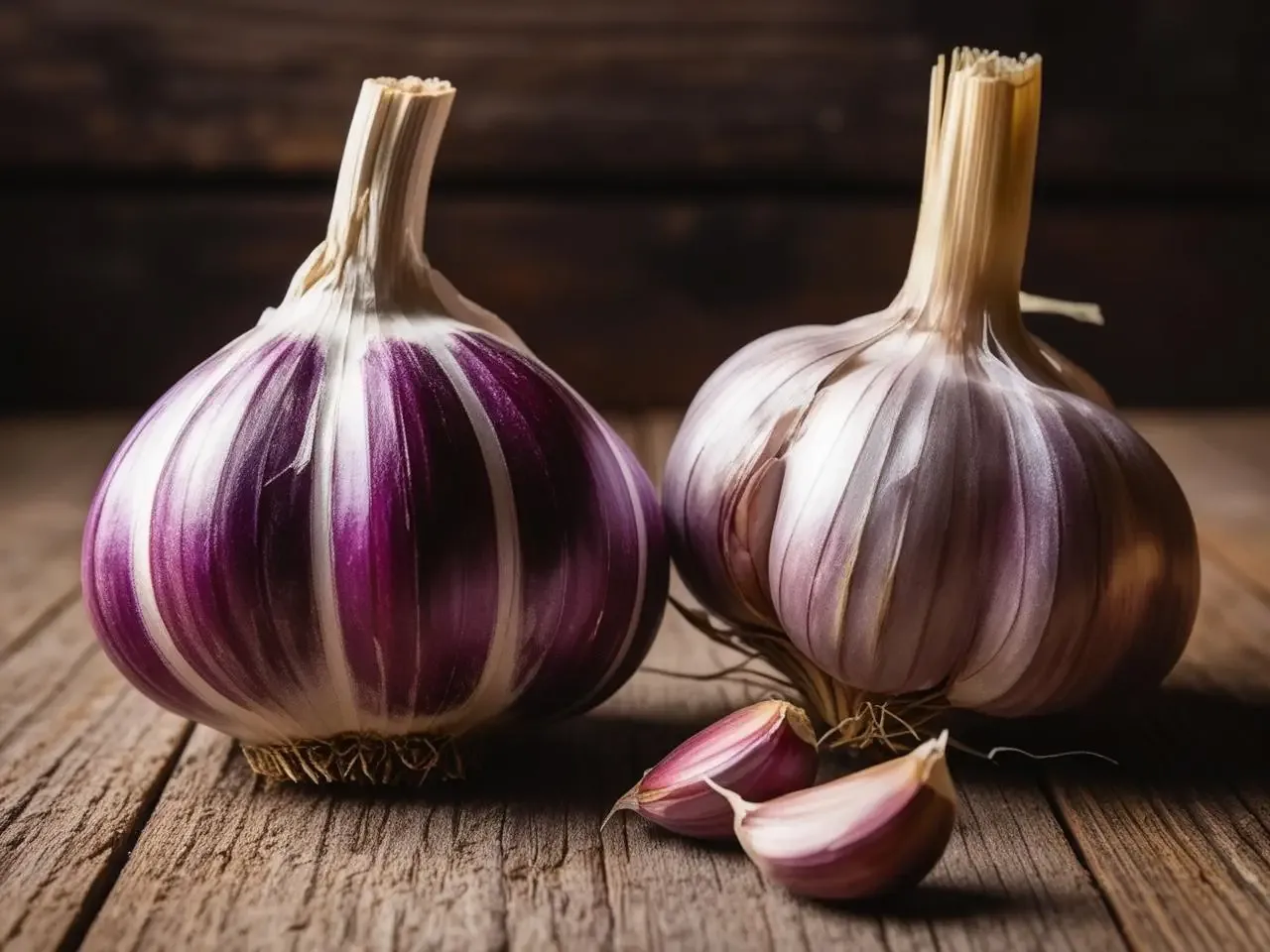
Garlic requires a sustained period of cold temperatures, known as vernalization, to trigger bulb division into individual cloves. Planting in autumn allows cloves to anchor roots before soil freezes solid, resulting in larger, well-segmented bulbs by midsummer.
Aim to plant 2 to 4 weeks before the ground freezes solid (typically October to November in Zones 5 to 7). Sowing too early causes excessive green top-growth that gets burned back by hard winter freezes; sowing too late prevents roots from establishing, reducing bulb size the following summer.
Why Fall Planting Outperforms Spring Sowing
Spring-planted garlic frequently produces “rounds”: single, unsegmented bulbs similar to small onions. Exposing cloves to 6 to 8 weeks of winter temperatures below 40°F (4.4°C) triggers the hormonal cascade necessary to split the clove into a multi-chambered head. Fall-planted garlic also matures 3 to 4 weeks earlier in summer than spring-planted stock.
When determining your planting calendar, remember that USDA hardiness zones track minimum winter lows, not frost dates. Schedule planting based on historical local ground freezes.
Hardneck vs. Softneck Garlic
Selecting the proper botanical subspecies determines overwintering success:
- Hardneck Garlic (Allium sativum var. ophioscorodon):
- Climate Suitability: Best for cold-winter regions (Zones 3 through 6).
- Structure: Features a stiff central woody stem and produces edible curly flower stalks (scapes) in late spring.
- Bulb Characteristics: Fewer, larger cloves organized in a single circle around the central stem; bold, pungent flavor profiles.
- Top Cultivars: German White, Music, Chesnok Red.
- Softneck Garlic (Allium sativum var. sativum):
- Climate Suitability: Ideal for moderate to mild winter regions (Zones 7 and warmer).
- Structure: Pliable stems that can be braided for attractive, long-term pantry storage.
- Bulb Characteristics: Tiers of overlapping smaller cloves; milder flavor; stores 8 to 10 months.
- Top Cultivars: Inchelium Red, California Early, Silverskin.
Soil Preparation
Garlic roots are sensitive to compaction and soggy soils. Saturated conditions cause bacterial rot during winter thaw cycles.
- Test Soil pH: Garlic thrives between pH 6.0 and 7.0. Check your bed with a 4-in-1 digital soil testerView on Amazon.
- Incorporate Compost: Mix in a 2-inch layer of finished compost and a handful of bone meal or rock phosphate to fuel root development.
- Ensure Drainage: If native soil is heavy clay, planting in a raised garden bed ensures excess winter moisture drains away freely from dormant cloves.
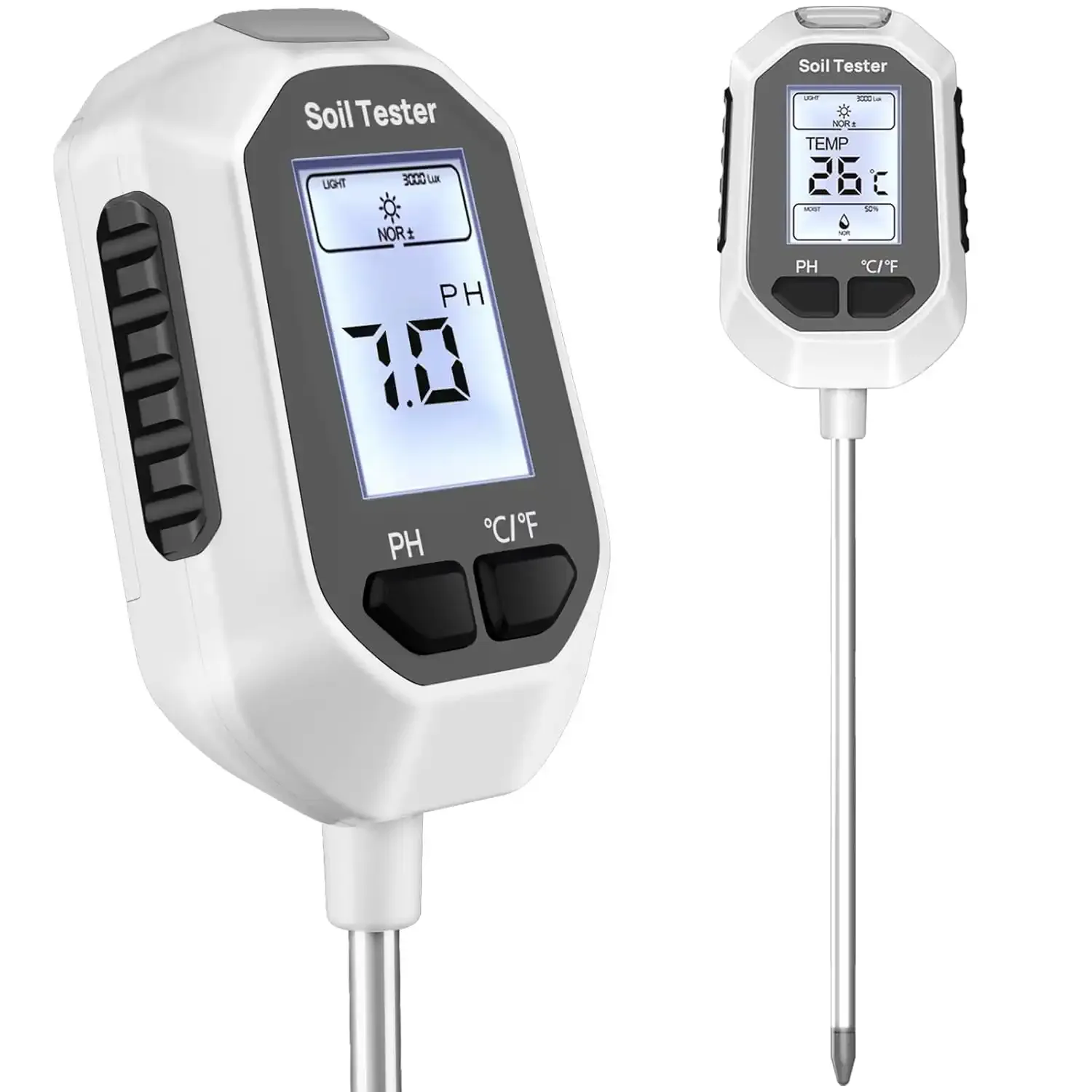
4-in-1 Soil Moisture, pH, Temperature and Light Tester
A versatile 4-in-1 tool that measures soil moisture, pH, temperature and sunlight levels to take the guesswork out of plant care. Featuring a backlit LCD screen and a rotating 45° display, it gives you quick, easy-to-read soil stats in just 10 seconds.
Step-by-Step Planting Sequence
- Separate the Cloves: Break bulbs apart 24 to 48 hours before planting, keeping papery wrappers intact. Select only the largest, firmest outer cloves; smaller interior cloves yield smaller mature bulbs.
- Orient Cloves Correctly: Always plant cloves with the pointed tip pointing upward and the flat root plate facing downward. Planting upside-down forces stems to loop around under the soil, producing deformed heads.
- Depth and Spacing: Dig individual holes 2 to 3 inches deep (measured from the top of the clove). Space cloves 6 inches apart in rows 10 to 12 inches apart. A long-handled bulb planterView on Amazon ensures uniform depth without straining your back.
- Cover and Settle: Backfill with loose soil and water lightly to eliminate air pockets around the root plate.
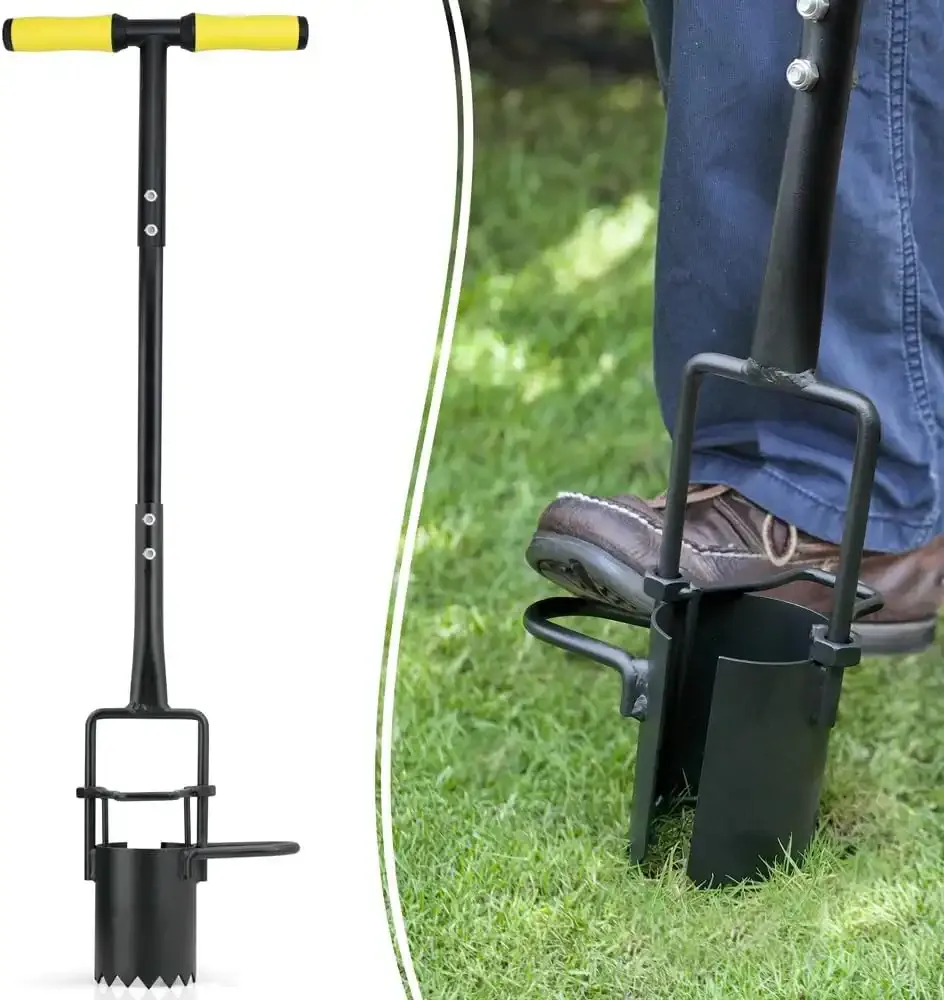
Heavy-Duty Long-Handled Bulb Planter
Plant spring bulbs and garlic cloves from a comfortable standing position. Features a double-pedal foot press for pushing through tough soil, a serrated steel base and a simple core release mechanism.
Mulching for Winter Insulation
Mulch prevents “frost-heaving”: the rapid freeze-and-thaw cycle of bare soil that pushes planted cloves up out of the ground.
Cover the planted bed with a 4 to 6-inch layer of clean organic straw mulchView on Amazon or shredded hardwood leaves. In extreme northern zones, layering a breathable frost cloth over the mulch prevents wind from scattering straw across the yard.
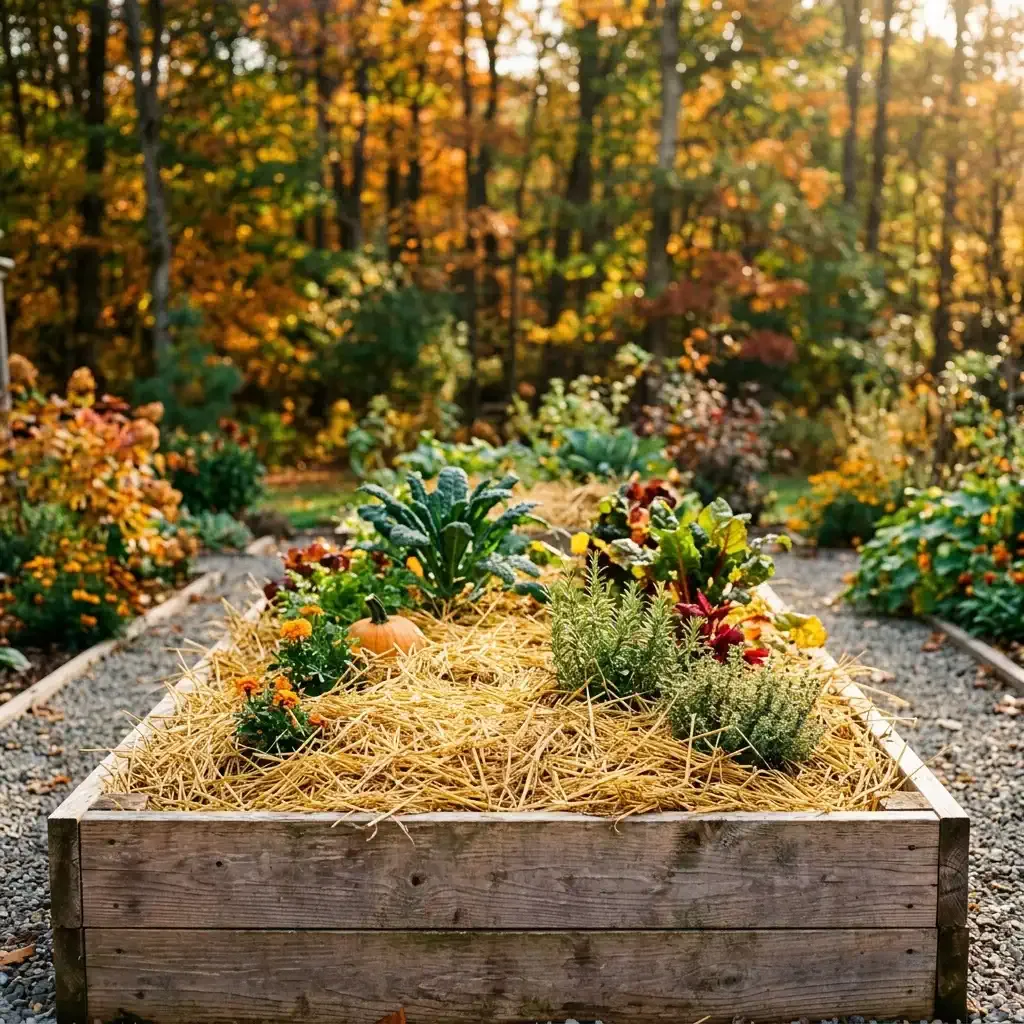
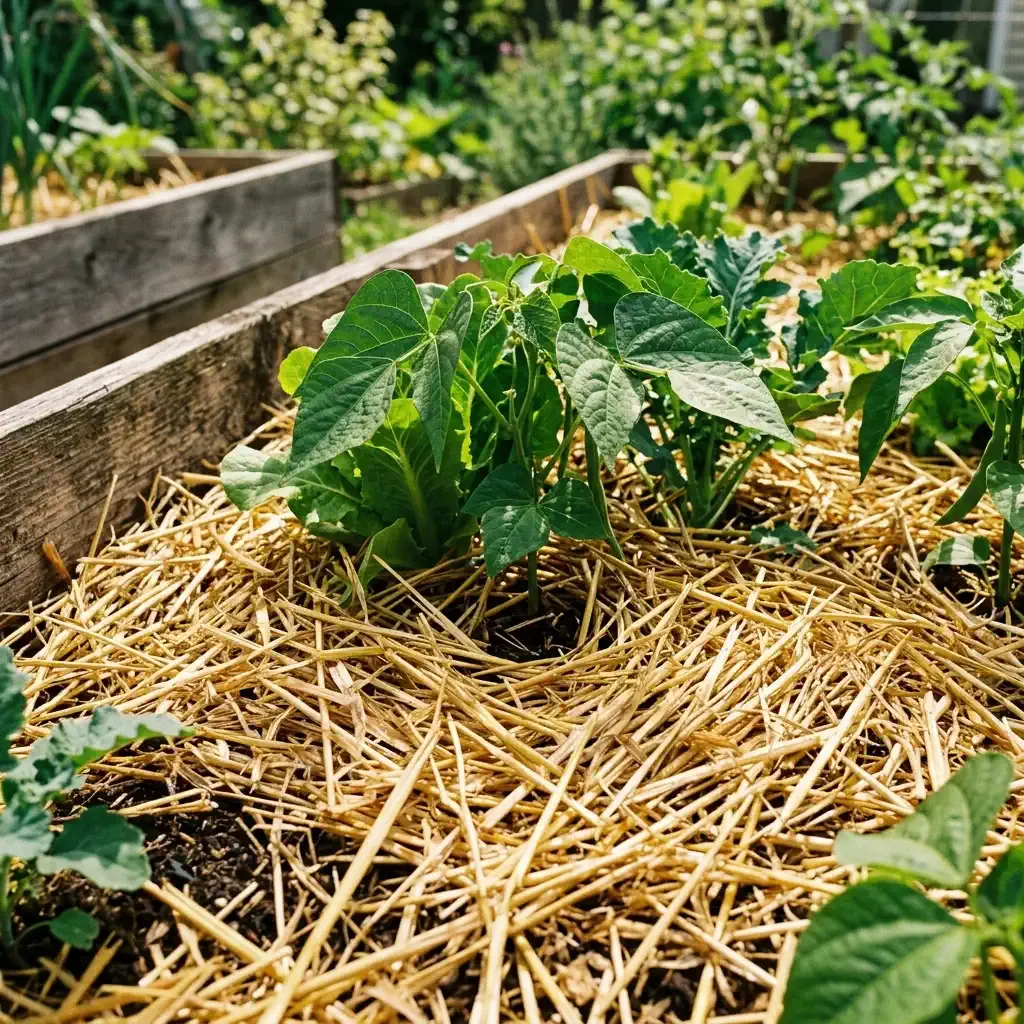
Organic Weed-Blocking Straw Mulch
A clean, dust-free straw mulch that provides excellent insulation for roots. Prevents soil erosion, retains moisture and naturally breaks down to feed the soil over winter.
Spring and Early Summer Care
- Mulch Management: As shoots push through in March, gently rake back heavy clumps of straw to expose soil to sunlight and speed warming, leaving a 1-inch layer to suppress spring weeds.
- Early Nitrogen Feeding: Drench beds with fish emulsion or blood meal when shoots reach 6 inches tall to encourage lush leaf development. Stop fertilizer by late May; excess nitrogen late in the cycle promotes foliage over bulb swelling.
- Harvesting Scapes (Hardneck Only): In late spring, hardneck garlic sends up curly flower stalks called scapes. Snap them off at the base once they form one complete curl. Removing scapes redirects carbohydrates back into expanding the underground cloves.
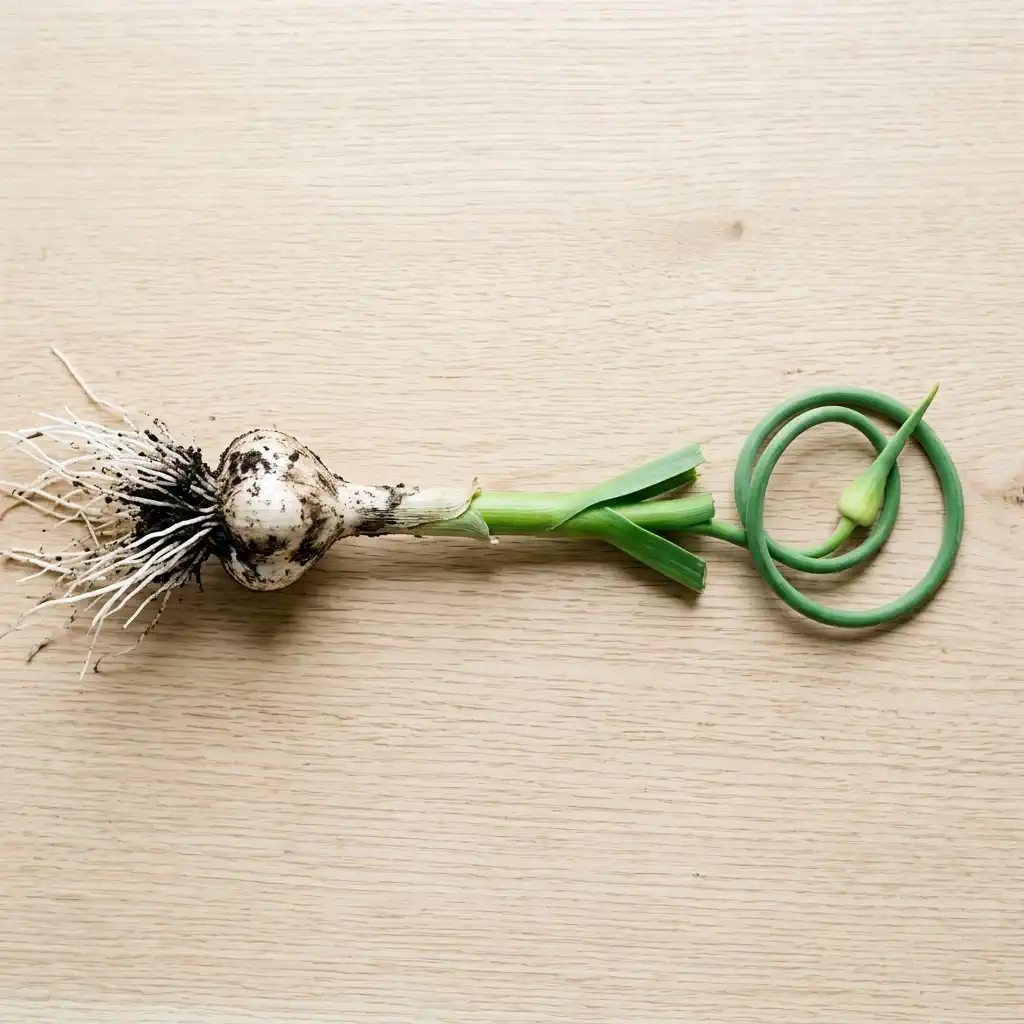
Note
Garlic scapes appear only on hardneck varieties. Softneck garlic forms bulbs naturally without developing central flower stalks.
Autumn Garden Coordination
Once garlic is planted and mulched, prepare the rest of your garden beds for winter. Review our guide to essential crops to plant before frost and complete your autumn checklist with how to prepare your garden for fall.
Frequently Asked Questions
When is the best time to plant garlic in the fall?
The ideal time is mid-to-late autumn, typically between October and November, about 2 to 4 weeks before your local ground freezes.
What is the difference between hardneck and softneck garlic?
Hardneck garlic is cold-hardy, produces a stiff flowering stem (scape) and has fewer, larger cloves. Softneck garlic grows better in warm climates, has flexible stems ideal for braiding and stores longer.
Can you plant store-bought garlic cloves?
It is not recommended. Grocery store garlic is often treated with sprout inhibitors to keep it fresh on shelves longer and it might not be a variety suited to your local climate. Additionally, store-bought garlic can introduce soil-borne diseases to your garden. Always buy certified disease-free seed garlic.
Why did my garlic produce only one single round bulb instead of dividing into cloves?
This is called a 'round,' and it happens when the garlic clove did not experience enough cold weather (vernalization) to trigger bulb division. This usually happens if garlic is planted too late in the spring instead of the fall or if the winter was unusually warm.
Should garlic cloves be soaked before planting?
Soaking garlic cloves in a mixture of water, baking soda and a splash of liquid seaweed for a few hours before planting can help sanitize the cloves against fungal diseases and stimulate early root growth, though it is optional.
What is the best fertilizer for garlic and onions?
A nitrogen-rich organic fertilizer like fish emulsion or blood meal is best for garlic and onions during their early spring growth stages. Avoid high-nitrogen fertilizers close to harvest, as this will promote leaf growth at the expense of bulb size.
How long does it take to grow a full bulb of garlic?
Garlic takes about 7–9 months to mature from planting to harvest.
How do you root garlic bulbs?
Plant garlic cloves in moist, well-draining soil and ensure they’re watered lightly to promote root growth. Do not submerge them in water to root beforehand, as they will rot.
Our Amazon Storefront
Browse all our recommended tools & supplies
Everything we personally use and trust, hand-picked for gardeners like you.
I've been running DWC and Kratky systems for several years and write about what actually works, not textbook theory. Follow along for honest product reviews, practical guides and real grow results.