As an Amazon Associate, I earn from qualifying purchases. Some links in this article are affiliate links, if you buy through them I may earn a small commission at no extra cost to you.
Quick Summary
- Hydroponic Pineapple: Grow pineapples indoors using a Deep Water Culture (DWC) or large container system.
- Crown Preparation: Twist off the top crown of a fresh pineapple and root it in water for 2–3 weeks.
- Feeding Schedule: Feed heavy nitrogen during vegetative growth, switching to high potassium and phosphorus during bloom.
- Gas Trick: Force early blooming around month 12 by using ethylene gas from a ripening apple.
- Long-Term Wait: Expect fruit to ripen 18 to 24 months after starting the plant.
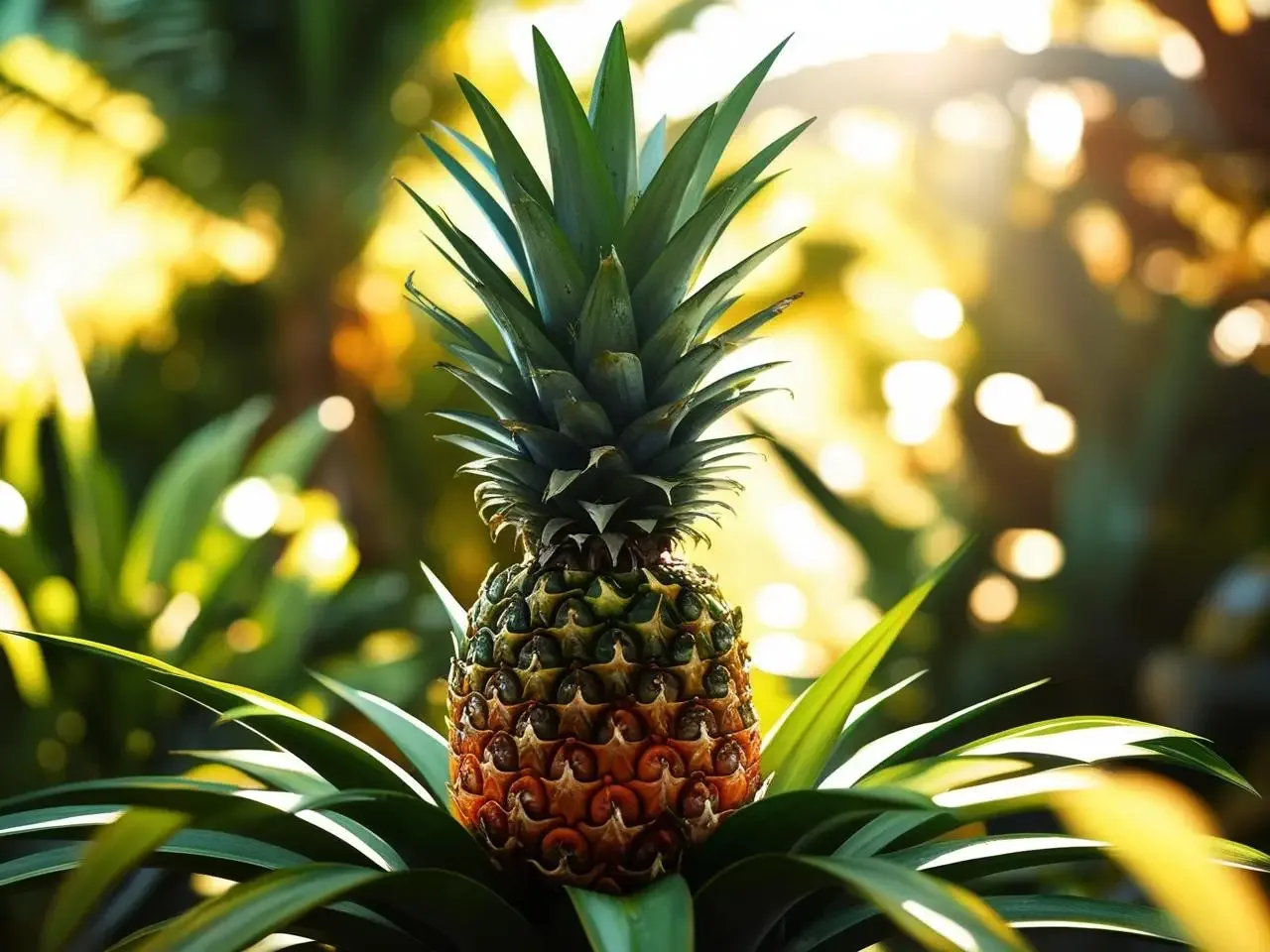
A pineapple crown takes 18 to 24 months to fruit in a hydroponic system. Growing a pineapple hydroponically is an extended project, but the payoff is a homegrown fruit far sweeter, juicier, and more aromatic than typical grocery store stock harvested unripe for shipping.
Because hydroponics allows you to regulate nutrient availability and environmental conditions, you can shave months off the traditional outdoor soil timeline. Here is the practical sequence for transitioning a store-bought pineapple crown into a productive indoor Deep Water Culture system.
Quick Grow Stats
| Statistic | Requirement |
|---|---|
| Rooting Time | 14–21 Days |
| EC Range | 1.8–2.2 (vegetative) / 1.5–1.8 (fruiting) |
| pH Range | 5.5–6.0 |
| Ideal Temperature | 68°F–86°F (20°C–30°C) |
| Light Duration | 14–16 Hours / Day |
| Time to Harvest | 18–24 Months |
Benefits of Growing Pineapple Hydroponically
Taking pineapples out of the soil eliminates their two biggest natural vulnerabilities: poor root aeration and soil-borne pests. In garden soil, pineapples are susceptible to root-knot nematodes and root rot if drainage is sluggish. A water-based system delivers dissolved oxygen and minerals directly to the root zone without soil compaction.
Controlling reservoir temperature and lighting also keeps the plant growing through winter, avoiding the dormancy caused by seasonal cold snaps outdoors.
Choosing the Right Hydroponic System
Pineapples can start in passive setups, but long-term success requires active aeration. Review our breakdown of different hydroponic systems to understand the mechanics.
While the Kratky method works well for rooting a young crown, mature pineapples develop a wide, heavy rosette of leaves and consume several gallons of water weekly by month twelve.
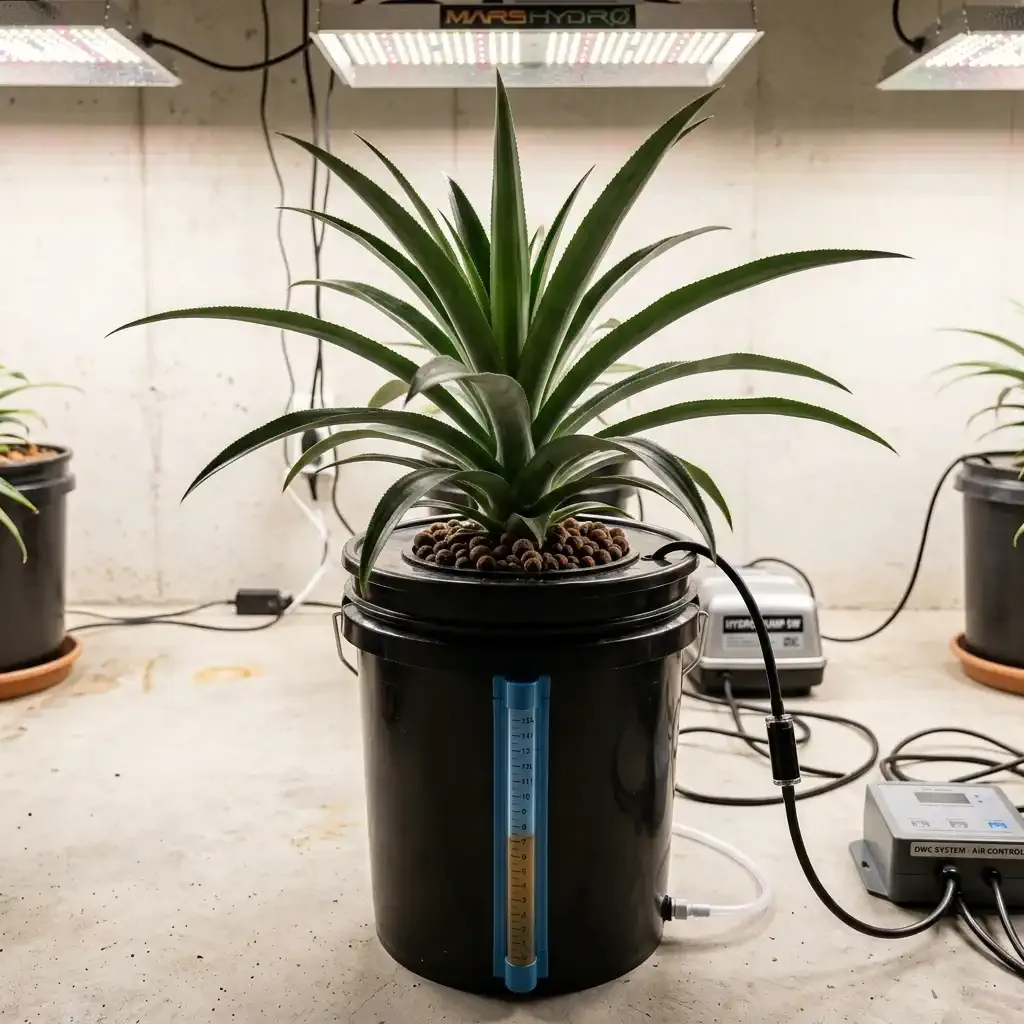
For a full-cycle grow, Deep Water Culture (DWC) is the ideal format. Continuous aeration from an air stone supplies dissolved oxygen to the thick root mass, preventing stagnation. A sturdy 5-gallon black bucket provides the physical ballast needed to keep a top-heavy, fruiting plant upright.
Preparing and Rooting the Pineapple Crown
Start with a ripe pineapple showing vibrant green crown leaves. Avoid crowns with dried, brown leaves or signs of mold near the core.
Do not slice the crown off with a knife. Instead, grip the fruit in one hand, grasp the leafy crown near its base with the other, and twist firmly. The crown snaps cleanly away from the fruit. Slicing with a knife leaves fruit flesh behind, which quickly rots in water and breeds pathogens that kill the crown before roots appear.
After twisting it off, strip away the lower 1 to 2 inches of small leaves around the base. This exposes the root primordia (the small brown nodes along the stem where roots sprout). Let the crown dry on a counter for 1 to 2 days. This callousing period lets the exposed leaf scars heal over, creating a protective barrier against fungal rot.
Once calloused, set the crown in a glass jar of clean water so that only the stripped base stays submerged, keeping the upper foliage dry.
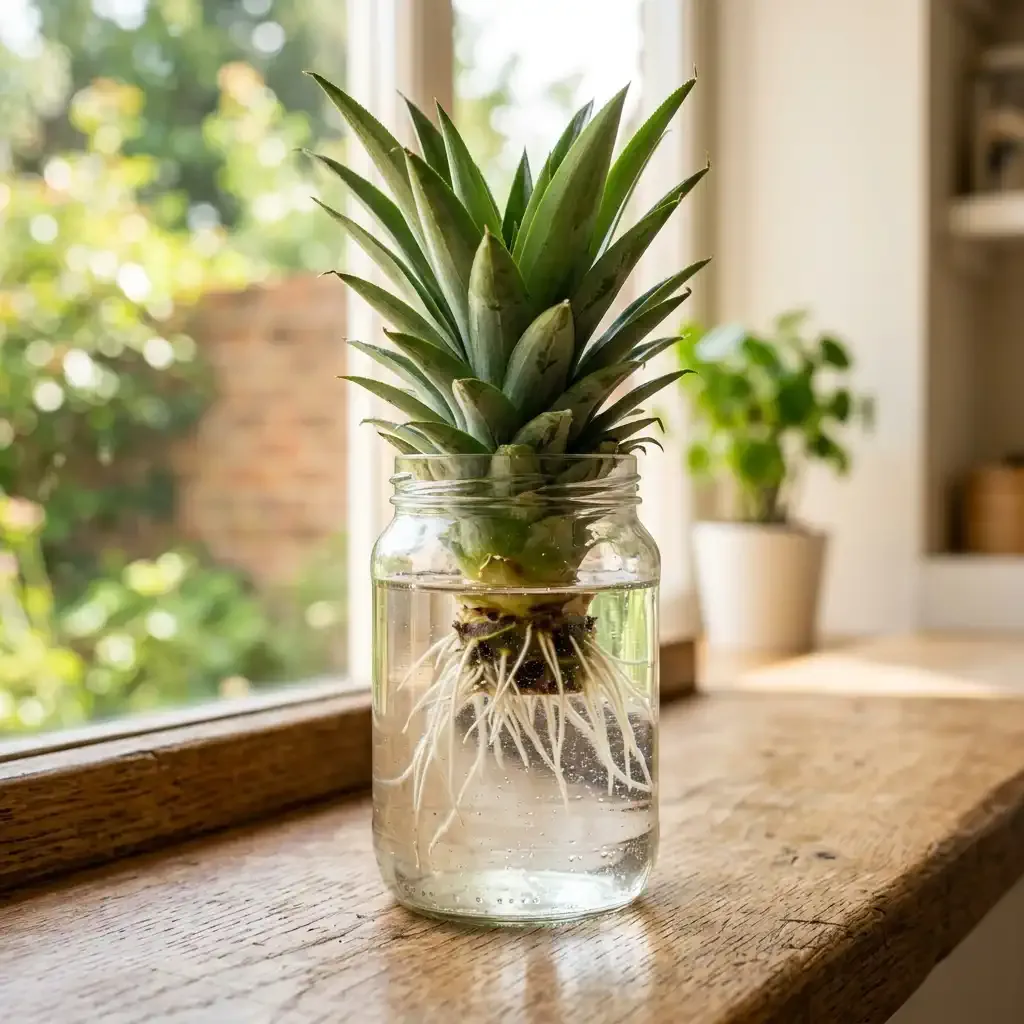
Place the jar on a warm, well-lit shelf. Change the water every two days to maintain clean conditions. Within 10 to 14 days, white roots emerge from the stalk. Once these roots reach 2 to 3 inches long (usually by week three), transplant the crown into your DWC bucket. For general propagation principles, review our guide on how to germinate seeds for hydroponics.
Setting Up Your DWC Reservoir and Transplants
Use an opaque 5-gallon bucket to block light and suppress algae growth. Fit the bucket with a 6-inch heavy-duty net pot lid.
Lower the rooted crown into the net pot and fill around it with expanded clay pebbles (LECA). The pebbles stabilize the heavy crown while letting roots branch freely into the nutrient solution below.
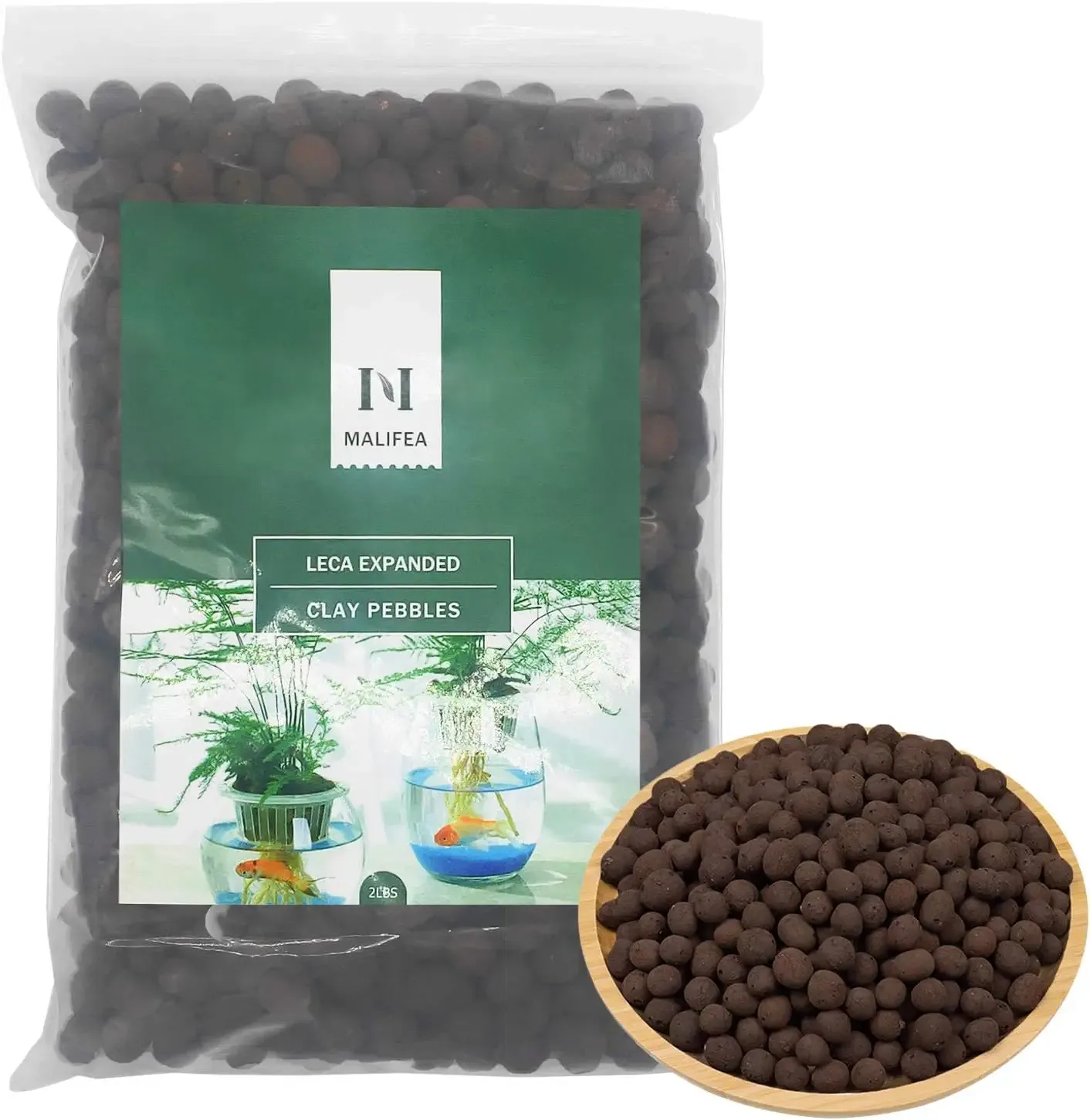
Leca Clay Pellets
These clean, pH-neutral expanded clay pebbles are the gold standard for DWC systems. They provide excellent physical support for top-heavy pineapple plants while keeping the root crown elevated and dry to prevent stem rot.
Fill the bucket so the water level just touches the bottom of the net pot, allowing the clay pebbles to wick moisture upward to the young root base. Once roots drop through the mesh into the water, lower the solution by 1 to 2 inches. This preserves an oxygenated air gap between the net pot and the water surface to protect against stem rot.
Maintaining Ideal Growing Conditions
Pineapples are tropical plants. Growing them indoors requires consistent heat and strong lighting.
Light Requirements
Pineapples need direct, bright light for 14 to 16 hours daily. A windowsill cannot sustain them through a 24-month fruiting cycle. Mount a full-spectrum LED grow light 18 to 24 inches above the canopy.
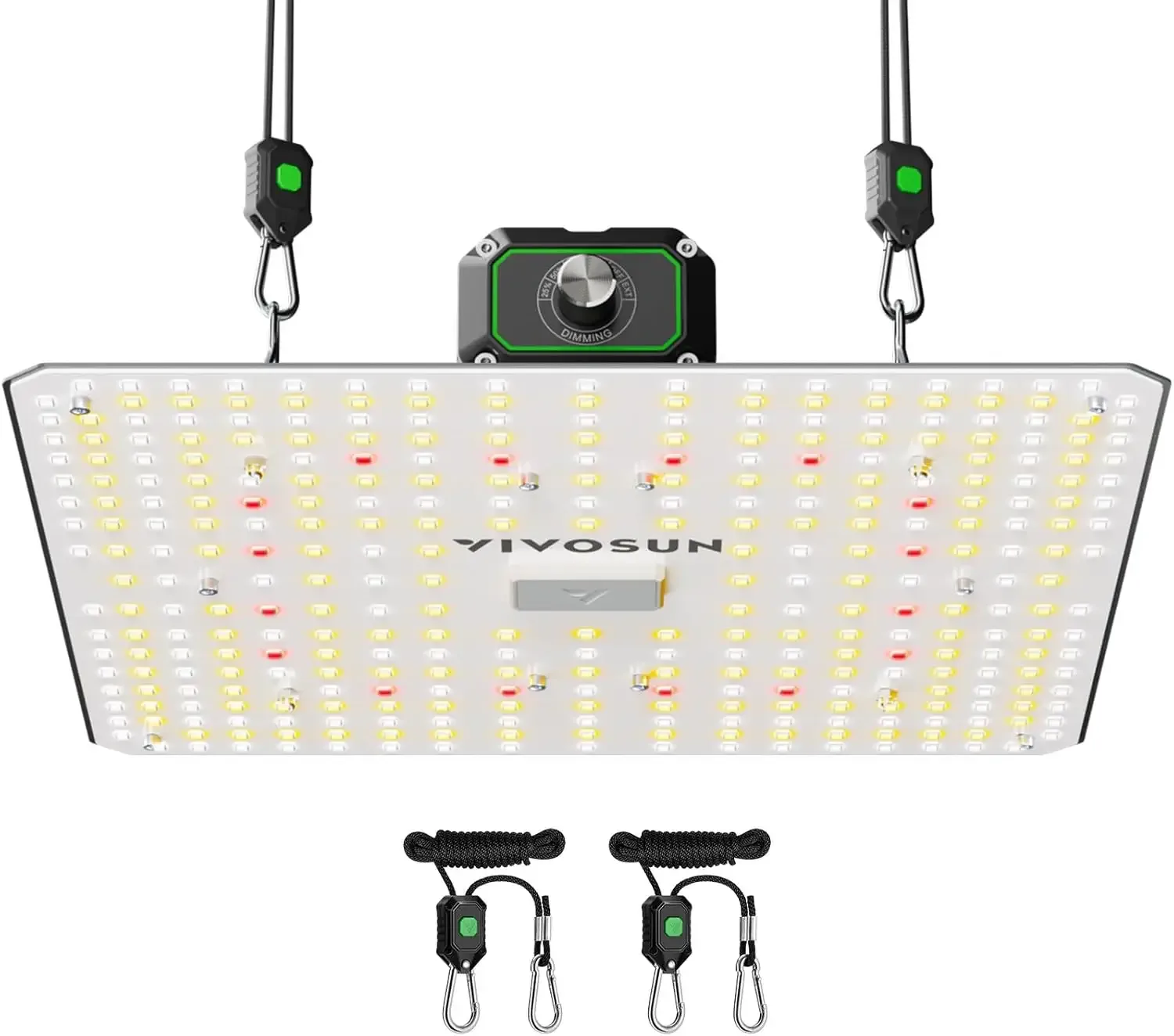
VIVOSUN LumaLight 100W LED Grow Light
A full-spectrum LED panel that delivers the intense, tropical-level light pineapples need to thrive and eventually fruit indoors. Features a dimmable driver and app control to adjust intensity throughout the 24-month cycle.
Temperature and Airflow
Keep the grow space between 68°F and 86°F (20°C to 30°C). Temperatures below 60°F (15°C) stall vegetative growth. Run an oscillating fan nearby to circulate air around the dense leaves, which prevents stagnant moisture pockets and fungal spots.
pH Management
Pineapples prefer an acidic root zone. Keep the nutrient solution between 5.5 and 6.0 pH. Above 6.2, micronutrients like iron and zinc become unavailable, triggering chlorosis. Test your solution twice weekly with a reliable meter. For calibration and correction routines, refer to our guide on understanding hydroponic pH levels.

Bluelab pH Pen
Fast, accurate digital pH meter with automatic temperature compensation and waterproof design. The go-to meter for hydroponic growers who need reliable readings every time.
Nutrient Feeding Schedule
Because pineapples grow in the reservoir for up to two years, feed them in distinct phases using a 3-part nutrient formula (Grow, Micro, Bloom) so you can tailor mineral ratios over time.
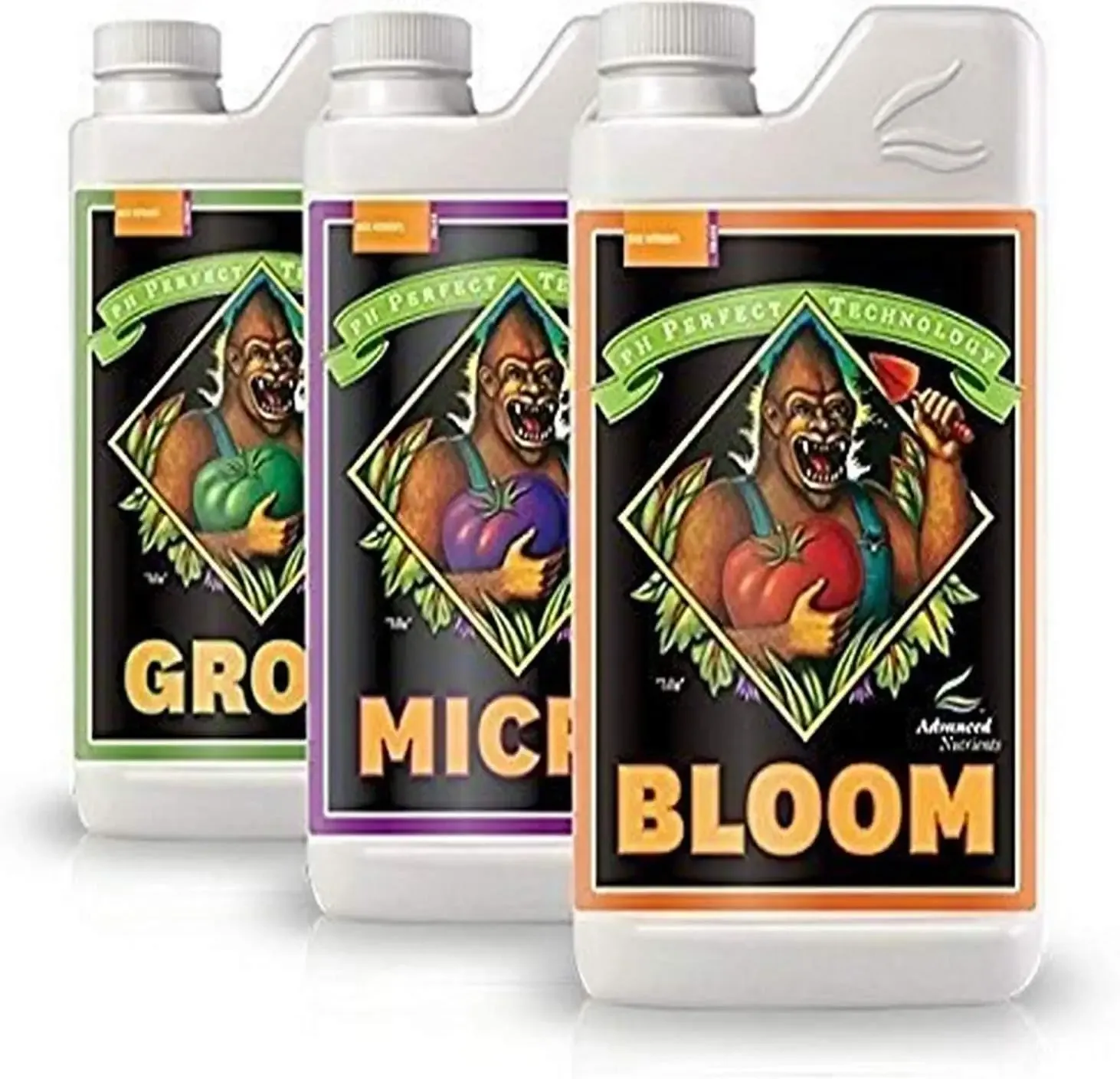
Advanced Nutrients Bloom, Micro & Grow Bundle
A premium 3-part nutrient system that makes it easy to adjust nitrogen, phosphorus and potassium ratios as your pineapple plant transitions from vegetative growth to the fruiting phase.
During the first 12 months (vegetative phase), the plant builds its leaf structure. Maintain an Electrical Conductivity (EC) of 1.8 to 2.2 mS/cm with balanced nitrogen and potassium. For cross-crop comparisons, check our optimal pH and EC values guide.
Drain and refill the reservoir completely every 2 to 3 weeks. Plants consume water and minerals at varying rates, causing residual solutions to drift out of balance. Between full changes, top up with plain, pH-adjusted water to replace transpiration losses.
Managing the Wait: Pollination and Fruit Forcing
Between months 12 and 15, the plant develops a broad rosette of serrated leaves. Indoor hydroponic pineapples do not need manual pollination. Pineapples are self-fertile and seedless when grown away from pollinators. Outdoors, hummingbird or bee pollination causes hard seeds to develop inside the fruit; growing in an indoor space guarantees seedless flesh.
Forcing the Bloom (The Ethylene Gas Technique)
Under constant indoor lighting and temperatures, pineapples may take over two years to flower spontaneously. If your plant is at least 15 months old and carries 30 to 40 broad leaves, you can trigger flowering with ethylene gas:
- Drape a large, clear plastic bag over the plant and bucket.
- Place two ripe apples or bruised banana peels on the clay pebbles inside the bag.
- Loosely secure the bottom of the bag to trap the gas.
- Keep the bag covered for 3 to 4 days, moving the plant away from hot grow lights to prevent heat buildup under the plastic.
The ripening fruit emits ethylene, a natural plant hormone that triggers flower bud development in bromeliads. After removing the bag, return the plant to its normal light routine. Within 6 to 8 weeks, the rosette center flushes reddish-pink and a compact cone bud pushes upward.
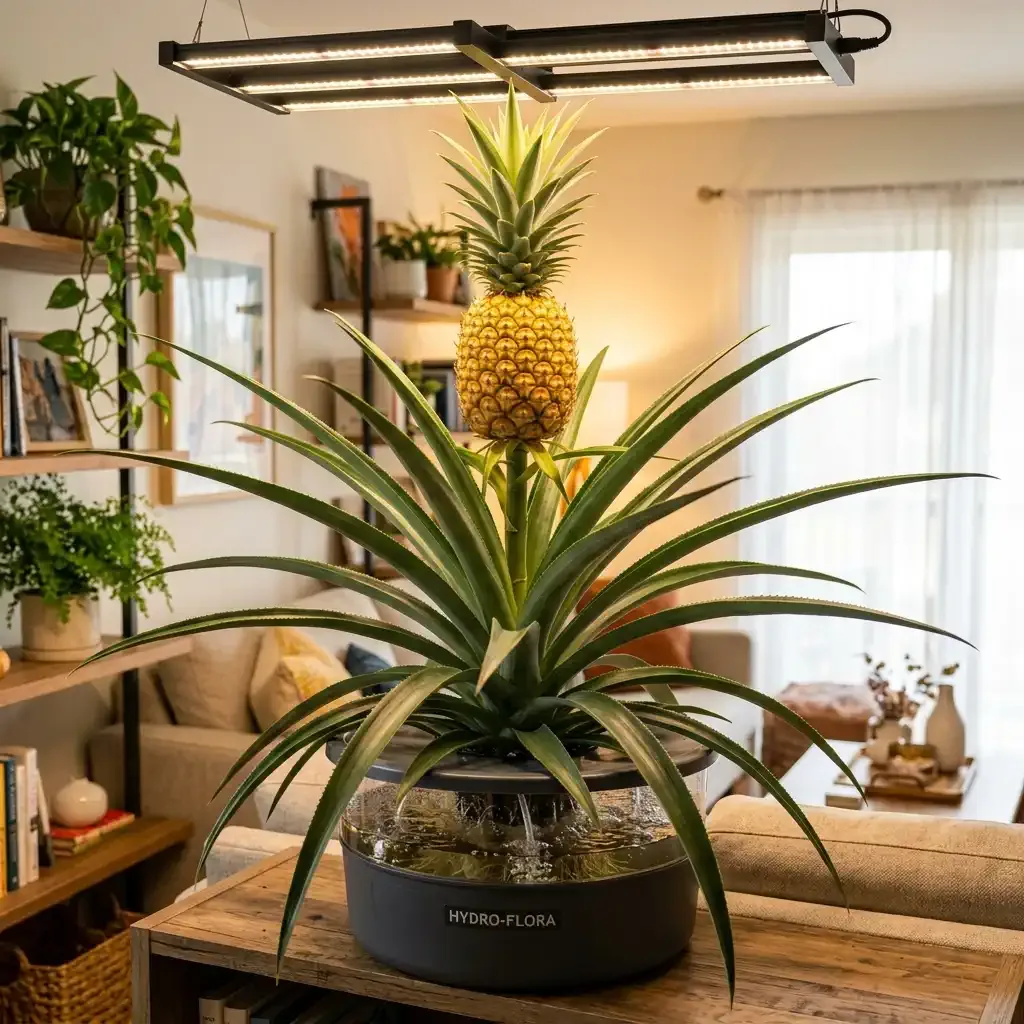
As the fruit forms over the following 5 to 6 months, lower the nutrient EC to 1.5–1.8 mS/cm. Keep potassium high and reduce nitrogen. Excess nitrogen during fruiting forces oversized top crowns at the expense of fruit sugars.
Common Challenges and Troubleshooting
Root Rot
Root rot occurs when reservoir temperatures exceed 75°F (24°C), which lowers dissolved oxygen levels. The roots turn brown, limp, and emit an odor.
Trim away damaged root sections, rinse the root mass, sanitize the bucket with diluted hydrogen peroxide, refill with fresh solution, and add a higher-output air pump. Read our guide on how to troubleshoot common hydroponic problems for more remediation steps.
Toppling and Physical Support
As the pineapple fruit swells to 2 to 4 pounds, the central stalk can tilt under the weight. Because LECA pebbles provide less resistance than packed soil, support the plant by staking the base or resting the 5-gallon bucket inside a wide, weighted container to keep it stable.
Nutrient Lockout (Yellowing Leaves)
If older leaves lose their dark green color and fade to yellow, check pH before adding fertilizer. A pH reading above 6.2 locks out iron and zinc. Reset the reservoir to 5.6 to 5.8; foliage will regain its deep color once uptake resumes.
Harvesting and Planting the Next Generation
Your pineapple is ready to harvest when the outer rind transitions from green to golden yellow from the base upward, and the fruit gives off a distinct sweet fragrance.
Cut the stem roughly one inch beneath the fruit base with a clean pruning knife. Because the fruit ripens on the plant rather than in a shipping crate, its sugar concentration will be noticeably higher than store-bought fruit.
After harvest, the mother plant rosette will decline, but it will produce side shoots called “pups” from the lower stalk.
Twist these pups off when they reach 6 to 8 inches in length. They already contain active root nodes and can be rooted in water just like the original crown. Pups mature and fruit in 12 to 15 months, noticeably cutting down the timeline for your next harvest.
Conclusion
Growing a hydroponic pineapple requires patience, but the result is a sweeter, higher-quality fruit grown right in your living space. By pairing a simple Deep Water Culture bucket with steady lighting, balanced nutrition, and ethylene gas bloom induction, you can harvest fresh tropical fruit anywhere. Start preparing a crown, keep your water balanced, and enjoy a rewarding long-term indoor project.
Frequently Asked Questions
Which hydroponic system is best for growing pineapples?
Deep Water Culture (DWC) is the best choice. Pineapple plants grow large and top-heavy, so a sturdy 5-gallon bucket system with a 6-inch net pot lid and heavy clay pebbles (LECA) provides the physical stability and root volume they need. Kratky can work initially but struggles as water consumption surges in the second year.
How long does it take to grow a hydroponic pineapple from crown to harvest?
It typically takes 18 to 24 months. While this requires patience, growing hydroponically in a temperature-controlled indoor space with proper lighting shaves 3 to 6 months off the timeline compared to outdoor soil, which slows during seasonal temperature drops.
Do you need to pollinate a hydroponic pineapple plant?
No, pineapple plants are self-fertile and do not require external pollination or a second plant to produce fruit. Outdoor pollination by hummingbirds or insects actually causes seeds to form inside the fruit, making it seedy. Growing indoors hydroponically yields seedless, sweet fruit.
How do you induce a hydroponic pineapple plant to fruit?
If the plant is mature (around 12–18 months old) and has at least 30 to 40 large leaves but has not flowered, you can induce fruiting using ethylene gas. Enclose the plant in a clear plastic bag for 3 to 4 days with a couple of ripe apples or bananas. The ethylene gas released by the ripening fruit triggers flower formation.
What EC and pH levels does a pineapple plant require?
Pineapples thrive in a slightly acidic root zone with a pH between 5.5 and 6.0. Electrical Conductivity (EC) should start around 1.0–1.2 mS/cm for young transplants, gradually increasing to 1.8–2.2 mS/cm as the vegetative canopy expands, and dropping slightly during active fruit development to prevent tip burn.
What does root rot look like on a pineapple plant and how do you fix it?
Root rot appears as mushy, brown or slimy roots accompanied by a stagnant smell in the reservoir. Above the waterline, leaf growth stalls and foliage turns a dull red-purple. To fix it, trim away slimy roots, clean the reservoir with a diluted hydrogen peroxide solution, refill with fresh nutrients, and increase aeration with a stronger air pump or extra air stones.
Can you regrow a pineapple plant after harvesting the fruit?
The main rosette dies after producing a single fruit, but it produces several pups or side shoots from the base and under the fruit crown. You can twist these pups off once they reach 6–8 inches and root them in water to start a new hydroponic cycle, which will fruit much faster than starting from a grocery crown.
How much light do hydroponic pineapples need?
They are high-light tropical plants requiring 14 to 16 hours of intense light daily. If growing indoors, they will not fruit on a windowsill alone; you need a full-spectrum LED grow light (at least 100W–200W actual draw) hung 18–24 inches above the canopy to replicate tropical sunlight.
Our Amazon Storefront
Browse all our recommended tools & supplies
Everything we personally use and trust, hand-picked for gardeners like you.

I've been running DWC and Kratky systems for several years and write about what actually works, not textbook theory. Follow along for honest product reviews, practical guides and real grow results.