As an Amazon Associate, I earn from qualifying purchases. Some links in this article are affiliate links, if you buy through them I may earn a small commission at no extra cost to you.
Quick Summary
- Wasabi Challenge: Grow the notoriously difficult wasabi plant hydroponically over 18 to 24 months.
- Cool Temperatures: Keep nutrient water cold (50°F to 55°F) to prevent root rot and plant stress.
- Shade-Loving: Keep light levels low; wasabi leaves sunburn easily and prefer indirect light.
- System Option: Use a modified gravel Ebb and Flow system to mimic natural mountain streams.
- Sulfur Feeding: Maintain proper sulfur levels in the nutrient solution to develop the signature hot flavor.
A single wasabi rhizome costs $15-$30 before you’ve spent a penny on equipment. You’ll then wait up to two years to harvest and if your water temperature drifts above 70°F for an extended period or your pH slips outside a narrow band, you can lose the plant entirely. Most beginners underestimate this. This guide doesn’t.
What follows is a step-by-step breakdown of how to set up a hydroponic wasabi system that gives your plants a genuine chance of reaching harvest, including the cultivar choices nobody else seems to cover, a troubleshooting section with real visual identification tips and specific equipment recommendations for the conditions wasabi actually needs.
Step 1: Choose Your Cultivar
This is the step most guides skip and it’s one of the most important decisions you’ll make. Wasabia japonica comes in distinct cultivars that behave differently in controlled environments:
Daruma is the most widely available cultivar outside Japan. It’s considered slightly more heat-tolerant than other varieties, which in wasabi terms means it may survive brief spikes to the low 70s°F rather than failing immediately. Daruma produces a robust, pungent rhizome and is the cultivar most likely to be sold through specialty nurseries in the US and UK. If you’re sourcing rhizomes online for the first time, you’re almost certainly getting Daruma.
Mazuma is slower-growing and more demanding, but produces a sweeter, more complex flavour with less harsh heat. It’s favoured by high-end restaurants. You’ll pay more for rhizomes and need tighter environmental control, but the end product is noticeably superior. If you’re growing wasabi to sell or to use in fine cooking, Mazuma is worth the extra effort.
Greenthumb (sometimes sold under regional trade names) is a hybrid developed for cultivation outside Japan. It tends to be more forgiving of imperfect conditions, making it the most beginner-friendly option, but the rhizome yield is smaller and the flavour is milder.
For a first grow, start with Daruma or Greenthumb. If you’ve already run one successful crop and want to push quality, try Mazuma.
Where to source rhizomes: Look for suppliers who can tell you the specific cultivar. In the US, Pacific Coast Wasabi and Marx Foods are reliable starting points. Avoid any seller who can’t name the cultivar, you’re likely getting cuttings of unknown provenance.
Step 2: Choose Your System
Two hydroponic systems work well for wasabi. Which one you use depends on your space and how much oversight you’re prepared to give the system.
Nutrient Film Technique (NFT) is the closest match to wasabi’s natural habitat, mountain stream channels where cool, oxygenated water flows constantly over the roots. In an NFT system, a thin film of nutrient solution circulates through angled channels, keeping roots moist and aerated without submerging them. This is the preferred setup for experienced growers. The main risk is that any pump failure will stress the plants quickly, since there’s no reservoir of solution around the roots to buffer against interruption.
Ebb and Flow (Flood and Drain) is more forgiving for beginners. The growing medium holds moisture between flood cycles, giving you a buffer if the pump stalls. The trade-off is that standing water in the grow tray can encourage root rot if drainage is slow or the medium stays saturated too long. Use expanded clay pebbles rather than rockwool, which retains too much moisture for wasabi.
See our comparison of NFT and aeroponic systems for a deeper look at the mechanics and our beginner’s guide to ebb and flow systems if you’re setting one up for the first time.
Step 3: Dial In the Environment
This is where most wasabi grows succeed or fail. Every parameter below is narrower than what most hydroponic plants require, treat them as hard limits, not suggestions.
Temperature: 50-70°F (10-21°C), targeting 60-65°F. Wasabi is a cold-mountain plant. It can tolerate brief excursions to either end of this range, but sustained temperatures above 70°F will trigger stress responses, yellowing leaves, slowed growth and eventually kill the plant. In a warm climate, this means you almost certainly need a water chiller for the nutrient reservoir. A basic aquarium chiller in the 1/10 HP range is sufficient for most small systems; the Active Aqua AACH10HP is a common choice that can maintain solution temps in the target range even in a 75°F room.
pH: 6.0-6.5. Check this daily for the first few weeks, then at minimum every other day once your system stabilises. Wasabi’s slow growth rate means pH drift doesn’t manifest as obvious symptoms quickly, by the time leaves show deficiency signs, the pH may have been off for weeks. A reliable combo meter that reads both pH and EC simultaneously will save you time. The Bluelab Combo Meter is accurate and durable; it’s an expensive piece of kit (~$200) but justified for a crop this sensitive.

Bluelab pH Pen
Reliable digital pH meter with fast, accurate readings for hydroponics, aquariums, pools and water testing. Features easy calibration, waterproof design and automatic temperature compensation for consistent results.
EC (Electrical Conductivity): 1.2-1.6 mS/cm. This is a lower EC than most vegetables, wasabi prefers a dilute nutrient solution. Start at 1.2 and only move toward 1.6 if you’re seeing pale, slow growth that suggests nutrient deficiency. Overfeeding causes tip burn and salt stress, which are harder to reverse than underfeeding in this species. Always supplement your base nutrient mix with calcium and magnesium at the rates recommended for leafy greens; wasabi has similar micronutrient demands.
Humidity: 70-80%. Use a digital hygrometer to monitor this. In a tent or enclosed space, a cool-mist humidifier on a humidity controller will keep this stable without fighting your temperature targets. Avoid ultrasonic humidifiers that raise ambient temperature.
Light: Low-intensity, 10-12 hours per day. Wasabi grows in deep shade in the wild. 150-200 µmol/m²/s of PPFD is sufficient, far less than you’d use for fruiting plants. A low-wattage LED grow light mounted well above the canopy works fine. See our guide to LED grow lights for specific product options at different price points.
Water quality: Use RO (reverse osmosis) or distilled water as your base. Tap water with a high mineral content will throw off your EC readings and make consistent nutrient management difficult.
Step 4: Nutrients
Mix a balanced base nutrient solution formulated for leafy greens or herbs, wasabi’s needs are closer to lettuce than to tomatoes. At the 1.2-1.6 EC target range, a two-part or three-part nutrient system gives you more control than a pre-mixed single solution.
- Nitrogen (N): The primary driver of leaf and petiole growth. Keep nitrogen in the mid-to-high range during the first year when the plant is establishing.
- Phosphorus (P) and Potassium (K): Increase the P:K ratio slightly as the plant approaches the rhizome development phase in year two.
- Calcium and Magnesium: Add a dedicated Cal-Mag supplement at half the label rate. Wasabi grown in RO water is particularly prone to calcium deficiency, which shows up as brown leaf margins.
Change your reservoir solution every 7-10 days. Wasabi’s slow growth rate means it consumes nutrients slowly, but the solution still degrades and can harbour pathogens if left too long.
For more detail on managing nutrients across different plant types, see our guide to choosing hydroponic nutrients and the pH and EC values reference for herbs and plants.
Step 5: Planting
Start with rhizome cuttings rather than seeds. Wasabi seeds have poor germination rates and require stratification, a cold, moist period to break dormancy, making them impractical for most growers. A healthy rhizome cutting will have visible growth nodes and firm, pale flesh; avoid anything soft, discoloured or showing mould.
Plant rhizomes in net pots filled with expanded clay pebbles, with the top of the rhizome sitting just above the medium. Space plants at least 12 inches apart, wasabi needs good airflow around the crown to prevent fungal problems at the base.
For the first two weeks, keep the reservoir EC at the low end (1.0-1.2) while the plant establishes. Once you see new leaf growth, you can bring it up to your target range.
Step 6: Troubleshooting Common Problems
Root rot is the most common failure mode. In wasabi, it typically starts at the base of the petioles, the leaf stems, before it reaches the rhizome. Early signs include a slight softening at the crown, petioles that pull away from the rhizome with minimal resistance and a faint sulphurous smell from the reservoir. The leaves may still look healthy at this stage. If you catch it early, remove the affected plant, trim away any soft root tissue with a sterilised blade, treat the roots with a hydrogen peroxide solution (3ml of 3% H₂O₂ per litre of water) for 30 minutes, then replant in a cleaned system. If the rhizome itself is soft or discoloured internally, the plant is not recoverable.
Temperature stress shows as rapid yellowing of the oldest leaves, followed by wilting that doesn’t recover with watering. Check your reservoir temperature immediately, not the ambient room temperature, which can be 5-10°F lower than the water in a warm grow room. Introduce a water chiller before you see symptoms, not after.
Nutrient deficiency (calcium) appears first as brown, papery margins on young leaves. Unlike most plants where calcium deficiency affects older leaves first, in wasabi it tends to show on new growth because calcium is not mobile in plant tissue and can’t be redistributed. Add Cal-Mag and check that your pH is within range, calcium is poorly absorbed below pH 6.0.
Mould at the crown is common when humidity is high and airflow is poor. Keep a small fan running to maintain air movement around the plant canopy. If you see white or grey fuzz at the base of the petioles, remove affected tissue, reduce humidity temporarily and improve ventilation.
For a broader overview of hydroponic system problems, see our troubleshooting guide for common hydroponic problems.
Step 7: Harvest
Wasabi leaves and petioles can be harvested from around 8-10 months. Use them in salads, as a wrap for fish or pickled, they carry real wasabi heat and are entirely edible. Harvesting a few outer leaves doesn’t harm the plant and gives you something to show for the wait.
The rhizome is ready between 18 and 24 months. You’ll know it’s mature when it reaches a diameter of around 1 inch and the plant has produced multiple side shoots. Harvest by lifting the entire plant from the net pot and using a sharp, clean knife to cut the rhizome from the root mass. If the roots are still healthy, you can replant the root mass, it will often produce new growth from the remaining nodes.
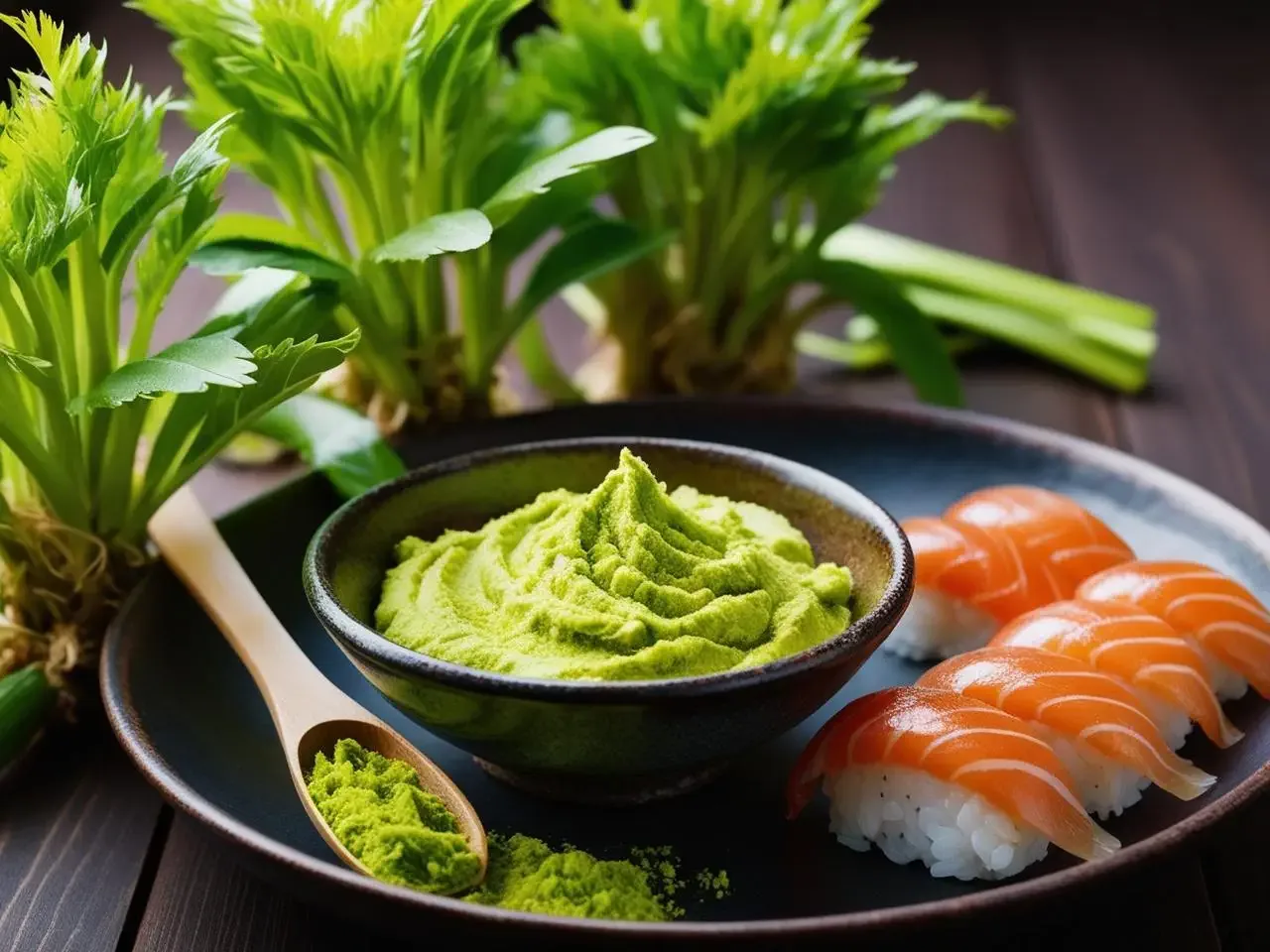
Fresh wasabi rhizome should be used within 30 minutes of grating; the volatile compounds responsible for its heat begin to dissipate quickly on exposure to air. This is why fresh wasabi is fundamentally different from the tube paste sold in supermarkets, which is typically horseradish, mustard and food colouring.
Equipment Summary
Here’s what you actually need to run a successful wasabi system:
- Water chiller: 42gal 1/10 HP Water Chiller for Hydroponics SystemView on Amazon for systems up to ~42 gallons
- pH/EC meter: Bluelab Combo MeterView on Amazon, accurate, reliable, worth the price for a slow, expensive crop
- Humidifier: Cool-mist model on a humidity controller; Inkbird IHC-200 controllerView on Amazon works well
- Grow light: Any low-wattage LED delivering 150-200 µmol/m²/s; Spider Farmer SE3000 LED Grow LightView on Amazon at maximum height or a small panel like the Mars Hydro TS 1000View on Amazon
- Nutrients: General Hydroponics Flora Series (3-part)View on Amazon plus CaliMagicView on Amazon for Cal-Mag supplementation
F.A.Q
-
How long does it take to grow wasabi?
Wasabi rhizomes take 18 to 24 months to reach harvestable size. Leaves and petioles can be taken from around month 8 or 9, they’re edible, mildly spicy and help you get something out of the grow while you wait for the main event. -
Is wasabi a profitable crop?
Potentially, yes. Fresh wasabi rhizome sells for $70-$100 per pound at wholesale and significantly more direct-to-consumer. The economics work if you can scale and maintain consistent quality, but the long grow cycle and high failure rate make it a difficult proposition without prior experience. The hydroponic farming profitability analysis on this site covers the financial modelling in more detail. -
Why is real wasabi so rare?
Real wasabi (Wasabia japonica) requires cool running water, partial shade and a stable climate that exists naturally in a limited number of mountain river valleys in Japan. Replicating those conditions commercially is expensive. The result is that roughly 95% of “wasabi” served in restaurants worldwide is a paste made from horseradish, mustard and green food colouring, completely different botanically and flavourwise. -
Is wasabi expensive to grow?
Yes, on multiple fronts. Rhizomes cost $15-$30 each. You’ll need a water chiller ($100-$300), a quality pH/EC meter ($50-$200) and potentially a temperature-controlled grow space. Then there’s the opportunity cost of 18-24 months of system maintenance. Factor all of this before starting. -
Does wasabi grow back?
Yes, if you harvest carefully. Cut the rhizome cleanly from the base of the plant, leaving the root mass and any side shoots intact. Replant in the same system and the plant will typically produce new rhizome growth from the remaining nodes, though the second crop is often smaller than the first. -
Can you grow wasabi in aquaponics?
Yes, with caveats. The fish waste in an aquaponics system tends to push EC higher than wasabi’s ideal range and water temperatures in a fish tank are typically warmer than wasabi prefers. It’s possible if you’re running a cold-water species (like trout) and monitor nutrient levels carefully, but it adds complexity. A standalone hydroponic system is easier to control for a first grow. -
Do wasabi plants multiply?
Yes. Mature plants produce offsets, small side shoots that emerge from the base of the rhizome. These can be separated and replanted once they have a few leaves and their own root system. This is the most reliable way to propagate wasabi and avoids the seed germination difficulties entirely. -
Why is wasabi difficult to grow?
It’s the combination of factors rather than any single requirement: cool temperatures that require active refrigeration in most climates, a pH window narrower than most crops, a long growth period that amplifies any management mistakes and sensitivity to both overwatering and drought. Any one of these is manageable. All of them together, sustained for two years, is genuinely challenging. -
Does real wasabi only grow in Japan?
No, it’s grown commercially in New Zealand, Canada, the UK and parts of the US Pacific Northwest, where the climate is cool and wet enough to support outdoor cultivation. Hydroponically, it can be grown anywhere with adequate environmental control. -
Can you eat wasabi leaves?
Yes and they’re underused. Wasabi leaves have a mild, peppery heat, less intense than the rhizome. Use them fresh in salads, wilt them briefly in stir-fries or pickle them in rice vinegar and a little sugar. They’re also a reasonable indicator of plant health: healthy leaves are deep green and firm; yellowing or soft leaves signal a problem in the root zone. -
Why is wasabi so hard to get?
Supply is the main constraint. There are very few commercial wasabi producers outside Japan, the growth cycle is long and fresh rhizome has an extremely short shelf life once harvested. Restaurants that serve genuine wasabi typically pay premium prices for it, which keeps retail availability limited.
What to do next: If you’re ready to start order your rhizomes first, supply is inconsistent and you may wait weeks for stock. While you wait, get your system running and temperature-stable before the plants arrive. The goal in month one is to achieve a consistent 60-65°F water temperature and stable pH. Everything else can be refined once the plants are in.
If you’re earlier in your hydroponic journey and want to build the underlying skills first, our complete guide to hydroponics for beginners and common beginner mistakes to avoid are the best starting points.
Frequently Asked Questions
Why is wasabi so difficult to grow hydroponically?
Wasabi requires cold water temperatures (50°F to 55°F), clean aeration, low light and takes 18 to 24 months to mature, making it highly susceptible to root rot and heat stress.
What system is best for growing wasabi?
A flood-and-drain (ebb and flow) system filled with gravel or LECA mimics the natural rocky stream beds where wild wasabi grows best.
Our Amazon Storefront
Browse all our recommended tools & supplies
Everything we personally use and trust, hand-picked for gardeners like you.

I've been running DWC and Kratky systems for several years and write about what actually works, not textbook theory. Follow along for honest product reviews, practical guides and real grow results.